All About Private School Options
Why Private Schools and Education Options Matter for Your Child’s Future
Choosing between private schools and education options is one of the most important decisions a parent will make. Here is a quick overview to help you decide what matters most:
At a glance — key differences between private and public schools:
| Factor | Public Schools | Private Schools |
|---|---|---|
| Funding | Tax dollars | Tuition, grants, fundraising |
| Admissions | Open to all in district | Selective, application-based |
| Class size | Typically larger | Typically smaller |
| Curriculum freedom | State-mandated | More flexibility |
| Cost to families | Free | Tuition required (aid available) |
| Parental involvement | Limited channels | Stronger, more direct |
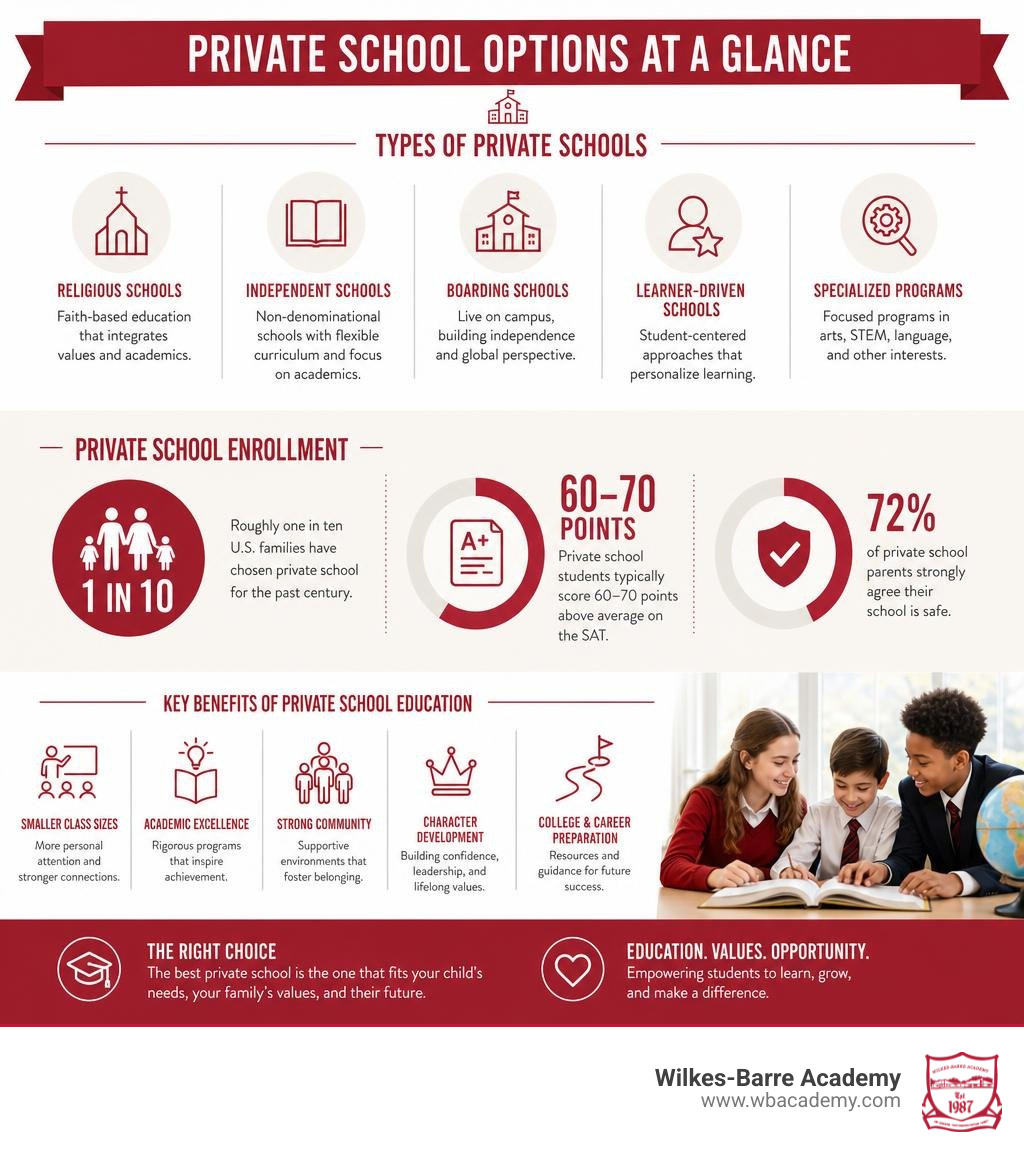
Roughly one in ten U.S. families have chosen private school for the past century. And it is easy to see why interest remains steady — private school students typically score 60–70 points above average on the SAT, and 72% of private school parents strongly agree their school is safe.
But private school is not one-size-fits-all. There are religious schools, independent schools, boarding schools, learner-driven models, and specialized programs — each with a different approach, cost, and community feel.
The right choice depends entirely on your child’s needs, your family’s values, and what kind of environment helps your child thrive.
This guide breaks it all down — from costs and financial aid to school types, regulations, and how to find the best fit.
Private schools and education options vocabulary:
- How do I find private schools in Luzerne County that prioritize individualized learning through limited enrollment per grade?
- Which wilkes barre area schools are known for providing a non-profit, private education with a focus on individualized learning?
Understanding Private Schools and Education Options
When navigating the landscape of private schools and education options, it is helpful to understand how these institutions operate on a structural level. In Pennsylvania alone, there are approximately 2,000 nonpublic and private academic schools serving diverse student populations.
Unlike public systems, which must accommodate every student residing within a specific geographic boundary, private institutions operate as schools of choice. If you are considering making a change for your child, learning the logistics of From Public to Private and Navigating the PA School Swap is an excellent first step in understanding how enrollment transitions work.
To explore the sheer variety of local options available in our region, parents can use resources like the Search for Private Schools – Search Results to filter institutions by county, size, and religious affiliation.
Key Differences in Funding and Governance
The fundamental distinction between public and private education lies in how schools are funded and governed:
- Funding Streams: Public schools rely almost entirely on local, state, and federal tax dollars. In contrast, private schools generate their own operating budgets through tuition, private grants, donations, and targeted fundraising.
- Governance Structures: Public schools are governed by politically elected local school boards and must adhere to strict state-level bureaucratic mandates. Private schools are typically overseen by independent boards of trustees or directors. This allows for rapid, flexible decision-making that directly serves the school’s immediate mission.
- Admissions Standards: While public schools must accept every child in their designated district, private schools utilize selective admissions standards. This process helps ensure that a school’s academic pace, behavioral expectations, and community culture align perfectly with the enrolling student.
Curriculum and Academic Standards
One of the greatest advantages of private education is curriculum freedom. While public schools are often bound to rigid state-mandated testing regimens and standardized curricula, private institutions have the flexibility to design creative, rigorous, and highly engaging programs.
However, “freedom” does not mean a lack of oversight. In Pennsylvania, private schools must comply with specific state regulations regarding health, safety, and basic instructional hours. They are required to be in session for a minimum of 180 days of instruction (or a minimum of 450 kindergarten hours, 900 elementary hours, or 990 secondary hours).
Furthermore, reputable private schools seek optional accreditation from recognized regional boards to validate their educational quality. For families, this translates to Certified Success for Pennsylvania Private School Students, ensuring that high academic standards are maintained and recognized by secondary schools and universities alike.
The Core Benefits of Private Education
Why do so many families choose to invest in private schooling? The reasons go far beyond simple academic preparation. Private schools foster environments where children are known, valued, and encouraged to explore their unique talents.

Individualized Learning and Academic Outcomes
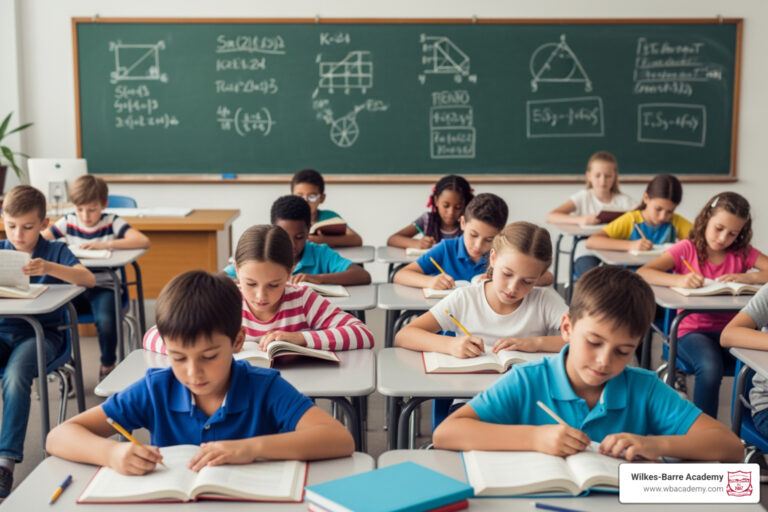
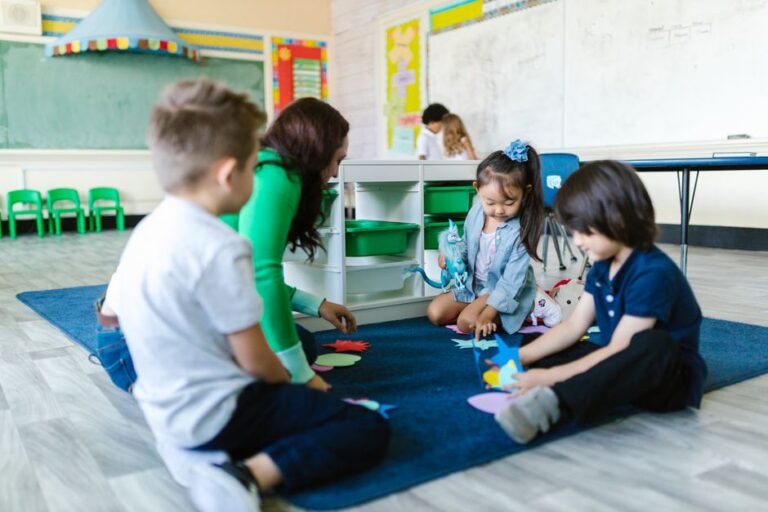
In a smaller classroom setting, students feel far more comfortable participating, asking questions, and venturing answers without the fear of judgment. Teachers in private schools have the time and space to tailor instruction based on individual student strengths and weaknesses, rather than teaching to a standardized test.
These environments yield impressive, tangible results:
- Test Scores: Private school students typically score 60 to 70 points above the national average on the SAT.
- Rigorous Expectations: Private schools often set graduation and coursework requirements that exceed state minimums, keeping students academically challenged.
- Future Readiness: By focusing on critical thinking, self-direction, and deep comprehension, private education represents Why Going Private is the Ultimate Grade Upgrade for students seeking a competitive edge.
Safe Environments and Strong Communities
A supportive school environment is essential for academic success. According to data from the Fraser Institute, 72% of private school parents strongly agree that their school provides a safe learning environment, while 62% feel the school’s culture is deeply motivating, supportive, and nurturing.
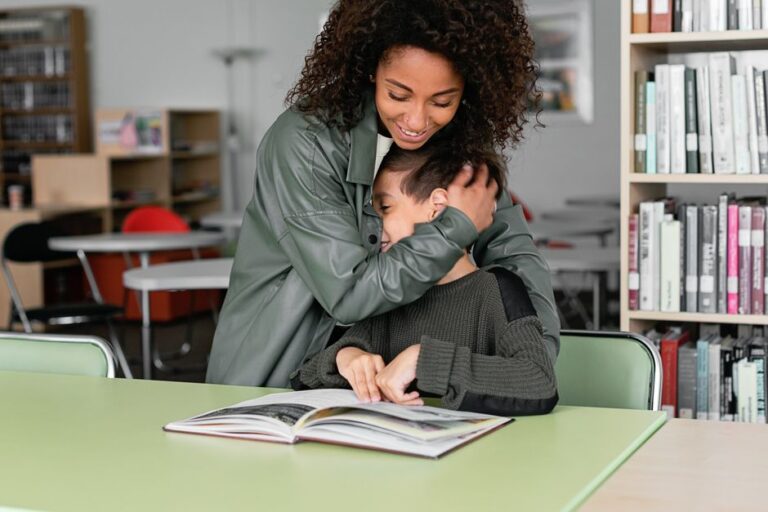
When staff-to-student ratios are low, educators can intervene quickly in conflicts, model positive peer interactions, and weave character education directly into the daily schedule. For a closer look at how local schools manage these aspects, check out A Practical Guide to Safe School Environment Pennsylvania.
This sense of security naturally breeds a vibrant, welcoming community. When families actively choose a school, they share a common commitment to the institution’s values, resulting in The Best Diverse and Close-Knit Schools in Pennsylvania.
Navigating Different Types of Private Schools
As you explore private schools and education options, you will quickly discover that the private sector is incredibly diverse. Understanding the different categories of schools can help you narrow down your search.

- Religious Schools: These institutions integrate faith, moral teachings, and spiritual development into their daily curriculum. They range from parochial Catholic parish schools to non-denominational Christian academies and Jewish day schools.
- Independent Schools: These are self-governed, non-profit institutions that are not affiliated with any religious organization or church. They are funded primarily by tuition and charitable donations.
- Boarding Schools: Students live on campus in residential dormitories, experiencing a 24/7 learning and living community.
- Special Education Schools: These private institutions are specifically designed, staffed, and equipped to serve students with physical, learning, or emotional disabilities.
Evaluating Private Schools and Education Options for Your Child
Finding the perfect school requires looking beyond general rankings and focusing on your child’s specific personality, interests, and learning style.
If your family prefers an educational environment focused purely on academic and personal development without religious instruction, you can explore Keep Faith in Academics with These Secular PA Private Schools.
To see the full range of what is available locally, consult The Complete List of Private Schools in Northeastern Pennsylvania to compare locations, grade ranges, and philosophies.
Specialized and Alternative Education Models
Some private schools follow specific pedagogical philosophies, such as Montessori (which emphasizes self-directed, hands-on learning) or learner-driven models where students progress at their own pace through mastery-based milestones.
For parents seeking highly tailored approaches, exploring The Best Wilkes-Barre Area Schools for Individualized Learning will help identify programs that move away from assembly-line education and toward personalized academic growth.
Cost, Financial Aid, and Accessibility
The topic of tuition can feel daunting for many families. However, modern private schools are increasingly focused on accessibility, ensuring that a high-quality education is not reserved solely for high-income households.
Understanding the True Cost of Private Education
Tuition rates vary widely based on the school’s location, grade levels, facilities, and specialized programs. When budgeting, it is important to look at the complete fee structure. Beyond base tuition, families should inquire about potential fees for books, uniforms, technology, and extracurricular activities. To get a realistic picture of local averages, read How Much is Private School in PA? Tuition Stats and Affordable Options.
Financial Aid and Scholarship Opportunities
Many families are surprised to learn how affordable private school can actually be once financial aid is factored in. In many private schools, a significant percentage of the student body receives some form of tuition assistance.
In Pennsylvania, two state-administered programs provide substantial help:
- Educational Improvement Tax Credit (EITC): This program allows businesses and individuals to redirect their state tax liabilities to approved scholarship organizations, which then provide private school scholarships to eligible low- and middle-income families.
- Opportunity Scholarship Tax Credit (OSTC): Similar to the EITC, this program specifically provides tuition scholarships to eligible students residing within the boundaries of underperforming public school districts.
To demystify this process, read Don’t Let the Sticker Price Scare You: Financial Aid for PA Private Schools and discover how to apply for these programs. Analyzing these options helps families answer the crucial question: Is Private School Worth the Pennies in Pennsylvania?
Frequently Asked Questions
Frequently Asked Questions About Private Schools and Education Options
Do private schools in Pennsylvania have to follow the same curriculum as public schools?
No. Private schools have the freedom to design their own curricula. However, licensed private academic schools must align their programs with state educational standards to ensure students are fully prepared for transition to high school or college.
Are private school teachers required to be state-certified?
In Pennsylvania, teacher certification requirements depend on the school’s classification. Licensed private academic schools (LPAS) must employ certified teachers and an approved education director, ensuring high professional standards.
Do private schools have to follow state attendance laws?
Yes. Private schools must meet Pennsylvania’s compulsory school attendance requirements, which dictate a minimum of 180 days of instruction or an equivalent number of hours.
How do private schools support students with special needs?
While public school districts are legally responsible for providing a Free Appropriate Public Education (FAPE) under the Individuals with Disabilities Education Act (IDEA), private schools support students in several ways:
- Auxiliary Services (Act 89): Many private schools partner with local Intermediate Units (IUs) to provide on-site speech therapy, remedial reading, math support, and psychological counseling.
- Classroom Accommodations: Because of smaller class sizes, private school teachers can easily implement individualized accommodations, such as extended testing time or specialized seating.
- Specialized Placements: In some cases, school districts may publicly place a student in a licensed private academic special education school to meet their specific therapeutic and educational needs.
What role do parents play in private school communities?
Parents are vital partners in the private school ecosystem. Because families actively choose to enroll, they tend to be highly engaged.
Private schools facilitate this through robust parent-teacher organizations, volunteer opportunities, and open communication channels. To learn more about how you can get involved, check out Everything You Need to Know About PA Private School Parent Associations.
Conclusion
Exploring private schools and education options is the first step toward unlocking your child’s full potential. When you choose a school that prioritizes individualized attention, academic excellence, and a safe environment, you are giving your child a foundation for lifelong success.
If you are looking for an exceptional educational environment in Luzerne County, we invite you to discover Wilkes-Barre Academy. As a premier, single-location, non-profit K-8 private school, we are proud to offer:
- An academically advanced curriculum tailored to challenge and inspire.
- A unique single classroom per grade structure, ensuring your child receives unmatched individualized learning and teacher attention.
- A close-knit, diverse community where strong family-school connections are at the heart of everything we do.
To see how we compare to other local options, you can check out Private Schools in Wilkes-Barre, PA – Niche and read Why a Private K-8 School in Pennsylvania Makes the Grade.
Ready to take the next step? Explore our Academics Program or contact us today to schedule a tour of our Wilkes-Barre school and experience our community firsthand!