Putting Luzerne County on the Map with Championship Geography Bee Training
Academic Enrichment: The Geography Bee Private School Luzerne County Advantage
Academic competitions give students a clear goal to aim for, transforming routine social studies into an exciting journey of discovery. In a dedicated learning environment, competition preparation does not happen on the sidelines. Instead, it weaves directly into a rigorous, cross-disciplinary curriculum that links geography with history, earth science, literature, and economics. Students preparing for a geography bee often study the same geographic concepts recognized by organizations like the National Geographic Society, deepening their understanding of Earth’s interconnected physical and cultural systems.
Because we maintain a single classroom per grade at our single-location campus in Wilkes-Barre, our teachers get to know each student’s specific strengths, interests, and learning styles. When preparing for high-level events like geography bees, this individualized approach makes all the difference. Instructors can pinpoint whether a student needs extra practice with physical landforms, cultural demographics, historical migrations, or rapid-fire oral response techniques under strict time limits.
Inside a Geography Bee Private School Luzerne County Classroom
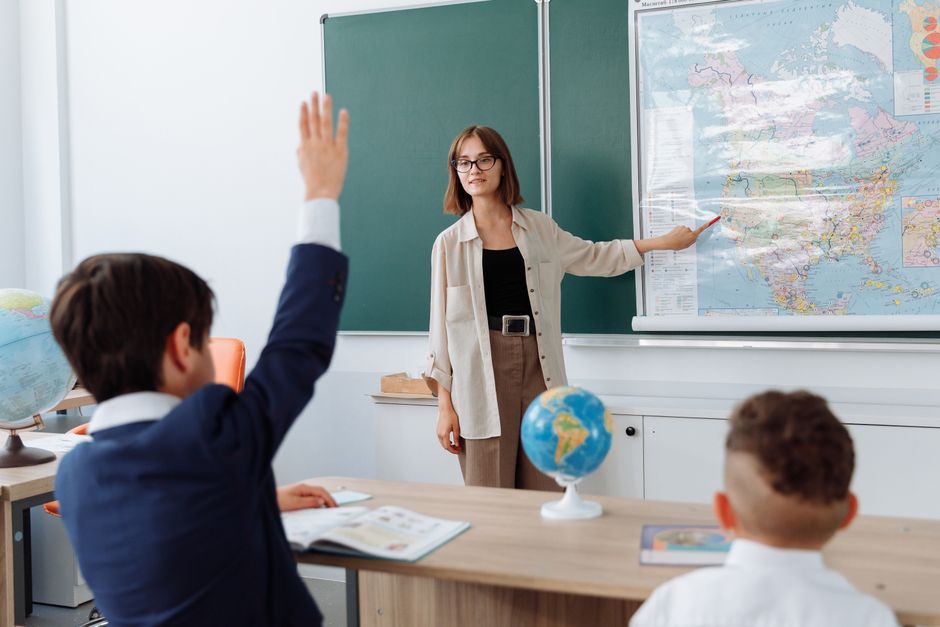
Stepping into our classroom during geography season reveals an energetic, highly collaborative atmosphere. Rather than simply memorizing long lists of static facts, students engage in dynamic oral questioning formats that mirror official competition rounds. They learn how to parse multi-part prompts, identify contextual clues within question stems, and reason through unfamiliar physical or political geography challenges.
Our core geography training focuses on several key areas:
- Physical Landscapes and Landforms: Mountain ranges, river drainage basins, deserts, plateaus, archipelagoes, tectonic fault lines, and ocean currents.
- U.S. Cities and Regional Geography: State capitals, historical landmarks, agricultural belts, manufacturing hubs, and interstate transit corridors.
- World Cultures and Demographics: Global languages, religious traditions, indigenous heritage, ethnic distributions, and cultural customs across continents.
- Political Boundaries and Cartography: Sovereign nations, dependent territories, contested borders, latitude and longitude coordinates, and thematic map interpretation.
- Economic and Environmental Geography: Global trade routes, natural resource distribution, climate zones, biomes, and pressing worldwide ecological challenges.
Students practice reading complex physical and political maps, analyzing why major metropolitan areas historically developed along specific waterways, and understanding how mountain ranges create localized rain shadows and influence weather patterns. This active practice builds strong factual recall alongside deep, lasting analytical thinking.
How a Geography Bee Private School Luzerne County Program Develops Global Literacy
True geographic literacy goes far beyond pointing to a spot on an atlas. Our program uses competition training to build spatial reasoning, geopolitical awareness, and empathy for diverse communities across the globe.
When children understand the geographical factors that shape human history—such as why strategic trade routes formed through mountain passes or how fertile river valleys gave rise to early civilizations—they begin viewing current events with sophisticated context. Standing up to answer challenging questions in front of peers also transforms classroom confidence into lasting poise, preparing students to speak clearly, think quickly on their feet, and articulate ideas without hesitation in any academic setting.
How the Competition Works: School Bees to National Championships
The path from the first classroom round to the national stage is a structured, rewarding journey that challenges students at every step.
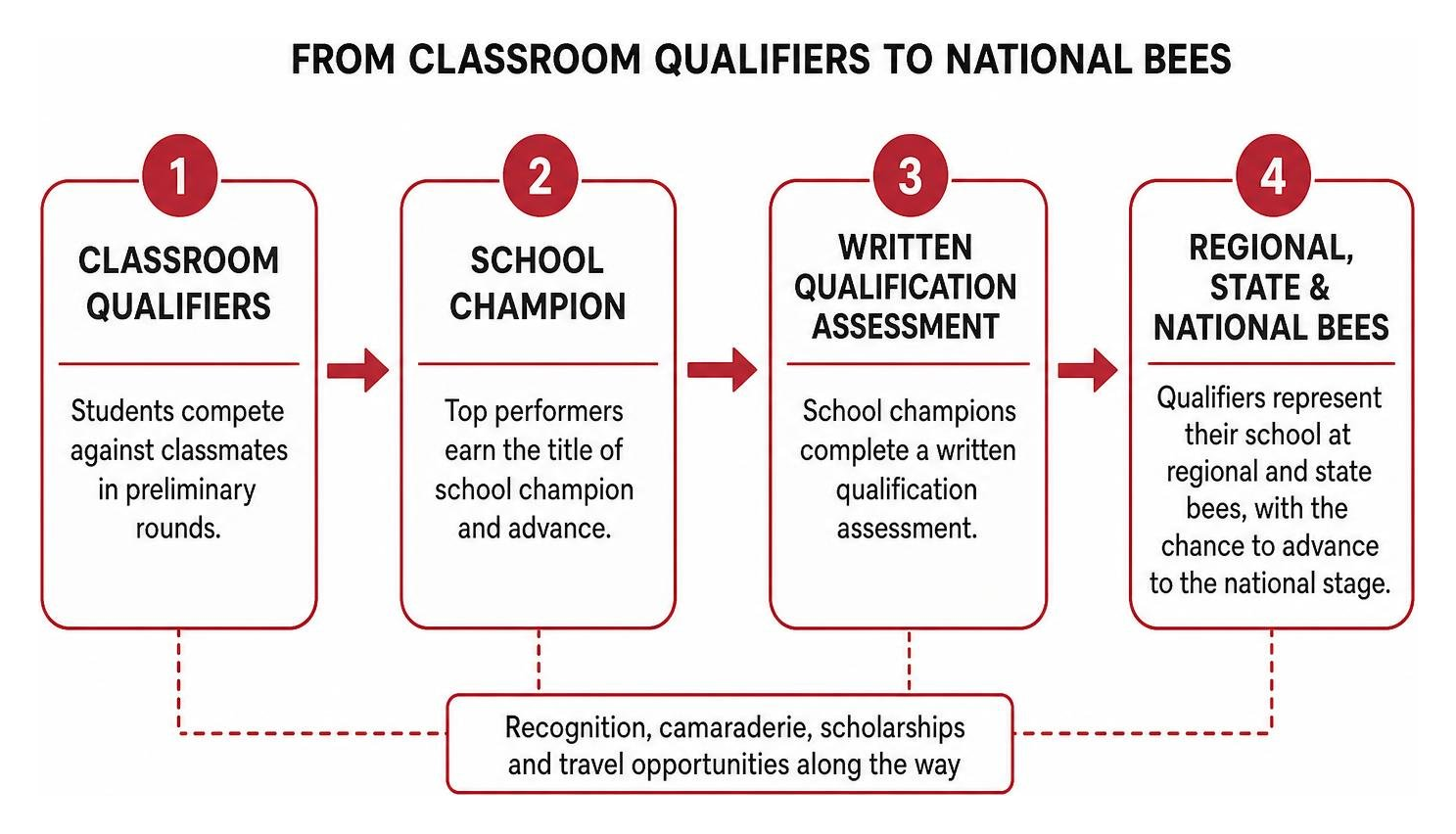
Students begin by competing against classmates in preliminary rounds designed to test breadth of knowledge. School champions then advance to written qualification assessments, earning the opportunity to represent their school against top regional and state contenders. Along the way, participants earn recognition, build camaraderie, and can compete for prestigious college scholarships and educational travel opportunities.
School-Level Bee Structure and Moderation Rules
Our school-level competition typically involves students in grades 4 through 8. The event follows traditional moderation standards to ensure fair, transparent, and consistent play:
- Preliminary Rounds: Each student answers a series of oral questions across multiple rounds. Questions cover both United States physical and cultural geography and complex international regions.
- Scoring and Elimination: Points are tallied after each round based on accuracy within the designated response time window. Students who achieve qualifying point thresholds advance to the final school-level stage.
- The Championship Match: The top two or three finalists face off in a multi-question round. If a tie occurs, judges use sudden-death tiebreaker questions based on specific geographic coordinates, landform classifications, or detailed cultural facts.
- Faculty Moderation: Experienced faculty members serve as moderators and judges, ensuring precise pronunciation, strict timekeeping, and fair adjudication throughout the event.
Advancing to State and National Competitions
Once a school crowns its champion, the journey continues outward. School winners take a proctored, written qualifying exam provided by official competition organizers. This comprehensive assessment evaluates comprehensive global knowledge across physical, geopolitical, and economic cartography.
The top 100 scoring students across Pennsylvania earn an invitation to the state championship tournament. State champions then advance to the national finals, where students compete for major academic prizes, including college scholarships ranging from $25,000 to $50,000, along with lifetime educational memberships and expeditions to world-renowned geographic sites like the Galápagos Islands.
Proven Training Strategies for Geography Bee Contenders
Reaching the top tier of academic competition requires deliberate, consistent practice. We combine structured classroom lessons with focused study routines to help students master large amounts of information efficiently and retain it over the long term.

The most successful contenders do not rely on last-minute cramming. They use a balanced regimen that combines foundational reading, digital tools, tactile map drawing, and realistic simulation drills.
| Study Method | Focus Area | Frequency | Primary Benefit |
|---|---|---|---|
| Atlas & Map Drills | Physical features, borders, topography | 20 mins daily | Strengthens visual memory and spatial orientation |
| Flashcard Systems | Capitals, flags, currencies, languages | 15 mins daily | Builds rapid factual recall and terminology fluency |
| Digital Practice Apps | Timed trivia, multiple-choice questions | 3 times weekly | Reinforces quick decision-making under time constraints |
| Mock Oral Bees | Multi-topic oral questions, tiebreakers | Weekly | Develops stage presence, poise, and active listening skills |
Map Mastery and Physical Geography Drills
Physical geography forms the bedrock of our training. Students learn to visualize the globe in their minds by studying blank outline maps and labeling mountain ranges, river basins, gulfs, straits, plateaus, and deserts from memory.
We emphasize dynamic border changes, geopolitical shifts, and physical cartography. Understanding how tectonic activity creates island chains or how rain shadows shape arid regions helps students deduce answers through scientific logic rather than pure memorization. This deeper spatial framework ensures that even when encountering an unfamiliar question, students can narrow down possibilities through regional physical landmarks and environmental patterns.
Integrating Global Culture, Economics, and Current Events
Modern geography encompasses the living world. Our training integrates daily international news analysis to connect textbook concepts with real-world developments happening across every continent.
Students explore global demographics, major import and export commodities, renewable energy distribution, and international geopolitical alliances. By discussing current trade agreements, infrastructure megaprojects, and global conservation efforts, students learn to view geography as a living, evolving subject that directly shapes global politics, natural resource management, and daily community life.
Long-Term Academic and Cognitive Benefits of Academic Competitions
Participation in rigorous academic bees builds cognitive habits that benefit students throughout high school, college, and beyond.
- Enhanced Memory Architecture: Memorizing interconnected geographic data trains the brain to organize, categorize, and retrieve complex information quickly.
- Critical Problem-Solving: Advanced bee questions require deductive reasoning, such as eliminating improbable answers based on climate clues, regional language families, or historical migration patterns.
- Public Speaking and Composure: Standing before an audience to answer questions under strict time limits teaches students how to manage performance anxiety with composure.
- Cross-Curricular Strength: Geographic literacy reinforces performance in earth sciences, world history, foreign languages, and international literature.
- Lifelong Curiosity: Exploring distant countries and ecosystems sparks an enduring interest in world affairs, cultural exploration, and environmental stewardship.
Frequently Asked Questions About School Geography Bees
What grade levels are eligible to participate in geography bees?
Geography bees are primarily designed for students in grades 4 through 8. At our school, classroom rounds introduce younger elementary students to basic map concepts, while middle school students tackle advanced global geopolitics, economic corridors, and physical topography. This age range allows students to build foundational geographic literacy before moving into more complex competition material.
How do school winners qualify for state and national tournaments?
After winning their school-level bee, champions take an official, proctored written test. The competition organization evaluates these tests across the state, and the top 100 scoring students qualify to represent their schools at the state tournament level. From there, state champions advance to the national competition, where they face top students from around the country.
What prizes and scholarships are awarded to top geography bee finishers?
School-level champions receive trophies, medals, and academic certificates. At the state and national levels, students can earn substantial college scholarships—often ranging between $25,000 and $50,000—as well as educational travel grants and specialized study resources. Some national-level winners also receive lifetime memberships to geographic organizations and opportunities to participate in international field expeditions.
Conclusion
Championship-level geography training helps young learners develop a deep curiosity about the world around them. Through structured coaching, oral competition rounds, and an advanced social studies curriculum, students build the confidence, spatial reasoning, and analytical skills needed to thrive both on stage and in the classroom.
At Wilkes-Barre Academy, our single-location community provides a supportive, challenging environment where every student receives individualized attention. From classroom map exploration to competitive academic enrichment and Science Olympiad programs, our dedicated faculty encourages children to expand their horizons, think critically, and put their academic talents on the map.