Everything You Need to Know About PA Private School Parent Associations
Why Parent Teacher Organizations in PA Private Schools Matter More Than You Think
A parent teacher organization in a private school in PA is one of the most practical ways families can strengthen their child’s education — and it’s something every private school parent should understand before their first day.
Here’s a quick overview of what these groups are and what they do:
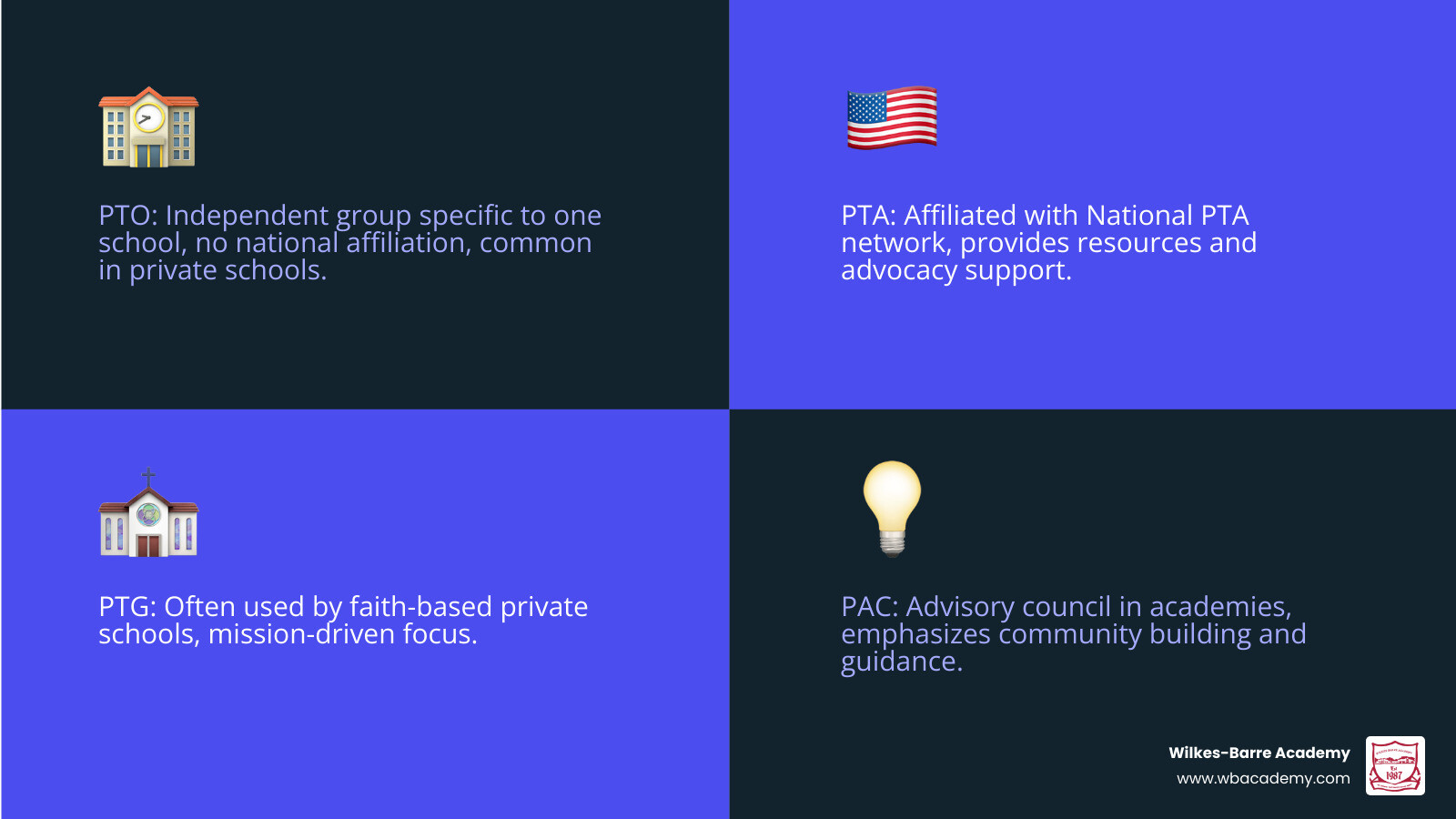
- PTO (Parent Teacher Organization) — An independent, school-specific group with no national affiliation. Very common in private schools.
- PTA (Parent Teacher Association) — A nationally affiliated version, tied to the National PTA network.
- PTG (Parent Teacher Guild) — A variation used by some private and faith-based schools, often with a mission-driven focus.
- PAC (Parent Advisory Council) — Common in private academies; emphasizes advisory and community roles.
All four types share the same core purpose: bringing parents, teachers, and school staff together to support students beyond what tuition alone can fund.
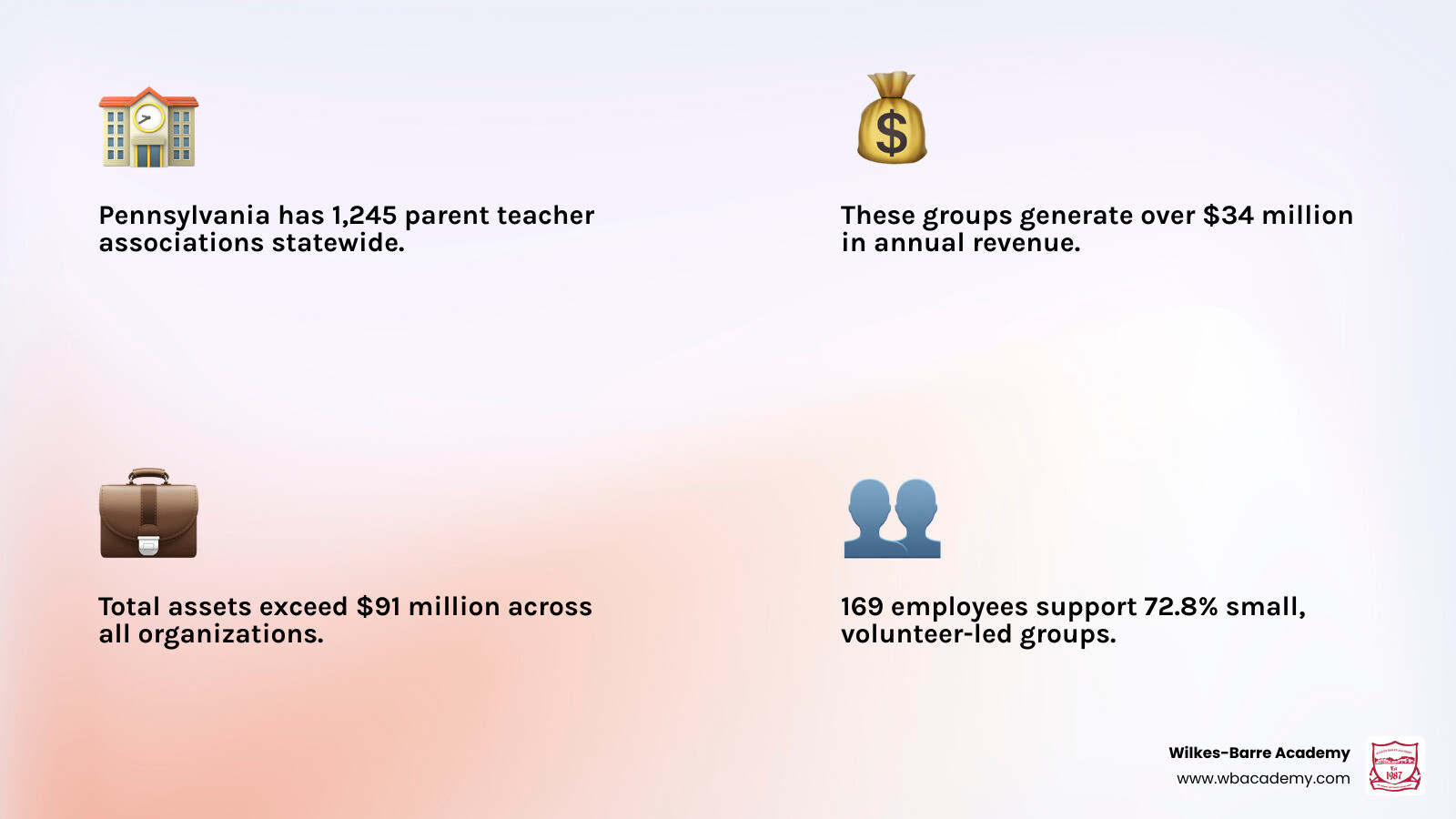
Pennsylvania has 1,245 parent teacher associations statewide. Together, they generate over $34 million in revenue annually and hold $91 million in assets. That’s a massive signal of how seriously PA families take organized parent involvement.
For private school families specifically, these groups fill a unique gap. Unlike public schools, private schools can’t rely on district budgets for enrichment. Parent organizations step in to fund things like classroom technology, arts programs, field trips, and teacher appreciation — while also building the tight-knit community that draws families to private schools in the first place.
If you’re trying to decide whether to get involved, or you’re new to how these groups work, this guide breaks it all down clearly.
What a Parent Teacher Organization in a Pennsylvania Private School Actually Does
When we talk about a parent teacher organization private school pa, we are describing the heartbeat of the school’s social and financial “extra” life. While the school administration handles the academics and operations, the parent organization focuses on the “feeling” of the school—the community, the spirit, and the small touches that make a child’s school years memorable.
parent teacher organization private school pa: definitions parents should know
Navigating the alphabet soup of parent groups can be confusing. Here is the breakdown of what these titles actually mean in our Pennsylvania private school landscape:
- PTO (Parent Teacher Organization): This is the most flexible model. It is usually an independent 501(c)(3) nonprofit. Because it isn’t tied to a national body, all the money raised stays exactly where it was earned—at that specific school.
- PTA (Parent Teacher Association): These groups are part of the National PTA. They pay dues to state and national branches and often focus heavily on legislative advocacy for children.
- PTG (Parent Teacher Guild): Often found in faith-based private schools, a “Guild” usually emphasizes the spiritual and service-oriented mission of the school alongside traditional fundraising.
- PAC (Parent Advisory Council): These groups often act as a bridge between the parent body and school leadership, offering feedback on school policies while still handling events.
Regardless of the name, the goal remains the same: fostering a partnership between the home and the classroom.
How private school parent groups support students, teachers, and families
In a private school setting, these organizations act as a central hub for volunteer coordination. They ensure that teachers aren’t overwhelmed by trying to plan every social event or field trip on their own. By centralizing these efforts, the parent organization allows teachers to focus on their “calling”—the education of our children.
Beyond logistics, these groups focus on student well-being. This might mean organizing a “Family Fun Night” to help new students make friends or coordinating a “Spirit Night” at a local restaurant to build school pride. They are the ones making sure the “extras” like holiday parties, assemblies, and graduation dinners happen seamlessly.

Typical missions and goals in PA private schools
Most private school parent associations in Pennsylvania operate under a mission of “prudent assistance.” This means they aim to:
- Foster goodwill and camaraderie among the families.
- Support the principal and staff through service and volunteerism.
- Promote a healthy environment for physical, educational, and spiritual development.
- Enhance the overall educational experience through financial contributions for equipment and programs.
Pennsylvania PTA Numbers and What They Reveal About Parent Involvement
The scale of parent involvement in the Keystone State is truly impressive. When we look at the data for 2026, it becomes clear that parents aren’t just “showing up”—they are driving significant economic and social impact.
Statewide PTA data in 2026
Pennsylvania is home to 1,245 parent teacher associations. While we often think of these as small groups of volunteers selling bake sale cookies, the collective impact is massive:
- Total Revenue: Over $34 million annually.
- Total Assets: $91 million.
- Employment: These organizations employ 169 people statewide, though the vast majority (about 72.8%) are small, volunteer-led groups with less than $1 million in annual revenue.
This data shows that the backbone of PA school support is local and grassroots. Most of these organizations have zero or very few employees, meaning nearly every dollar raised goes directly back into school programs and student resources.
What the numbers mean for private school families
For us in the private school sector, these numbers represent “volunteer power.” Because many private school parent groups operate as independent PTOs, they have the flexibility to pivot their fundraising toward the most immediate needs of their specific campus. Whether it’s a $7,000 Smart Board or a $120,000 capital project for a new rest area, the financial health of these organizations directly correlates to the quality of the school’s facilities.
Where parent associations are especially active across Pennsylvania
Parent associations are thriving in our major metro areas. The Philadelphia metro area boasts 302 PTAs with nearly $20 million in assets, while the Pittsburgh area has 300 PTAs. However, parent involvement is just as vital in regions like ours. In Luzerne County, families can use the Search for Private Schools – NCES Data to see the landscape of private education where these parent groups operate.
How Private School PTOs in PA Are Different From Public School Groups
While the goal of supporting kids is universal, the way a parent teacher organization private school pa functions is often quite different from its public school counterparts.
parent teacher organization private school pa vs public school PTOs
| Feature | Private School PTO/PA | Public School PTA/PTO |
|---|---|---|
| Governance | Independent or school-board directed | Often governed by school district policies |
| Membership | Frequently automatic for all enrolled families | Usually requires a sign-up and specific fee |
| Funding Focus | Technology, capital projects, tuition assistance | Supplemental supplies, field trips, playground gear |
| Flexibility | High; can quickly approve niche purchases | Lower; must follow strict district procurement rules |
| Mission | Often includes community or spiritual goals | Strictly focused on educational support/advocacy |
In a private school, the parent organization is often seen as a partner in the school’s survival and growth. Since private schools don’t receive the same tax-based funding as public districts, the PTO often takes on larger responsibilities, such as funding major classroom technology or specialized art and music equipment.
Membership, leadership, and volunteer roles
Leadership in these groups typically follows a standard board structure, but with a “team” approach to prevent burnout. Common roles include:
- President/Co-Presidents: Leads meetings and acts as the primary liaison with the school administration.
- Vice Presidents: Often divided by task (e.g., VP of Fundraising, VP of Events, VP of Communications).
- Treasurer: Manages the books—in some larger PA organizations, they use a two-person system for better financial oversight.
- Secretary: Keeps records and ensures parents are informed of upcoming dates.
- Parent Teams: Smaller groups focused on specific tasks like “Teacher Appreciation” or “New Family Welcome.”
How parents can join and get involved quickly
One of the best things about private school parent groups is how easy it is to jump in. Many schools, like ours, consider all parents and guardians automatic members of the parent association. You don’t need a formal invitation to attend a monthly meeting.
If you only have a few hours a month, you can join a specific event committee (like the auction committee) or volunteer for a shift at a book fair. For those with more time, board service is a rewarding way to shape the school’s future. Just remember that in Pennsylvania, most volunteer roles involving direct contact with students will require standard background clearances—a small step to ensure student safety!
The Most Common Events, Fundraisers, and Purchases at PA Private School Parent Associations
What does the money actually go toward? And how do we raise it? In Pennsylvania private schools, fundraising is often a mix of high-energy social events and “easy money” programs.
Events families can expect throughout the year
A typical school year calendar for a parent association is packed with variety. You might see:
- Social Mixers: Trivia nights, “Monday Morning Moms” prayer meetings, or fall picnics.
- Student Fun: Gingerbread house decorating, pumpkin painting, and Family Fun Fairs.
- Traditions: Christmas tree lightings, graduation dinners, and Father-Daughter or Mother-Daughter socials.
Fundraisers that work well for private schools
Private school fundraising often leans into the “gala” or “auction” model because it builds community while raising significant funds.
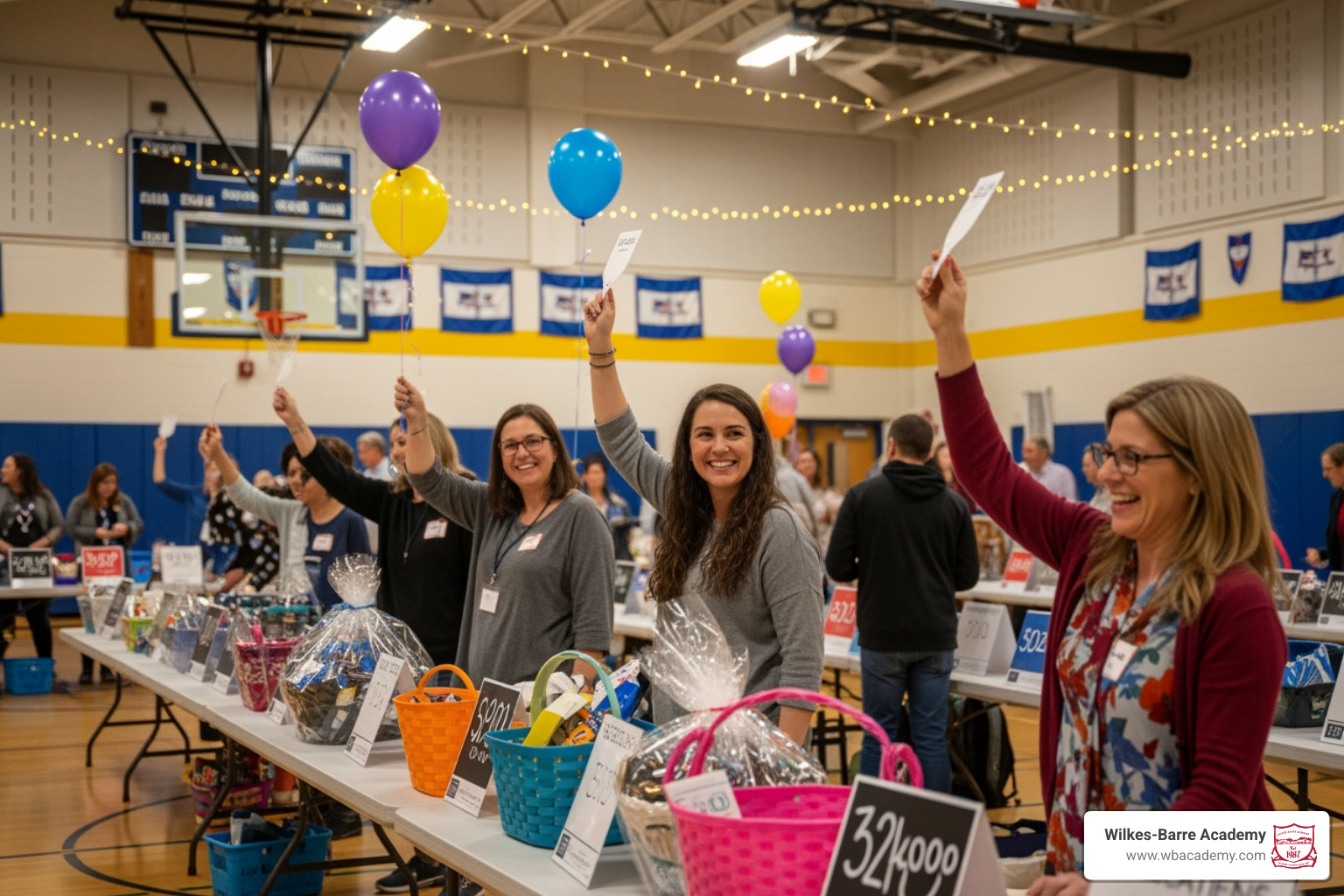
- The Annual Auction: This is often the “Mane Event” of the year, featuring silent and live auctions for items like “Principal for a Day,” vacation packages, or classroom-themed baskets.
- Spirit Nights: Local restaurants donate a percentage of sales on a specific night when school families dine there.
- Read-A-Thons & Jogathons: These get the students involved, teaching them that their efforts can help improve their own school.
- Third-Party Rewards: Simple programs like grocery store rewards or “box tops” that provide a steady trickle of income.
What parent groups often fund for the school
The impact of a parent teacher organization private school pa is visible in almost every room of the building. Common purchases include:
- High-End Tech: iPads, Smart Boards (which can cost $7,000 each), and updated computer labs.
- Specialized Equipment: Art kilns, music instruments, gym backboards, and even greenhouses.
- Student Life: Funding for extracurricular activities and student activities like field trips and assemblies that might otherwise be cost-prohibitive.
- Infrastructure: Some groups take on massive goals, like raising $120,000 for a new rest area or playground renovation.
How PTOs contribute to student well-being and teacher appreciation
We believe that happy teachers make for happy students. Parent organizations often lead the charge in teacher appreciation by:
- Hosting luncheons and providing weekly refreshments for staff meetings.
- Providing “Back-to-School” gift cards for classroom supplies.
- Coordinating “Teacher Appreciation Week” with personalized gifts and themed days.
- Funding “out-of-the-box” teacher ideas that aren’t in the standard budget.
Real Examples of PA Private School Parent Associations and What Parents Can Learn From Them
Looking at how other successful organizations operate can give parents great ideas for their own school community.
Models of automatic membership and strong community culture
Several prominent PA schools use the “automatic membership” model. This removes the barrier of “joining” and makes every parent feel like they belong from day one. These organizations often maintain extensive committee lists, ranging from the “Altar Guild” to the “Yarn Club,” ensuring there is a niche for every type of talent. This inclusivity is a hallmark of a strong parent teacher organization private school pa.
Examples of fundraising and funded improvements
In the Philadelphia and Pittsburgh areas, some organizations have raised enough to donate medical supplies to local hospitals during crises, showing that a PTO’s reach can extend beyond the school gates. Closer to home, successful groups focus on transparent goals—telling parents exactly what their $20 raffle ticket is buying, whether it’s a new kiln for the art room or a set of new basketball hoops for the gym.
Success stories parents should look for in a strong organization
A strong parent association is defined by more than just its bank balance. Success looks like:
- High Participation: Not just the same five people doing everything!
- Transparency: Regular meetings with clear financial reports.
- Consistency: A predictable schedule of events that families can plan for.
- Direct Impact: Being able to walk into a classroom and see the technology or books that the parents provided.
Frequently Asked Questions About parent teacher organization private school pa
Do all private schools in Pennsylvania have a PTO, PTA, PTG, or PAC?
While nearly every private school has some form of parent group, the structure varies. Some small schools may have informal “parent teams,” while larger academies have highly structured 501(c)(3) organizations. The name usually reflects the school’s heritage or its affiliation with a national body.
Is membership free, or are there dues?
This varies by school. Some PA private schools charge a flat membership fee (often around $100 per family) to provide immediate working capital for the year’s events. Others have no dues and rely entirely on fundraising and voluntary donations.
What trends should PA parents watch in 2026?
Transparency and “virtual-friendly” involvement are the biggest trends. Many PTOs now offer Zoom options for their monthly meetings to accommodate working parents. Additionally, the National PTA Convention is coming to Pittsburgh, June 18-20, 2026, which will likely highlight new ways for parent leaders to advocate for mental health resources and school safety.
Conclusion
At Wilkes-Barre Academy, we know that the strength of our school lies in our close-knit, diverse community. A parent teacher organization private school pa is more than just a fundraising committee; it is the support system that allows our individualized learning environment to thrive. By getting involved, you aren’t just “helping out”—you are actively shaping the environment where your child grows every day.
Whether you are interested in leading a board or simply attending a family picnic, your presence matters. For more details on how our school community operates and how you can get involved this year, be sure to check our school-year information and paperwork for the latest updates and volunteer opportunities. We can’t wait to work alongside you!