Why a Private K-8 School in Pennsylvania Makes the Grade
Is a Private K-8 School the Right Fit for Your Advanced Learner in Pennsylvania?
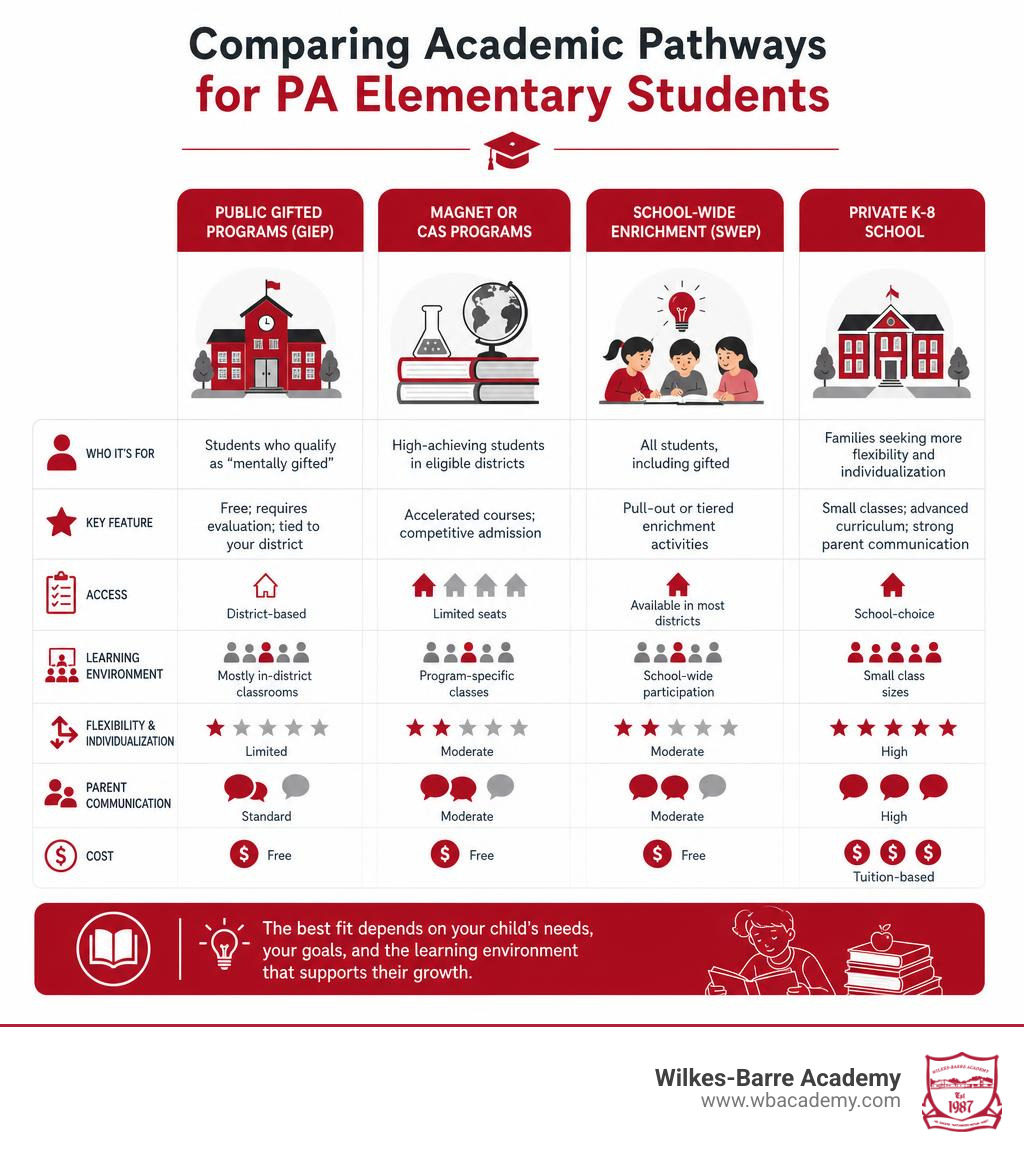
If you’re exploring advanced academics in elementary school in PA, here’s a quick look at the main pathways available to families right now:
Quick Answer: Advanced Academic Options for Elementary Students in PA
| Option | Who It’s For | Key Feature |
|---|---|---|
| Public gifted services (GIEP) | Students who qualify as “mentally gifted” | Free; requires evaluation; tied to your district |
| Magnet or CAS programs | High-achieving students in eligible districts | Accelerated courses; competitive admission |
| School-wide enrichment (SWEP) | All students, including gifted | Pull-out or tiered enrichment activities |
| Private K-8 school | Families seeking more flexibility and individualization | Small classes; advanced curriculum; strong parent communication |
Finding the right academic fit for a bright child isn’t simple. Pennsylvania law defines “mentally gifted” as having an IQ of 130 or higher — or showing multiple signs of outstanding intellectual and creative ability. But many advanced learners fall outside that threshold, or simply aren’t being challenged enough in a standard classroom.
Public schools do their best. But large class sizes, rigid grade-level pacing, and limited one-on-one time can leave curious, high-ability kids disengaged.
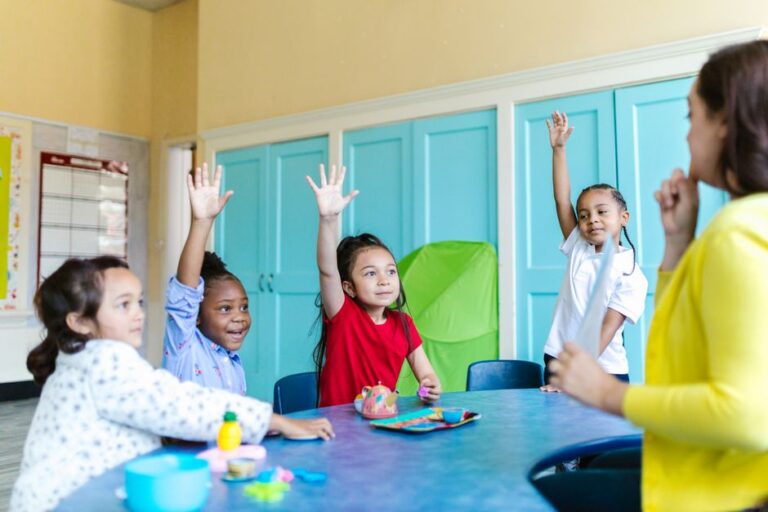
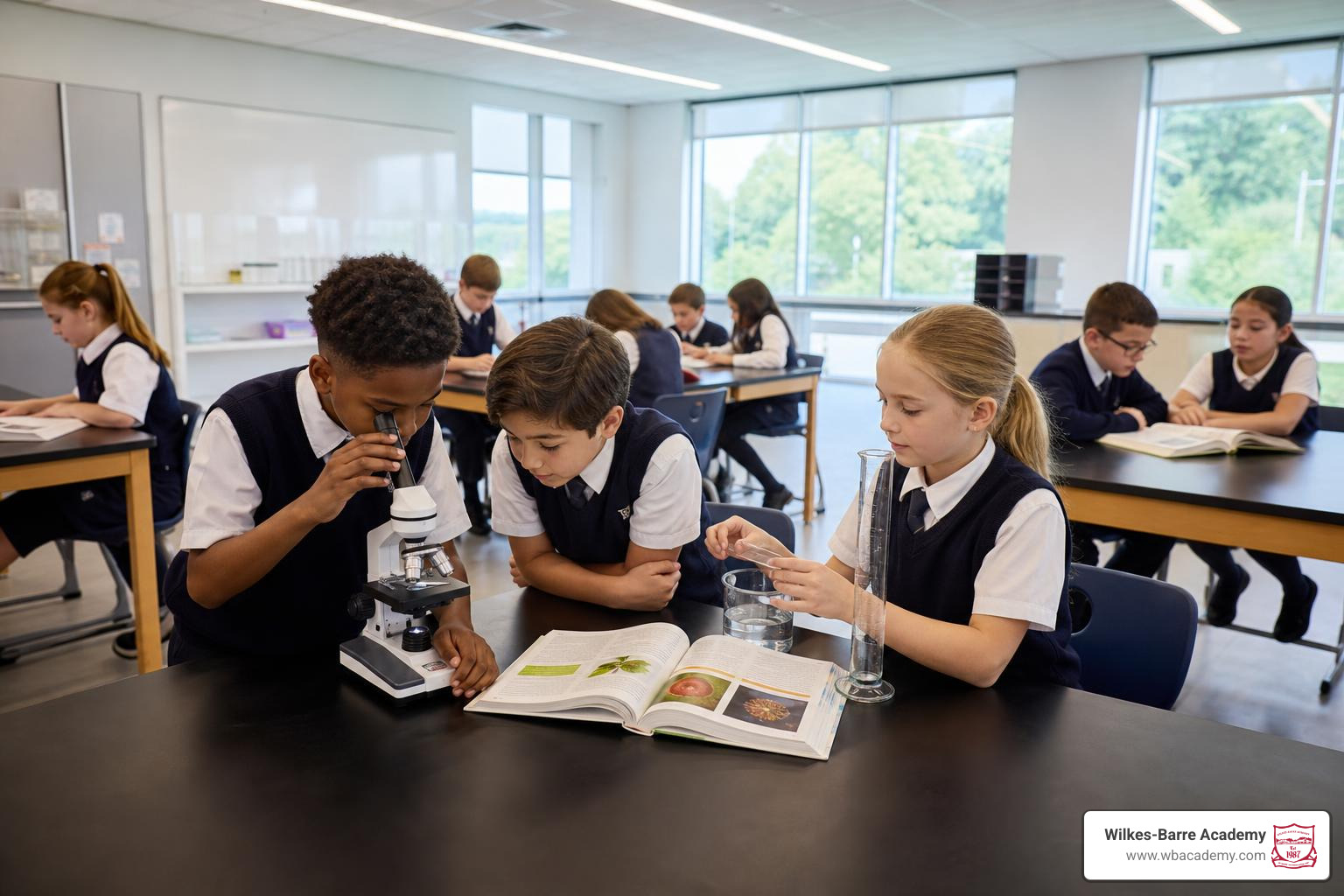
That’s where private K-8 schools come in. A smaller, structured environment with an advanced curriculum can offer what many families are looking for: real individualization, strong teacher relationships, and academic challenge that grows with the child.
This guide breaks down what advanced academics actually look like at the elementary level in Pennsylvania — from state gifted law and public program model to what sets a private K-8 school apart.
Basic advanced academics elementary school pa glossary:
What advanced academics elementary school pa Means for Families in 2026
When we talk about advanced academics at the elementary level in Pennsylvania, we are looking at a complex landscape of state mandates, district resources, and independent options. In May 2026, parents have more choices than ever, but navigating them requires understanding how Pennsylvania defines and supports high-ability learners.
Pennsylvania’s Definition of “Gifted” or “Mentally Gifted”
Under Pennsylvania law (specifically Title 22 Education, Chapter 16 regulations), “mentally gifted” is defined as outstanding intellectual and creative ability, the development of which requires specially designed programs or support services not ordinarily provided in the regular education program.
The state guidelines explicitly include any student who has an IQ of 130 or higher. However, an IQ score alone is not the sole gateway. Pennsylvania school districts are legally required to look at multiple criteria. A student with an IQ score below 130 may still be identified as mentally gifted if other educational criteria strongly indicate gifted ability. This legal framework ensures that students who think outside the box, possess unique creative talents, or demonstrate rapid academic acquisition are not left behind simply because of a single test score on a given day.
Common Signs of Giftedness in Elementary Students
Giftedness is about more than just getting straight A’s. In fact, many highly gifted children struggle with routine classroom tasks because of disengagement. Common observable characteristics of gifted learners include:
- Rapid Information Acquisition: They learn new academic concepts much faster than their peers, often requiring only one or two exposures to master a topic.
- Intense Curiosity: They ask frequent, deep, and sometimes challenging questions about how the world works.
- Advanced Vocabulary: They use nuanced language, understand complex metaphors, and express abstract thoughts early.
- Abstract Reasoning and Problem Solving: They look for patterns, make unexpected connections, and enjoy logical puzzles.
- Deep Academic Interests: They may develop an almost obsessive focus on specific subjects, such as paleontology, space, or advanced mathematics.
- Social and Emotional Sensitivity: They often show deep concern for social, political, or moral issues and can experience intense emotional responses.
How advanced academics elementary school pa Programs Differ from Standard Enrichment
Standard classroom enrichment often means giving a student “more of the same” work—such as extra worksheets or a longer spelling list—once they finish their standard assignments. This approach can feel like a punishment for working quickly.
True advanced academics elementary school pa programs focus on qualitative differences in instruction. Instead of just more work, students experience:
- Curriculum Compacting: Bypassing content the student has already mastered to free up time for deeper study.
- Academic Acceleration: Moving through standard subjects at a faster pace or studying content from higher grade levels.
- Differentiated Products: Allowing students to demonstrate their knowledge through complex, creative projects rather than standard multiple-choice tests.
- Independent Study and Mentorship: Giving students the freedom to investigate niche topics of personal interest under the guidance of a teacher or mentor.
Public Gifted Programs, Magnet Options, and Private K-8 Models in Pennsylvania
Pennsylvania families looking for advanced pathways have several models to choose from. Each comes with its own set of rules, admissions criteria, and daily structures.
| Program Type | Local Availability | Key Benefits | Key Limitations |
|---|---|---|---|
| Public Gifted Support (GIEP) | Available in all PA public districts | Free; legally binding individualized goals | Often limited to short pull-out sessions; dependent on district funding |
| Magnet / STEM Academies | Selective public school programs | Specialized STEM focus; peer group of high achievers | Rigid admissions windows; transportation challenges; competitive lottery |
| School-Wide Enrichment (SWEP) | Some public elementary schools | Open to non-identified advanced students | Not always individualized; depends on school resources |
| Private K-8 Schools | Regional options (like Wilkes-Barre Academy) | Small Classes and Big Hearts at Wilkes Barre Academy; flexible pacing; no state testing pressure | Tuition cost; parents must handle daily transportation |
Main Types of Gifted and Advanced Elementary Programs
- Pull-Out Enrichment Programs: Students remain in standard classrooms for most of the day but spend a few hours each week with a gifted support specialist.
- Cluster Grouping: A small group of identified gifted or high-achieving students is placed in a standard classroom together, allowing the teacher to differentiate instruction specifically for that pod.
- Full-Time Gifted or Magnet Schools: Self-contained public schools where every student has met selective admissions criteria.
- Private Advanced Curriculum: Independent schools that design their entire scope and sequence to be advanced, allowing all students to learn at an accelerated pace without needing a formal state evaluation.
How K-8 Advanced Academics Prepare Students for High School Success
The elementary and middle school years are when students build their academic stamina and study habits. In a standard classroom, highly capable students often get by on natural ability alone, earning top grades without ever learning how to study, take notes, or handle academic frustration.
When these students hit high school or Advanced Placement (AP) courses, the sudden increase in difficulty can be a shock. An advanced K-8 program introduces healthy challenges early. By teaching students how to manage long-term projects, conduct independent research, and embrace academic trial-and-error, we prepare them to thrive in rigorous high school environments.
Key Differences Between Public Gifted Services and Private Advanced Schools

While public schools must follow strict state evaluation timelines and residency rules to grant a GIEP, private schools have the freedom to design their programs based on student readiness rather than bureaucratic categories.
In a public school, a student must undergo formal cognitive testing and meet specific state thresholds to receive specialized services. In a private K-8 setting, the advanced curriculum is baked into the daily schedule. This means smaller class sizes, fewer standardized testing disruptions, and the ability to pivot lessons quickly when students are ready to move faster. It also fosters direct, frequent parent-teacher communication, creating a true family-school partnership.
Identification, Testing, and the GIEP Process in Pennsylvania
For families navigating the public school system, securing advanced services is a highly structured legal process.
How Pennsylvania Schools Evaluate Students for Gifted Services
The evaluation process typically begins with a screening, which can be requested by a parent or recommended by a teacher. If the screening indicates potential giftedness, the school must conduct a formal evaluation.
A school psychologist administers cognitive tests (such as the WISC-V) to measure the student’s IQ. They also review achievement tests, classroom performance, and student portfolios. To qualify for a gifted designation, the team looks for:
- An IQ score of 130 or higher (or meeting multiple criteria if the score is slightly lower).
- Evidence of rapid learning rates and high academic achievement.
- Demonstrated leadership, creativity, or specialized talent.
- A written Gifted Written Report (GWR) summarizing these findings.
What a GIEP Is and How It Supports Gifted Learners
If a student is found eligible, a team—including the parents, a regular education teacher, a gifted support teacher, and a district representative—meets to write a Gifted Individualized Education Plan (GIEP).
The GIEP is a legally binding document that outlines:
- The student’s present levels of educational performance.
- Annual, measurable academic goals.
- Specially Designed Instruction (SDI) to support those goals (e.g., accelerated math pacing or independent research projects).
- Any necessary support services or accommodations.
This plan must be reviewed and updated at least once a year to ensure the student continues to receive appropriate challenges.
What Parents Should Know About Private School Admissions and Readiness
Private schools do not require a state-issued GIEP to provide advanced instruction. Instead, the admissions process focuses on holistic readiness.
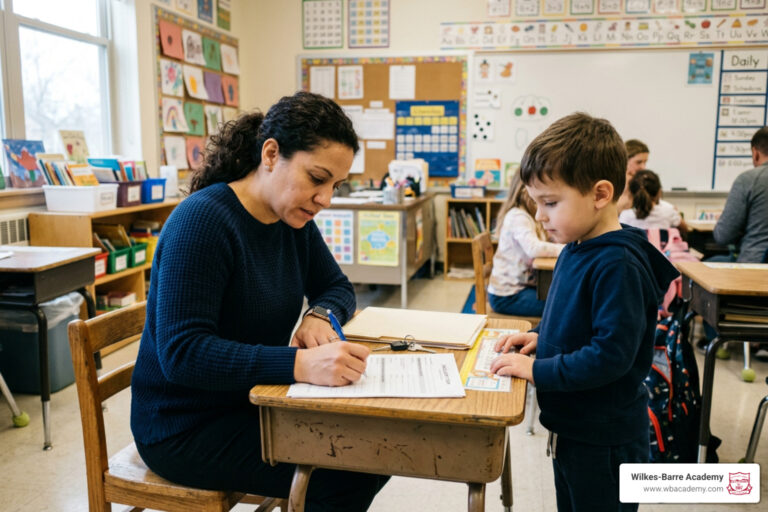
When applying to a private school, families typically provide previous academic records, teacher recommendations, and developmental milestones. The school may conduct a classroom visit or a shadow day to see how the child interacts with peers and responds to the curriculum. This approach looks beyond a single test score to find a true match between the child’s learning style and the school’s academic culture.
Curriculum Models That Make Advanced Elementary Learning Work
Advanced academics require instructional strategies that go beyond rote memorization. Highly capable minds thrive on depth, complexity, and hands-on application.

Inquiry, Project-Based Learning, and Long-Term Projects
Rather than memorizing facts for a Friday quiz, students in advanced programs tackle essential questions. Inquiry-based learning encourages students to ask questions, conduct experiments, and draw their own conclusions.
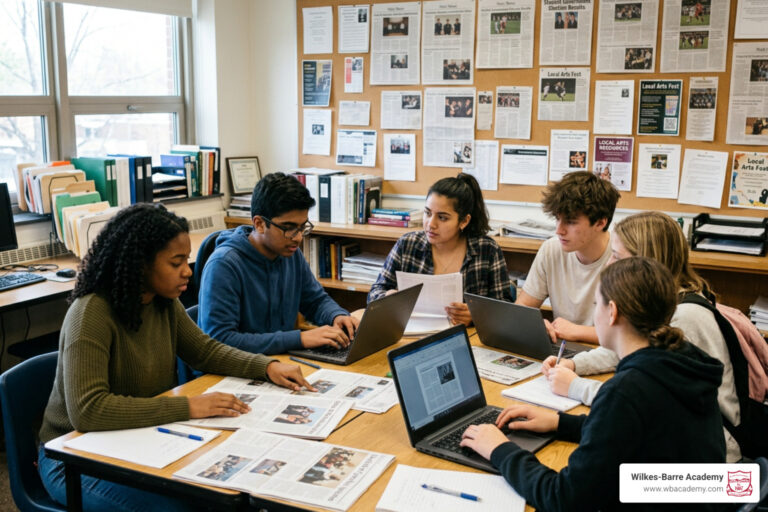
Through project-based learning, students work over extended periods to solve real-world problems. This model culminates in original products, presentations, or community solutions. For example, participating in a local Science Fair or preparing for a regional Science Olympiad teaches kids how to apply scientific principles to real-world challenges.
Acceleration Without Skipping the Whole Child
One of the greatest concerns parents have about advanced placement is social-emotional readiness. A child might have the math skills of a fifth grader but the social needs of a second grader.
Effective programs use flexible grouping to allow academic acceleration while keeping students with their age-appropriate peer group for social activities. This approach supports executive function skills—like organization and time management—while providing access to advanced math and literacy challenges. Programs like Continental Math allow students to engage in high-level problem solving while remaining socially connected to their classmates.
Technology, Language, Fitness, and Enrichment for Advanced Learners
A well-rounded advanced curriculum must look beyond core academic subjects. True enrichment integrates:
- Technology & Coding: Moving from passive screen time to active creation, using tools like robotics, CAD design, and programming. Learn more about our approach to modern learning on our Technology page.
- World Languages: Introducing languages early to build cognitive flexibility. Discover how we build these skills in our Spanish Class.
- Physical Education & Movement: Supporting physical health and teamwork. Read about physical development in our guide on Everything You Need to Know About PE Programs in PA Schools and see how we integrate it daily on our Physical Fitness page.
- Academic Competitions: Encouraging friendly, structured competition through events like the Geography Bee, Spelling Bee, and Word Study Bee. You can explore our full range of extracurriculars on our Student Activities page.
Questions to Ask an advanced academics elementary school pa Before You Enroll
Choosing a school is a major decision. When touring public or private elementary programs, parents should look beyond the brochures and ask targeted questions to understand the daily student experience.
What to Ask About Academic Rigor and Individualization
- How do you handle a student who has already mastered the grade-level curriculum in a specific subject?
- What specific assessment tools do you use to measure progress throughout the year?
- Are students grouped by ability or age for reading and mathematics?
- Can you share examples of recent student projects or independent studies?
- You can compare these answers to our core philosophy by visiting our Academics page.
What to Ask About Social-Emotional Support
- How does the school support students who struggle with perfectionism or academic anxiety?
- What role does unstructured play or recess play in the daily schedule?
- How do teachers help students build collaboration and conflict-resolution skills?
- How does the school foster a sense of community and belonging among diverse learners?
What to Ask About Cost, Fit, and Long-Term Value
- What is the total cost of tuition, and are there flexible payment plans or before/after-care options?
- What are the average class sizes, and how does that impact individual instruction?
- How do your graduates transition to local high schools?
- For a deeper dive into regional costs and budgeting, check out our guide on How Much is Private School in PA Tuition Stats and Affordable Options.
Frequently Asked Questions About Advanced Academics in Pennsylvania Elementary Schools
Can a Child Be Advanced Without Qualifying as “Mentally Gifted”?
Absolutely. The state’s “mentally gifted” label is a legal category with strict testing thresholds. Many children are highly capable, motivated, and creative but may not score a 130 on a specific cognitive test. These students still need a challenging curriculum, small class sizes, and differentiated instruction to reach their full potential.
Do Private Schools in Pennsylvania Use GIEPs?
No. GIEPs are a legal requirement for public school districts under Pennsylvania Chapter 16. Private schools are not bound by these state mandates. Instead of relying on a formal legal document, private schools maintain the flexibility to customize instruction directly. At Wilkes-Barre Academy, we monitor student progress continuously and adjust academic pathways through close collaboration with families, bypassing the rigid bureaucracy of public evaluations. Learn more about the benefits of this model in our article on Why Going Private is the Ultimate Grade Upgrade.
What Parent Resources Are Available in Pennsylvania?
Parents can access official guidelines, evaluation forms, and complaint procedures through the Pennsylvania Department of Education (PDE). Organizations like the Pennsylvania Association for Gifted Education (PAGE) offer advocacy resources and support networks. For independent evaluations and community reviews of regional schools, parents often consult resources like the Wilkes-Barre Academy – Pennsylvania – GreatSchools profile.
Conclusion
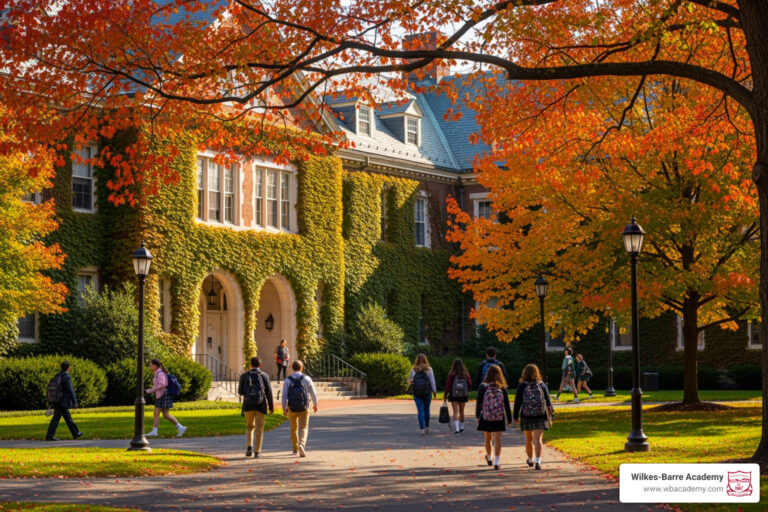
Every child deserves an education that meets them where they are and challenges them to grow. While the public gifted system works well for some, many families in Luzerne County find that the flexibility, small class sizes, and advanced curriculum of a private K-8 school offer a more complete solution.
At Wilkes-Barre Academy, we are a single-location, non-profit K-8 school dedicated to offering an academically advanced curriculum in a close-knit, diverse community. By maintaining a single classroom per grade, we ensure that our certified teachers can focus on individualized learning goals, strong family-school connections, and the holistic growth of every child.
If you are ready to explore an environment where your child can thrive academically, socially, and emotionally, we invite you to take the next step. Explore the academic program at Wilkes-Barre Academy and schedule a visit to see our community in action.