Choosing the Best Preschool in Wilkes-Barre PA for Early Learning
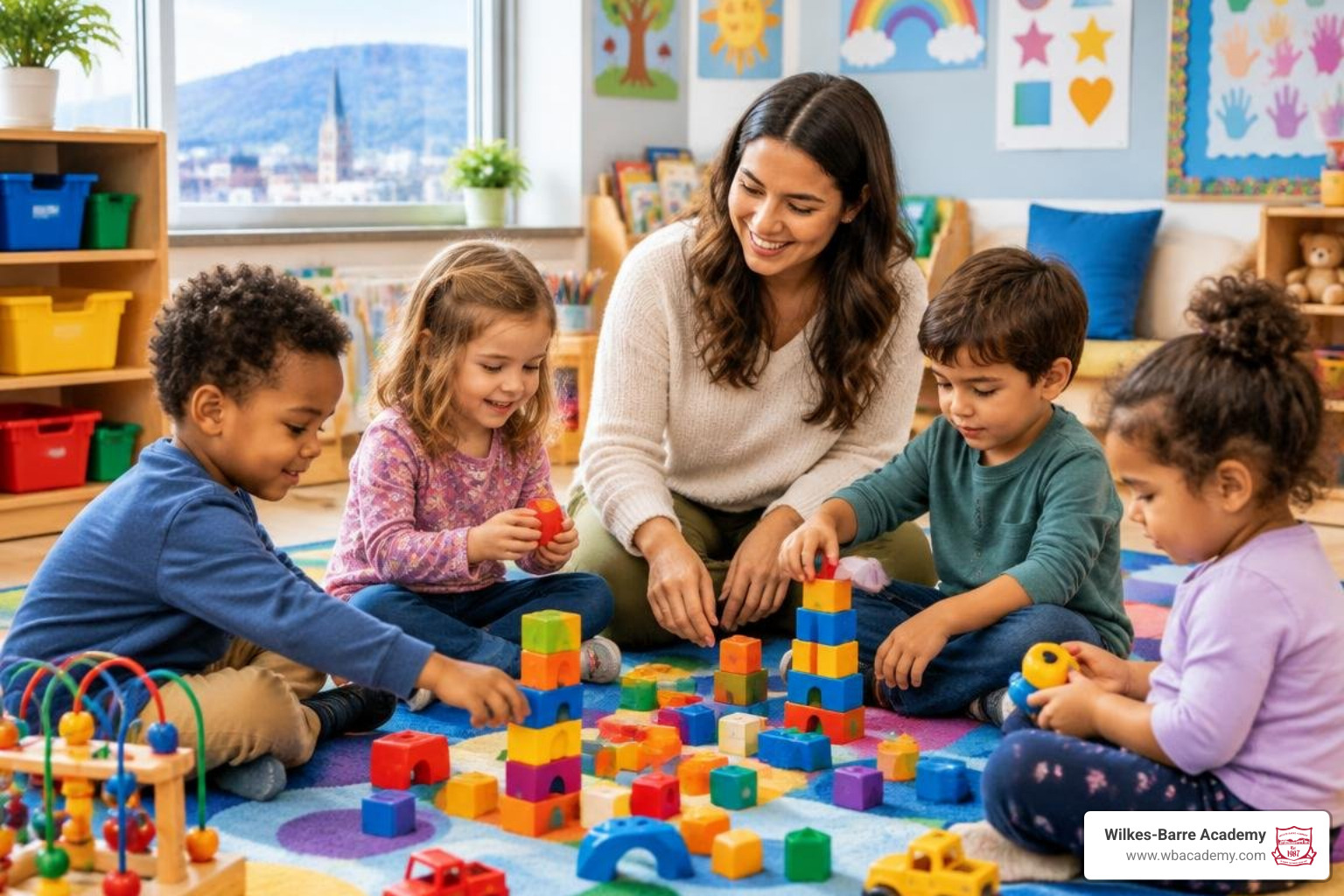
Finding the Best Preschool in Wilkes-Barre, PA
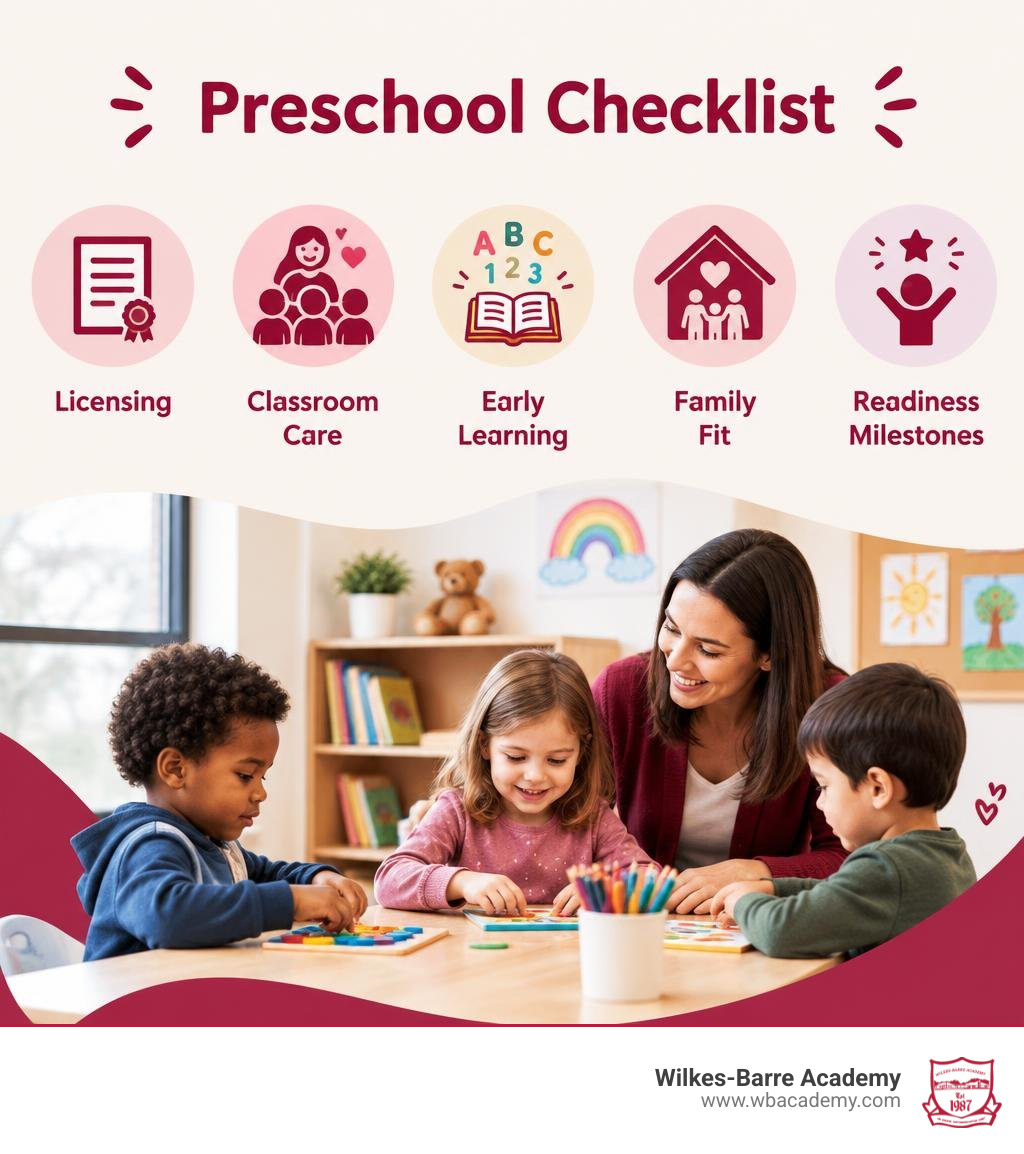
Start with licensed programs that fit your child’s age and your family’s schedule. Then check each program’s Keystone STARS rating and tour the classroom. Look for warm teacher-child interactions, time for play, early reading and math activities, and clear updates to parents.
There is no single best preschool for every child. Compare public pre-K and private options, then ask each school about eligibility, hours, tuition, and current openings before you apply. A thoughtful search now helps you find a setting where your child feels safe, curious, and ready to learn.
Best preschool in wilkes-barre pa terms to remember:
- private preschool luzerne county
- preschool enrollment wilkes-barre
- early childhood education wilkes-barre
Key Factors When Choosing the Best Preschool in Wilkes-Barre PA
Selecting an early childhood education program shapes your child’s attitude toward learning for years to come. In Pennsylvania, all legitimate child care providers must adhere to stringent Department of Human Services (DHS) licensing regulations and Office of Child Development and Early Learning (OCDEL) oversight. When exploring options, parents can consult licensed child care directories to confirm that a facility maintains current state certification, clean health inspections, and appropriate background clearances for all staff members.
Accreditation programs provide a clear picture of quality beyond baseline licensing. Pennsylvania’s Keystone STARS program rates early learning centers from STAR 1 to STAR 4. Facilities achieving higher tiers demonstrate continuous staff professional development, evidence-based curricula, structured child assessment tools, and meaningful family engagement partnerships. Reviewing our detailed guide to Pre-K programs in Pennsylvania will help you better understand how state quality standards translate into daily classroom experiences.
Academic Readiness at the Best Preschool in Wilkes-Barre PA
Academic readiness in early education does not mean drilling toddlers with flashcards. High-quality preschool programs seamlessly blend foundational numeracy, emergent literacy, and rich social-emotional learning into daily routines. Children build phonemic awareness through rhymes and storytelling, while hands-on activities introduce sorting, patterns, and counting concepts. These early experiences help children develop the vocabulary, attention, and problem-solving habits they will need for kindergarten and beyond.
Understanding regional performance context helps families evaluate their options. Public early childhood programs across Luzerne County present notable academic variations when evaluated against state averages:
| Metric / Program Level | Luzerne County Public Average | Pennsylvania State Average | Top-Ranked Local Programs |
|---|---|---|---|
| Math Proficiency Benchmark | 12% | 28% | 60% – 69% |
| Reading Proficiency Benchmark | 32% | 38% | 60% – 69% |
| County Performance Ranking | 2 / 10 | 5 / 10 (Median) | 6 / 10 |
| Minority Student Enrollment | 50% (Majority Hispanic) | 56% (Black & Hispanic) | Balanced Representation |
Lower student-to-teacher ratios ensure that educators identify each child’s strengths and areas needing support early. When teachers have smaller groups, they can tailor literacy and math games to individual learning paces, fostering genuine curiosity rather than frustration. This individualized attention is especially important during the preschool years, when children develop confidence in their own ability to learn.
Outdoor Play and Classroom Environments
A child’s physical learning environment serves as an essential educator. Engaging classrooms incorporate purposeful learning stations—such as creative ateliers, sensory bins, literacy nooks, and building areas—equipped with child-sized furniture and accessible materials that promote independence. When children can reach materials on their own, they practice decision-making and build the self-help skills that support smooth transitions into elementary school.
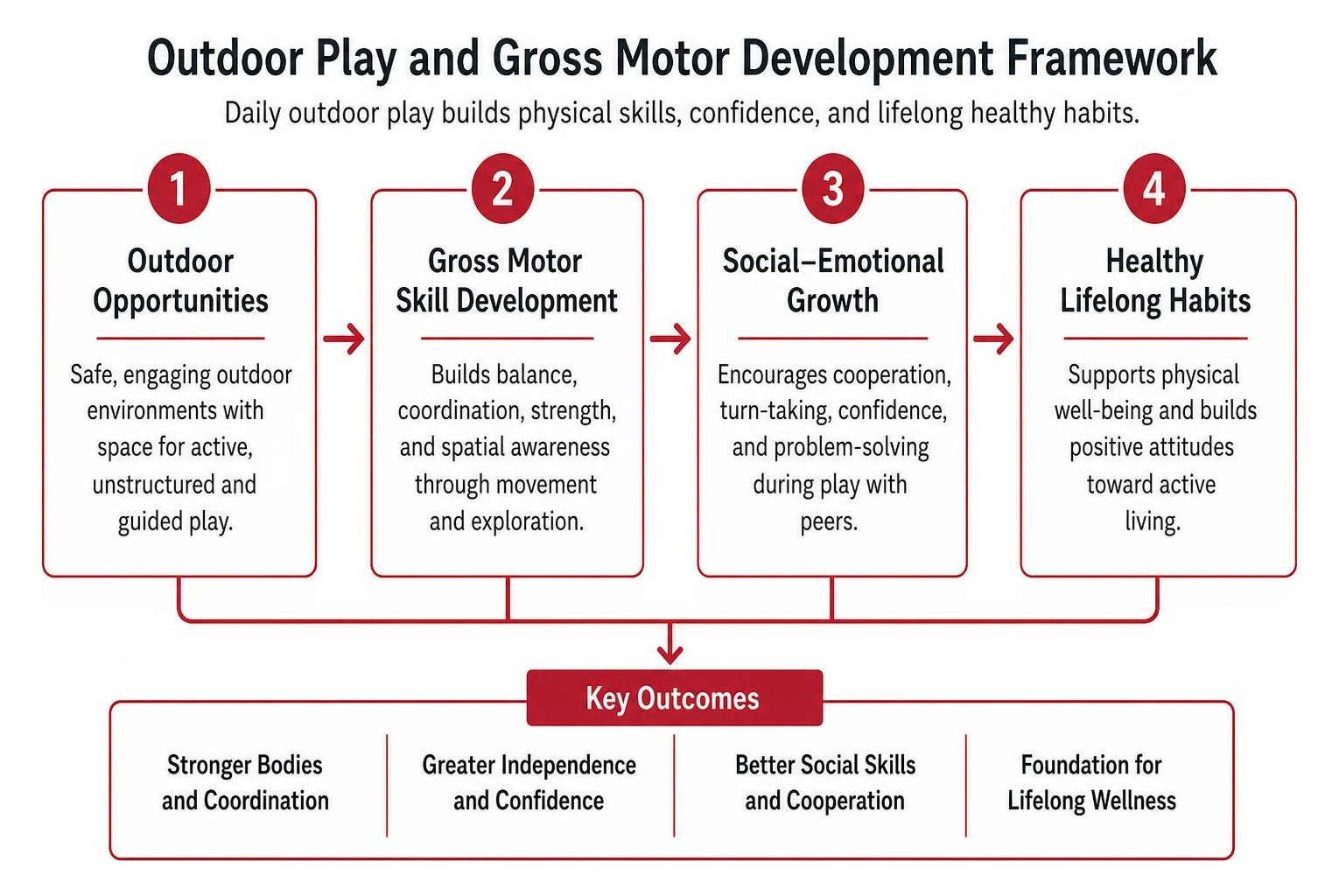
Equally vital is gross motor play. Safe, engaging outdoor environments allow children to build balance, spatial awareness, and social problem-solving skills. Whether engaging in unstructured imaginative games or guided outdoor physical activities, children thrive when daily fresh air is an intentional part of the schedule. For a deeper look into the developmental benefits of outdoor recreation, explore our guide to nonsectarian preschool outdoor play.
Public vs. Private Early Education in Luzerne County

Families in Luzerne County can choose between public school district pre-K initiatives and independent private early learning institutions. During the 2026-27 school year, Luzerne County features 7 public preschools serving approximately 2,317 students. While public options offer accessible community education, performance indicators across the county average in the bottom half of state rankings, prompting many families to explore private alternatives.
Private programs often offer smaller class settings, greater curriculum flexibility, and specialized enrichment activities. Parents seeking specialized instruction can explore the best private preschools in Luzerne County for beginners or consult local child care center price comparisons to assess how different private programs structure their schedules, tuition, and family services.
Evaluating Curriculum and Educational Approaches
When comparing early childhood philosophies, look for approaches that balance structured inquiry with purposeful play. Top-tier curricula emphasize:
- Social-Emotional Competence: Teaching children emotional regulation, empathy, and collaborative conflict resolution through conscious guidance.
- Child-Led Exploration: Providing open-ended materials that encourage critical thinking, spatial reasoning, and artistic expression.
- Consistent Learning Cohorts: Maintaining a single, cohesive classroom cohort per grade level to promote enduring peer relationships and stable teacher-student bonds.
- Formative Assessments: Observing milestones organically through classroom engagement rather than high-stress formal testing.
A strong curriculum also builds early literacy and math skills through daily routines. Teachers may introduce letter sounds during morning circle time, practice counting during snack distribution, or develop vocabulary through rich read-aloud sessions. These small, consistent moments add up to meaningful kindergarten readiness.
How to Choose the Best Preschool in Wilkes-Barre PA for Your Child
Every family has unique practical needs. Daily operating schedules vary considerably across the Wyoming Valley, from standard morning half-day sessions to comprehensive full-day schedules running from 6:00 AM to 6:00 PM. Some families also require centers with provided meal programs (breakfast, hot lunch, and snacks) to simplify busy mornings.
Navigating all these logistical details can feel daunting, but following a structured selection framework makes the process straightforward. Review our tips on finding the best preschool in Wilkes-Barre without losing your mind to keep your search organized, stress-free, and focused on what matters most for your child’s well-being.
Touring and Enrolling in Local Early Learning Programs
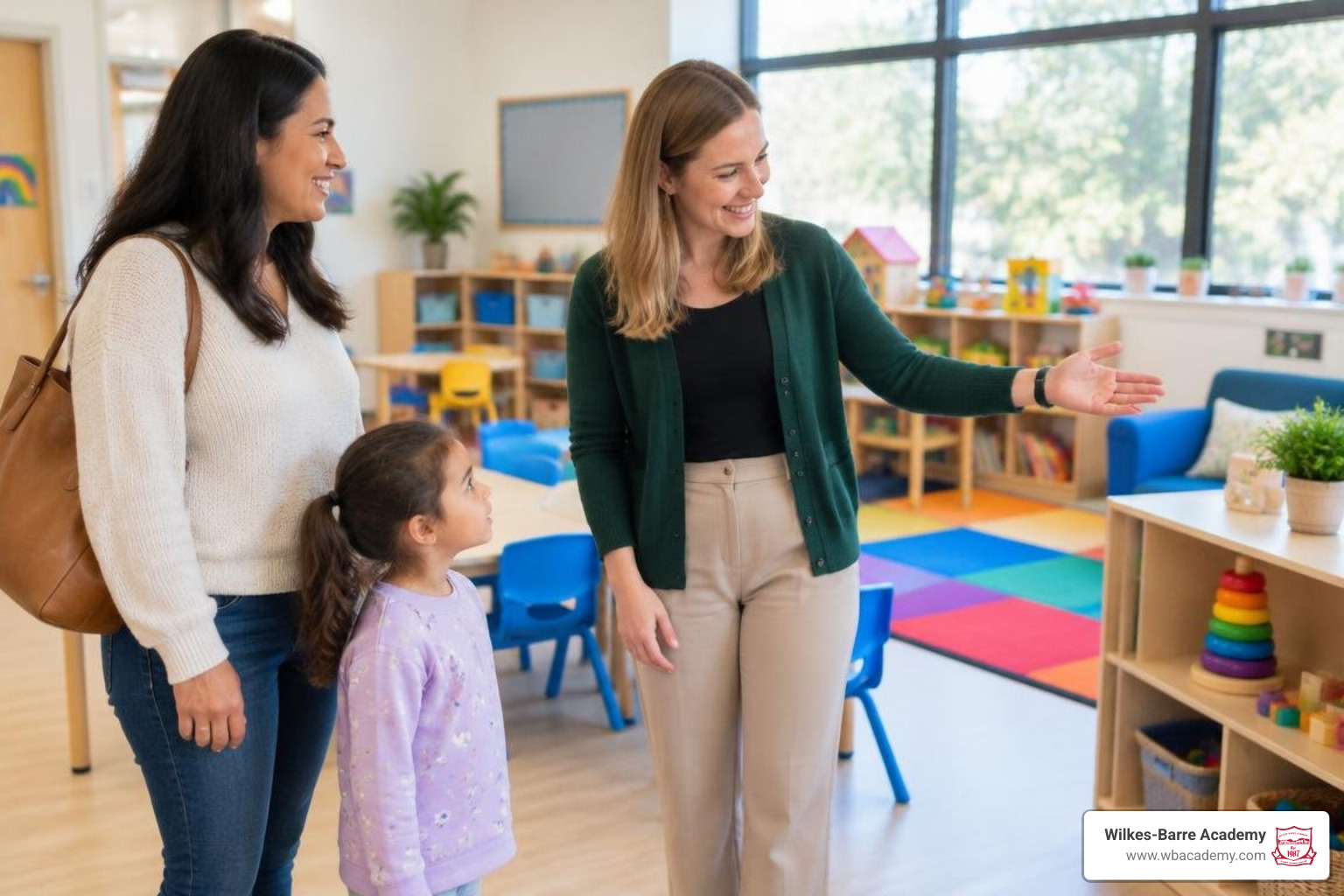
Scheduling an in-person tour is the most effective way to gauge a school’s culture. When visiting a center, observe whether children appear actively engaged, how teachers redirect challenging behavior, and whether the physical spaces are clean, secure, and bright. Pay attention to the tone of teacher-child conversations and whether children are encouraged to ask questions and explore their interests.
To make the most of your visits, use this quick checklist of essential questions:
- What are your staff-to-child ratios and maximum group sizes in each classroom?
- How do you support children during the transition from home to school?
- What specific curriculum or early learning framework do your teachers follow?
- How do educators communicate daily progress, milestones, and behavioral updates with parents?
- What safety, sanitation, and emergency protocols are maintained on-site?
- How much time do children spend in outdoor play and gross motor activities each day?
- What enrichment opportunities, such as music, art, or early STEM activities, are included?
Once you have identified the right program, prepare your registration materials early. Many programs fill their rosters months before the fall term begins. You can review our comprehensive preschool enrollment guide to gather necessary immunization records, developmental histories, and emergency contact documentation ahead of time.
Frequently Asked Questions About Wilkes-Barre Preschools
What is the average student-teacher ratio in Luzerne County early learning centers?
State licensing mandates specific minimum caregiver-to-child ratios based on age: 1:4 for infants, 1:5 or 1:6 for toddlers, and 1:10 for preschool-age children (ages 3 to 5). Across public and private facilities in Luzerne County, ratios vary widely, ranging from small 6:1 settings up to 22:1 in select public school cohorts. High-performing private learning centers prioritize lower ratios to provide individualized academic and emotional support.
How do local preschool proficiency scores compare to Pennsylvania state averages?
Public early education benchmarks in Luzerne County reflect an average math proficiency of 12% and reading proficiency of 32%, compared to Pennsylvania statewide public averages of 28% in math and 38% in reading. However, leading public and private early learning programs in the region outperform these county averages significantly, achieving scores exceeding 60% through targeted foundational instruction.
What licensing standards should parents look for in Pennsylvania preschools?
Parents should ensure that any prospective center holds an active license from the Pennsylvania Department of Human Services (DHS) and meets OCDEL standards. Furthermore, programs participating in the Keystone STARS quality rating initiative provide verified benchmarks for teacher education, classroom environments, health standards, and family communication protocols.
When should families begin the preschool search and enrollment process?
Many quality programs in the Wyoming Valley fill their rosters months before the fall term begins. Starting your search in late winter or early spring gives you time to tour multiple facilities, compare schedules and tuition, and gather required documentation without feeling rushed. Early planning also allows families to join waitlists if their preferred program is full.
Conclusion
A nurturing, academically rich preschool experience sets the stage for a lifetime of intellectual curiosity and confidence. At Wilkes-Barre Academy, we provide a warm, academically advanced environment at our dedicated single-location campus in Luzerne County. Through our single classroom per grade model, we ensure every child receives individualized attention, robust social-emotional guidance, and a strong educational foundation alongside our affiliated Small Wonders Daycare program. Connect with our faculty today to schedule a personal tour and discover how our close-knit community supports your child’s early learning journey.