Don’t Let the Sticker Price Scare You: Financial Aid for PA Private Schools
The Real Cost of Private School in Pennsylvania (And How to Lower It)
Private school financial aid in Pennsylvania is more available than most families realize — and it comes in several forms.
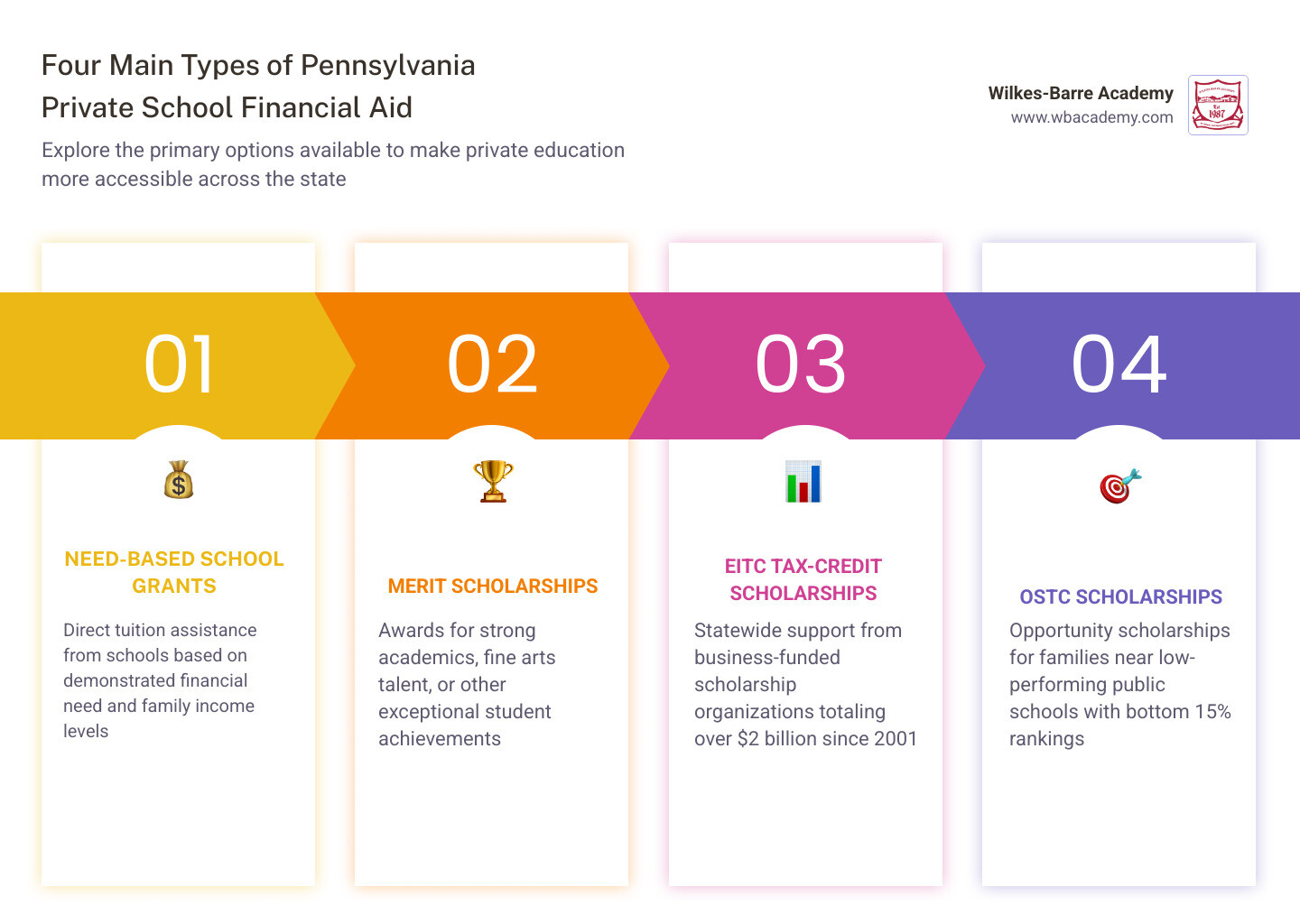
Here’s a quick overview of your main options:
| Type of Aid | Who It’s For | Examples |
|---|---|---|
| Need-based school grants | Families with demonstrated financial need | Various PA private schools |
| Merit scholarships | Students with strong academics or special talents | Fine arts, academic achievement awards |
| EITC tax-credit scholarships | Income-eligible families statewide | The Learning Lamp, AAA Scholarship Foundation |
| OSTC scholarships | Families near low-performing public schools | Opportunity Scholarship Tax Credit Program |
| Lottery-based scholarships | Under-resourced Philadelphia families (K-8) | Children’s Scholarship Fund Philadelphia (CSFP) |
The sticker price of private school tuition can stop families cold. Tuition at many Pennsylvania private schools now runs from $30,000 to over $50,000 per year. That number alone sends most parents straight back to the public school option.
But here’s the thing: that number is rarely what families actually pay.
Across the state, a significant percentage of families receive tuition assistance, with many awards covering a substantial portion of the costs. At many institutions, families receiving aid pay less than half the listed tuition. And statewide programs like the EITC have delivered over $2 billion in private school scholarship support since 2001.
Whether you’re in Philadelphia, Luzerne County, or anywhere in between, there are real, accessible paths to making private K-8 education affordable for your family.
Understanding Private School Financial Aid in Pennsylvania
When we talk about private school financial aid in Pennsylvania, we aren’t just talking about a school’s internal budget. Pennsylvania is unique because of its massive tax-credit scholarship infrastructure. The two heavy hitters are the Educational Improvement Tax Credit (EITC) and the Opportunity Scholarship Tax Credit (OSTC).
Since their inception in 2001, the EITC and OSTC programs have provided more than $2 billion in support for school choice. In the 2023-24 budget alone, these programs diverted $470 million in taxpayer-funded support to help families afford tuition. This means that a significant portion of the “financial aid” you receive might actually come from businesses that receive tax credits in exchange for donating to scholarship organizations.
Finding the right fit starts with research. If you are looking for the Best Private Schools in Wilkes Barre, PA (2026), you’ll find that many of these institutions participate in these programs. At Wilkes-Barre Academy, we understand that navigating these grants can feel like learning a new language. Whether it is an EITC Grant or a school-specific award, the goal is the same: making an advanced curriculum accessible to your child.
Need-Based vs. Merit Scholarships
It is important to distinguish between the two main categories of aid:
- Need-Based Aid: This is the most common type. It is determined by your family’s financial situation—your income, assets, and expenses. Most schools use a third-party platform like the Clarity application to get an objective look at what a family can realistically contribute.
- Merit Scholarships: These are awarded based on a student’s “merit”—think high test scores, artistic talent, or musical ability. While some schools offer these, many prestigious PA private schools focus exclusively on need-based aid to ensure their community is socioeconomically diverse.
At Wilkes-Barre Academy, we provide clear information on Tuition to help you plan, but we always encourage families to look beyond the initial number.
The Role of Scholarship Organizations
You don’t usually apply to the state for EITC or OSTC funds. Instead, you apply through Scholarship Organizations (SOs) or Opportunity Scholarship Organizations (OSOs). These are non-profits that act as the middleman.
- The Learning Lamp: Provides tuition assistance to K-12 students in specific counties (like Cambria or Somerset) but serves as a great model for how these organizations operate.
- AAA Scholarship Foundation: A major player that manages scholarships for families across the state, often using specific income tiers to determine award amounts.
- CSFP (Children’s Scholarship Fund Philadelphia): Specifically for Philadelphia families, this organization uses a random lottery to award scholarships for K-8 students.
Understanding which organization partners with your school is a key step in the Voucher Program application process.
State-Level Programs: EITC and OSTC Explained

The backbone of private school financial aid in Pennsylvania is the tax-credit system. It’s a win-win: businesses reduce their tax liability, and students get the chance to attend a school that fits their needs.
The OSTC program, established by Act 85 of 2012, is a specifically targeted version of this. It’s designed for students who live in the attendance zones of the state’s lowest-performing schools. You can check the OSTCP – Wilkes-Barre Area School District resources to see if your local neighborhood school qualifies your child for this specific type of assistance.
Navigating the Private School Financial Aid Pennsylvania Landscape with OSTC
The Opportunity Scholarship Tax Credit Program (OSTC) is specifically for students residing within the boundaries of “low-achieving” schools. These are defined as the lowest 15% of public schools based on combined Mathematics and Reading/ELA scores from the previous year.
One of the best features of OSTC is the continuation rule. If your child receives an OSTC scholarship and the public school later improves its scores (moving off the “low-achieving” list), your child can often keep their scholarship for up to five years or until they reach 12th grade. This provides the stability families need to commit to a private education long-term.
Philadelphia-Specific Opportunities
While we focus on the Wilkes-Barre area, it is worth noting that Philadelphia families have access to the CSFP lottery. These awards range from $1,250 to $3,350 per child. Even with a scholarship, CSFP requires a minimum family contribution of $500. This “skin in the game” philosophy is common across many PA scholarship programs—the idea is that the scholarship is a partnership between the organization, the school, and the family.
Eligibility and Income Guidelines for Tuition Assistance
Who qualifies for private school financial aid in Pennsylvania? While every scholarship organization has slightly different rules, the state sets the baseline for tax-credit programs.
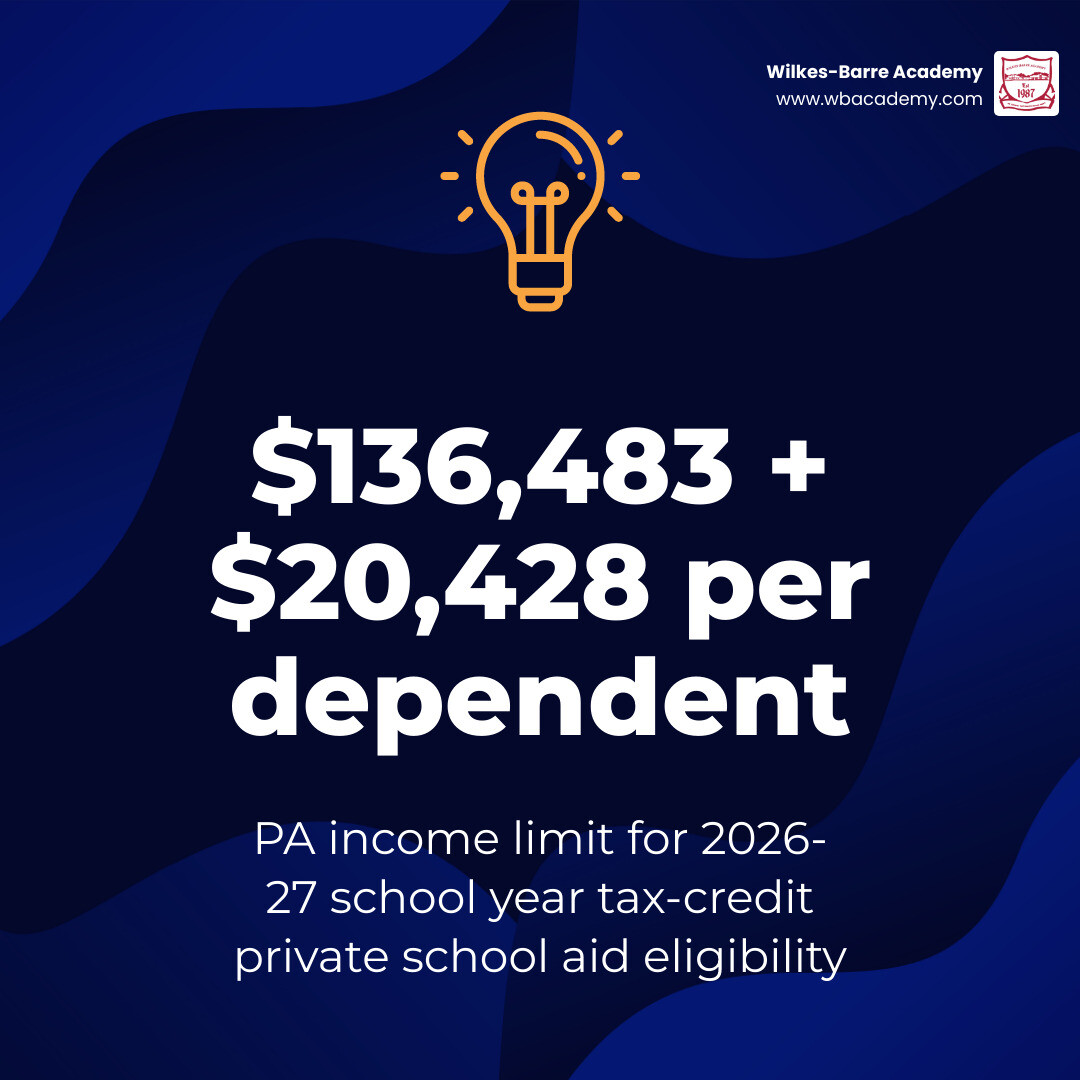
For the 2026-2027 school year, the standard household income limit for many programs is $136,483, plus an additional $20,428 for each dependent. If you have two children, your household income could be nearly $177,000 and you might still qualify for assistance.
Note: Some organizations, like the AAA Scholarship Foundation, use Federal Poverty Level (FPL) percentages to create tiers:
- 100% Award: Income up to 185% of FPL.
- 75% Award: Income between 186% and 225% of FPL.
- 50% Award: Income between 226% and 250% of FPL.
For organizations like CSFP in Philadelphia, the 2026-2027 guidelines allow a family of four to earn up to $88,670 to remain eligible for the lottery. Always remember that “income” usually refers to the total household income, including both parents even if they are living in separate households.
How to Apply for Private School Financial Aid in Pennsylvania

Applying for aid is a multi-step process that requires organization. You aren’t just applying for the school; you are applying for the funding. The first step is always Admissions. Most schools won’t process a financial aid request until the student has at least started the application for enrollment.
Step-by-Step Guide to Private School Financial Aid Pennsylvania Applications
- The Application Window: Many programs have a strict window. For example, The Learning Lamp often accepts applications only from June 1 to June 30. CSFP’s lottery usually runs from mid-September through March 1, with a priority deadline of November 15.
- The Platform: Most private schools in PA now use the Clarity Application. It’s a user-friendly platform that takes about 30 minutes to complete. There is typically a small fee (around $60) to submit your application, but it can be sent to multiple schools at no extra cost.
- Required Documents: Have your 2025 tax returns ready. You will also likely need W2s, 1099s, and recent pay stubs. Some programs require a 4506c form, which gives the scholarship organization permission to verify your income directly with the IRS.
- Special Circumstances: If parents are divorced or separated, most schools require applications from both households. If one parent is non-custodial and uninvolved, you may need to file a “Non-Custodial Parent Waiver.”
Managing Deadlines and Notifications
Timing is everything. If you miss the June window for certain EITC funds, you might be out of luck for the entire school year. Awards are typically announced in late August, with funding distributed directly to the schools in late September or October. Keep your School Year Information Paperwork updated so you don’t miss these critical notifications.
Family Responsibilities and Award Maintenance
Receiving private school financial aid in Pennsylvania isn’t just a “set it and forget it” situation. Families have ongoing responsibilities to keep their funding.
- Volunteer Service: Some organizations, like The Learning Lamp, require families to complete at least 5 hours of volunteer service to remain eligible for the following year.
- Attendance Requirements: This is a big one. To keep an AAA Scholarship, for example, a student must maintain at least a 90% attendance rate. That means no more than 18 absences in a standard 180-day school year.
- Academic Performance: While most tax-credit scholarships are need-based, you usually have to remain in “good standing” with the school. This means meeting behavioral standards and maintaining a passing GPA.
- Financial Integrity: If you receive a scholarship check, it is often sent to the school but made out to the parent. You must go to the school and “restrictively endorse” the check so it can be applied to your tuition balance.
Frequently Asked Questions about PA Private School Aid
What happens if my child transfers schools mid-year?
Scholarships like those from the AAA Foundation are often “portable,” meaning they follow the student to any eligible private school in Pennsylvania. However, you must notify your current school at least two weeks before withdrawing. The funding will be pro-rated based on the time spent at each school.
Can I receive aid from multiple scholarship organizations?
Generally, no. Most programs have a “single organization rule” to prevent “over-awarding.” If your tuition is $8,000 and you get a scholarship for $8,000, you cannot accept another scholarship from a different organization. You must disclose all outside aid to the school’s financial aid office.
Is financial aid available for Pre-Kindergarten students?
Yes, but it is often more limited. For instance, some schools cap Pre-K aid at 50% of tuition, regardless of the family’s level of need. Programs like EITC do offer support for “educational improvement organizations” that handle early childhood, but the rules are stricter than for K-12.
Conclusion
At Wilkes-Barre Academy, we believe that every child deserves an education that challenges them and recognizes their unique potential. We offer a single-classroom-per-grade environment that fosters deep connections between teachers, students, and families. While the financial side of private education can seem daunting, the resources available in Pennsylvania—from EITC grants to need-based school assistance—are designed to bridge the gap.
Our close-knit, diverse community in Luzerne County is proof that an academically advanced education is within reach. Don’t let tuition costs prevent your child from accessing a premier education—explore your options at Wilkes-Barre Academy today.