Why Going Private is the Ultimate Grade Upgrade
Why Choose a Private School in 2026 — and Why It Matters More Than Ever
If you’re weighing why choose a private school for your child, here’s the short answer:
Top reasons families choose private school:
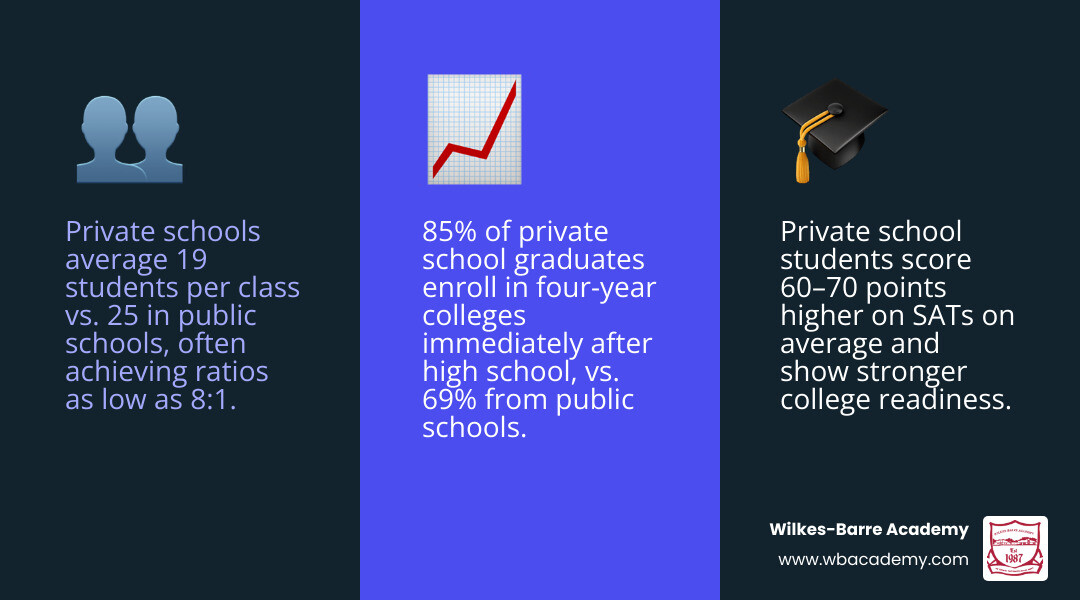
- Smaller classes — Private schools average 19 students per class vs. 25 in public schools, with some schools reaching ratios as low as 8:1
- Higher academic outcomes — Private school students score 60–70 points above average on the SAT and are more likely to graduate college-ready
- Stronger teacher relationships — Lower student-to-teacher ratios mean teachers actually know your child
- Safer, more supportive environments — 72% of private school parents strongly agree their school is safe
- More college-ready graduates — 85% of private school graduates enroll in a four-year college immediately after high school, compared to 69% of public school students
- Values-driven communities — Mission-aligned schools build shared culture between families, students, and staff
- Better access to enrichment — More extracurriculars, STEAM programs, and leadership opportunities per student
Choosing a school is one of the biggest decisions you’ll make for your child. And for many families, the gap between what public schools can offer and what their child actually needs is growing wider every year.
Crowded classrooms. Limited one-on-one time. Weak communication between school and home. These are real frustrations — and they’re pushing more families toward private education.
In fact, 40% of private schools reported enrollment increases from 2023–24 to 2024–25. That’s not a coincidence. Parents are voting with their feet.
This guide breaks down the real advantages of private schooling — from academics and safety to cost and special needs support — so you can make a confident, informed decision for your family.
Academic Excellence and Individualized Learning

When families ask us why choose a private school, academics is usually the first part of the conversation. And that makes sense. School is, after all, where children spend a huge part of their day learning how to think, solve problems, communicate, and grow.
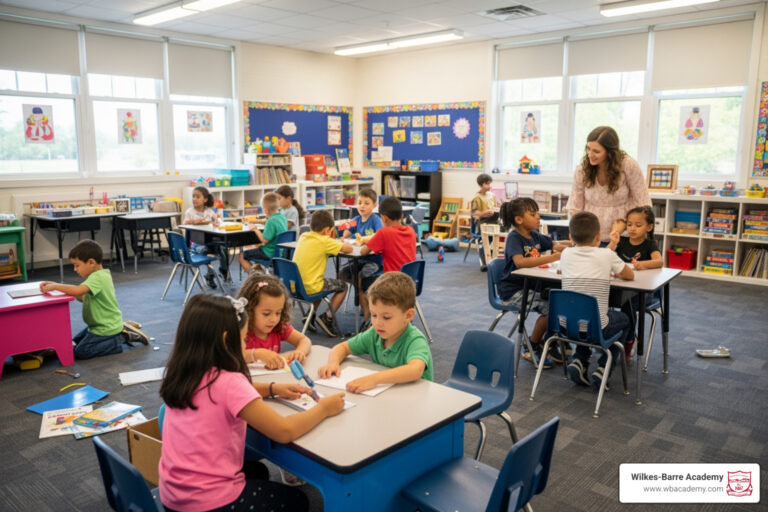
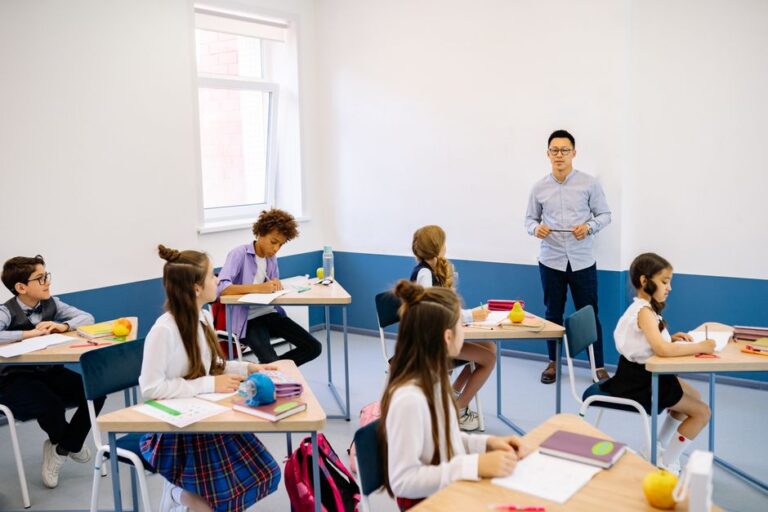
One of the biggest academic advantages private schools offer is personalization. Nationally, public schools average about 25 students per class, while private schools generally average 19. That difference matters more than it may look on paper. Six fewer students can mean more discussion, faster feedback, fewer chances to drift into the background, and more chances for a teacher to notice when a child is excelling or struggling.
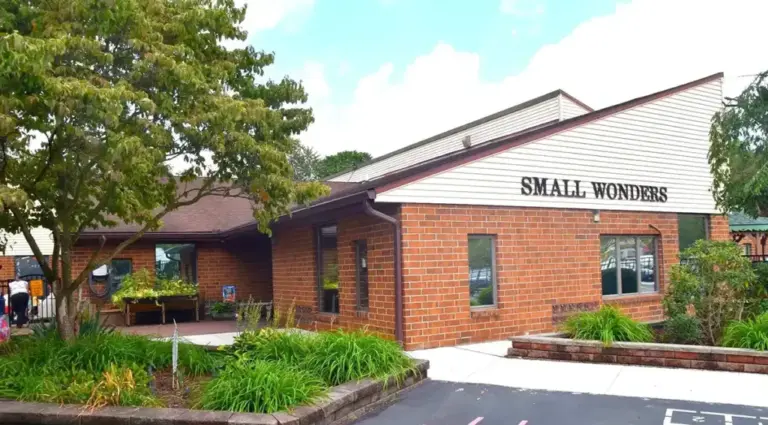
At Wilkes-Barre Academy, our approach is built around that idea of being known well. As a private, non-profit K-8 school in Luzerne County, we offer a single classroom per grade, which supports individualized learning in a close-knit academic setting. You can learn more about our program on our Academics page.
Smaller learning environments often improve student outcomes because they make teaching more responsive. Teachers can:
- adjust pacing when students need more challenge or more support
- tailor instruction to different learning styles
- ask deeper questions instead of just managing the room
- give more meaningful written and verbal feedback
- build stronger relationships with students over time
That last point matters a lot. Children learn better when they feel seen. In a smaller classroom, teachers are more likely to notice subtle changes in confidence, participation, organization, or understanding. Sometimes the difference between a child thriving and a child merely getting by is one adult who catches the problem early.
Private schools also often have more curricular flexibility. Because many private schools are not tied to the same state mandates and testing structures as public schools, they can innovate more quickly. In 2026, that matters. Families increasingly want schools that can thoughtfully incorporate technology, project-based learning, and interdisciplinary teaching without waiting three committee meetings and a minor miracle.
That flexibility can show up in many ways:
- stronger writing across subjects
- earlier access to advanced math or science concepts
- richer reading and discussion-based classes
- more room for arts, STEAM, and hands-on learning
- teaching methods based on how students actually learn, not just how systems are easiest to manage
Private schools also tend to attract families who value education deeply, which can help create an academically focused culture. That does not mean every student is identical or that pressure is the goal. It means the school community often shares an expectation that learning matters.
For families comparing local options in Luzerne County, resources like Education | Living in Luzerne County – DiscoverNEPA can help provide regional education context, but fit always matters more than rankings alone.
If you want a broader look at emerging academic trends in private education, Why Private School in 2026? Key Benefits for Today’s Families offers a useful overview.
Why choose a private school for college readiness?
Even though Wilkes-Barre Academy serves K-8 students, college readiness starts long before high school. Strong reading, writing, study habits, confidence, and curiosity in elementary and middle school build the foundation for later success.
That foundation is one reason private school outcomes often stand out. Research shows that 85% of private school graduates enroll in college immediately after high school, compared with 69% of public school students. Private school students also typically score 60 to 70 points higher on the SAT than the national average, and private high schools often require more rigorous coursework for graduation.
Why does that happen?
Usually, it is not one magic ingredient. It is a stack of advantages working together:
- smaller classes
- stronger accountability
- more rigorous graduation expectations
- closer student-teacher relationships
- earlier academic intervention
- more personalized advising and support
At the high school level, many private schools offer college counseling caseloads far smaller than those in large public systems. Some counselors work with 30 to 50 students rather than hundreds. That allows for more personalized planning, stronger recommendation letters, and less last-minute panic. We all love a good adrenaline rush, but not when a college essay is due at midnight.
In K-8 settings, readiness looks different but is just as important. Students benefit from:
- consistent expectations in core subjects
- discussion-based learning that builds confidence
- chances to practice leadership and responsibility
- teachers who understand both strengths and growth areas
- study habits that prepare them for demanding secondary programs
Faculty quality also plays a big role. Many private schools prioritize deep subject knowledge and mission alignment in hiring. If you want to learn more about our educators, visit our Faculty/Staff Directory.
In short, private school can be a strong choice for college readiness because it helps students become capable, engaged learners early, not just polished applicants later.
Why Choose a Private School for Community and Safety
A great school is not only academically strong. It also feels like a place where children belong.
That sense of belonging is one of the most overlooked answers to why choose a private school. Private schools are often mission-driven communities. Families usually choose them intentionally, not just because of a zip code. That shared commitment can create stronger school culture, clearer expectations, and closer relationships among students, parents, teachers, and administrators.
At Wilkes-Barre Academy, our identity as a non-profit K-8 school and our single-classroom-per-grade model help create strong family-school connections. In a smaller community, communication tends to be more direct and more personal. Parents are not left wondering who to contact, and teachers are not trying to know hundreds of children at once.
This kind of environment often encourages higher parental involvement. Instead of school being a mystery your child visits five days a week, it becomes a partnership. Families can participate through conferences, events, volunteering, and organizations like our Parent Teacher Organization.
That home-school partnership benefits students in practical ways:
- parents hear about concerns earlier
- teachers understand family context better
- students receive more consistent messages from adults
- celebrations and struggles are shared, not siloed
- children see that school matters to the people they trust most
Community also influences safety. According to the research, 72% of private school parents strongly agreed that their school was safe, and 62% said the environment was motivating, supportive, and nurturing. No school can promise a perfect bubble. Kids are still kids, and they occasionally make questionable choices with the confidence of tiny CEOs. But smaller communities often allow adults to intervene earlier, notice social issues sooner, and reinforce expectations more consistently.
Private schools may feel safer and more supportive for several reasons:
- fewer students to supervise
- stronger adult visibility throughout the day
- clearer behavior standards
- closer parent communication
- mission-driven culture and shared values
- more room for restorative discipline and counseling support
Bullying is another concern for many families. Roughly 1 in 5 public school students report being bullied, and some studies suggest lower rates in private schools due in part to smaller size, structure, and adult oversight. Again, no setting eliminates problems entirely. But when teachers know students well, changes in behavior and peer conflict are harder to miss.
Holistic development and character education
Private education is not just about test scores and tidy uniforms. One of its strongest benefits is the emphasis on the whole child.
Character development and values education are often woven into daily school life, not treated like an occasional assembly sandwiched between math and lunch. That can include lessons and habits related to:
- empathy
- responsibility
- honesty
- self-control
- respect
- service
- leadership
These qualities matter academically, too. A student who can manage emotions, listen well, collaborate, and persevere through challenges is better prepared to learn.
Many private schools also invest heavily in enrichment. Families often find more opportunities in arts, clubs, athletics, service learning, and STEAM programs. In some schools, participation rates in co-curriculars are especially high because smaller enrollment can actually mean less competition for spots and more chances to get involved.
At Wilkes-Barre Academy, families can explore opportunities through our Extracurricular Activities and Student Activities pages.
Enrichment matters because it helps students discover who they are. A child who is quiet in math may come alive in theater. A student who struggles with writing may thrive in robotics or service projects. These experiences build confidence, resilience, and social skills that carry back into the classroom.
Holistic development also includes exposure to technology and modern learning tools. In 2026, families should expect thoughtful technology integration, not technology for its own sake. A good school uses digital tools to deepen learning, not to turn children into tiny tab-switching professionals.
Accessibility, Support, and Finding the Right Fit
Let’s talk about the question every family asks, usually somewhere between “this sounds great” and “wait, how much?”
Yes, private school costs money. National average tuition in 2026 is generally around $12,000 to $15,000 for elementary programs and $16,000 to $20,000 for secondary programs, though local rates vary widely. Cost is one of the clearest potential drawbacks of private education, and it should be discussed honestly.
Private school can also have other challenges, including:
- admissions selectivity
- transportation logistics
- less program breadth in very small schools
- possible limits in demographic diversity depending on the school
- varying levels of support for complex special needs
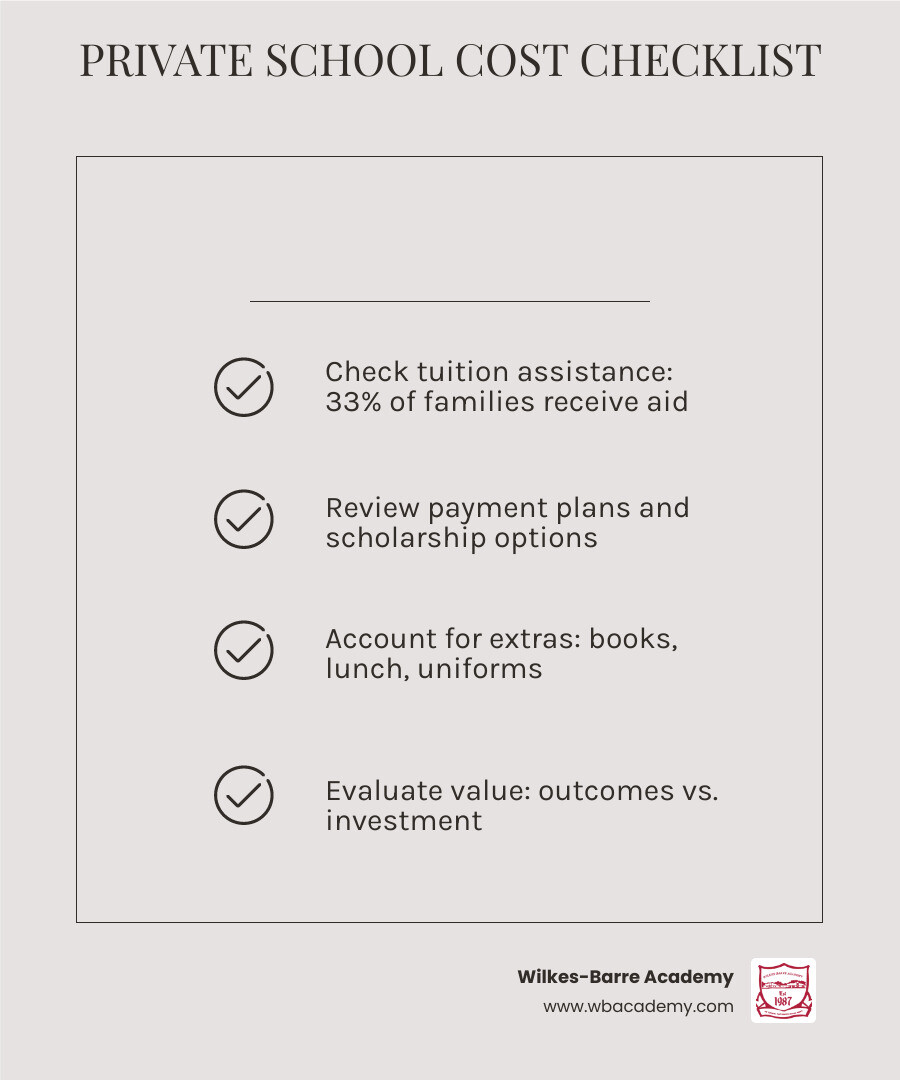
That said, tuition sticker price is not always the final price. Many schools offer aid, payment plans, scholarships, or tuition assistance. Some private schools provide assistance to a substantial share of their student body. If private education interests you, it is worth asking questions before assuming it is out of reach.
For Wilkes-Barre Academy families, our Tuition and Tuition Schedule 2024-2025 pages are a good place to start.
When evaluating affordability, we recommend looking beyond base tuition and asking about:
- fees for books, activities, or technology
- lunch and transportation costs
- uniforms or dress code expenses
- payment plan options
- tuition assistance timelines
- what is included in the educational experience
Families should also think about value, not just price. That does not mean every private school is automatically “worth it.” It means the right question is whether the school’s mission, support, and outcomes justify the investment for your child and family.
For a balanced look at private school benefits and tradeoffs in the current landscape, The Pros and Cons of Private School in 2026 is helpful.
Why choose a private school for special needs support?
This is an area where families need clear, specific information.
A common misconception is that private schools only work for independent, high-performing students. In reality, research shows that 87% of private schools in the United States serve students with some form of special need. That can include mild to moderate learning differences, executive functioning challenges, attention issues, or the need for individualized academic support.
Private schools may support these students through:
- individualized learning plans
- smaller classes and more frequent teacher feedback
- executive functioning coaching
- flexible pacing
- adaptive learning tools
- closer parent communication
- early intervention when difficulties appear
This is one area where smaller classes can be a major advantage. A teacher is more likely to notice when a student is disorganized, confused, avoidant, overwhelmed, or falling behind. That can lead to earlier support instead of waiting for the problem to grow.
However, families should also understand an important distinction: private schools are not governed the same way public schools are under federal IDEA mandates. Support in private schools may operate through school policies, contracts, and available services rather than exactly mirroring public school systems. So the right question is not “Does the school say it supports special needs?” The right question is “What support does the school actually provide, and is it the right match for my child?”
When talking with any school, ask:
- What kinds of learning differences do you support?
- What accommodations are available in practice?
- How do teachers communicate with parents?
- Is there academic intervention or executive functioning support?
- How is progress monitored?
- What happens if a child needs more support over time?
Fit matters enormously here. Some private schools are excellent for students who need structure, personalization, and close relationships. Others may not be equipped for more intensive needs. The more specific the conversation, the better the decision.
If you want to understand our school community and philosophy more deeply, visit About, Our Story, and Parent Testimony.
Frequently Asked Questions about Private Education
Is private school safer than public school?
Sometimes, but not automatically.
Private schools often feel safer because they tend to have smaller student bodies, stronger adult oversight, clearer behavior expectations, and tighter family-school communication. Research cited above found that 72% of private school parents strongly agreed their school was safe. Smaller communities can also make it easier to identify bullying, social conflict, or emotional struggles early.
Still, safety depends on the individual school. Families should ask about supervision, visitor policies, emergency planning, counseling support, discipline approaches, and school culture.
How do families afford private school tuition?
Families use a mix of strategies, including:
- tuition assistance
- scholarships where available
- monthly payment plans
- prioritizing education in the household budget
- comparing value across school options
The key is to ask directly. Many families assume they will not qualify for aid and never apply. It is often worth having the conversation anyway. Start with our Tuition information and then contact us through Admissions with specific questions.
What are the main academic benefits of private schools?
The biggest academic benefits usually include:
- smaller class sizes
- more individualized attention
- curriculum flexibility
- stronger teacher-student relationships
- rigorous standards
- more room for discussion, writing, and hands-on learning
- earlier intervention when students need help
For many families, the real benefit is not just higher scores. It is that their child is known, challenged, and supported as an individual.
Conclusion
Choosing a school is ultimately about fit. Not every private school is right for every child, and “private” by itself is not a magic word. But for many families in Wilkes-Barre and across Luzerne County, private education offers something hard to find in larger systems: a learning environment where children are truly known.
At Wilkes-Barre Academy, we are proud to be a private, non-profit K-8 school serving Luzerne County with an academically advanced curriculum, single classroom per grade, individualized learning, and a close-knit, diverse community.
If you are exploring why choose a private school, we invite you to learn more about our approach through Admissions and Ready to upgrade your child’s education? Explore our advanced curriculum today.
The right school should help your child feel challenged, supported, and excited to learn. If that is the kind of grade upgrade you are looking for, we would love to meet you.