Investing in Education: Pennsylvania Non-Profit Private Schools Explained
Why Non-Profit Private Schools in Pennsylvania Are Worth Understanding
Non-profit private school in Pennsylvania options give families a meaningful alternative to public education — and there are more options than most parents realize.
Here’s a quick snapshot of what you need to know:
| Question | Quick Answer |
|---|---|
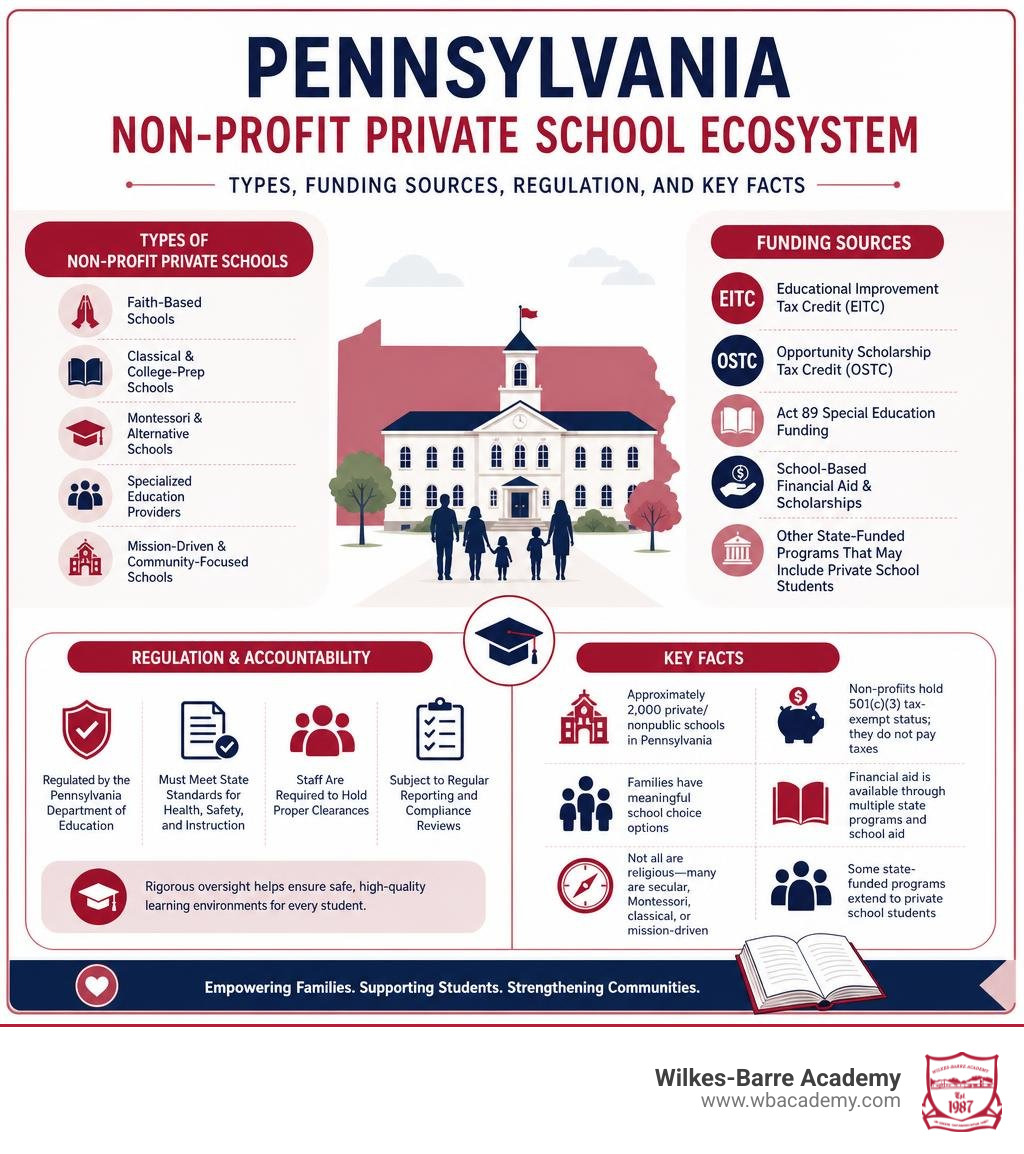
| How many private/nonpublic schools exist in PA? | Approximately 2,000 |
| Are they regulated? | Yes, by the Pennsylvania Department of Education |
| Do they pay taxes? | No — non-profits hold 501(c)(3) tax-exempt status |
| Is financial aid available? | Yes — through EITC, OSTC, Act 89, and school-based aid |
| Are they all religious? | No — many are secular, Montessori, classical, or mission-driven |
| Can public school students access their services? | Some state-funded programs extend to private school students |
Pennsylvania’s private school landscape is large and genuinely diverse. It ranges from fully-funded residential programs to small classical academies, faith-based schools, autism-specialist institutions, and independent college-prep schools.
For busy parents who want more for their child — smaller classes, stronger relationships with teachers, and a community that actually knows their kid — understanding how non-profit private schools work is the first step.
This guide breaks it all down clearly: the legal definitions, school types, funding, admissions, and what sets non-profit schools apart from every other option.
Explore more about non-profit private school pennsylvania:
Defining the Non-Profit Private School Pennsylvania Model
When looking at educational options, it is easy to get lost in the terminology. What is the actual difference between a public school, a for-profit private school, and a non-profit private school pennsylvania families can choose?
The core distinction lies in how the school is structured, governed, and funded. A non-profit private school is recognized by the IRS as a 501(c)(3) tax-exempt organization. This status means the school does not operate to generate a profit for owners or shareholders. Instead, every single dollar brought in through tuition, grants, or fundraising is reinvested directly into the school’s educational mission, facilities, teacher salaries, and student resources.
Public schools are funded by local, state, and federal tax dollars and are governed by publicly elected school boards. For-profit private schools operate like traditional businesses, where surplus revenue can be distributed to owners or investors. Non-profit private schools, however, are governed by an independent board of directors or trustees. These board members are often volunteers from the local community, parents, and educational experts who serve without pay to oversee the school’s long-term health and mission.
Choosing a non-profit model offers distinct benefits. Because the focus remains entirely on the students rather than profit margins, these schools can prioritize smaller class sizes, specialized curricula, and robust community engagement. For a deeper look at why this educational path is so powerful, explore Why Going Private is the Ultimate Grade Upgrade.
Types of Non-Public and Private Academic Schools in PA
The Pennsylvania Department of Education (PDE) recognizes approximately 2,000 nonpublic and private academic schools across the Commonwealth. These schools fall into distinct regulatory categories, each designed to meet different community needs while ensuring students receive a high-quality education.
Understanding these classifications helps families navigate their options with confidence. To see how these schools fit the needs of younger learners, read Why a Private K-8 School in Pennsylvania Makes the Grade.
| School Category | Regulatory Authority | Key Characteristics |
|---|---|---|
| Licensed Private Academic Schools (LPAS) | Fully licensed by the PDE | Must comply with strict state licensing regulations, including state-certified teachers and approved curricula. |
| Nonpublic Nonlicensed Schools | Registered with the PDE | Often religiously affiliated or independently accredited schools that are exempt from formal state licensing but must still meet basic health, safety, and attendance laws. |
Licensing and Registration for a Non-Profit Private School Pennsylvania
For a school to operate as a licensed private academic school in Pennsylvania, it must navigate a rigorous state licensing process. This begins with submitting specific applications to the PDE, such as Form PDE-3130 (for school licensing) and Form PDE-5000A.
These regulations ensure that private schools maintain high academic standards. Key requirements include:
- Instructional Time: Schools must be in session for a minimum of 180 days of instruction, or meet minimum hourly requirements: 450 hours for kindergarten, 900 hours for elementary students, and 990 hours for secondary students.
- Teacher Certification: Teachers in licensed private academic schools must hold valid state certifications or meet specific PDE-approved qualifications.
- Curriculum Standards: The curriculum must align with state standards to ensure students are prepared for future academic transitions.
Educational Philosophies in a Non-Profit Private School Pennsylvania
One of the greatest advantages of the private non-profit model is the freedom to adopt unique educational philosophies. Unlike public schools, which must adhere to standardized state testing regimes, non-profit private schools can build their entire curriculum around proven, specialized methodologies.
Some of the most common educational philosophies in Pennsylvania include:
- Classical Education: This traditional approach organizes learning around the “Trivium” (grammar, logic, and rhetoric phases), focusing on critical thinking, classic literature, and historical texts.
- Montessori Method: A student-led approach that emphasizes self-directed learning, hands-on activities, and collaborative play in multi-age classrooms.
- Quaker and Faith-Based Values: Many schools integrate spiritual growth, community service, and character development directly into their daily routines.
- Secular Independent Models: Focus on progressive, academically advanced curricula designed to foster global citizenship and creative problem-solving.
By selecting a school with a philosophy that aligns with your family’s values, you can find a close-knit environment where your child can truly thrive. Learn more about finding these communities in our guide on The Best Diverse and Close-Knit Schools in Pennsylvania.
State-Funded Programs and Financial Aid Options
Many families assume that a private school education is financially out of reach. However, Pennsylvania offers some of the most robust financial aid programs in the nation to help bridge the gap. Through a combination of state-backed tax credit programs and school-based fundraising, non-profit private schools work hard to keep tuition affordable.
To demystify these costs, check out How Much is Private School in PA? Tuition Stats and Affordable Options and Don’t Let the Sticker Price Scare You: Financial Aid for PA Private Schools.
State Programs Supporting Private and Nonpublic Students
While Pennsylvania does not offer direct voucher programs to parents for private tuition, the state provides critical support through indirect funding mechanisms:
- Educational Improvement Tax Credit (EITC): This program allows Pennsylvania businesses to redirect their state tax liabilities directly to approved scholarship organizations. These organizations then award tuition scholarships to eligible families based on household income. You can learn more about how this works on our EITC Grant page.
- Opportunity Scholarship Tax Credit (OSTC): Similar to the EITC, this program provides tuition scholarships to students who live within the boundary of a low-achieving public school district, allowing them to attend an approved private school.
- Act 89 Auxiliary Services: This state program provides essential auxiliary services—such as speech therapy, remedial reading, math support, and psychological counseling—directly to students enrolled in nonpublic schools.
- Acts 195/90/35 (Textbook and Equipment Loans): This program allows the state to loan textbooks, instructional materials, and scientific equipment directly to nonpublic schools, keeping operational costs down and tuition more affordable.
- Voucher Programs: To stay updated on potential changes in state-level tuition assistance, keep an eye on our Voucher Program resources.
Tuition Assistance and Philanthropy
Because non-profit private schools hold 501(c)(3) status, they can actively fundraise and accept tax-deductible donations. This philanthropic support is vital. In many non-profit schools, tuition does not cover the full cost of educating a child. Donations, annual appeals, and community events bridge this gap, allowing schools to maintain moderate tuition schedules while funding robust tuition assistance programs.
Families can review current tuition rates and payment structures on our Tuition Schedule 2024-2025 page. If you are interested in supporting these programs to keep high-quality education accessible to all families, please visit our Donate page.
Admissions, Enrollment, and Supporting Diverse Student Needs

The admissions process at a non-profit private school pennsylvania families trust is designed to be collaborative. Rather than focusing solely on standardized test scores, non-profit schools look for a mutual fit—ensuring that the school’s environment, curriculum, and community align with the student’s unique personality and the family’s expectations.
To begin this journey, families can explore our dedicated Admissions and Enrollment pages.
Navigating the Admissions and Recruitment Process
Applying to a non-profit private school is a straightforward, step-by-step journey:
- Inquiry and Research: Use resources like the Wilkes Barre Private School Guide: Finding the Perfect Fit to identify schools that match your educational goals.
- School Tours and Open Houses: Visit the campus to see classrooms in action and experience the school’s culture firsthand.
- Application Submission: Submit academic records, teacher recommendations, and any required developmental observations.
- Family Interview: Sit down with school administrators to discuss your child’s needs and learn how the school can support them.
- Transition Support: Once accepted, schools often host transition events, family nights, and parent-teacher conferences (with a best practice of holding at least two parent-teacher conferences per school year) to help new students feel at home.
Special Education and Individualized Support
A common misconception is that private schools cannot support students with special needs or learning differences. While public school districts retain the legal responsibility to provide a Free Appropriate Public Education (FAPE) to students with disabilities, many non-profit private schools excel at providing highly individualized support.
For example, specialized non-profit schools in Pennsylvania maintain low student-teacher ratios (such as a 4:1 ratio) to serve students with autism across multiple counties. Even in general education non-profit schools, smaller class sizes and dedicated teachers allow for tailored instruction that accommodates different learning styles. To learn more about how we personalize instruction, read about The Best Wilkes Barre Area Schools for Individualized Learning.
Economic Impact and Community Value of PA Non-Profits
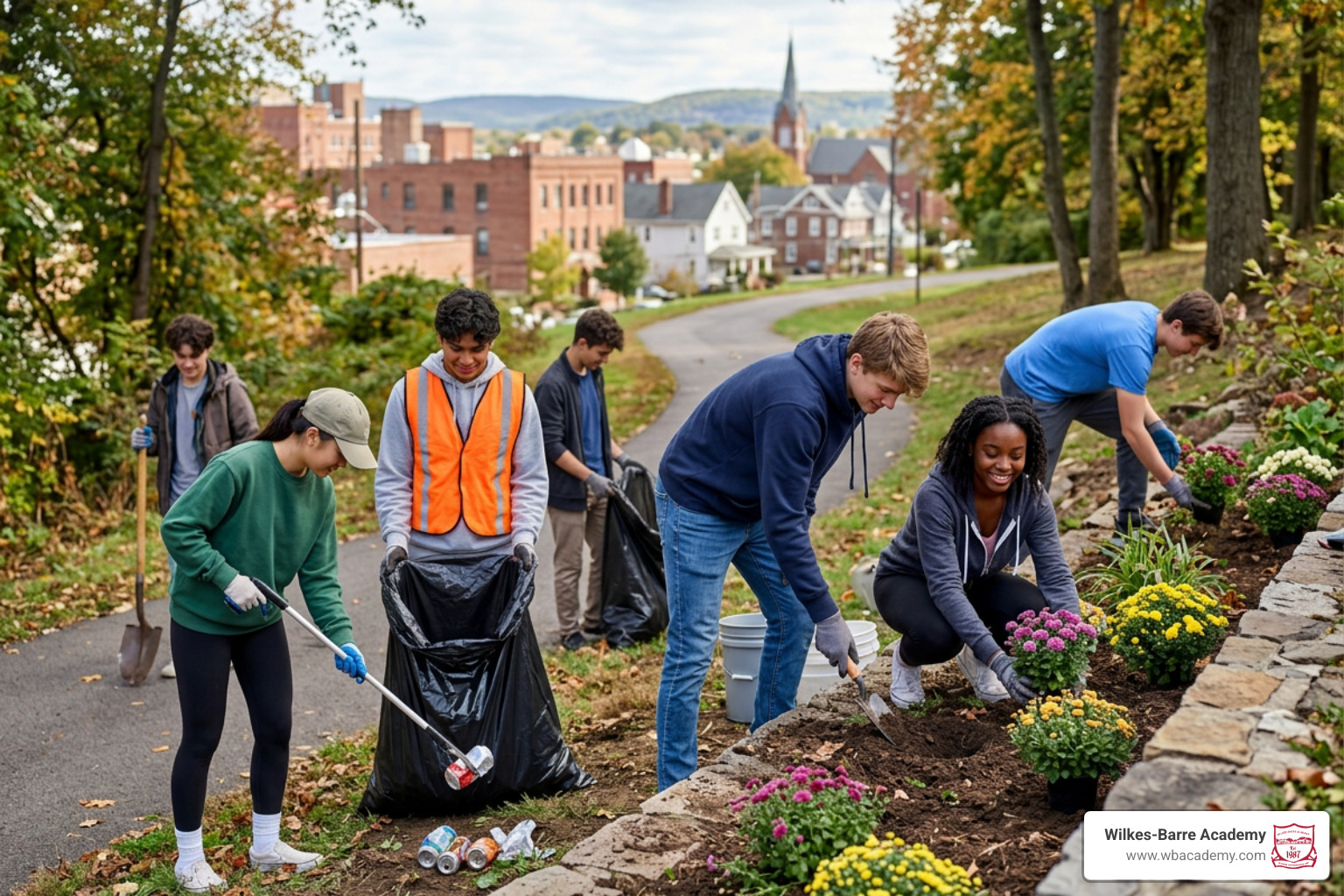
Non-profit private schools do not just benefit the families who attend them—they are major contributors to the local economy and community. By providing alternative educational pathways, they relieve financial pressure on local public school districts, saving taxpayers millions of dollars in instructional costs.
Furthermore, the non-profit education sector in Pennsylvania is a powerful economic engine. For instance, member schools of the Association of Independent Colleges and Universities of Pennsylvania (AICUP) create and sustain over 200,000 jobs and contribute $29 billion annually to the state’s economy. This demonstrates the massive workforce development and job creation potential inherent in the non-profit educational model.
At the K-8 level, non-profit private schools prepare students to become civic-minded, highly capable leaders. By emphasizing community service, critical thinking, and character development, these schools set students on a fast track to future academic and professional success. Discover how this foundation pays off in The Fast Track to High School Success via Private Education.
Frequently Asked Questions about Pennsylvania Non-Profit Private Schools
Do Pennsylvania non-profit private schools receive state funding?
No, non-profit private schools do not receive direct state funding or taxpayer-funded tuition grants. However, Pennsylvania supports private school families through indirect programs. This includes the Educational Improvement Tax Credit (EITC) and Opportunity Scholarship Tax Credit (OSTC) programs, which provide business-funded scholarships. Additionally, programs like Act 89 provide auxiliary services (like speech therapy), and Acts 195/90/35 provide textbook loans directly to nonpublic school students.
What is the difference between licensed and nonlicensed private schools in PA?
Licensed Private Academic Schools (LPAS) are formally licensed by the Pennsylvania Department of Education (PDE) and must comply with strict state regulations regarding teacher certification, curriculum, and instructional hours. Nonpublic nonlicensed schools are registered with the state but are exempt from formal licensing requirements. These are typically religiously affiliated schools or schools accredited by approved independent organizations. Both types must still comply with state compulsory attendance, health, and safety laws.
Can non-profit private schools withhold student records in Pennsylvania?
Under Pennsylvania state regulations, nonpublic and private academic schools are legally required to release all student health and immunization records upon request. However, private schools do have the legal right to withhold academic records, transcripts, and report cards if a family has outstanding financial obligations, such as unpaid tuition.
Conclusion
Choosing the right school is one of the most important decisions a parent can make. As we have explored, a non-profit private school in Pennsylvania offers a unique combination of academic rigor, fiscal responsibility, and deep community roots that can transform your child’s educational journey.
At Wilkes-Barre Academy, we are proud to stand as a premier private, non-profit K-8 school in Luzerne County. Our mission is built around an academically advanced curriculum, a single-classroom-per-grade model that guarantees individualized learning, and a close-knit, diverse community where strong family-school connections are at the heart of everything we do. From our early childhood programs at Small Wonders Daycare to our middle school graduates, we provide an education that prepares children for life.
We invite you to learn more about our community, explore our history, and see what makes us the talk of the town:
- Read Our Story to see how we built our school community.
- Explore our About page to meet our leadership and staff.
- Discover our advanced Academics programs.
- See how our students grow outside the classroom through Extracurricular Activities and exciting Student Activities.
- Compare local options using the Private Schools in Wilkes-Barre, PA – Niche directory and the official NCES Search for Private Schools – Search Results .
Ready to experience the difference firsthand? Learn Why Wilkes Barre Academy is the Talk of the Town and visit us today at Wilkes-Barre Academy to schedule your personal tour!