
School Security Awareness PA: Act 55 and Your Safety Strategy
Why School Security Awareness PA Matters Right Now
School security awareness in PA is no longer optional — it’s the law. And as of June 2026, every Pennsylvania school is expected to be in full compliance with the training standards set by Act 55 of 2022.
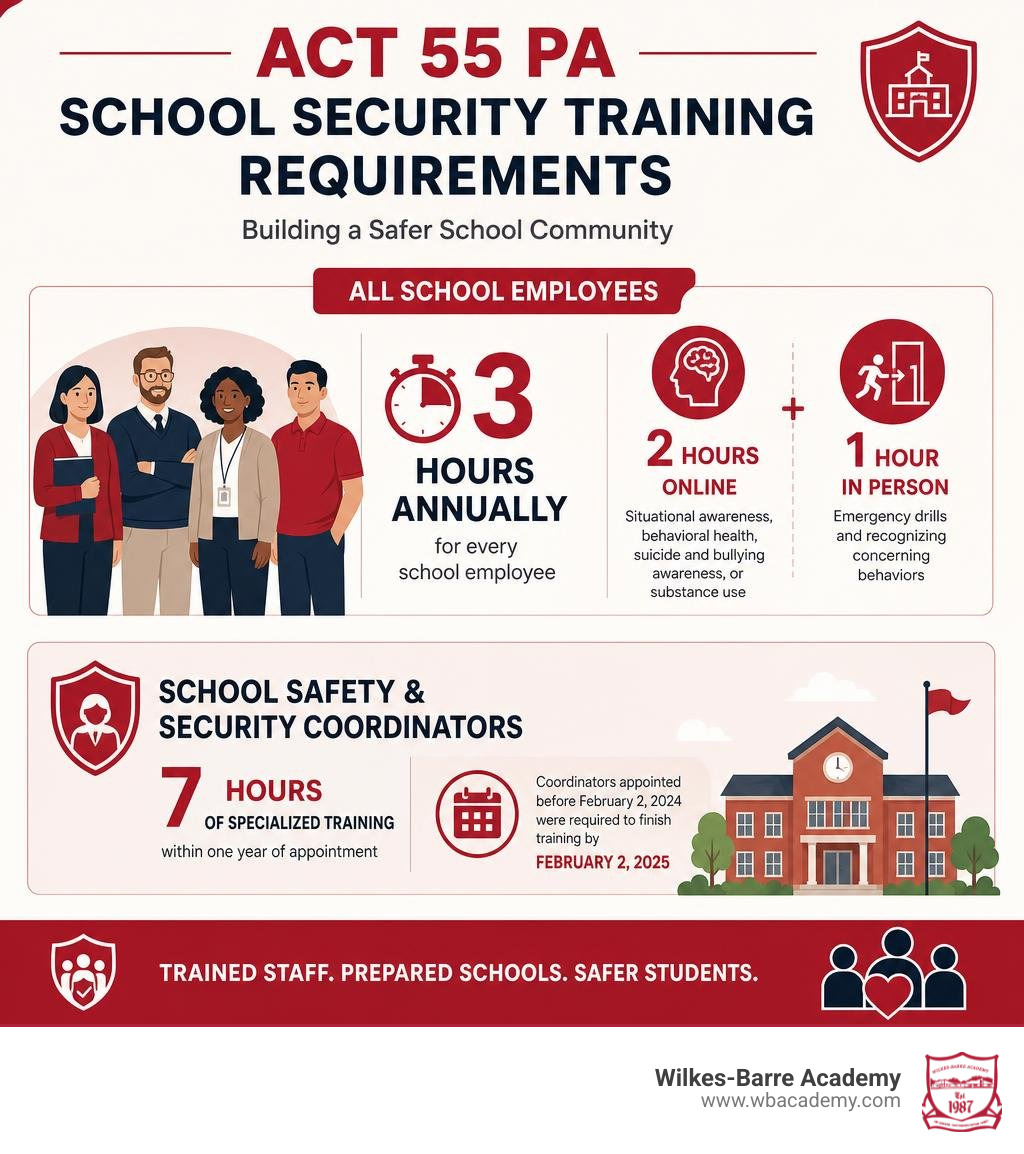
Here’s a quick summary of what Act 55 requires for Pennsylvania schools:
- All school employees must complete 3 hours of safety training every year
- 2 hours must cover topics like situational awareness, behavioral health, suicide and bullying awareness, or substance use
- 1 hour must cover emergency drills and recognizing concerning behaviors — and this part must be done in person
- School Safety and Security Coordinators must complete up to 7 hours of specialized training within one year of appointment
- Coordinators appointed before February 2, 2024 were required to finish training by February 2, 2025
This applies to everyone — teachers, administrators, counselors, librarians, and even cafeteria workers.
The state backed this up with $4.8 million in funding to support training development and rollout. That’s how seriously Pennsylvania is taking this.
For parents choosing a school for their child, this matters. Knowing whether a school is meeting these standards — and how — tells you a lot about how seriously that school takes the safety of every student in the building.
One insight that captures why real training matters: a veteran superintendent with 25 years of experience said that after just two hours in an immersive safety simulation, he realized how much he didn’t know. That’s a powerful reminder that awareness isn’t just a checkbox.
Understanding Act 55 and School Security Awareness PA Requirements
To fully grasp the scope of school security awareness pa mandates, we have to look closely at Act 55 of 2022. This legislation amended Section 1310-B of the Pennsylvania Public School Code of 1949, completely overhauling how school safety is approached across the Commonwealth.
Before Act 55, Pennsylvania school employees were only required to undergo three hours of safety training once every five years. Under the updated law, that requirement has jumped to three hours of training annually. This shift ensures that safety protocols remain fresh in everyone’s minds, building the muscle memory necessary to act quickly during a crisis.
To make this transition possible, the Pennsylvania Commission on Crime and Delinquency (PCCD) allocated $4.8 million in state funding to develop and launch standardized training programs. These resources are designed to help schools meet the strict standards set by the School Safety and Security Committee (SSSC). You can explore the state’s official guidelines and approved training registries on the Act 55 School Safety Training | Commission on Crime and Delinquency | Commonwealth of Pennsylvania page.
At Wilkes-Barre Academy, we believe that compliance is just the baseline. True safety comes from an active, community-wide commitment to vigilance. We integrate these state standards into our comprehensive approach to Student Safety & Security Awareness, ensuring our staff is prepared for any scenario.
To help visualize how these requirements differ depending on an employee’s role, review the breakdown below:
| Training Element | General School Employees | School Safety & Security Coordinators |
|---|---|---|
| Annual Hour Requirement | 3 hours total (minimum) | Up to 7 hours within one year of appointment |
| Awareness Training | Minimum 2 hours (Modules 1-5) | Deep-dive into physical assessments, leadership, and policy |
| Drills & Threat Recognition | Minimum 1 hour (Modules 6-7) | Oversight, structural assessment, and coordinator protocols |
| In-Person Requirement | Mandatory for emergency training drills (Module 7) | Highly recommended in-person coordination sessions |
| Key Milestones | Completed annually | Appointed before Feb 2, 2024: must have completed by Feb 2, 2025 |
Mandatory Training Modules and Emergency Preparedness
The annual three-hour training for school employees is divided into specific, bite-sized modules to ensure comprehensive coverage of both physical safety and mental health.
The first portion of the training requires a minimum of two hours focused on critical behavioral and situational awareness topics (Modules 1 through 5). These modules cover:
- Situational Awareness: Training staff to observe, assess, and respond to unusual or concerning situations in their immediate environment.
- Trauma-Informed Approaches: Helping educators understand the impact of trauma on student behavior and academic performance.
- Behavioral Health Awareness: Identifying students who may be experiencing mental health crises.
- Suicide and Bullying Awareness: Recognizing the warning signs of self-harm and peer victimization.
- Substance Use Awareness: Spotting indicators of drug or alcohol use and knowing how to intervene safely.
The remaining one hour of annual training must focus on Modules 6 and 7, which deal directly with recognizing concerning behaviors and executing emergency training drills. This balanced approach ensures that school staff are just as prepared to support a student struggling with mental health as they are to respond to an active physical threat.
Implementing In-Person Emergency Drills for School Security Awareness PA
While many of the behavioral health modules can be completed through approved online learning platforms, Module 7 (Emergency Training Drills) cannot be completed online. The state mandates that this training be conducted in-person to ensure hands-on familiarity with emergency protocols.
These in-person sessions prepare staff for a wide range of emergency scenarios, including:
- Fire Drills: Ensuring orderly evacuation routes.
- Natural Disasters: Preparing for severe weather, such as tornadoes or severe storms in Northeastern PA.
- Active Shooter Situations: Implementing tactical responses, including the widely recognized “Run, Hide, Fight” protocol.
- Hostage Situations & Bomb Threats: Teaching staff how to secure classrooms and communicate with emergency responders.
To support schools in executing these drills, the state provides “Train the Trainer” resources. This allows school safety leaders to learn directly from law enforcement and bring that hands-on knowledge back to their buildings. For schools looking to coordinate these efforts, the PA State Police | Department of Education | Commonwealth of Pennsylvania offers specialized programs, target-hardening advice, and active shooter preparedness training at no cost.
Threat Assessment and School Security Awareness PA Best Practices
Prevention is the ultimate goal of any school safety strategy. Under Act 18 of 2019, all Pennsylvania school entities are required to establish dedicated threat assessment teams. These teams are trained to intervene before a safety breach occurs by identifying, assessing, and managing individuals who may pose a threat to themselves or others.
PCCD offers a free, comprehensive 12-module training program designed to help schools build and maintain these teams. The curriculum, developed in partnership with national safety experts, covers the entire threat management process. Schools can register for these training programs directly through the K-12 Threat Assessment Training | Commission on Crime and Delinquency | Commonwealth of Pennsylvania portal.
At Wilkes-Barre Academy, we ensure our administrative procedures and emergency contact protocols are updated before the school year begins. Parents can learn more about how we organize these vital details by reviewing our School Year Information Paperwork.
Roles and Responsibilities: Coordinators and Security Personnel
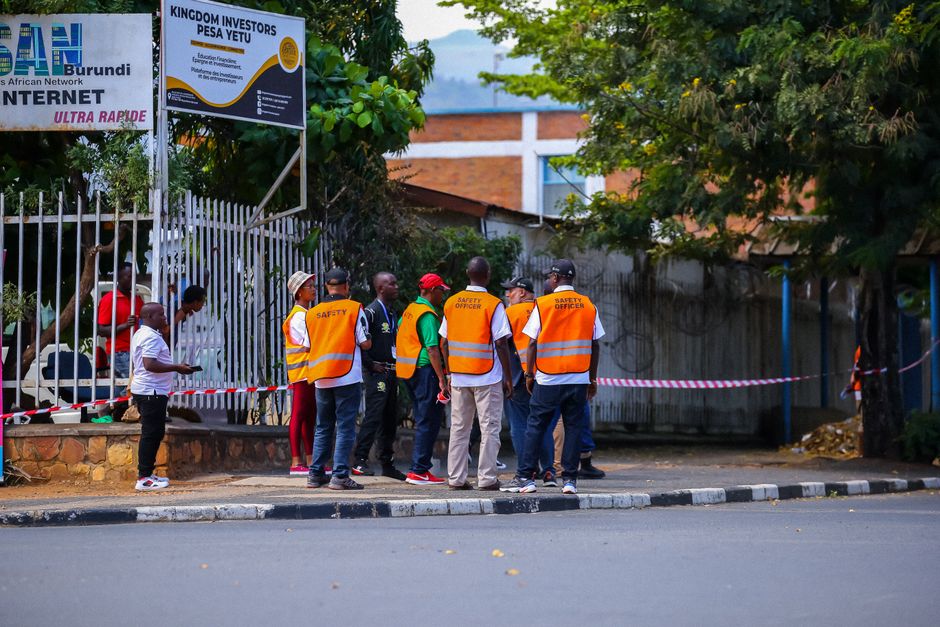
Every school in Pennsylvania must appoint a School Safety and Security Coordinator. This individual bears the heavy responsibility of overseeing all safety policies, coordinating with local law enforcement, and ensuring the school meets all Act 55 requirements.
Coordinators are held to rigorous training standards. They must complete 7 hours of specialized training within one year of their appointment. For coordinators who were already in their roles prior to February 2, 2024, the state set a hard deadline of February 2, 2025, to complete this instruction.
Additionally, legislative updates through Acts 44 and 47 of 2025 expanded the coordinator’s duties. They are now required to host quarterly school safety and security meetings with building leadership and formally document attendance. For a complete breakdown of these updated administrative requirements, you can review the Summary of School Safety and Security Updates – presentation.
Comparing School Police, Resource Officers, and Security Guards
When discussing physical security personnel in Pennsylvania schools, it is important to understand that not all security roles are the same. The state distinguishes between three specific types of personnel:
- School Police Officers (SPOs): These are law enforcement officers directly employed by the school entity. They have full arrest powers on school property and must complete specialized training under the PA Public School Code.
- School Resource Officers (SROs): These are active-duty municipal police officers stationed at schools through a collaborative agreement between the school and the local police department. They undergo National Association of School Resource Officers (NASRO) training, which focuses on mentoring and law enforcement in a school setting.
- School Security Guards: These are individuals employed by the school or a third-party vendor to monitor entrances and patrol grounds. They do not have police powers and must complete specific PCCD-approved training before beginning their duties.
Funding and Safety Standards for Pennsylvania Nonpublic Schools

Private and nonpublic schools in Pennsylvania are also eligible for significant state support to keep their students safe. Through the Targeted School Safety Grant Program for Nonpublic Schools, the state allocated $20.7 million to help nonpublic institutions upgrade their security measures.
Eligible schools can apply for grants of up to $75,000 for projects spanning up to 24 months. This funding can be used for:
- Physical security enhancements (e.g., security cameras, metal detectors, electronic lock systems).
- Behavioral health and mental health initiatives.
- The training and compensation of approved school security personnel.
- Cybersecurity measures, which were newly added as eligible expenses under Act 47 of 2025 (including penetration testing and breach reaction plans).
To help schools prioritize their spending, the state encourages focusing on Level 1 Baseline Criteria. These represent the most fundamental physical security and behavioral health elements a school should possess before pursuing advanced upgrades. You can read the official guidelines and application requirements in the 25-26 Targeted School Safety for Nonpublic Schools document, and view common questions answered in the 25-26 Targeted School Safety for Nonpublic Schools Funding Announcement Q&A Tracker.
Understanding how these regulations and funding opportunities apply to private education is essential for families. For a deeper look at your rights and the legal protections surrounding nonpublic school safety, read our comprehensive resource: Private School Student Safety Pennsylvania: A Parent’s Guide to the Law.
Frequently Asked Questions About PA School Security
How do PennSSI immersive training programs differ from online Act 55 modules?
While the standard online Act 55 modules provide excellent foundational knowledge, the Pennsylvania School Safety Institute (PennSSI) offers highly immersive, hands-on training. Using augmented reality, interactive simulators, and realistic role-playing scenarios, PennSSI helps school staff and local law enforcement build muscle memory. These simulations allow educators to practice de-escalation tactics and emergency communication in real-time, bridging the gap between theoretical knowledge and real-world response.
What free TSA security awareness training is available for flight instructors?
Though separate from K-12 school safety, the Transportation Security Administration (TSA) requires flight training providers and flight instructors to complete security awareness training. Flight instructors must complete their initial training within 60 days of hire and undergo a refresher course every two years. King Schools offers a free, TSA-compliant online refresher course that covers current threats to general aviation, recognizing suspicious activity, and vetting procedures for U.S. and non-U.S. citizens.
How can parents stay informed about school safety protocols and incidents?
Communication is the cornerstone of school security. Under Act 44 of 2025, Pennsylvania schools are legally required to notify parents, guardians, and employees within 24 hours of any weapon possession incident on school property.
To ensure you never miss critical updates, we highly recommend utilizing secure, direct communication channels. You can learn about our primary communication methods via the Parent Portal Communication Tool and explore how we keep our community connected by reading about Stay Connected with Pennsylvania School Communication Apps and Portals.
Conclusion
At Wilkes-Barre Academy, a premier single-location private K-8 school in Luzerne County, we understand that an academically advanced curriculum can only thrive in a safe, secure, and nurturing environment. Our close-knit community and single-classroom-per-grade structure allow us to maintain strong family-school connections, ensuring that every student is known, valued, and protected.
By staying at the forefront of state safety standards and fostering open communication with our families, we make school security an active, daily practice. To learn more about how we protect our students while fostering academic excellence, visit our page on Student Safety & Security Awareness.