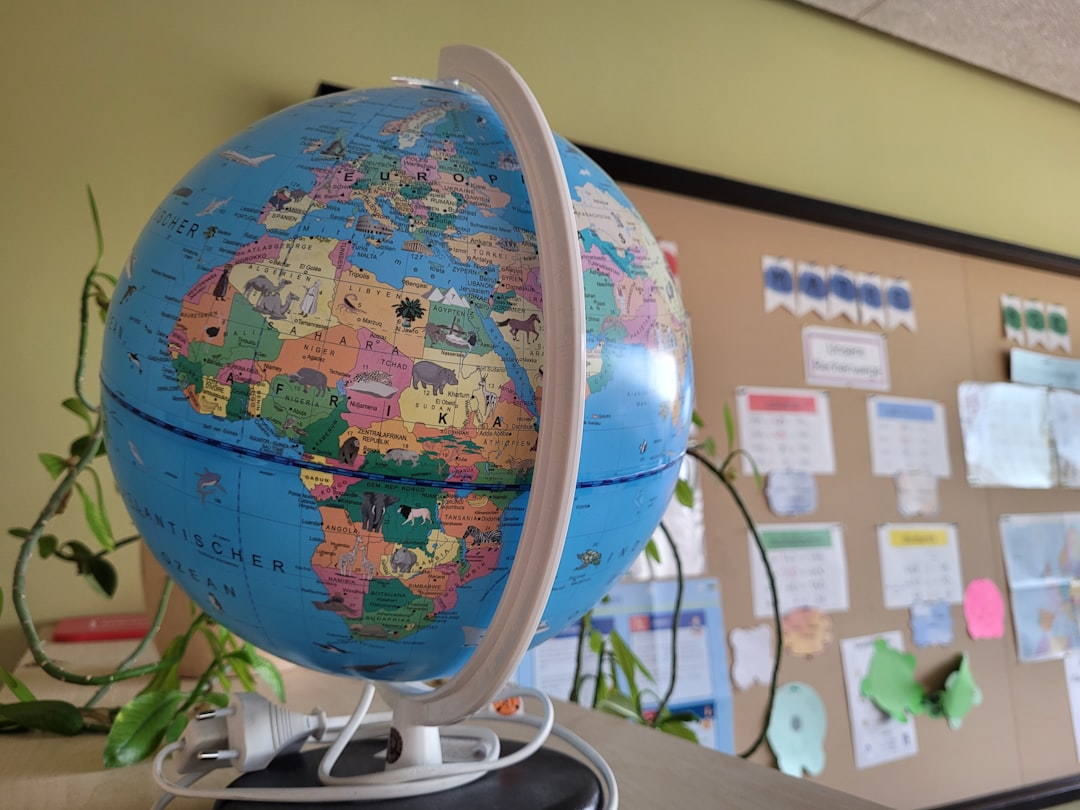
The Ultimate Guide to the International Geography Bee for Kids
Why the Geography Bee Is One of the Most Exciting Academic Competitions for Elementary Students
A geography bee elementary school competition is a structured academic event where students in grades 4 and 5 test their knowledge of world geography — from countries and capitals to bodies of water and world cultures.
Here’s a quick overview of how it works:
- Who can compete: Students in grades 4–8, with elementary divisions focused on grades 4 and 5
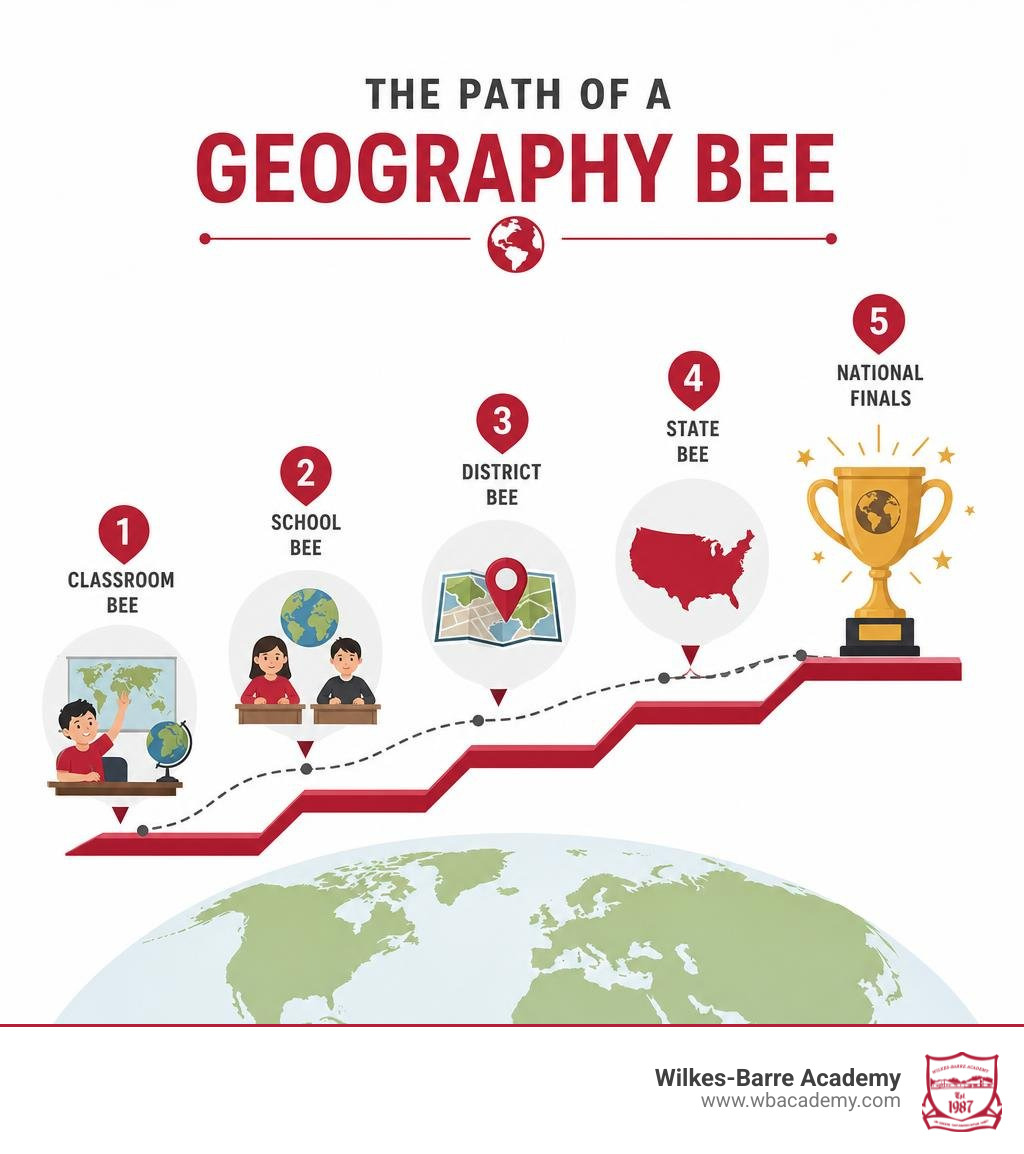
- How it starts: Students compete at the classroom level, then advance to a school-wide bee
- What’s covered: Cities, countries, physical geography, world cultures, and map reading
- How far it can go: School to district to state to national finals
- Who organizes it: The National Geographic Society and International Academic Competitions both run recognized programs
Geography bees are more than a quiz. They push students beyond what they learn in the classroom and challenge them to think fast, recall details, and compete with confidence. One student from McVey Elementary placed 6th in the entire country out of more than 120 national qualifiers — and he was only in 5th grade.
If your child loves maps, travel, or world trivia, this competition could be the perfect academic challenge.
Geography bee elementary school definitions:
- math competition elementary school pennsylvania
- science fair elementary school pennsylvania
- spelling bee school pennsylvania
What is a Geography Bee Elementary School Competition?
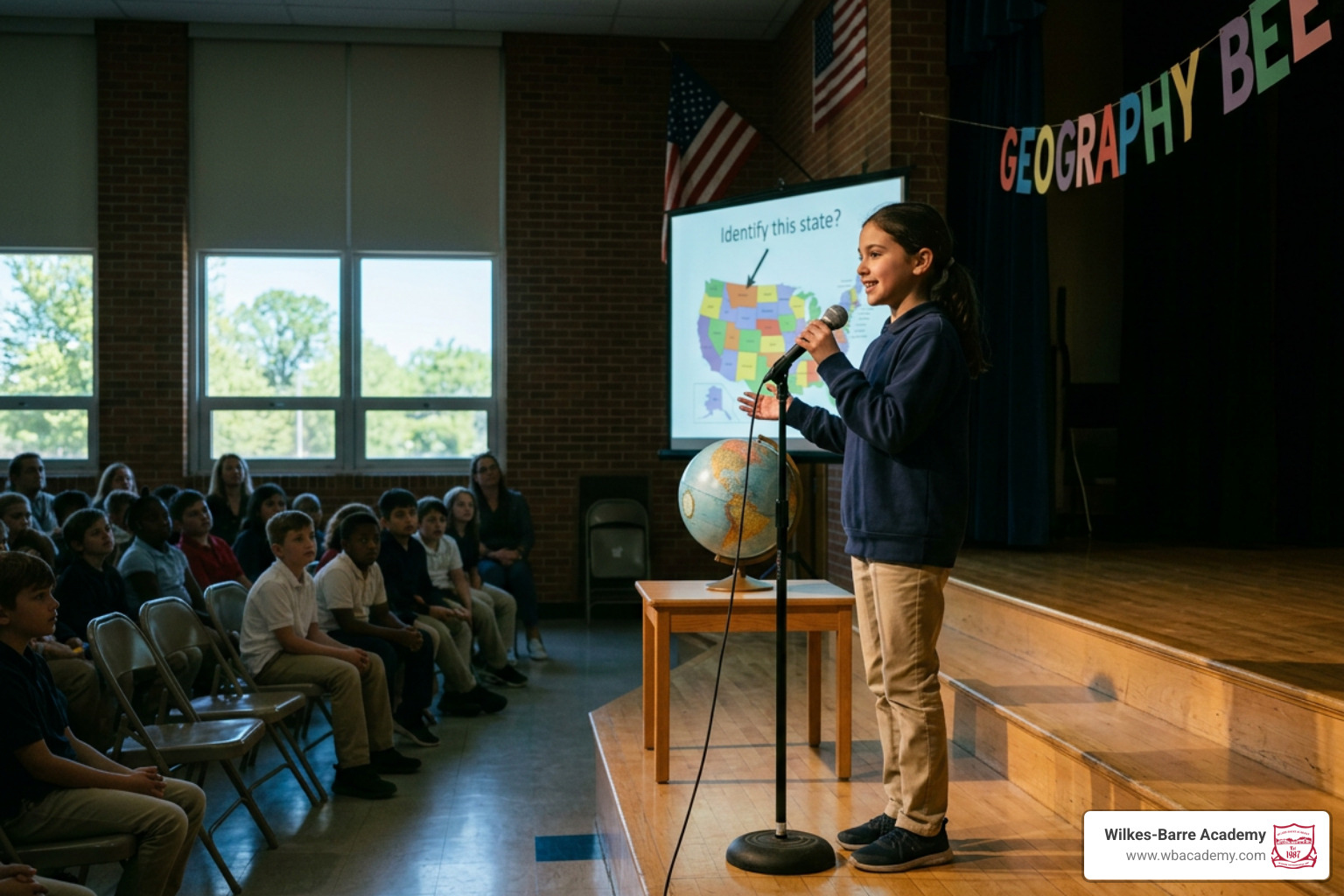
At its core, a geography bee elementary school competition is an exciting, tournament designed to inspire a lifelong curiosity about our planet. While classroom social studies lessons introduce basic maps, a geography bee takes this geographic literacy to a whole new level. It challenges young minds to explore the complex relationships between people, places, and environments across the globe.
Historically, the National Geographic Bee, sponsored by the National Geographic Society, was the primary avenue for this competition. Today, organizations like International Academic Competitions (IAC) host highly popular tournaments, including the National Geography Bee, which features dedicated elementary school divisions.
Many schools run their programs through partnerships between teachers and parent-teacher associations. For example, the Geography Bee – Woodlin Elementary PTA model shows how a school can build a 15-year tradition of voluntary student participation, utilizing custom study packets to keep the experience accessible, fun, and highly educational.
Eligibility and Grade Levels for a Geography Bee Elementary School Event
While geography competitions extend all the way through high school, the elementary school division is uniquely tailored to younger learners.
- Grade Requirements: Typically open to students in the fourth grade and fifth grade. Some local school programs also welcome eager third graders to join in on the fun.
- Participation Limits: To keep the playing field fair, students are generally limited to a maximum of five years of total participation across their elementary and middle school careers.
- Academic Restrictions: Students may not be enrolled in more than three high school or college courses during the academic year they compete.
This structure ensures that young students compete against peers with similar developmental and academic backgrounds, as highlighted by specialized programs like the Geo Bee enrichment initiatives.
How Students Qualify and Excel in a Geography Bee Elementary School
The journey to becoming a geography champion is a step-by-step process that starts right inside the classroom.
- Classroom Selection: Teachers or moderators introduce the competition to their classes. In many schools, each fourth and fifth-grade classroom selects a representative (often one student and an alternate) to move forward.
- Preliminary Rounds: Students complete study packets and participate in classroom-level preliminary bees. These initial rounds usually take about 30 minutes and focus on direct-answer questions.
- Written Qualifying Test: The top performers from each classroom take a written qualifying exam to determine who will represent the school on the big stage.
- School-Wide Competition: The qualified students gather for a school-wide assembly. For instance, at Little Mountain Elementary School, thirty students representing the fourth and fifth grades competed in front of their peers to crown a single school champion.
In recent years, virtual adaptations have also expanded access. Events like the 2021 Elementary Virtual Geography Bees proved that students can showcase their geographic expertise and qualify for higher levels of competition even from a digital learning environment.
How the Competition Progresses: From School to Nationals
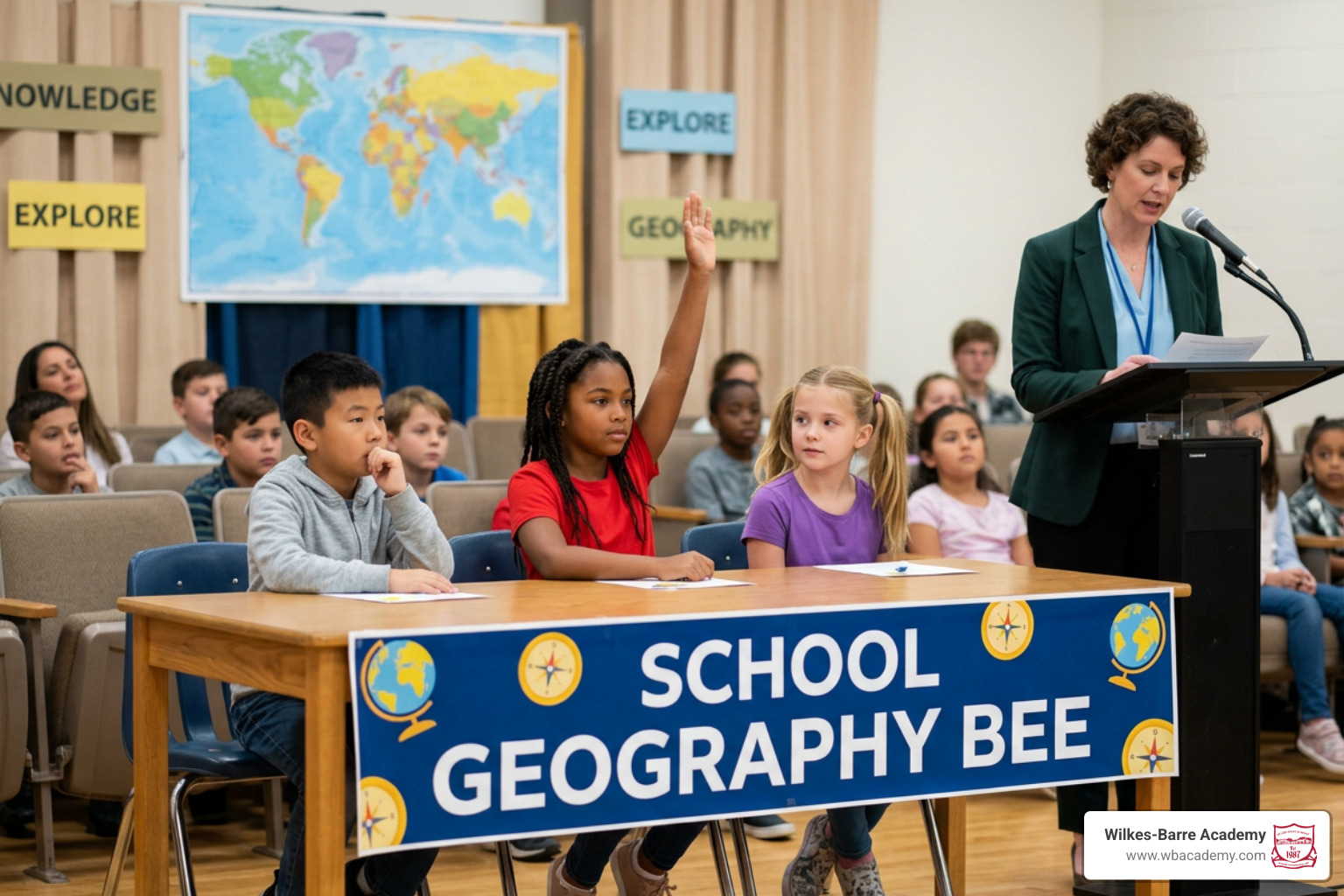
For a student who excels at the school level, the competitive horizon is vast. The progression of a geography bee elementary school tournament is designed to challenge students incrementally as they climb from local classrooms to the national stage.

- School Level: The journey begins with the school-wide bee. The champion of this event earns the right to take an official online or written qualifying test.
- District/Regional Level: Depending on the school district, school winners may advance to a district-wide face-off. In Pennsylvania, districts like the Wilkes-Barre Area School District foster local competitive spirits by celebrating regional academic achievements.
- State Level: Students who score in the top percentiles on the qualifying test are invited to the State Geography Bee. Here, they compete against the brightest young geographers from all over their home state.
- National Finals: The peak of the competition takes place at the national finals, often held over Memorial Day weekend in Orlando, Florida. This prestigious event brings together more than 120 top students from across the United States.
The level of competition at the national finals is incredibly high. Young prodigies like Shamik Mukherjee have shown what is possible, as detailed in the news report Fremont 4th Grader Repeats As National Geography Bee Champion | Fremont, CA Patch, where he defended his title to become a back-to-back national champion.
The Quizbowl Format and Question Types
Once students advance past the written exams, the competition shifts to an exciting, live “Quizbowl” format. This style of play requires not just deep knowledge, but lightning-fast reflexes.
- Buzzer Rounds: Students sit on stage with electronic buzzers. The moderator reads a paragraph of clues that starts broad and gets progressively more specific. The first student to buzz in with the correct answer wins points for their team or themselves.
- Multiple-Choice Tests: Some stages include a rapid-fire multiple-choice test, such as a 50-question exam that must be completed in 20 minutes.
- Diverse Question Types: Questions are rarely simple memorization. They cover:
- Map Locations: Identifying cities, borders, or physical features on a projection.
- World Cultures: Questions about language, religion, traditional foods, and historical empires.
- Physical Geography: Understanding tectonic plates, weather patterns, and ecosystems.
How to Prepare: Study Resources and Support Strategies
Preparing for a geography bee elementary school event requires a mix of structured study and creative exploration. Because geography is an incredibly vast subject, breaking down the material into manageable pieces is key to helping young minds absorb the information without feeling overwhelmed.
| Resource Type | What It Includes | Best For |
|---|---|---|
| School Study Packets | 40-60 pages of curated maps, historical facts, and regional guides. | Mastering the core curriculum and local school-level questions. |
| Interactive Online Tools | Digital map quizzes, educational geography apps, and flashcard sites. | Developing speed, quick recall, and buzzer reflexes. |
| Physical Atlases & Globes | High-quality visual books and physical globes to explore at home. | Building a spatial understanding of borders and physical features. |
To make the most of these resources, parents and educators should work together to build a supportive study routine. You can discover excellent ways to integrate these competitions into your child’s routine by reading about Beyond The Classroom Exciting Academic Activities And Competitions For Students.
Key Topics Covered in Elementary Divisions
If you are helping a student prepare, focus your efforts on these core geographic regions and topics:
- The Western Hemisphere: Deep focus on United States geography, neighboring Canada, Mexico, and the diverse nations of Central and South America.
- Eurasia and Africa: Major mountain ranges, historical empires, dominant river systems (like the Nile and the Danube), and capital cities.
- Bodies of Water: Identifying oceans, seas, gulfs, bays, and major lakes across the globe.
- Navigation & Direction: Understanding latitude, longitude, compass directions, and how to read map legends.
The Benefits of Participating in Geography Competitions
While winning a trophy is a thrilling experience, the true value of a geography bee elementary school competition lies in the lifelong skills it builds.
- Global Awareness: In an increasingly interconnected world, understanding where other cultures live and how global systems interact is a vital skill. Students learn to see themselves as global citizens.
- Critical Thinking: Geography is not just about memorizing names on a map; it is about understanding why cities are built where they are, how rivers shape economies, and how mountain ranges protect or isolate cultures.
- Public Speaking and Poise: Standing on a stage in front of peers, parents, and judges to answer challenging questions builds incredible academic confidence. It teaches children how to handle pressure and think on their feet.
Participating in academic events early in life sets a strong foundation for future learning. To see how geography fits into the broader landscape of youth academic challenges, explore The Ultimate Guide To Pennsylvania Literacy Competitions and learn more about how advanced academics nurture these talents.
Frequently Asked Questions about Elementary Geography Bees
How did COVID-19 and cybersecurity incidents affect recent competitions?
The landscape of student competitions faced significant hurdles in recent years. Due to the COVID-19 pandemic, the 2020-2021 National Geographic Bee was canceled at all levels. This prompted many schools to pivot to virtual bees, utilizing online testing platforms and video conferencing to keep the competitive spirit alive safely.
Additionally, unexpected modern challenges like school cybersecurity incidents have occasionally disrupted school calendars and delayed local district-level bees. Despite these hurdles, organizers and schools have shown incredible resilience, finding creative ways to reschedule and protect these valuable academic traditions for their students.
What are some notable success stories of young geography champions?
Young students constantly prove that age is just a number when it comes to academic excellence:
- Shamik Mukherjee: This brilliant young geographer first discovered his passion for maps at just six years old. By the time he was in the fourth grade, he defeated more than 100 national qualifiers to become a back-to-back National Geography Champion.
- Ibrahim: Competing in Orlando, Florida, Ibrahim stood out as one of the highest-performing fifth graders in the country, earning an impressive 6th place nationally out of more than 120 elite competitors.
How can schools register to host a local Geography Bee?
Schools can register directly through the official International Academic Competitions website or local geography bee organizing bodies. The process typically involves appointing a teacher or administrator as the official moderator, coordinating with the school’s PTA to distribute study packets, and setting up classroom-level preliminary rounds. Partnering with parent volunteers to serve as timekeepers and scorekeepers is a fantastic way to build a strong family-school connection during the event.
Conclusion
At Wilkes-Barre Academy, we believe in providing our students with rich, diverse opportunities to grow both inside and outside the classroom. As a premier, single-location private K-8 school in Luzerne County, Pennsylvania, we offer an academically advanced curriculum designed to inspire curiosity and critical thinking. Our single classroom per grade structure ensures individualized learning, allowing us to support every student’s unique academic passions.
Participating in events like geography bees helps students build confidence, explore the world, and develop skills that will serve them for a lifetime. To learn more about the exciting programs, clubs, and academic challenges we offer to enrich our students’ journeys, visit our Student Activities page and explore our specialized Student Activities/Geography Bee opportunities. Let’s explore the world together!