
In Depth Guide to K-8 Enrichment Programs Near Me in PA
Find the Right K-8 Enrichment Program in Pennsylvania
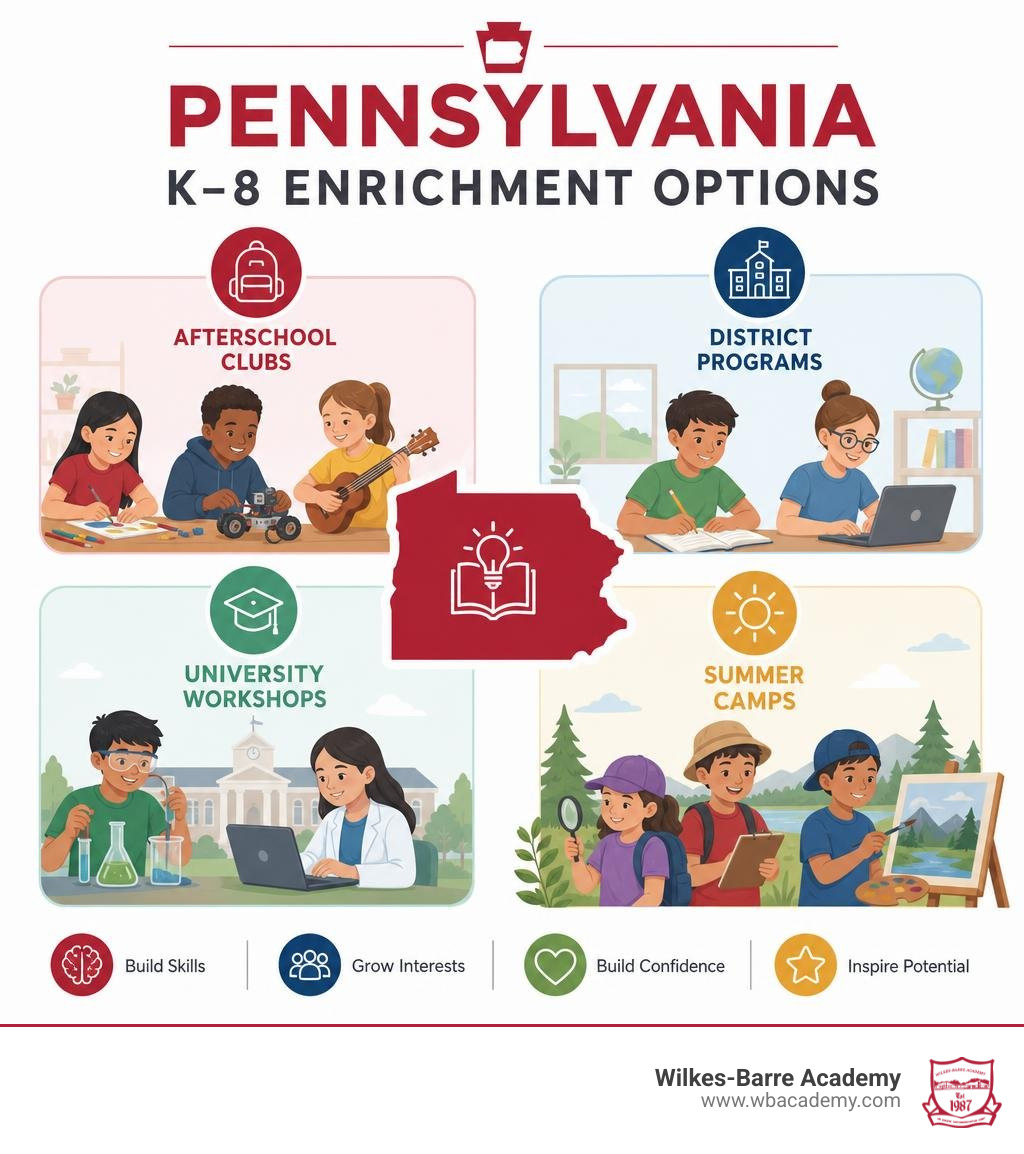
Pennsylvania families can choose from afterschool tutoring and clubs, school-district summer learning, university-led workshops, community programs, and tuition-based camps. The best academic enrichment programs for K-8 students in PA match your child’s grade level, interests, learning needs, schedule, and your family’s budget.
Start by looking for programs that offer:
- Academic support: reading, writing, math, homework help, and study skills
- Interest-based learning: STEM, coding, robotics, arts, music, and creative projects
- Useful family supports: transportation, meals, devices, scholarships, or extended-day care
- A good fit: clear eligibility rules, small-group attention, and regular communication with families
Summer options can be especially helpful. Consistent reading, math practice, and hands-on projects help students hold onto skills during the long break, when some learners may lose as much as two months of reading progress. Programs range from flexible online activities to full-day camps, so families can find support that fits real summer schedules.
This guide explains what is available across Pennsylvania, who can enroll, what it may cost, and how to find a strong local match for your K-8 learner.
Top Types of Academic Enrichment Programs for K-8 Students PA
Navigating the landscape of academic enrichment across Pennsylvania reveals an impressive variety of instructional models. Whether your child thrives in a collaborative classroom, benefits from independent asynchronous modules, or seeks rigorous challenge through university partnerships, Pennsylvania offers structured pathways for every learning profile.
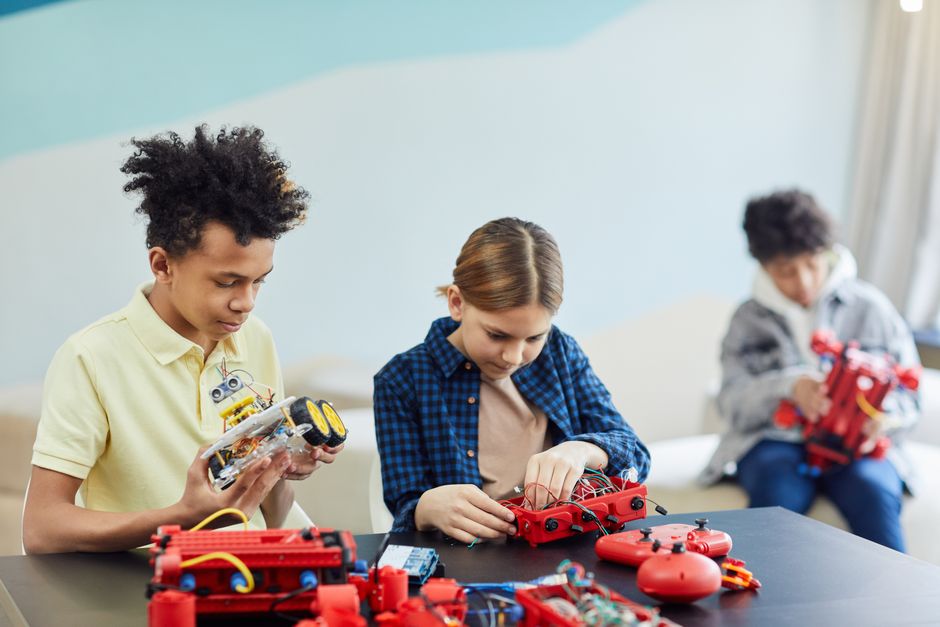
Out-of-school learning models are structured to complement foundational daytime schooling. They provide students with the freedom to dive into specialized subjects without the time constraints of a standard school day bell schedule.
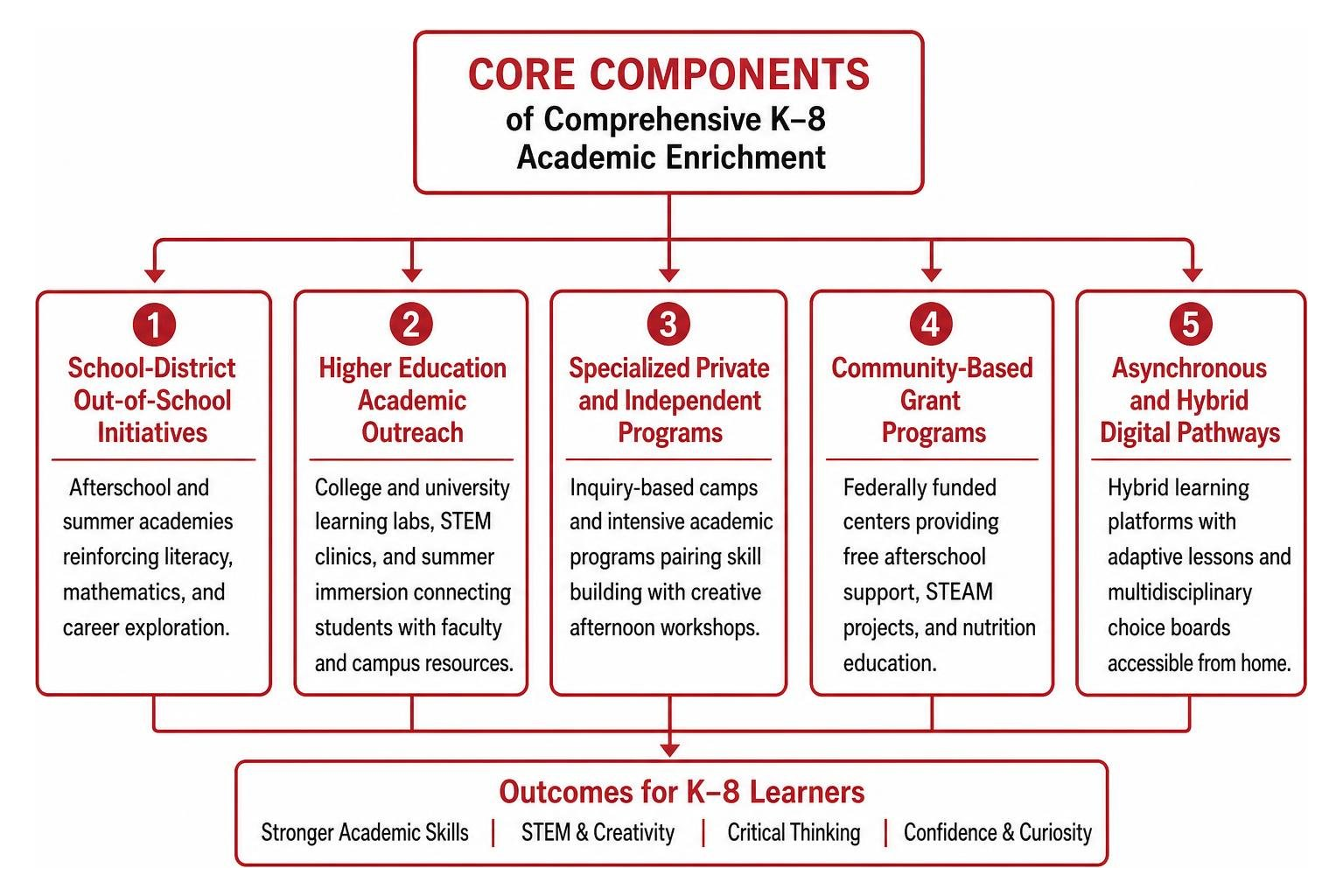
The most common program formats serving kindergarten through eighth-grade students across the Commonwealth include:
- School-District Out-of-School Initiatives: Public school systems often run free or low-cost afterschool enrichment and multi-week summer academies that reinforce literacy, mathematics, and career exploration.
- Higher Education Academic Outreach: Major Pennsylvania colleges and universities sponsor weekend learning labs, STEM clinics, and summer immersion opportunities. Initiatives like Penn State K-12 Student Opportunities connect young learners directly with university faculty, research spaces, and campus resources.
- Specialized Private and Independent Programs: Organizations such as Pennon Education offer inquiry-based camps utilizing real-world broadcasting and digital design spaces, while regional summer academies deliver intensive skill remediation paired with creative afternoon workshops.
- Community-Based Grant Programs: Federally funded initiatives like the 21st Century Community Learning Centers (CCLC) provide free afterschool homework help, STEAM projects, and nutrition education in designated public school communities.
- Asynchronous and Hybrid Digital Pathways: Many Pennsylvania programs provide hybrid learning platforms where elementary students access adaptive math lessons and multidisciplinary choice boards from home.
Core Subject and STEM Academic Enrichment Programs for K-8 Students PA
STEM-focused enrichment connects abstract classroom theories with real-world experimentation. For elementary learners, early engagement in solving the Pennsylvania elementary math competition scene sharpens computational fluency, spatial reasoning, and creative problem-solving skills long before middle school.
In inquiry-driven science programs, students transition from passive readers into active researchers. Hands-on laboratory experiments, maker challenges, and environmental field studies encourage children to question hypotheses, analyze data sets, and present findings. Many students prepare for competitive showcases by reviewing the best science fairs in Pennsylvania for young scientists, which fosters a deep appreciation for evidence-based inquiry.
Urban and university-led partnerships also provide deep technical immersion. For instance, Drexel University’s Young Dragons program provides free weekly STEAM summer camps for rising 6th–8th grade students living or attending school in West Philadelphia. These initiatives integrate the scientific method with music technology, digital beat coding, animation, and digital storytelling to keep middle schoolers motivated.
Arts, Humanities, and Language Immersion Pathways
While STEM garners substantial focus, humanities and creative arts enrichment programs cultivate critical interpretation, empathy, and refined communication skills.
Literacy-focused clubs, creative writing seminars, and spelling bees strengthen vocabulary and text analysis. Students can measure their reading comprehension and expressive writing abilities by exploring the ultimate guide to Pennsylvania literacy competitions.
Humanities enrichment spans multiple creative disciplines:
- World Language Immersion: Introducing global languages during the early elementary years accelerates cognitive flexibility. Understanding why early language learning matters: Spanish for Pennsylvania kids reveals how early foreign language exposure builds stronger neural pathways and improves native English grammar proficiency.
- Student Journalism and Non-Fiction Writing: Writing for school papers or community publications teaches young writers how to interview sources, conduct primary research, and craft persuasive articles. The impact is detailed in the power of the pen: student journalism in PA schools.
- Performing and Visual Arts: Orchestral ensembles, summer drumlines, and theatrical stages give students an outlet for creative expression, team coordination, and stage presence.
- Debate and Public Speaking: Middle school forensics and debate leagues train young scholars to research nuanced public policies, craft persuasive arguments, and speak clearly in front of diverse audiences.
Key Academic and Developmental Benefits for Elementary and Middle Schoolers
Participating in structured academic enrichment programs for k-8 students pa delivers developmental benefits that extend beyond test scores. When children collaborate on complex, multi-week projects, they build social-emotional resilience and self-confidence.
Peer collaboration within enrichment settings teaches students how to negotiate roles, delegate tasks, and solve conflicts. Mentorship programs also play a transformative role; examining students helping students with PA peer tutoring programs demonstrates how peer-to-peer instruction reinforces learning for both the tutor and the learner.
| Academic Factor | Without Summer / Afterschool Enrichment | With Structured Academic Enrichment |
|---|---|---|
| Reading Retention | Loss of up to 2 months of grade-level reading progress | Maintained or advanced reading comprehension levels |
| Math Fluency | Measurable decline in computational and procedural recall | Sustained problem-solving speed and concept retention |
| Executive Function | Unstructured routines can slow academic momentum | Consistent practice in time management and goal-setting |
| Social-Emotional | Limited structured peer interaction over extended breaks | Regular collaboration, teamwork, and leadership practice |
Preventing the Summer Slide in Reading and Mathematics
The “summer slide”—the well-documented loss of academic skills when formal schooling ceases—disproportionately affects reading comprehension and computational mathematics. Educational research confirms that without academic engagement, elementary and middle school students can lose up to two months of foundational learning each summer.
Structured summer enrichment directly addresses this challenge. For example, the North Penn School District Summer Enrichment Program uses personalized digital math pathways paired with weekly teacher-created choice boards to keep elementary students academically active. Similarly, our team at Wilkes-Barre Academy designs summer curricula to balance active recreation with core skill maintenance, as outlined in about our summer program.
Fostering Executive Functioning and Advanced Problem-Solving
As students advance from elementary grades into middle school, academic expectations shift from basic memorization to independent self-management. Enrichment programs serve as low-stakes environments to develop essential executive functioning skills:
- Prioritization and Planning: Breaking down multi-step assignments, such as robotics prototypes or research essays, into manageable daily milestones.
- Organized Note-Taking: Implementing structured note-taking frameworks for scientific observations, historical texts, and lecture summaries.
- Metacognition and Self-Assessment: Reviewing mistakes on math challenges or coding scripts to identify logical errors without frustration.
- Competitive Drive: Engaging in extracurricular challenges, as highlighted in beyond the classroom: exciting academic activities and competitions for students, which teaches students how to perform under time constraints while keeping their composure.
Eligibility, Schedules, and Essential Support Services Across Pennsylvania
Enrichment program logistics across Pennsylvania vary by provider type, geographic setting, and funding source. Understanding operating calendars, eligibility rules, and support options helps families plan an enriching academic year and summer.
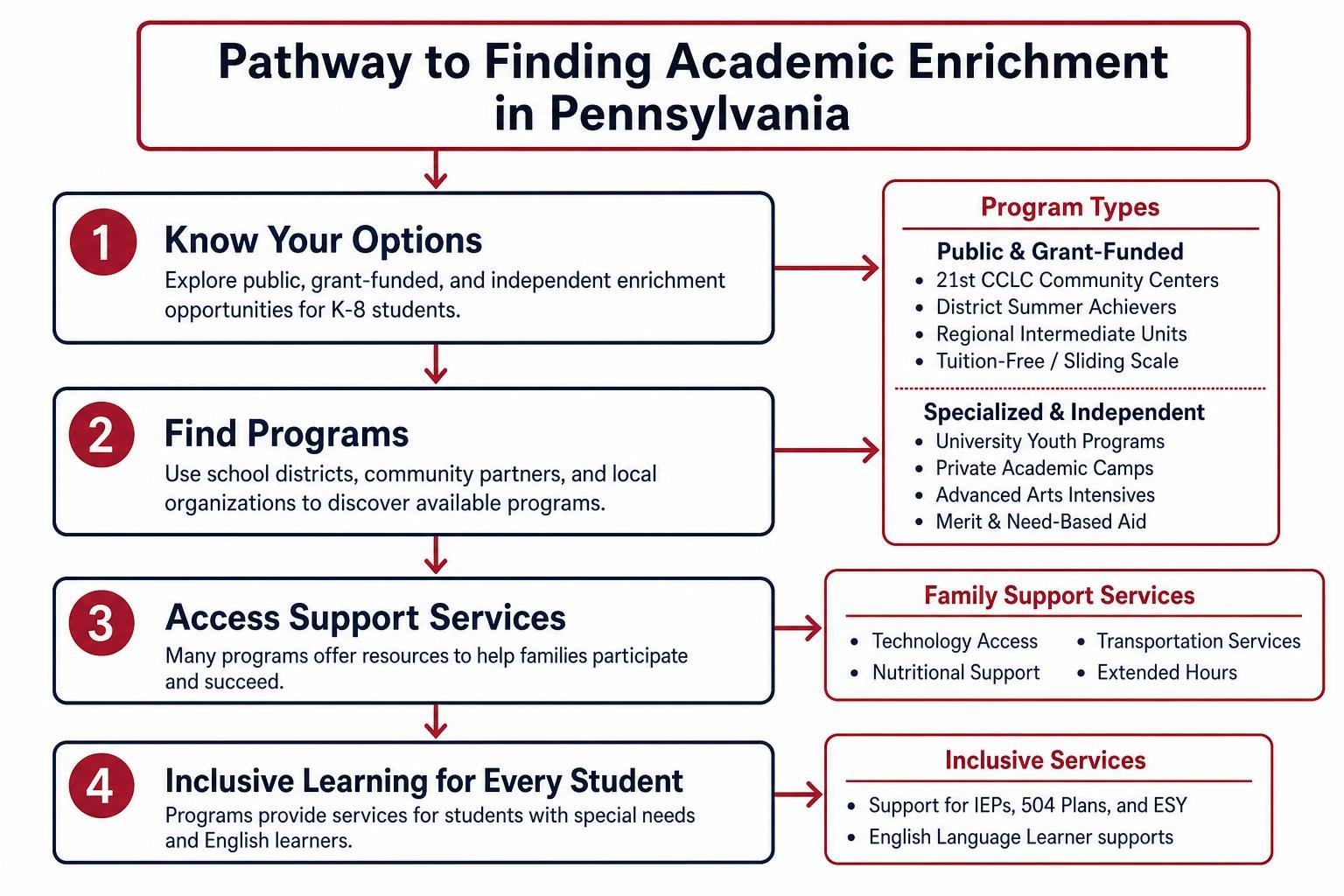
Many out-of-school programs provide wrap-around supports to make learning accessible:
- Technology Access: Virtual transition programs frequently supply loaner Chromebooks or tablets to ensure students can access online learning platforms from home.
- Nutritional Support: Full-day summer camps and grant-funded afterschool programs often provide free breakfast, lunch, or afternoon snacks through the USDA Summer Food Service Program.
- Transportation Services: Several urban and rural school districts provide consolidated hub busing for summer achievers and afterschool learning centers.
- Extended Hours: To assist working parents, many programs provide before-care (starting at 7:45 AM) and after-care (running until 5:15 PM or 6:00 PM).
Inclusive Learning: Accommodations for Special Needs and English Learners
Pennsylvania enrichment programs strive to support diverse learners, including students with Individualized Education Programs (IEPs), 504 Plans, and English Language Learners (ELL).
Public school districts across the Commonwealth provide Extended School Year (ESY) services for eligible students with special needs to prevent significant skill regression. Furthermore, specialized newcomer programs deliver focused English language development alongside bilingual family support.
For families exploring independent education models, learning styles and specialized instruction play a central role. Exploring no two brains are alike: the rise of personalized private education in PA explains how small class sizes and differentiated pacing help students with varying academic profiles reach their full potential.
Finding and Funding Academic Enrichment Programs for K-8 Students PA
Securing high-quality enrichment does not have to strain your family’s budget. Pennsylvania hosts a wide range of free, subsidized, and sliding-scale educational initiatives:
- 21st CCLC Grant Programs: The Private Industry Council’s Afterschool and Summer Enrichment Programs serve students across Fayette and Westmoreland Counties at no cost to families. Similar programs like Wilkes University SHINE provide hands-on STEAM enrichment in Luzerne County.
- Tuition-Free District Summer Camps: Large urban systems, including the School District of Philadelphia, offer free full-day summer programs like Summer Achievers (grades 1–8) and Career and Technical Education (CTE) exploration camps for rising 6th–8th graders.
- University Community Partnerships: Initiatives such as Drexel University’s Young Dragons in West Philadelphia deliver free weekly STEAM workshops.
- Need-Based Scholarships: Independent camp providers frequently offer partial or full tuition scholarships. For example, Pennon Education’s Slide into Summer camps in Harrisburg, PA provide half-day camps for $135/week and full-day sessions for $270/week, with financial aid available for qualifying families.
- Private Independent School Offerings: For families in Northeastern Pennsylvania seeking a cohesive academic environment year-round, reviewing the best Wilkes-Barre area schools for individualized learning highlights how dedicated private institutions structure enrichment directly into their school culture.
Frequently Asked Questions About K-8 Enrichment in Pennsylvania
When do summer and afterschool enrichment programs open for registration?
Most Pennsylvania enrichment providers open summer registration between February and April. Highly specialized university camps, district career exploration programs, and subsidized community programs often fill their spots on a first-come, first-served basis by mid-spring.
Afterschool enrichment programs typically open registration in August for the upcoming fall semester, with secondary intake windows occurring in January for mid-year offerings.
Are free or low-cost academic programs available in Pennsylvania?
Yes. Pennsylvania families can access numerous free and low-cost programs funded through federal 21st Century Community Learning Centers grants, municipal park departments, local public libraries, and university endowment initiatives.
Major school districts across Pennsylvania also provide free full-day summer learning programs covering reading, math, and STEAM activities for enrolled public school students.
Can students from any school type participate in regional enrichment opportunities?
It depends on the program host and funding regulations:
- Public School District Programs: Programs funded directly by local school property taxes or district-specific allocations are often restricted to students enrolled in that specific public school system.
- University Outreach and Independent Camps: University youth clinics, non-profit community programs, and private academic summer camps welcome students from all educational backgrounds—including public, private, parochial, and homeschool settings.
- Regional Intermediate Units: Pennsylvania Intermediate Units (IUs) frequently host academic competitions, STEM challenges, and arts showcases open to all registered students across their regional footprint.
Conclusion
Choosing the right academic enrichment pathway empowers your child to cultivate new passions, build strong study habits, and develop meaningful friendships. Whether preventing summer learning loss through interactive math games, mastering coding languages at a university workshop, or discovering a love for public speaking, out-of-school enrichment creates confident, lifelong learners.
At Wilkes-Barre Academy, located in Wilkes-Barre, PA, we understand the value of an individualized academic experience. Our single-location private school features a single classroom per grade, allowing our teachers to tailor instruction to every student’s learning pace while building strong family connections within a close-knit community.
From advanced elementary science experiments to preparing middle school scholars for competitions like winning the Pennsylvania Science Olympiad, we are dedicated to helping every child excel. Explore how our advanced academic curriculum and supportive school community can guide your child toward a bright academic future.