
The Complete Guide to Local Preschools in Wilkes-Barre
Early Childhood Education Wilkes-Barre: A Quick Guide for Parents
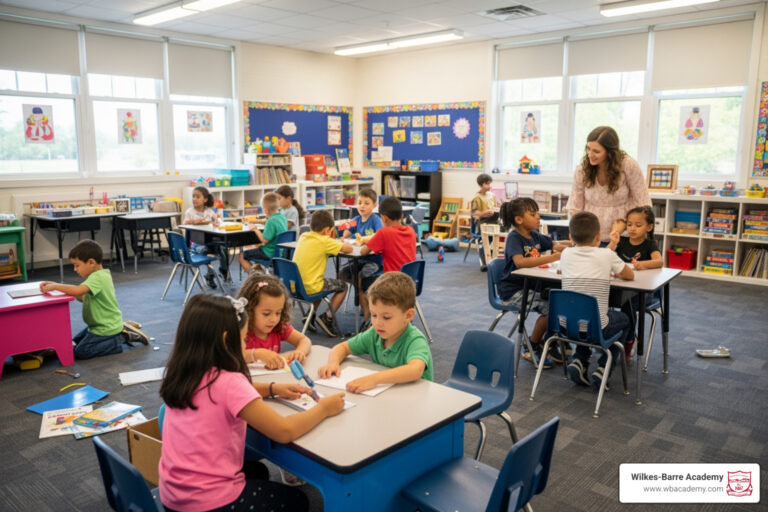
Early childhood education Wilkes-Barre includes infant care, nursery school, preschool, and pre-kindergarten programs designed to build early literacy, social skills, independence, and kindergarten readiness.
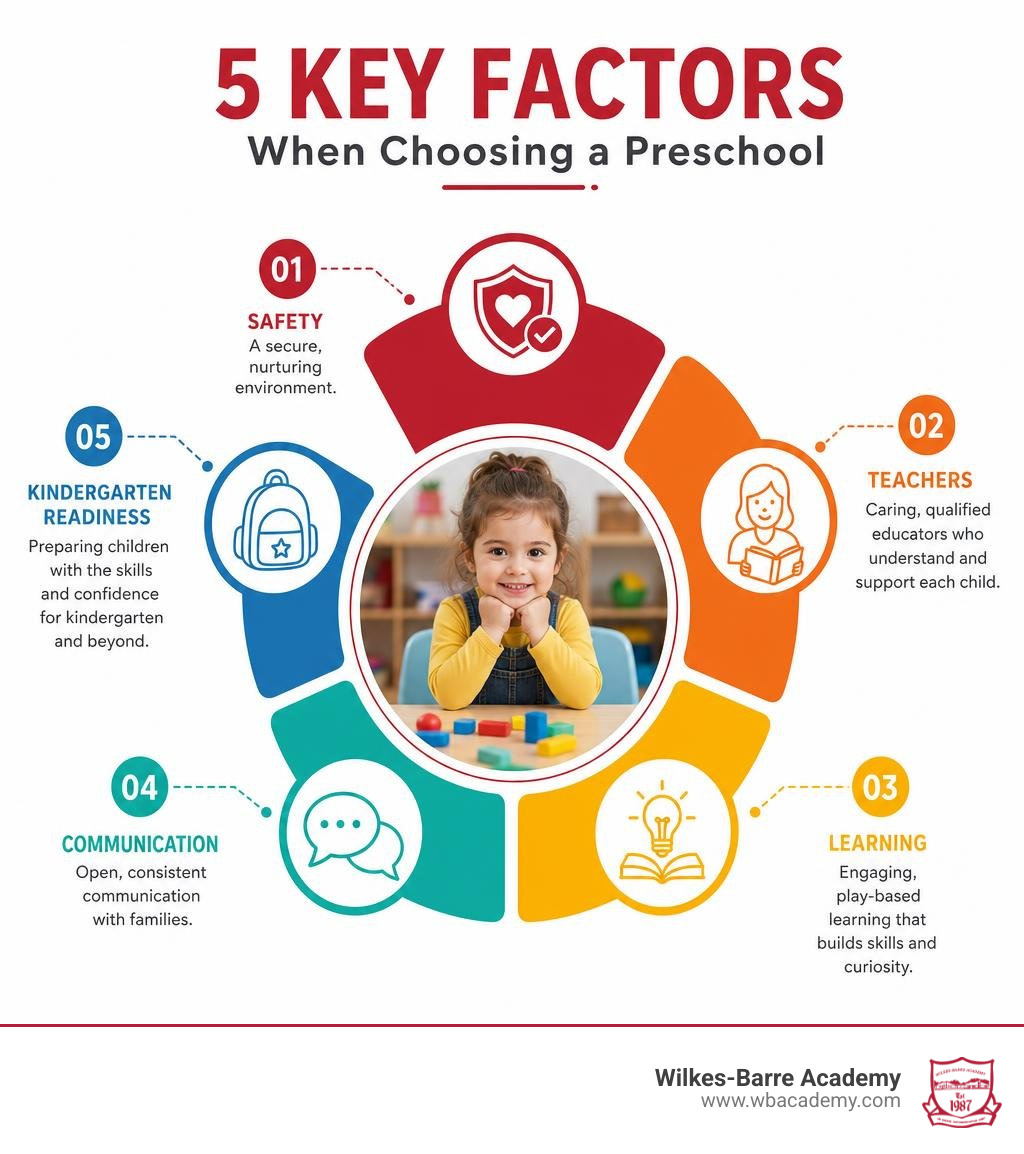
For busy families, the best fit is usually a program that offers:
- A safe, nurturing classroom with consistent communication
- Learning through play, stories, music, movement, and hands-on activities
- Age-appropriate support for language, early math, motor skills, and social-emotional growth
- Teachers who understand child development and can respond to each child’s needs
- A clear path from preschool into kindergarten and elementary learning
Wilkes-Barre families can choose from community child care centers, pre-K programs, and private early-learning settings. The options differ in schedules, age groups, teaching approach, and how closely they connect with a child’s next school experience.
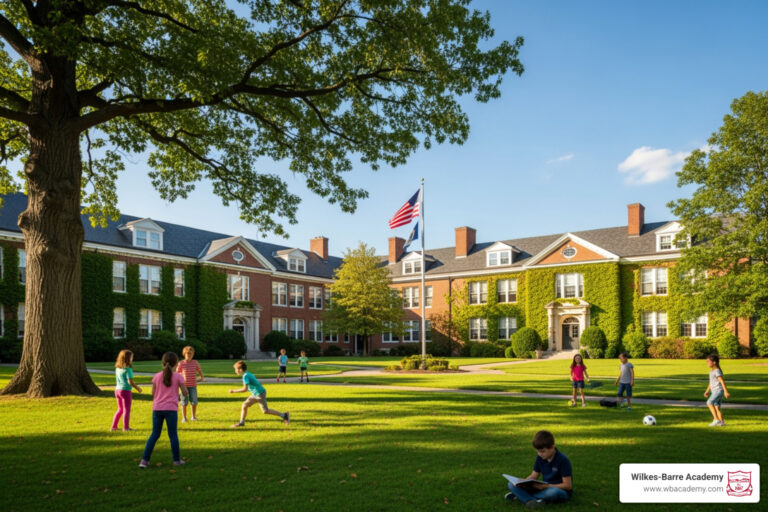
At Wilkes-Barre Academy, Small Wonders Preschool is a single-location early-learning program serving children from infancy through pre-kindergarten. Its approach combines caring relationships with purposeful learning, helping children gain confidence before their transition to kindergarten.
This guide explains what to look for, how local programs compare, and how early education can shape a strong start in school.
Navigating Early Childhood Education Wilkes-Barre Options
Choosing the right path for early childhood education Wilkes-Barre can feel like trying to assemble furniture without the manual. Parents want a place where their children will be safe, loved, and academically prepared, but sorting through local offerings takes time. Early education in Northeastern Pennsylvania spans a wide spectrum—from infant developmental programs up to structured pre-kindergarten classes designed for smooth transitions into elementary school.
Understanding Pennsylvania’s educational framework helps narrow down the choices. In Pennsylvania, early childhood instruction generally aligns with PK-4 (Pre-Kindergarten through 4th grade) learning standards set by the Pennsylvania Department of Education. These standards establish clear goals for early literacy, cognitive reasoning, fine and gross motor development, and social-emotional regulation.
When evaluating local options, families often weigh factors such as teacher qualifications, classroom sizes, safety protocols, and how well a school communicates daily progress. If you are starting your search, our guide on Finding the Best Preschool in Wilkes-Barre Without Losing Your Mind breaks down step-by-step strategies for touring facilities and asking the right questions.
Types of Early Childhood Education Wilkes-Barre Programs
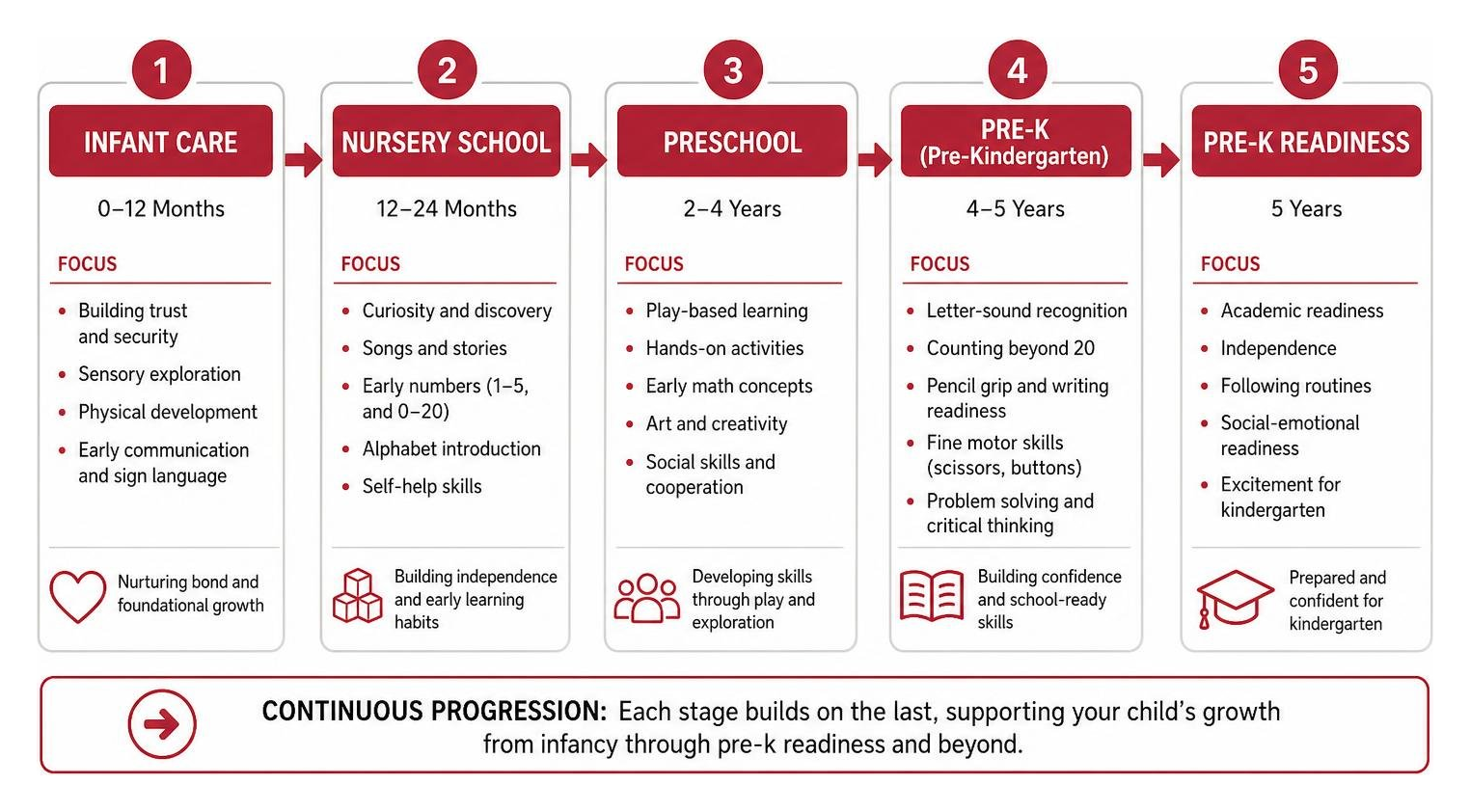
Early learning isn’t a one-size-fits-all model. Children develop at their own pace, and programs are structured around developmental tiers to nurture specific milestones:
- Infant Care Programs: Focus on building trust, sensory exploration, physical stability, and foundational language exposure. High-quality infant programs integrate basic sign language to help babies express needs before verbal skills fully mature.
- Nursery School: Geared toward toddlers, nursery programs foster curiosity through songs, group stories, initial counting (1–5 and 0–20), alphabet introduction, and early self-help skills like potty training and washing hands.
- Preschool Curriculum: Blends play-based discovery with structured learning. Preschoolers explore hands-on science experiments, simple mathematical patterns, guided artwork, and interactive play that builds cooperation and empathy.
- Pre-Kindergarten (Pre-K) Focus: Prepares four- and five-year-olds directly for elementary school. Taught by certified educators, Pre-K emphasizes letter-sound recognition, counting beyond 20, pencil grip, fine motor manipulation (using safety scissors and buttoning coats), and problem-solving skills.
Early language acquisition is particularly crucial during these formative years. Introducing structured language activities early boosts brain plasticity and verbal confidence. To understand why introducing foreign languages early pays huge dividends, read our deep-dive on Why Early Language Learning Matters Spanish for Pennsylvania Kids.
Key Features of Quality Early Learning Centers
What makes an early learning center stand out? Beyond colorful walls and fun toys, exceptional early childhood facilities share several key features:
- Certified and Caring Teachers: Early educators who hold degrees or state certifications understand child development theory and know how to differentiate instruction for active or quiet learners.
- Focus on Motor Skills and Fine Motor Control: From sensory bins and clay modeling to playground navigation, young learners require daily physical activities to develop core strength and handwriting readiness.
- Self-Help Habits and Independence: Great centers teach children how to zip their jackets, clean up play stations, wash hands independently, and manage daily routines.
- Social-Emotional Growth: Early classrooms serve as the first social laboratory. Guidance in sharing, managing frustration, recognizing emotions, and using words to resolve conflicts builds lifelong resilience.
- Hands-On, Interactive Learning: Rather than passive screen time or tedious worksheets, quality centers utilize tactile learning blocks, science experiments, storytelling, and music.
Families looking at local community resources can review state early education portals and regional directories to compare learning environments, facility standards, and operational models across Luzerne County.
Higher Education Pathways and Teacher Certification
The backbone of outstanding early childhood education Wilkes-Barre lies in the dedication and training of local teachers. In Pennsylvania, becoming a certified early childhood educator requires rigorous coursework, mastery of child psychology, and hundreds of hands-on classroom hours before taking lead teaching roles.
Local colleges and universities offer well-traveled academic pipelines for prospective teachers, ranging from initial two-year associate degrees to four-year bachelor’s degrees with specialized certifications.
| Feature / Criteria | Associate Degree (A.A.S.) | Bachelor’s Degree (B.A. / B.S.) |
|---|---|---|
| Typical Duration | 2 Years | 4 Years |
| Total Credits | ~60–64 Credits | 124 Credit Hours |
| Primary Focus | Foundational child development, observation, care basics | Advanced pedagogy, literacy, curriculum design, leadership |
| Certification Pathway | Entry-level childcare, assistant teacher, transfer track | Pennsylvania PK-4 State Teacher Certification |
| Field Hours Required | 20 hrs Stage 1 observation + 10 hrs Stage 2 infant focus | 250+ field/PDS hours prior to formal student teaching |
| Clearance Requirements | DPW Child Abuse, PA State Police, FBI Fingerprints, TB test | DPW Child Abuse, PA State Police, FBI Fingerprints, TB test |
Degree Pathways for Early Childhood Education Wilkes-Barre Teachers
Students starting their journey in higher education often begin at two-year institutions before transitioning to university bachelor’s programs:
- Associate of Applied Science (A.A.S.): Institutions like Luzerne County Community College offer complete programs of study in early childhood education. Students examine Developmentally Appropriate Practice (DAP), child psychology, and environmental assessments using tools like the Infant/Toddler Environmental Rating Scale-revised (ITERS-R). Check out the complete course outline at Luzerne County Community College – Early Childhood Education ECE Program of Study .
- Bachelor of Arts / Science (124 Credits): Four-year degrees, such as the Elementary and Early Childhood Education Major | Wilkes University , require 124 credit hours. These comprehensive programs lead directly to PA PreK-4 teacher certification.
- Dual Certification & Reading Minors: To address diverse learning needs, many teachers pursue dual certification in Special Education alongside their PK-4 credential. Programs frequently build an 18-credit reading minor directly into the major so future educators can effectively diagnose and support early reading difficulties.
Online vs On-Campus Educator Programs
Balancing work and higher education can be challenging, especially for early childhood professionals already working full-time in local child care centers. To meet this demand, flexible academic formats have expanded significantly:
- Traditional On-Campus Track: Ideal for traditional college students who benefit from face-to-face instruction, on-campus peer collaboration, and structured daytime field placements starting in their first semester.
- Online Degree Completion Track: Designed specifically for working adults who have earned an associate degree or completed at least 55 college credits. Candidates can finish their bachelor’s degree entirely online while continuing to work in early care facilities during the day. This flexibility enables assistant teachers to earn full certification without sacrificing their income.
Field Work, Financial Aid, and Career Outcomes
Becoming an effective teacher requires extensive real-world experience. You cannot learn classroom management solely from a textbook! That is why Pennsylvania certification programs require hands-on field hours embedded into academic training.
Before stepping into a classroom as a lead teacher, candidates complete a structured series of observations and professional school placements:
- Stage 1 & Stage 2 Field Experience: Introductory courses require 20 hours of initial observation (Stage 1) followed by 10 hours focused specifically on infant and toddler care environments (Stage 2).
- Professional Development Schools (PDS): Local university partnerships with school districts across Luzerne, Lackawanna, and Wyoming counties allow candidates to log over 250 field hours before student teaching. Candidates observe diverse student behaviors, practice lesson delivery, and learn classroom management strategies under expert guidance.
- Student Teaching Commitments: The capstone semester involves full-time immersion in PK-4 classrooms. Some local programs even maintain partnerships with out-of-state districts—such as Casa Grande, Arizona—where an impressive 95% of student teachers receive immediate job offers upon completion.
Financing an education in early childhood care is supported by valuable state and foundation grants:
- T.E.A.C.H. Early Childhood Pennsylvania Scholarship: Administered by PACCA for staff working in Keystone STARS-rated facilities, this state grant covers partial tuition, university fees, and provides paid release time for coursework.
- PNC Grow Up Great Funding: Local grants and foundation support assist working educators in completing degree requirements with minimal out-of-pocket expenses.
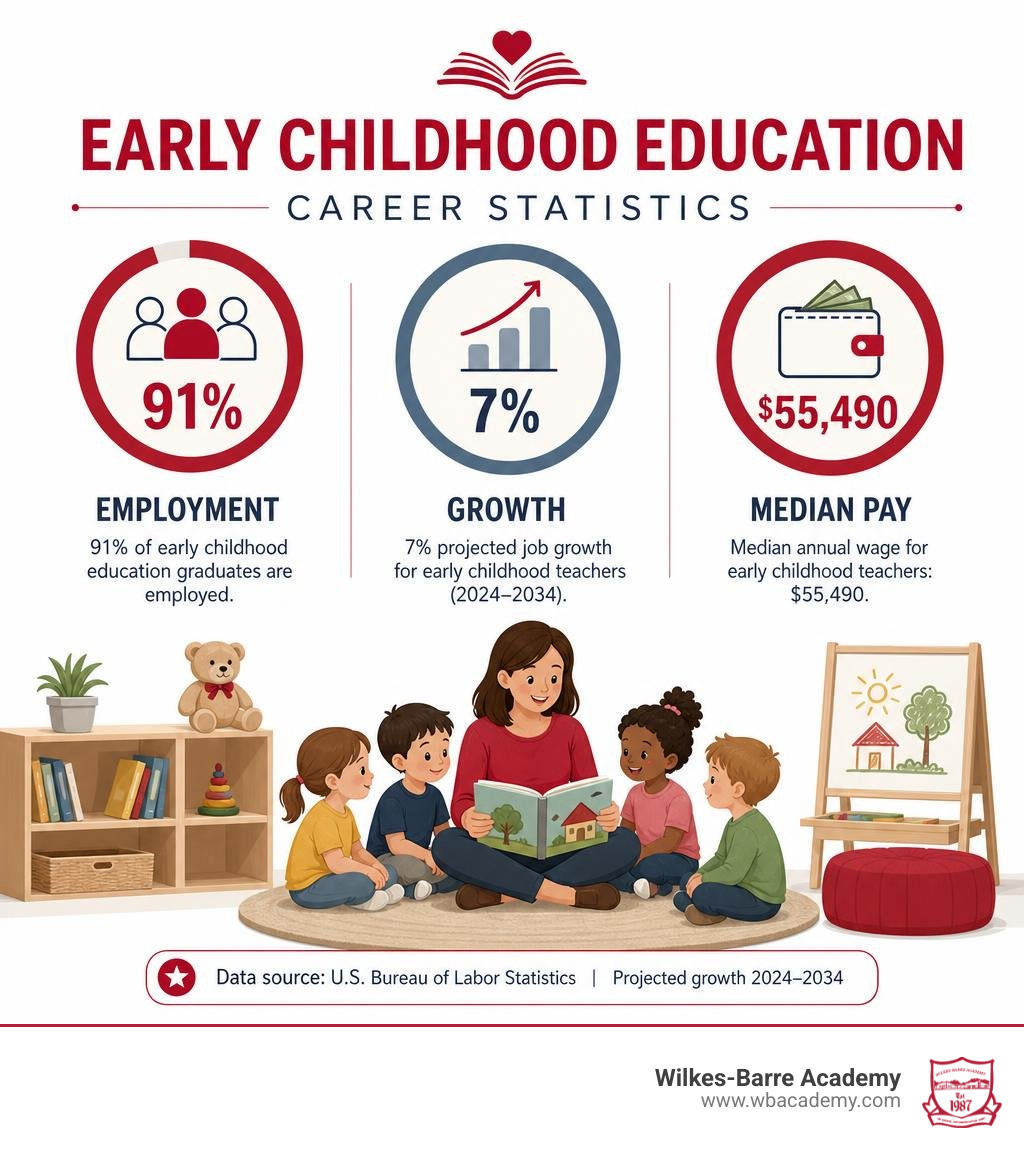
The career path for early educators offers steady demand. The U.S. Bureau of Labor Statistics projects that employment for preschool and elementary teachers will grow by 7% over the coming decade. Nationally, median annual pay stands at $55,490. Locally, career outcomes are exceptionally bright: 91% of program graduates are working in education within one year of graduation.
For working parents managing higher education or busy jobs, reliable schedule support is essential. Exploring options like quality Before After School Care can make all the difference in keeping family routines running smoothly.
Transitioning from Preschool to Primary Education
The leap from preschool into elementary school represents a major milestone for young children and their parents. A well-designed early education program ensures that this transition feels like a natural step forward rather than a overwhelming jump.
Key markers of kindergarten readiness include:
- Academic Foundations: Recognizing uppercase and lowercase letters, phonemic awareness, counting objects accurately, and recognizing primary colors and shapes.
- Social & Emotional Competence: Taking turns, listening to multistep directions, expressing frustration constructively, and sitting attentively during group instruction.
- Physical Dexterity: Holding a pencil with proper tripod grip, using safety scissors comfortably, navigating playground equipment, and managing personal belongings.
When parents choose an integrated, single-location educational path—where preschool and elementary grades share a cohesive philosophy—children gain deep familiarity with their environment, teachers, and peers.
If you are exploring educational choices beyond early care, take time to learn All About Private School Options to see how independent schools format early learning. Discovering Why a Private K-8 School in Pennsylvania Makes the Grade can help you evaluate long-term learning benefits from pre-kindergarten all the way through 8th grade.
Frequently Asked Questions About Early Learning
What certifications do early childhood educators need in Pennsylvania?
In Pennsylvania, lead teachers in public elementary schools and formal Pre-K programs generally hold a bachelor’s degree and a Pennsylvania PK-4 Instructional I Teaching Certificate. To qualify, candidates must complete an accredited teacher preparation program, log required field and student teaching hours, pass state PRAXIS/PAPA certification exams, and maintain required background clearances (DPW Child Abuse Clearance, PA State Police Criminal Record Check, FBI Fingerprinting, and a negative TB test).
What financial support helps students complete early education degrees?
Working childcare professionals in Pennsylvania can take advantage of the T.E.A.C.H. Early Childhood Pennsylvania Scholarship, which provides tuition assistance, book stipends, and paid release time. Additional financial aid includes PNC Grow Up Great tuition grants, federal Pell Grants, student loans, and university-specific scholarships designed for transfer students completing online or evening degrees.
How do field hours prepare educators for early childhood classrooms?
Field hours allow prospective teachers to apply child development theory in real classrooms. By logging over 250 field hours across diverse classroom settings before formal student teaching, educators learn to differentiate instruction for varying learning speeds, implement positive behavior management strategies, adapt lessons for special needs students, and communicate effectively with parents.
Conclusion
Securing outstanding early childhood education Wilkes-Barre is one of the most impactful investments parents can make in their child’s future happiness and academic growth. From nurturing infant environments that celebrate first words to structured pre-kindergarten classrooms that spark a passion for reading and science, local early learning programs set the stage for lifelong confidence.
At Wilkes-Barre Academy, our Small Wonders Daycare and preschool program operates as a single-location institution focused entirely on providing a warm, family-centered community. We believe every child deserves a safe, inspiring space to explore, build lasting friendships, and master foundational academic skills.
Whether your child is taking their first steps in our nursery or getting ready for kindergarten in Pre-K, our dedicated teachers are here to guide every step of the journey. Contact us today to schedule a private tour and discover how our close-knit environment can give your child the perfect start!