The Best Private Preschools in Luzerne County for Beginners
Comparing Public Programs and Private Preschool Luzerne County Options
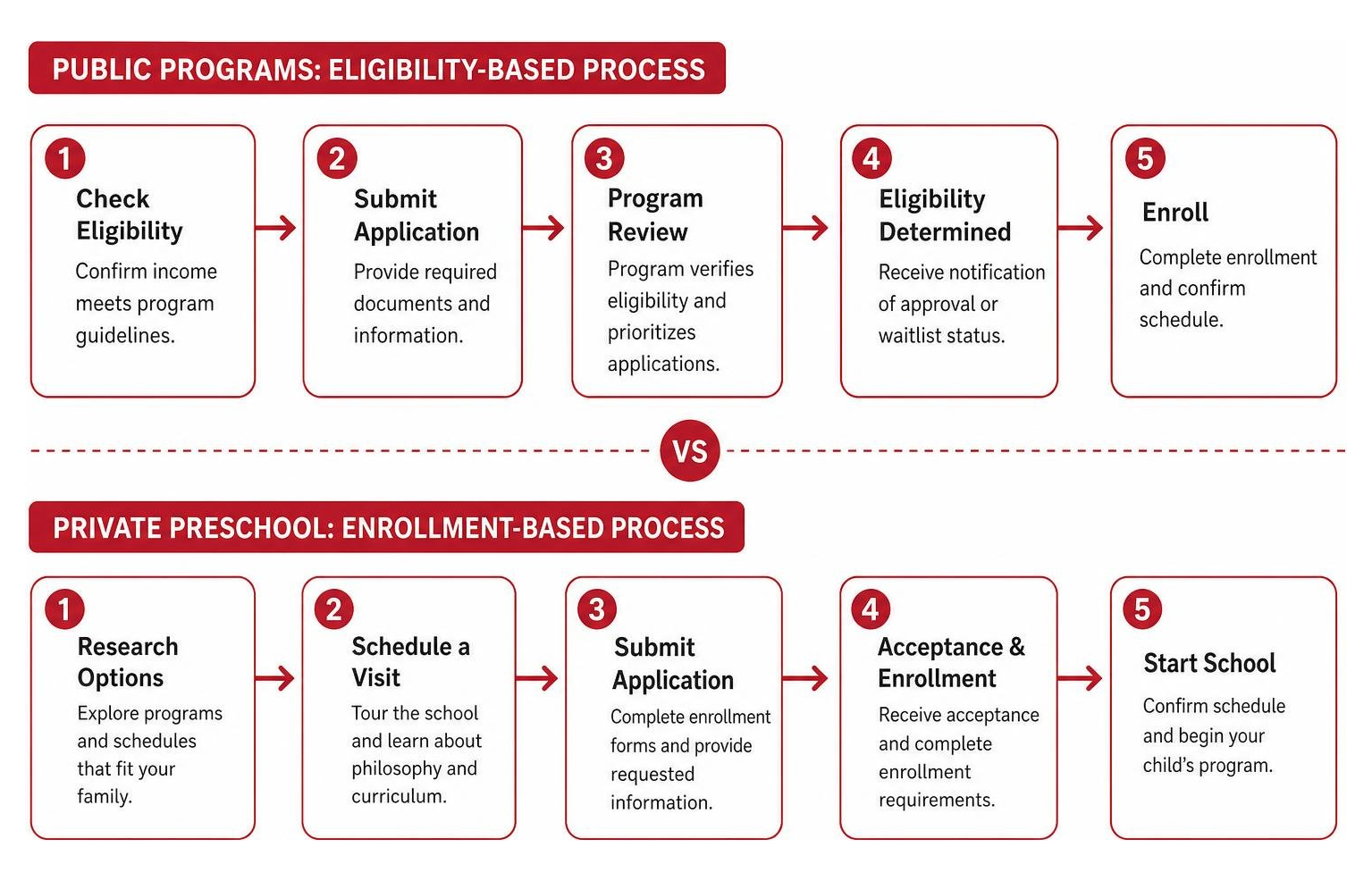
When evaluating early childhood education, understanding the differences between publicly funded programs and a private preschool Luzerne County family might choose is essential. Public initiatives like Luzerne County Head Start and Pennsylvania Pre-K Counts provide vital services to the region. Head Start—which began serving 90 families in 1965 and has expanded to serve over 1,100 children annually—focuses on holistic early education alongside health and nutritional support for qualifying low-income families. Pre-K Counts extends state-funded full-day pre-kindergarten to families earning up to 300% of the federal poverty income level.
In contrast, private preschools operate independently of income limits. Parents can select a program based on academic standards, daily structure, philosophy, and schedule rather than meeting financial criteria.
| Program Type | Income Guidelines | Schedule Options | Transportation | Primary Focus |
|---|---|---|---|---|
| Luzerne County Head Start | At or below 100% Federal Poverty Level | Full-day & part-day center options | Provided at many center locations | School readiness, health, nutrition, and whole-family support |
| PA Pre-K Counts | Up to 300% Federal Poverty Level | Full school-day programs | Not provided by program | Academic and social readiness for kindergarten |
| Private Preschool | None (Tuition-based) | Flexible 2-day, 3-day, 5-day, half or full-day | Varies by school district and center | Specialized philosophy, advanced academics, small class sizes |
Income Requirements vs Private Preschool Luzerne County Tuition
For public programs, qualifying strictly depends on family income. Head Start prioritizes families at or below 100% of the federal poverty guideline, while Pre-K Counts serves families up to the 300% threshold. For many working families whose income exceeds these limits, public programs are simply not an option.
Private preschool tuition offers flexibility and predictable costs. Depending on whether you choose a two-day half-day schedule or a five-day full-day program, monthly rates vary across the state. While tuition is an investment, many parents find that is private school worth the pennies in pennsylvania when weighed against low teacher-to-student ratios, specialized learning centers, and seamless scheduling for working parents. Additionally, many private non-profit institutions offer financial assistance or tax-credit scholarships to lower out-of-pocket costs.
Health Screenings and Transportation in Private Preschool Luzerne County Facilities
Public programs integrate comprehensive wraparound medical care into their daily routine. For instance, Luzerne County Head Start provides on-site dental screenings, hearing and vision tests, lead checks, and nutritional meals.
Private preschools focus primarily on high-level instruction and early childhood growth while requiring parents to submit standard health assessment forms completed by their child’s pediatrician. When it comes to commuting, Head Start often provides busing at select sites, whereas state-funded Pre-K Counts leaves transportation entirely up to parents. For private preschools, families often utilize district-provided busing options where applicable under Pennsylvania law or take advantage of convenient drop-off routines. You can learn more about navigating daily travel options in our guide to wilkes barre private school commuting made easy.
Key Educational Philosophies and Curricula in Luzerne County
Every preschool builds its day around an educational philosophy. Across Luzerne County, you will encounter play-based, Montessori-inspired, faith-based, and academically focused programs. Understanding these approaches helps you choose an environment where your child will thrive. To explore the broader landscape of local education choices, read our guide all about private school options.
Academic Foundations and Core Learning Values
Many parents seek secular programs that prioritize early literacy, mathematical reasoning, and inquiry-based science activities. A strong secular curriculum emphasizes:
- Hands-on Learning Centers: Dedicated areas for writing, tactile math, art, sensory play, and guided reading.
- Early STEM Concepts: Structured exploration of basic physics, biology, and math through building and experimentation.
- Whole-Child Development: Balancing cognitive challenge with social-emotional growth, conflict resolution, and fine-motor independence.
Programs aligned with National Association for the Education of Young Children (NAEYC) guidelines balance teacher-directed activities with child-led exploration. If you are looking for an academic environment focused on secular excellence and foundational skills, consider how we keep faith in academics with these secular pa private schools.
Kindergarten Readiness Standards and Progress Benchmarks
A central goal of any quality early education program is ensuring children enter elementary school with confidence. High-performing private preschools conduct regular assessments—typically two to three times per year—to track progress in essential areas:
- Cognitive & Academic Skills: Letter recognition, phonemic awareness, counting, shape identification, and pattern recognition.
- Fine & Gross Motor Skills: Pencil grip, scissor usage, drawing, spatial awareness, and physical coordination.
- Social-Emotional Growth: Group cooperation, following multi-step directions, listening during circle time, and managing emotions.
By assessing these skills systematically, teachers can tailor instruction to meet each child’s needs. For tips on navigating these early choices, check out our guide on finding the best preschool in wilkes barre without losing your mind.
How to Evaluate Private Preschool Options for Your Child
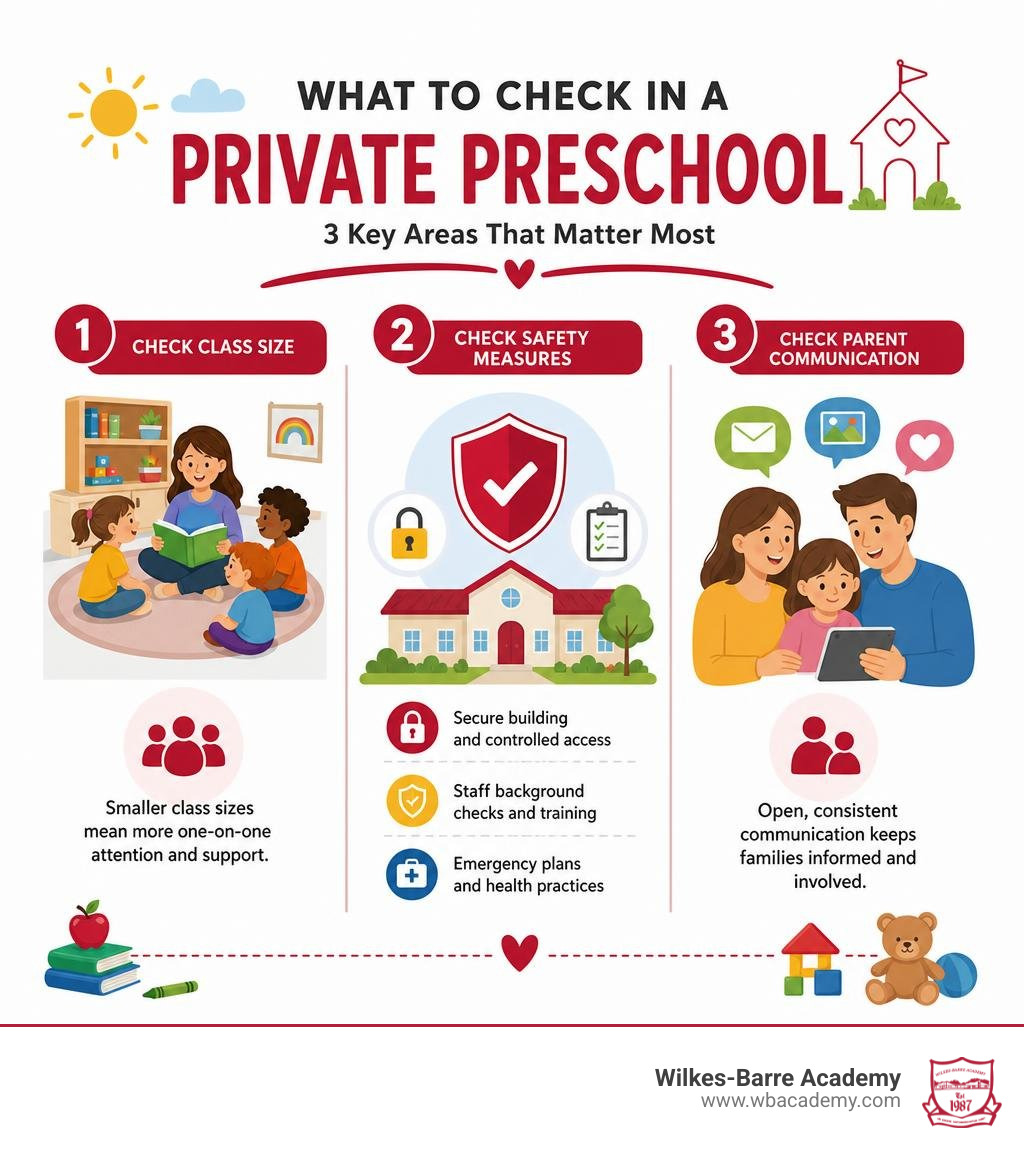
Evaluating a private preschool Luzerne County families recommend involves looking beyond colorful wall displays. Touring facilities in person allows you to observe classroom dynamics, teacher-student interactions, and safety standards firsthand. Pay close attention to how comfortable children appear and how warmly staff members respond to questions and curiosity.
To help structure your evaluation, keep these essential criteria in mind:
Student-to-Teacher Ratios and Individualized Attention
Classroom size is one of the most important factors in early learning quality. While standard daycare facilities may group larger numbers of children together, specialized private preschools often cap enrollment tightly—sometimes at micro-class sizes of 6 to 8 students, or single-classroom settings per grade level.
Small class sizes ensure that every child receives personalized attention, immediate encouragement, and customized instruction. Furthermore, smaller group settings simplify adherence to strict Pennsylvania safety guidelines, background checks, and Act 55 security measures. You can learn more about state safety mandates in our detailed look at private school student safety pennsylvania a parents guide to the law. To see how small groups transform daily learning, explore our article on small classes and big hearts at wilkes barre academy.
Parent Engagement and Community Support Services
A welcoming preschool environment extends beyond the classroom to embrace the whole family. High-quality private institutions foster strong connections through:
- Modern Parent Portals: Real-time daily photo updates, digital newsletters, and direct messaging apps.
- Active Parent Associations: Opportunities for family events, volunteer initiatives, and school celebrations.
- Community Partnerships: Special visitors such as local librarians, fire safety officials, and nature educators who enrich classroom learning.
Strong communication keeps parents informed and involved in their child’s milestones. Learn more about how families connect through everything you need to know about pa private school parent associations.
Frequently Asked Questions About Luzerne County Early Education
What age requirements and potty-training rules apply to private preschools?
Most private preschool programs require children to be 3 years old by September 1st of the enrolling school year, though some accommodate independent late-summer birthdays. Standard private preschool programs usually require children to be fully potty-trained before starting class. However, specialized early childhood care settings (such as Small Wonders Daycare) cater to younger toddlers and help guide them through these developmental milestones. Mid-year enrollment is often available if space permits. For step-by-step guidance on admissions, see dont panic how to master the admissions and enrollment process.
Are financial aid or scholarships available for local private preschool tuition?
Yes! Many non-profit private schools participate in Pennsylvania’s Educational Improvement Tax Credit (EITC) program, which provides tuition assistance and scholarships to eligible families based on income guidelines. Additionally, multi-child discounts and flexible payment schedules help make private education manageable. Learn how to navigate funding options in our guide: dont let the sticker price scare you financial aid for pa private schools.
Do private preschools offer before and after care programs for working parents?
Many private programs offer extended care options to support working families. These programs provide early morning drop-off (often starting around 6:30 AM or 7:00 AM) and afternoon care extending until 5:30 PM or 6:00 PM. Extended care gives children a safe, familiar environment for supervised play, snacks, and quiet activities before and after the traditional academic day. Read more in everything you need to know about pa private school extended care.
Conclusion

Choosing the right private preschool Luzerne County path for your child is a foundational decision that sets the tone for their future education. Whether you prioritize an advanced academic curriculum, small class sizes, or extended care that fits your work schedule, finding the right environment ensures your child enters kindergarten confident, capable, and excited to learn.
At Wilkes-Barre Academy—and through our early childhood nursery and care program at Small Wonders Daycare—we take pride in operating as single-location institutions focused on providing an enriched, supportive, and close-knit learning environment. Our single classroom per grade structure guarantees that every student receives individual attention from dedicated educators within a diverse and welcoming community.
Ready to explore how a warm, academically rich preschool setting can benefit your child? Learn more about our early childhood options by visiting Small Wonders Daycare today to schedule a tour and meet our team!