
No More Paperwork Panic for Enrolling in PA Private Schools
PA Private School Applications Don’t Have to Be Overwhelming
Learning how to apply to private school in Pennsylvania is simpler than most families expect — once you know the steps.
Here’s a quick overview of the process:
- Research schools that fit your child’s needs and your family’s values
- Submit an inquiry form to create an admissions portal account
- Gather required materials — transcripts, teacher recommendations, and a parent questionnaire
- Schedule a visit or shadow day for your child
- Complete any required assessments based on grade level
- Apply for financial aid at the same time as your admissions application
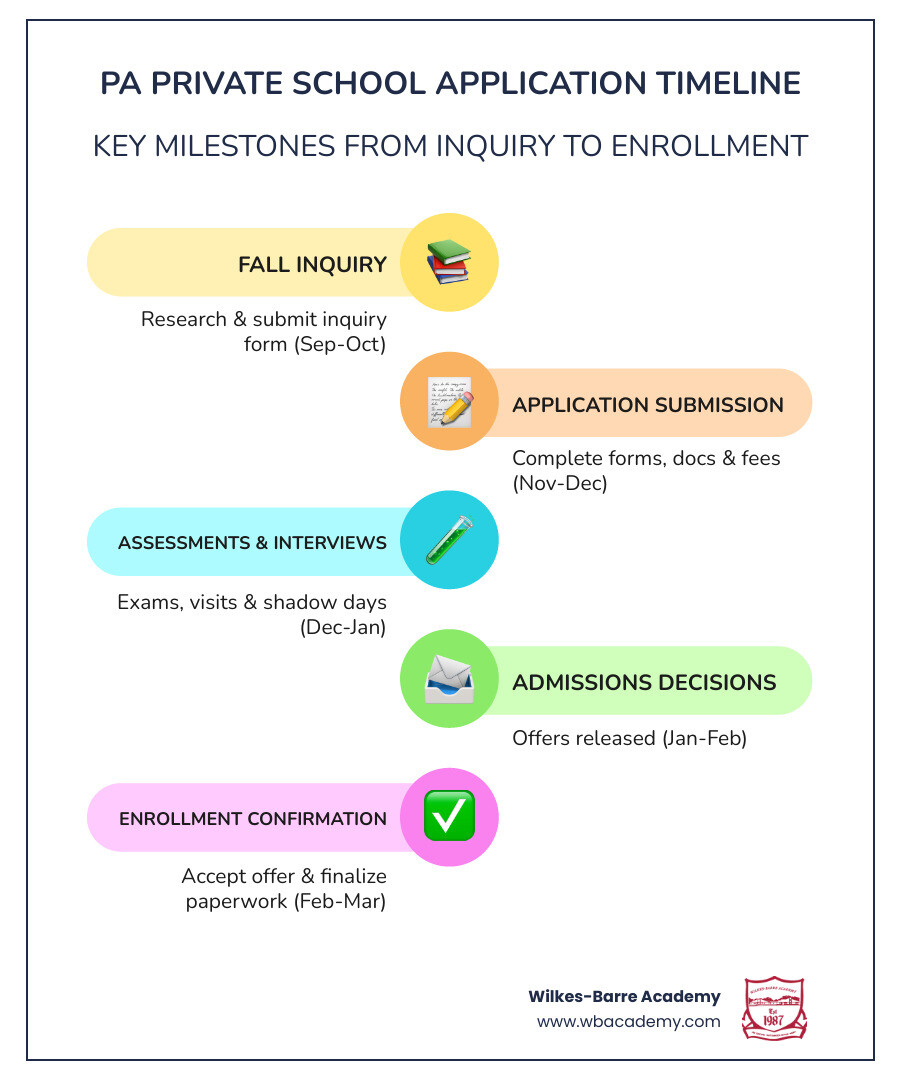
- Submit your application before the school’s deadline (typically December 1 for first-round decisions)
- Await a decision — usually released in January — and confirm enrollment by the February deadline
That’s the core of it. But the details matter — deadlines vary by school, required tests differ by grade, and financial aid has its own separate process.
Pennsylvania families have more private school options than many realize, from small K-8 day schools in places like Luzerne County to large boarding programs near Philadelphia. Each school has its own application process, but most follow a similar seasonal rhythm: inquire in the fall, apply by December, and receive decisions in January.
This guide walks you through every stage — so you can move through the process with confidence, not confusion.
Understanding the Types of Private Schools in Pennsylvania
Before we dive into the “how,” it is helpful to understand the “what.” Pennsylvania has a diverse educational landscape with several categories of schools that fall under the “private” umbrella. Knowing which type of school you are applying to helps you understand what regulations they follow and what their curriculum might look like.
Licensed Academic Schools
A licensed academic school is an institution that has gone through a rigorous process with the Pennsylvania Department of Education (PDE). These schools must meet specific standards regarding their physical facilities, faculty certifications, and curriculum. For instance, the Opening a Private or Nonpublic School | Department of Education guidelines require these schools to have an Education Director who attends mandatory state training and undergoes onsite inspections where state officials actually measure classrooms and take photographs to ensure safety and compliance.
Nonpublic Non-licensed Schools
These are often religious schools. In Pennsylvania, many religious institutions are exempt from formal licensure but must still register with the PDE to acknowledge they are complying with compulsory attendance laws. They are still required to provide a “thorough and efficient” education, but they have more autonomy over their specific religious curriculum.
Accredited Institutions
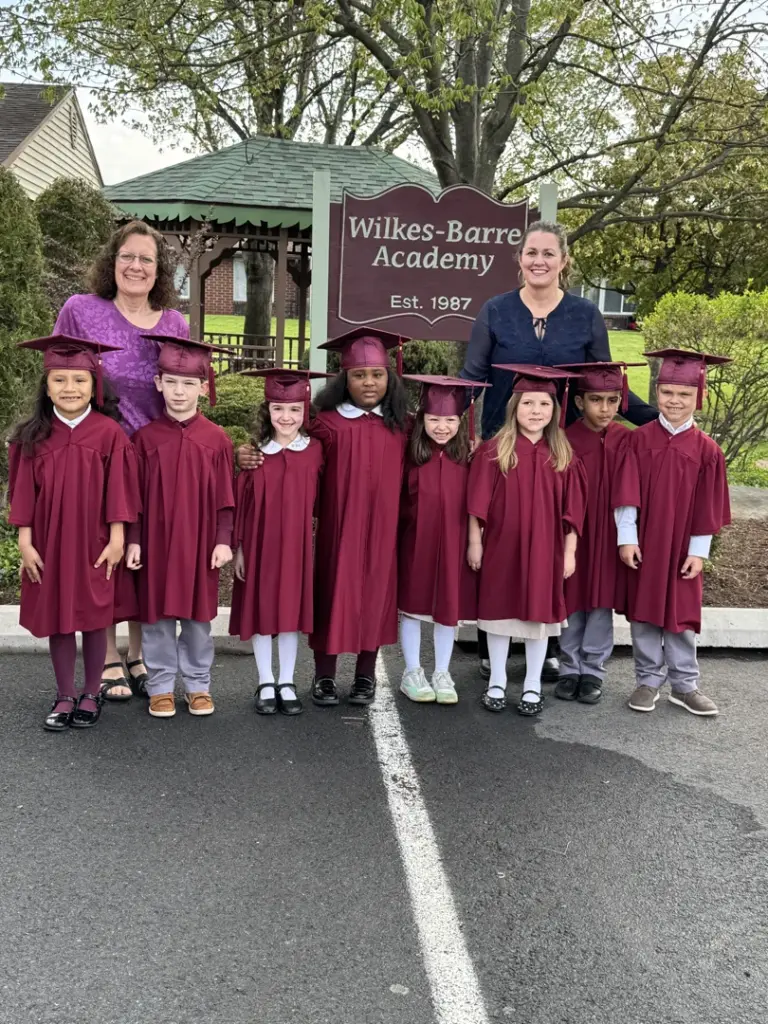
Many private schools, like us at Wilkes-Barre Academy, focus on high academic standards through a specialized curriculum. We operate as a non-profit K-8 school in Luzerne County, providing an academically advanced environment. While all private schools must ensure students meet the state’s compulsory attendance requirements, accredited schools often go above and beyond state minimums to provide a more challenging experience for students.
Step-by-Step Guide on How to Apply to Private School Pennsylvania
The process of how to apply to private school pennsylvania usually begins long before the first bell rings. Most families start their journey in the late summer or early fall of the year before they want their child to start.
The Inquiry and Portal Phase

Most modern private schools use an online enrollment portal. Your first step is almost always filling out an “Inquiry Form.” This isn’t the application itself; it’s more like a “handshake.” Once you submit this, the school will send you login credentials for their portal. This portal becomes your command center where you can track which documents have been received and what steps are still outstanding.
The Parent Questionnaire
In the Admissions process, the parent questionnaire is one of the most important tools. This is your chance to tell the school’s story from your perspective. Schools want to know:
- What are your child’s strengths and challenges?
- Why are you seeking a private education at this time?
- What are your child’s interests outside of the classroom?
Application Fees and History
Expect to provide a full school history for your child and pay a non-refundable application fee. These fees cover the administrative costs of processing records and conducting assessments. You will also provide basic demographic information to ensure the school has everything needed for state reporting and emergency contacts.
Required Materials for Your How to Apply to Private School Pennsylvania Checklist
Think of this section as your “Evidence Folder.” Schools need objective data to understand if their environment is the right fit for your child.
- Teacher Recommendations: Most schools require at least one or two recommendations. These are usually sent electronically through the portal to ensure confidentiality. It is best to request these after October 15th so the teacher has had enough time to get to know your child in the current school year.
- Official Transcripts: You will need to sign a release form so your child’s current school can send their records. This usually includes the last two full years of grades plus the most recent report card from the current year.
- Graded Writing Samples: For middle school and high school applicants, schools often ask for a “graded writing sample.” This is a paper your child has already turned in at their current school, complete with the teacher’s comments and grade.
- Early Childhood Observations: For the very little ones (Pre-K and Kindergarten), schools might ask for an observation video or a specific “observation protocol” where a teacher observes the child’s social and motor skills.
- Tuition and Fees: Reviewing the Tuition Schedule 2024-2025 early in the process ensures your family is prepared for the financial commitment of a private education.
Entrance Exams and Assessments for How to Apply to Private School Pennsylvania
Testing can be the most nerve-wracking part of the process, but it doesn’t have to be! In Pennsylvania, the type of testing required often depends on the grade level and the specific school.
- Lower School (Grades K-4): Many schools use readiness assessments or the WISC-V (Wechsler Intelligence Scale for Children). These look at cognitive development and academic “readiness” rather than just memorized facts.
- Middle and Upper School (Grades 5-12): Standardized tests like the ISEE (Independent School Entrance Exam) or the SSAT (Secondary School Admission Test) are common.
- School-Specific Evaluations: Some schools, including us at Wilkes-Barre Academy, prefer our own placement evaluations. This helps us see exactly where a student fits within our specific advanced curriculum.
If your child has a learning difference, don’t forget to submit any previous psycho-educational evaluations. Most private schools are happy to review these to determine if they can provide the necessary accommodations for your child to thrive.
Navigating Admissions Timelines in Pennsylvania
Timing is everything. If you miss a deadline, you might end up on a waiting list even if your child is a perfect fit.
| Month | Milestone |
|---|---|
| August – September | Peak inquiry season; start visiting websites and booking tours. |
| October – November | Open houses and shadow days; request teacher recommendations. |
| December 1 | The “Big Deadline” for many PA private schools for first-round consideration. |
| January | Admissions interviews and final testing dates. |
| January 15 – 30 | Decision letters are typically mailed or emailed. |
| February 15 | Enrollment deadline; families must commit and pay a deposit. |
| March – August | Rolling admissions; schools with remaining spots will accept applications. |
While the “Peak Season” is September through December, many schools in Luzerne County and the Wilkes-Barre area offer rolling admissions. This means if a family moves to the area in the spring or summer, they can still apply as long as there is space available in that grade.
Financial Aid and Scholarship Opportunities in PA
One of the biggest myths about how to apply to private school pennsylvania is that it is only for the ultra-wealthy. Pennsylvania actually has some of the best private school choice programs in the country.
EITC and OSTC Grants
The Educational Improvement Tax Credit (EITC) and the Opportunity Scholarship Tax Credit (OSTC) are game-changers. These programs allow businesses to redirect their state tax liability to scholarship organizations.
- EITC Grant: This provides tuition assistance to eligible families based on household income.
- OSTC Grant: This is specifically for students who live within the boundaries of a “low-achieving” public school district.
Applying for Aid
Most schools require a separate financial aid application through a third-party service like Clarity or SSS. You will need to provide tax returns and W-2s. Pro tip: apply for financial aid at the same time you apply for admission. Funds are often distributed on a first-come, first-served basis, and you don’t want to wait until after you are accepted only to find the scholarship pool has run dry. You can find more details on our Tuition page.
The Final Stages: Interviews, Shadow Days, and Enrollment
Once the paperwork is in, it’s time for the “human” part of the process.
Shadow Days and Visits
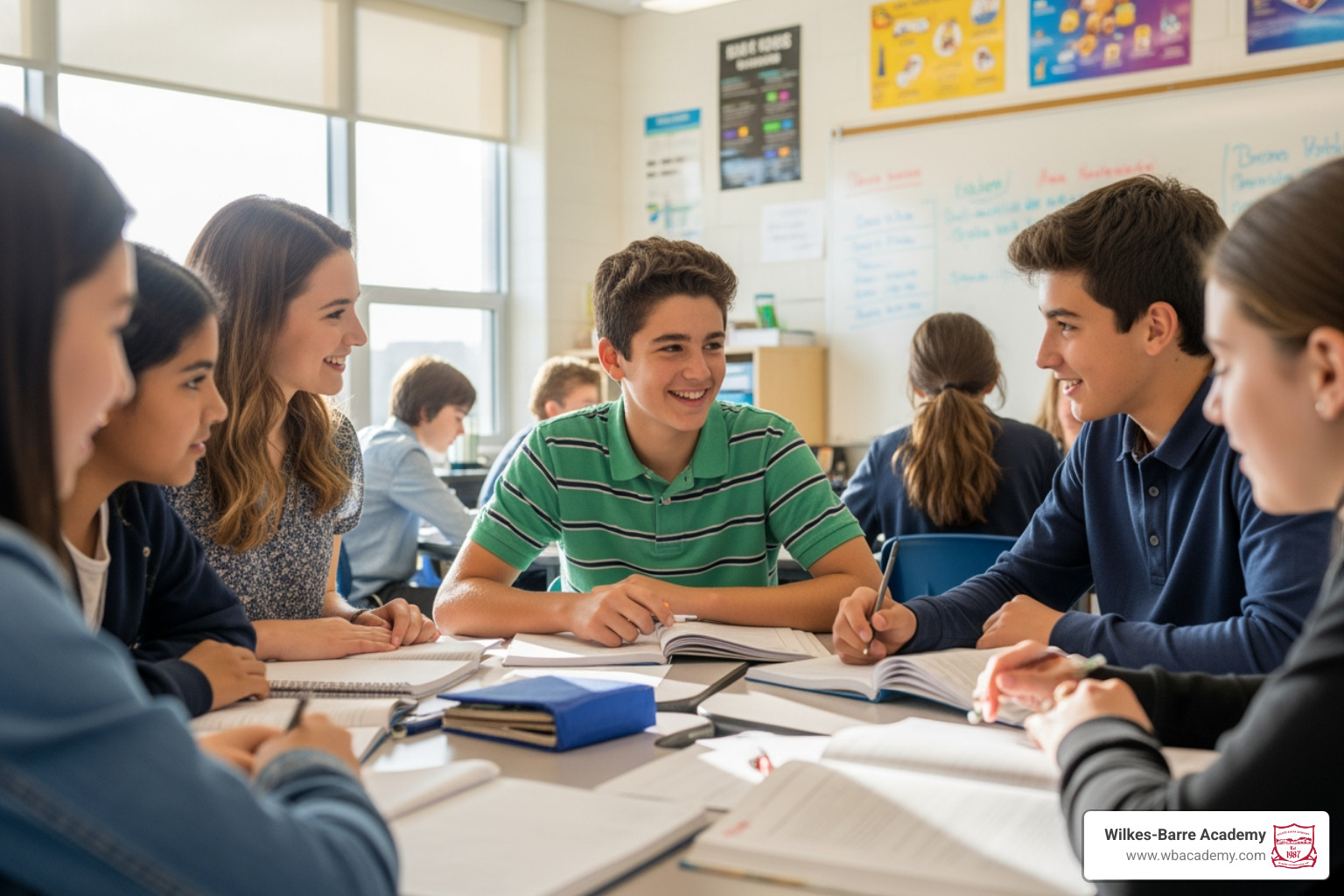
A “Shadow Day” is when your child spends a full or half-day at the school, attending classes with a peer host. This is often the most important day for the student. It allows them to see if they feel comfortable in the classrooms and if they connect with the other students. At Wilkes-Barre Academy, we value these visits because they help us see how a student interacts within our close-knit, diverse community.
Parent and Student Interviews
Don’t let the word “interview” scare you. For younger children, this is usually just a friendly chat with a teacher or admissions director. For parents, it’s a chance to discuss the school’s philosophy and ensure your family’s values align with the school’s mission.
The Decision and Enrollment
After the committee reviews the file, you will receive a decision: Accepted, Waitlisted, or Declined. If accepted, you will receive an enrollment contract. This is where you officially secure your spot. Be mindful of the “Commitment Deadline” (usually mid-February). If you miss this date, the school may offer your spot to someone on the waitlist.
Transferring and Homeschooling
If you are transferring from a public or charter school, or transitioning from homeschooling, the process is largely the same. However, homeschooled families should be prepared to provide a detailed portfolio of work or a narrative report of the curriculum covered to help the school determine the appropriate grade placement.
Frequently Asked Questions about PA Private School Admissions
What is the difference between a licensed and non-licensed private school?
A licensed school is overseen by the PA State Board of Private Academic Schools and must follow specific state regulations regarding teacher certification and facilities. A non-licensed school is typically a religious institution that has filed for an exemption but still complies with compulsory attendance laws.
Can homeschooled students apply to private schools in Pennsylvania?
Absolutely! Private schools welcome homeschooled students. You will just need to provide documentation of your child’s academic progress, such as standardized test scores or a portfolio, in lieu of a traditional school transcript.
What are the benefits of a single-classroom-per-grade environment?
In a single-classroom-per-grade setting, like what we offer at Wilkes-Barre Academy, students benefit from a very stable social environment and individualized attention. Teachers get to know every student’s learning style deeply, and the “paperwork panic” is minimized because the communication between the school and home is much more direct and personal.
Conclusion
Applying to a private school in Pennsylvania is a journey of finding the right “home” for your child’s education. While the checklists and deadlines might seem daunting at first, breaking them down into small, manageable steps makes the process smooth.
At Wilkes-Barre Academy, we take pride in our academically advanced curriculum and our ability to foster strong family-school connections. Our K-8 program in Luzerne County is designed for families who want a close-knit community where their child can truly be known and challenged.
If you’re ready to take the next step, we invite you to learn more About our story and our mission. You can also Contact us directly with any questions or begin your journey today by visiting our Admissions page. We look forward to meeting your family!