No Two Brains Are Alike: The Rise of Personalized Private Education in PA
Why Every Child Deserves a School Built Around Them
Individualized learning in a private school in PA looks very different from what most kids experience in a standard classroom — and for many families, that difference is exactly what their child needs.
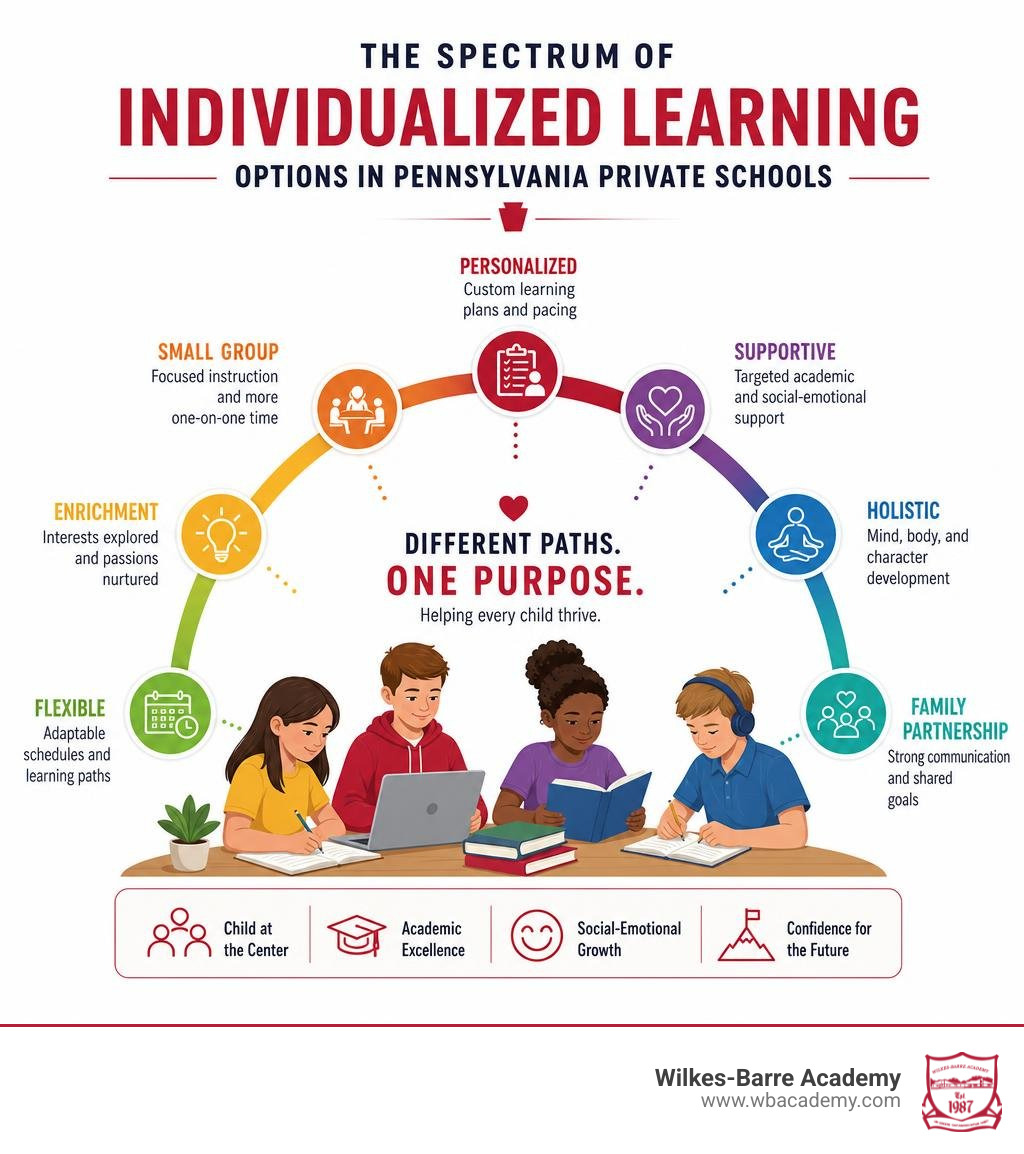
Here’s a quick snapshot of what this means in Pennsylvania:
| What It Is | What It Means for Your Child |
|---|---|
| Personalized instruction | Lessons matched to your child’s pace and strengths |
| Small class sizes | More one-on-one time with teachers |
| Tailored learning plans | Goals built around your child, not a grade-level average |
| Holistic support | Academic and social-emotional growth, together |
| Family-school communication | Regular updates, not just report cards |
Pennsylvania is home to a wide range of private schools — from faith-based academies to specialized programs serving students with complex learning needs. But a growing number of families are looking for something more specific: a school that treats their child as an individual, not a data point.
And that frustration is real. Many parents feel that public schools, despite their best efforts, simply can’t provide the focused attention their child needs. Classrooms are large. Pacing is fixed. Communication with teachers can feel like shouting into a void.
The good news? Private schools built around individualized learning are changing that — and they exist right here in Pennsylvania.
This guide walks you through everything you need to know: how these schools work, who they serve, what they cost, and how to find the right fit for your K-8 learner.
Easy individualized learning private school pa word list:
- close-knit school community pennsylvania
- certified teachers private school pennsylvania
- about wilkes-barre academy
Understanding the Landscape of Individualized Learning Private School PA Options
When you begin searching for an individualized learning private school pa, you will quickly notice that the educational landscape in Pennsylvania is incredibly diverse. Families have several pathways to choose from, each offering a different level of flexibility, structure, and support.
Traditional public schools operate under strict state mandates, often requiring teachers to teach to the middle of the class to prepare students for standardized tests. While charter schools offer some programmatic themes, they are still public institutions bound by many of the same large-group constraints and testing requirements.
For families seeking a truly tailored education, independent private schools offer an entirely different approach. Because independent schools are self-governing, we have the freedom to design curricula that adapt to the student rather than forcing the student to adapt to a rigid curriculum.
In Pennsylvania, all private schools must comply with the Pennsylvania Department of Education (PDE) standards, which include providing a 180-day school year. However, how those 180 days are structured varies wildly. On one end of the spectrum, Pennsylvania features 38 Approved Private Schools (APS) that receive state funding to serve students with severe, complex special education needs (such as multiple physical or intellectual disabilities). On the other end are independent private K-8 schools that focus on delivering an academically advanced, highly personalized curriculum for mainstream and gifted learners.
Additionally, intermediate units across the state, such as the Personalized Academy of Learning – Luzerne Intermediate Unit, provide specialized alternative and supportive services to help districts meet diverse needs. To see how these various models fit together across our region, you can explore The Complete List of Private Schools in Northeastern Pennsylvania.
To help make sense of these options, here is a comparison of how different school types handle key educational elements:
| Educational Element | Traditional Public Schools | Charter Schools | Individualized Private Schools |
|---|---|---|---|
| Classroom Pacing | Fixed; tied to state testing schedules. | Standardized; often limited by high student-to-teacher ratios. | Highly flexible; moves at the student’s mastery level. |
| Class Size & Structure | Larger classes (often 20-30+ students). | Moderate to large classes. | Small classes; often a single classroom per grade level. |
| Curriculum Autonomy | Strictly bound by state-mandated textbooks. | Bound by charter agreements and state standards. | High autonomy to use advanced, creative, or multi-sensory tools. |
| Family Connection | Formalized (scheduled parent-teacher nights). | Standardized communication portals. | Daily/weekly direct communication and close partnership. |
Who Benefits from Personalized Private Education in Pennsylvania?
The short answer is: almost every child. Because no two brains are wired exactly alike, a one-size-fits-all classroom will almost always leave some students behind while leaving others completely disengaged.
Personalized private education is particularly beneficial for:
- Gifted and Advanced Learners: Students who grasp concepts quickly often become bored in traditional classrooms. In an individualized environment, they can dive into advanced math, science, or literature without waiting for the rest of the class to catch up.
- Students with Diverse Learning Styles: Some children are highly visual, others are kinesthetic learners who need to build and touch things to understand them, and others learn best through auditory storytelling.
- Children Needing Tailored Academic Pacing: A child might be a genius at reading comprehension but need extra time and one-on-one guidance to master long division. Individualized pacing allows them to take the time they need in challenging subjects while soaring in their areas of strength.
At the K-8 level, these formative years are critical. This is when children build their foundational self-esteem and decide whether they are “good at school.” By focusing on personalized growth early on, we prevent students from falling into the trap of academic anxiety or learned helplessness.

Tailoring the Curriculum for Diverse Student Profiles
Every child brings a unique profile to the classroom. When we look at student profiles, we see a beautiful tapestry of strengths, quirks, and areas that need a little extra love.
For students navigating mild learning differences—such as ADHD, dyslexia, or executive functioning challenges—the traditional classroom can feel like a sensory minefield. A child with ADHD isn’t trying to be disruptive; they simply need an environment where they can move, use hands-on materials, and receive immediate feedback. Similarly, students dealing with school-related anxiety thrive when they aren’t subjected to the high-stakes pressure of constant standardized testing.
In Luzerne County, families looking for this level of care have several local options. You can read more about what makes our local landscape unique in this guide to The Best Wilkes Barre Area Schools for Individualized Learning.
Designing and Implementing Personalized Learning Plans in Private Settings
How do we actually make individualized learning work on a daily basis? It starts with a plan. While public schools use Individualized Education Programs (IEPs) primarily for students receiving special education services, individualized private schools believe that every student deserves a personalized roadmap.
At the start of the year, teachers work closely with families to establish customized academic goals. These goals don’t just focus on reading levels and math facts; they also target social-emotional growth, public speaking, and organizational skills.
Progress monitoring in this setting doesn’t mean more tests. Instead, it involves continuous, qualitative observations and daily feedback. Because teachers in a personalized environment aren’t managing thirty students at a time, they can spot the exact moment a student hits a roadblock and adjust the lesson plan on the spot.
Transitioning to Private Education: Navigating the School Swap
Making the decision to move your child from a public school to a private school can feel like a major leap. Parents often worry about how their child will handle the transition: Will they make friends? Will they be behind academically? Will the environment feel too different?
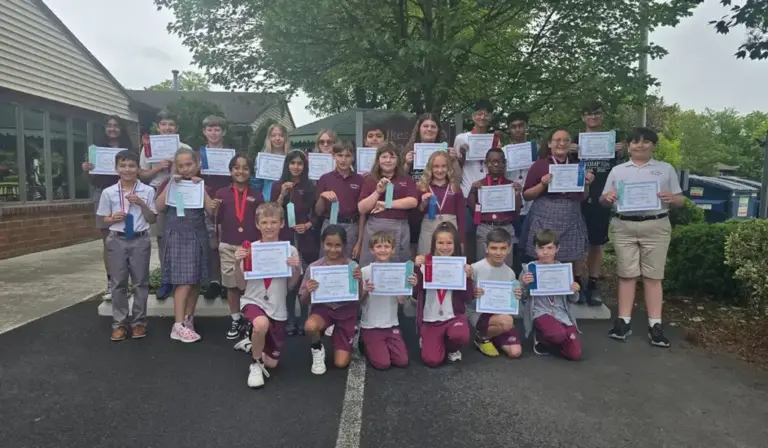
In our experience, the key to a successful “school swap” is the strength of the family-school connection. When parents and teachers communicate openly, the child feels supported from all sides. A supportive, close-knit school community acts as a soft landing pad, helping students adjust to new routines without feeling overwhelmed.
If you are currently weighing this decision, you can find a compassionate roadmap in our guide on From Public to Private and Navigating the PA School Swap.
Specialized Instructional Approaches and Classroom Supports
An individualized learning private school pa relies on a toolkit of specialized instructional approaches to bring lessons to life. Rather than relying solely on lectures and worksheets, educators use:
- Differentiated Instruction: Teaching the same core concept but tailoring the complexity and the student’s output based on their readiness.
- Multi-Sensory Learning: Engaging sight, sound, touch, and movement. For example, learning spelling words by writing them in sand, or learning fractions by baking.
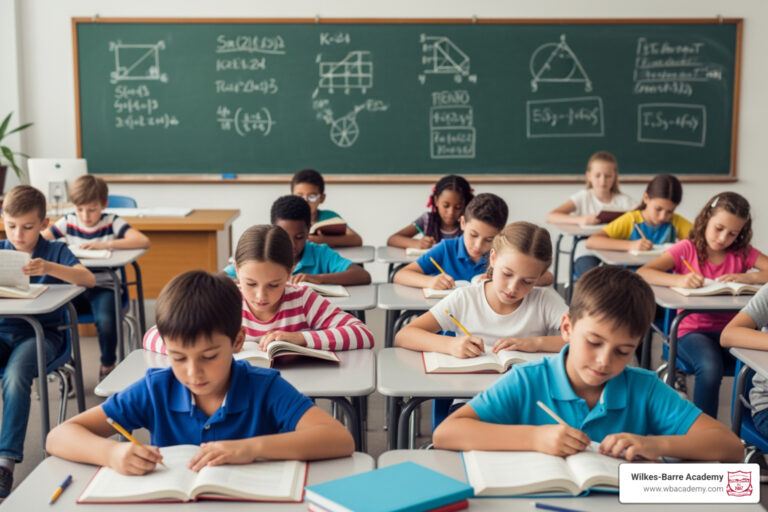
- Small Class Sizes: Keeping class sizes small ensures that no student can “hide” in the back of the room. It ensures every child receives direct, individualized attention every single day.

Holistic Growth in an Individualized Learning Private School PA
Education is about so much more than academic transcripts. If a child gets straight A’s but struggles to share, resolve conflicts, or manage their emotions, their education is incomplete.
A truly personalized education prioritizes character development and holistic growth. In a close-knit, supportive environment, students learn how to collaborate, practice empathy, and take intellectual risks without the fear of failure. To learn more about how we blend academic rigor with a nurturing touch, explore our philosophy of Small Classes and Big Hearts at Wilkes Barre Academy.
Financial Realities: Tuition and Value in PA Private Education
We understand that choosing a private school is a significant financial commitment for any family. When looking at the financial realities of private education in Pennsylvania, it helps to understand the full spectrum of costs and funding.
For the 2025-26 school year, tuition rates for state-approved private schools (which serve highly specialized populations with severe disabilities) are quite high, reflecting the intensive medical and therapeutic services they provide:
- Day Programs: Tuition ranges from $46,290.77 to $122,410.00 per year.
- Residential Programs: Tuition ranges from $117,600.00 to $285,080.74 per year.
However, for mainstream, independent K-8 private schools in Northeastern Pennsylvania, the tuition is significantly more accessible. For families evaluating this educational investment, the value lies in the lifelong foundation of confidence, critical thinking, and academic excellence that a personalized school provides.
Navigating Costs for an Individualized Learning Private School PA
When budgeting for private school, it is important to look beyond the base tuition rate. Families should inquire about additional fees, such as textbooks, technology fees, field trips, and extracurricular activities, so there are no surprises.
Many families find that by carefully planning and utilizing local tuition assistance programs, a high-quality private education is well within reach. To understand how to weigh these costs against the long-term benefits of a private education, check out our article on Why Going Private is the Ultimate Grade Upgrade.
Preparing K-8 Students for Future Academic Success
The primary goal of a K-8 education is to build a rock-solid foundation. When students spend their early years in an environment that values their individual voice, they develop strong critical thinking skills, time-management habits, and leadership capabilities. They don’t just memorize answers; they learn how to learn.
This preparation is vital for ensuring high school readiness. Students who graduate from personalized K-8 programs enter high school with the self-advocacy skills needed to communicate with teachers, tackle complex projects, and navigate social dynamics with confidence.
Preparing Middle Schoolers for High School and Beyond
The transition from middle school to high school is one of the biggest milestones in a young person’s life. In our single-classroom-per-grade environment, middle schoolers receive close mentorship from faculty members who know them deeply.
This close guidance ensures that they are not only academically prepared for advanced high school coursework but are also emotionally resilient. To discover how a personalized K-8 experience acts as a springboard for future achievements, read about The Fast Track to High School Success via Private Education.
Frequently Asked Questions about Personalized Private Education in PA
What is the difference between a traditional private school and an individualized private school in PA?
While traditional private schools often have rigid, college-preparatory curricula that all students must follow at the exact same pace, an individualized private school adapts the curriculum to the student. We use a lower student-to-teacher ratio to provide tailored instruction, allowing advanced students to accelerate and ensuring that students who need extra help get the focused support they need to master each concept.
How do private schools in Pennsylvania ensure compliance with state education standards?
Private schools in Pennsylvania must meet the Pennsylvania Department of Education (PDE) requirements, including the mandatory 180-day school year. Many independent schools also pursue rigorous, voluntary accreditation through regional bodies. Furthermore, we maintain strict nondiscrimination policies to ensure a safe, welcoming, and equitable environment for all families.
How do small class sizes support individualized learning?
Small class sizes completely transform the classroom environment. In a small classroom, a teacher can easily check in with every single student during a lesson. It fosters deeper student engagement, allows for spontaneous discussions, and ensures that teachers can tailor their instructional style to match the unique learning profiles of the children in the room.
Conclusion
At Wilkes-Barre Academy, we have spent years proving that when you treat children as individuals, there is no limit to what they can achieve. As a single-location, non-profit K-8 school in Luzerne County, we pride ourselves on our unique structure: a single classroom per grade. This allows us to maintain an academically advanced curriculum while fostering incredibly strong family-school connections within a close-knit, diverse community.
We believe that school should be a place where your child is known, loved, and challenged to grow into their best self.
Learn more about Wilkes-Barre Academy’s unique approach to personalized education and see how we can help your child thrive.