A – Z Guide to Student Wellness Program Options in PA Private Schools
Essential Elements of a Student Wellness Program Private School PA Framework
A thriving school community relies on a balanced approach to whole-child development. In Pennsylvania, private and non-public schools are uniquely positioned to create cohesive, nurturing environments that prioritize academic curiosity alongside emotional stability and physical vitality. The Pennsylvania Department of Education emphasizes the necessity of developing equitable, trauma-informed learning environments that support the academic, physical, and psychological safety of all children.
When establishing an effective student wellness program private school pa framework, several foundational pillars ensure every child receives tailored support. By integrating comprehensive handbook wellness policies directly into daily school routines, independent schools cultivate clear standards for emotional growth, active living, and mutual respect.
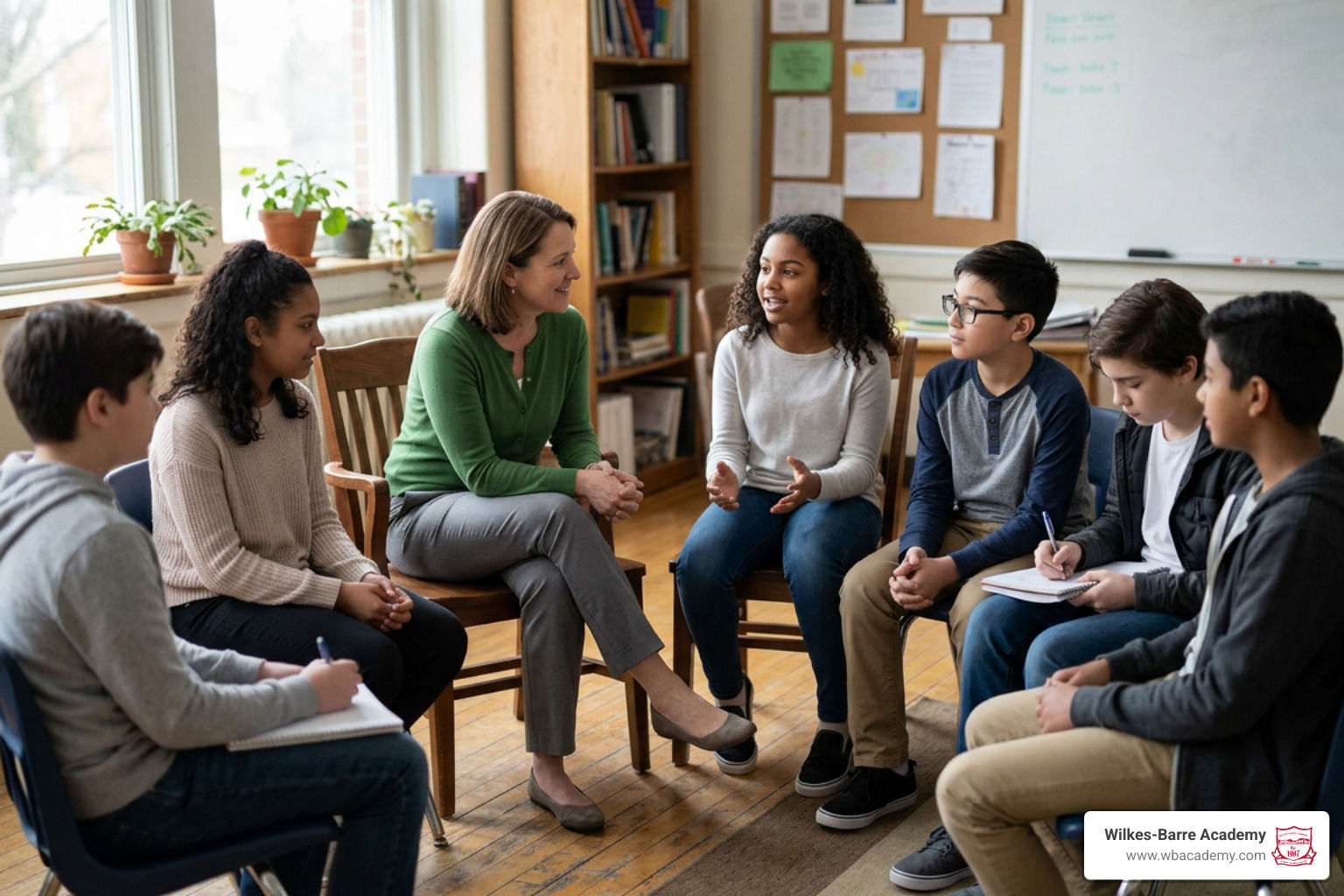
Safety and wellness are inextricably linked. Providing a secure physical setting allows students to lower their stress responses and engage deeply in classroom discovery. Establishing these standards is outlined in our practical guide to safe school environment in Pennsylvania, demonstrating how structured routines, active supervision, and compassionate disciplinary measures work together to create an uplifting atmosphere.
Social-Emotional Learning (SEL) and Evidence-Based Models
Social-emotional competence does not develop by accident; it requires intentional, evidence-based instruction. Leading independent institutions frequently incorporate structured frameworks such as Dr. Martin Seligman’s PERMA model (Positive Emotion, Engagement, Relationships, Meaning, and Accomplishment) or multi-tiered Positive Behavioral Interventions and Supports (PBIS).
These frameworks teach students:
- Emotional Agility: Recognizing and naming complex feelings without judgment.
- Character Development: Cultivating core values such as honesty, perseverance, and kindness.
- Constructive Conflict Resolution: Learning active listening, perspective-taking, and restorative problem-solving.
- Self-Reflection and Mindfulness: Taking mindful pauses during transitions to reset focus and manage classroom energy.
By embedding these competencies into regular classroom discussions rather than treating them as isolated lectures, students build emotional resilience that serves them through challenging exams, team sports, and personal milestones.
Comprehensive Nursing, Nutrition, and Health Assessments
Physical health provides the foundation upon which all learning takes place. A comprehensive school wellness program ensures daily access to certified nursing care, robust health protocols, and nutritional education.
Starting the academic year with an up-to-date student health assessment allows staff to understand each child’s medical history, immunizations, and individual accommodations.
Key medical and physical health components include:
- Individualized Care Plans: Tailored support for chronic conditions such as asthma, diabetes, or severe food allergies.
- Allergy Management: Implementation of strict nut-aware policies and allergen-free dining spaces to prevent cross-contamination.
- Emergency Preparedness: Readily accessible Automated External Defibrillators (AEDs) and staff trained in first aid and CPR across key campus facilities.
- Illness Mitigation: Clear guidelines requiring students to remain home until fever-free for 24 hours without medication to protect the entire school community.
Physical Fitness, Sports Medicine, and Daily Movement
Daily physical exertion is vital for cardiovascular health, fine and gross motor skill refinement, and stress relief. Regular recess and structured physical education stimulate neural pathways that enhance focus, memory, and cognitive processing.
Incorporating elementary physical fitness routines into early education builds a positive association with active living. As children grow into intermediate and middle school grades, structured physical fitness programs introduce team sports, cooperative games, and foundational strength conditioning. Furthermore, modern athletic protocols must include rigorous concussion management aligning with pediatric guidelines, ensuring gradual and safe return-to-play and return-to-learn processes.
A to Z Student Wellness Offerings: From Advisory Circles to Zero-Stigma Mental Health
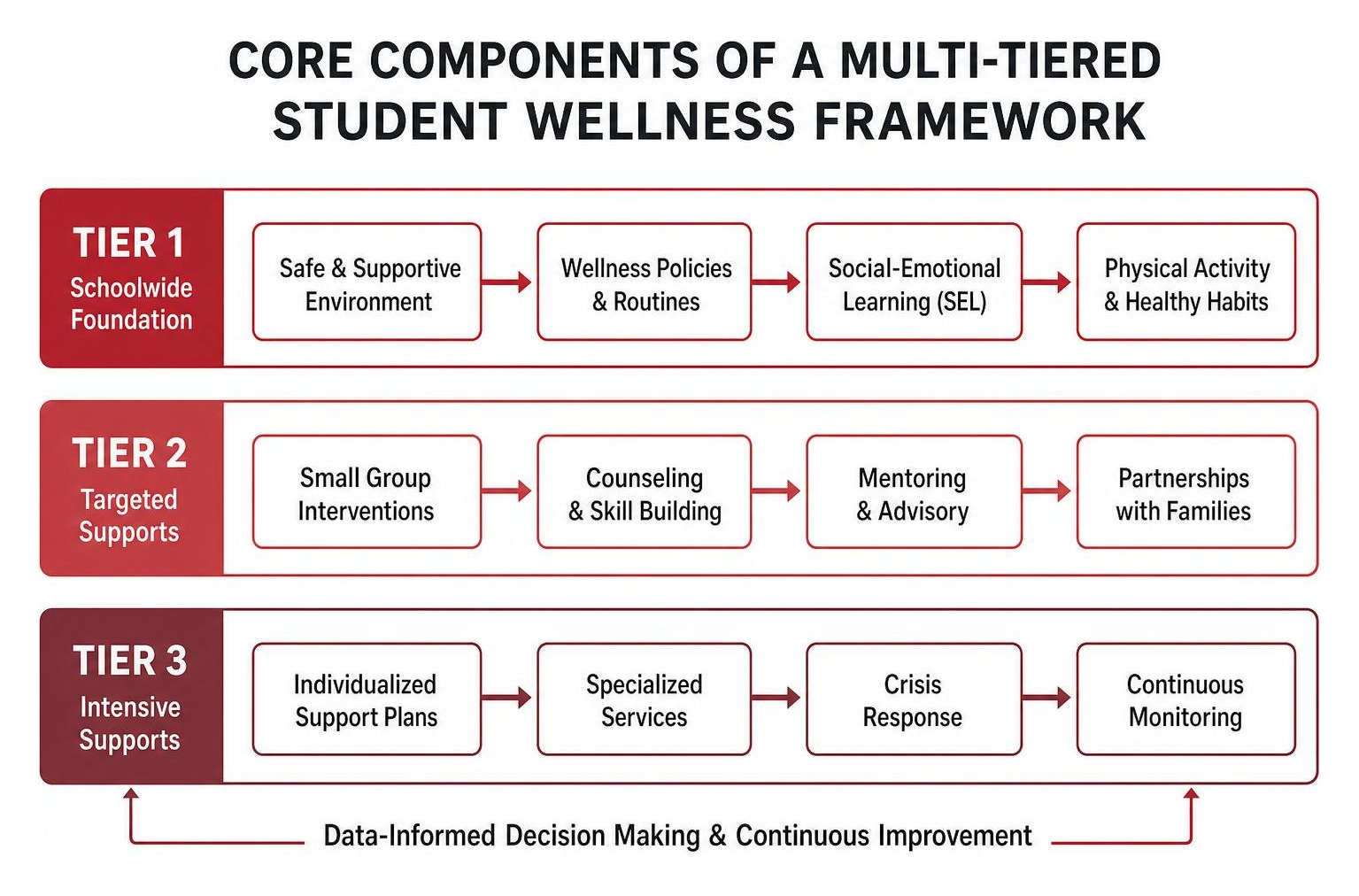
A comprehensive wellness framework operates across three distinct tiers of support to ensure no student falls through the cracks:
| Wellness Tier | Focus Level | Core Strategies & Programs |
|---|---|---|
| Tier 1: Universal | Entire Student Body (100%) | School-wide SEL, PE, daily recess, nutrition policies, advisory circles, character education. |
| Tier 2: Targeted | Small Groups / Moderate Need (10–15%) | Small-group counseling, peer mentoring, executive function coaching, academic check-ins. |
| Tier 3: Intensive | Individualized / High Need (1–5%) | 1-on-1 crisis response, tailored behavioral plans, external clinical referrals, Student Assistance Programs (SAP). |

At the heart of Tier 1 and Tier 2 support is the Teacher-Coach-Mentor model. When faculty members interact with students across multiple settings—guiding them through mathematics in the morning, coaching them on the basketball court in the afternoon, and leading their advisory circle—they build strong rapport. This continuous connection allows educators to notice subtle shifts in behavior, mood, or academic engagement early.
Beyond advisory periods, a rich slate of student activities and clubs offers healthy avenues for self-expression, leadership, and camaraderie. Whether participating in student government, chess, or performing arts, these extracurricular activities foster a profound sense of belonging that bolsters emotional well-being.
Implementing a Student Wellness Program Across K-8 Grades
Children undergo tremendous developmental transformations between kindergarten and eighth grade. A successful wellness model adapts intentionally to each stage:
- Lower School (Grades K–4): Emotional Literacy & Social Foundation
- Developing foundational vocabulary for identifying emotions.
- Practicing sharing, turn-taking, and cooperative play.
- Engaging in multi-sensory movement breaks and active play to channel natural energy.
- Middle School (Grades 5–8): Identity, Agency, & Academic Balance
- Managing the pressures of increasing academic rigor through structured academic activities and competitions.
- Developing executive functioning skills, time management, and study habits.
- Navigating digital wellness, social media literacy, and peer group dynamics.
- Fostering leadership opportunities and community service initiatives.
Crisis Intervention, Drop-In Counseling, and Regional Support
Even with robust preventative measures, students occasionally face acute emotional distress, grief, or personal crises. Independent schools maintain clear, compassionate protocols for crisis intervention.
On-site drop-in counseling provides a safe haven for students experiencing acute stress. When clinical needs exceed the scope of school-based support, strong partnerships with trusted regional organizations—such as community health and behavioral resources—ensure families receive coordinated mental health care, psychological assessments, and specialized therapeutic interventions without delay.
Funding, Compliance, and Community Integration for PA School Wellness
Creating a comprehensive wellness ecosystem requires intentional resource allocation, legal compliance, and community collaboration. In Pennsylvania, school safety and wellness are supported by substantial state and federal investments.
Under the Bipartisan Safer Communities Act, $1 billion was directed nationwide through Title IV, Part A of the Elementary and Secondary Education Act. From these federal investments, Pennsylvania received $39 million to disburse through the Stronger Connections Grant program, prioritizing safe, healthy, and trauma-informed learning environments.
Schools maintain compliance with critical safety and wellness mandates, including:
- Act 35 of 2014: Mandating automated external defibrillator (AED) maintenance, tracking, and trained response personnel.
- Pennsylvania Act 55: Establishing rigorous standards for school safety training, threat assessments, and security coordination, detailed further in our overview of school security awareness and PA Act 55 compliance.
- School Climate Evaluations: Utilizing tools like the PA School Climate Survey to gather anonymous feedback from students, faculty, and parents to evaluate social-emotional benchmarks.
Connecting classroom learning with community-based programs—such as regional after-school enrichment and family support initiatives—further bridges the gap between home, school, and community life.
Frequently Asked Questions About Student Well-Being in PA
What are the core components of a comprehensive independent school wellness model?
A comprehensive model integrates five central pillars:
- An evidence-based social-emotional learning (SEL) curriculum.
- Structured advisory and mentorship systems.
- Dedicated physical health, nursing, and first-aid services.
- Daily physical education, active play, and nutritional education.
- Accessible mental health counseling and community referral partnerships.
How do families evaluate a student wellness program for their child?
Families should look beyond marketing materials and observe daily school life. Key questions to ask include:
- What is the student-to-teacher ratio, and how well do teachers know individual students?
- How much time is dedicated to physical activity and outdoor recess each day?
- What specific SEL curriculum is taught in the classroom?
- How does the school handle peer conflict and behavioral corrections?
- What are the school’s emergency, medical, and allergy protocols?
Understanding these factors illustrates why a private K-8 school in Pennsylvania makes the grade when seeking an environment where children are both challenged academically and supported emotionally.
How do non-public schools assess wellness program effectiveness?
Non-public schools assess wellness effectiveness through measurable data points, including regular school climate surveys, attendance and tardiness records, behavioral referrals, and qualitative feedback from parent-teacher conferences and student reflection journals.
Conclusion
A well-rounded education must nurture both the mind and the heart. When social-emotional learning, physical fitness, dedicated mentorship, and proactive health protocols work in tandem, students gain the confidence and resilience required to excel in the classroom and beyond.
At Wilkes-Barre Academy, our single-location campus community in Luzerne County is purposefully built around a single-classroom-per-grade model. This close-knit structure ensures our faculty knows every child as an individual, fostering a warm, secure atmosphere where academic achievement and personal well-being flourish together. To learn more about our community expectations and school policies, explore our student dress code and handbook guidelines or contact us to schedule a personal tour of our campus.