Beyond the Classroom: Exciting Academic Activities and Competitions for Students
Why Academic Activities and Competitions Matter for Every Student
Academic activities and competitions give students a powerful way to grow beyond what happens in the classroom. Whether your child is in kindergarten or middle school, there are structured, engaging challenges designed to stretch their thinking, spark curiosity, and build real confidence.
Here is a quick look at the main types of academic competitions and what they offer:
| Type | Examples | Best For |
|---|---|---|
| Math & Science | Science Olympiad, Continental Math | Problem-solving, logic |
| Language & Literacy | Spelling Bee, Word Study Bee | Vocabulary, reading, writing |
| History & Social Studies | History Bowl, Geography Bee | Memory, critical thinking |
| Research & Innovation | Science Fair, Global Research Challenge | Creativity, investigation |
| Technology & STEM | Huawei ICT Competition, Science Olympiad | Coding, applied science |
| Team Quiz Formats | Quiz Bowl, NAQT tournaments | Teamwork, broad knowledge |
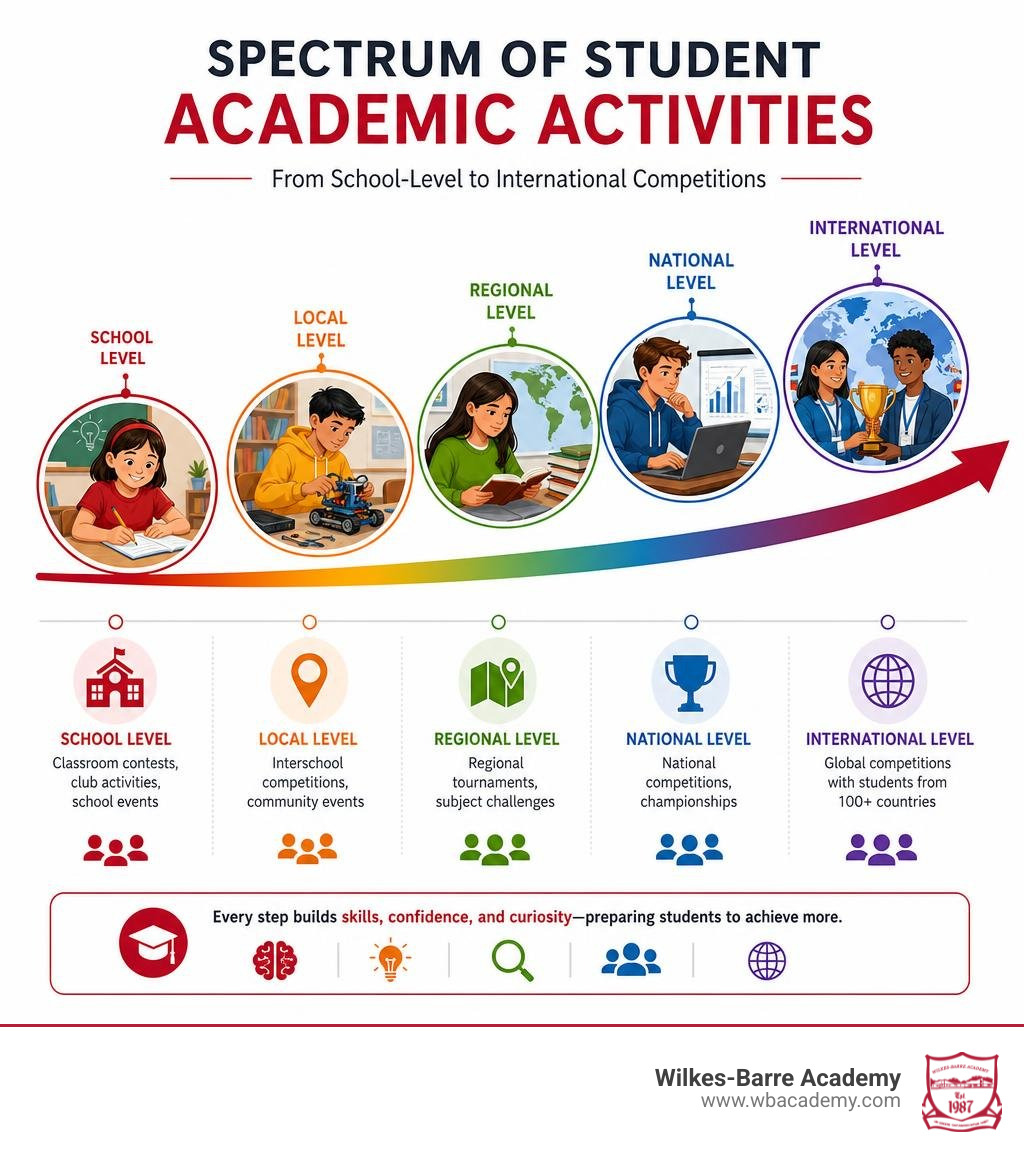
These opportunities exist at every level — from small school events all the way up to international tournaments with participants from 100+ countries.
Since 1966, programs like AGLOA have brought over 20,000 students in grades 4–12 together through competitive academic games. That kind of long track record tells you something: this works. Students who compete don’t just learn more — they learn how to think.
For busy parents who want more than basic academics for their kids, competitions offer structured enrichment, measurable growth, and a chance for children to discover what they are truly passionate about.
Key terms for academic activities and competitions:
- math competition elementary school pennsylvania
- science fair elementary school pennsylvania
- science olympiad pennsylvania
The Diverse World of Academic Activities and Competitions

When we look at the landscape of educational development, we see that learning is not a one-size-fits-all journey. Beyond daily classroom lessons, academic activities and competitions serve as a vibrant arena where students can test their limits, discover niche interests, and shine. These activities span across all grade levels and cover every core subject imaginable, from literature and linguistics to advanced robotics and environmental engineering.
At Wilkes-Barre Academy, we design our advanced Academics curriculum to naturally prepare students for these challenges. By introducing classroom-level challenges early on, we help students build the stamina and curiosity needed to transition smoothly into regional tournaments and national stages.
The journey typically starts right in the classroom with spelling bees, math challenges, and small-scale science projects. As students grow in confidence, they can step up to regional tournaments in Pennsylvania. For example, high school students in our state frequently look forward to programs like the Chester County Academic Competition, which involves teams from 24 high schools competing in a college-bowl format. For younger students in the Wilkes-Barre area, regional events provide the perfect stepping stone to test their knowledge against peers from other schools.
Benefits of Participating in Academic Activities and Competitions
Participating in these events does more than just fill a trophy case. The true value lies in the profound personal and intellectual growth that happens during the preparation process. When students dive into academic activities and competitions, they develop vital life skills that traditional schoolwork alone might not fully draw out:
- Critical Thinking & Problem-Solving: Competitions rarely ask for simple memorization. Instead, they challenge students to apply their knowledge to complex, real-world problems.
- Self-Confidence: Standing on a stage, presenting a research paper, or buzzer-beating a tough question builds an unmatched sense of self-assurance.
- Teamwork and Collaboration: Many events require students to work in teams, teaching them how to communicate, delegate tasks, and support one another through wins and losses.
- Character Development: Learning how to handle pressure, manage time, and practice good sportsmanship are lessons that stay with students for life.
At our school, we emphasize these traits through a robust selection of Student Activities, ensuring our students develop into well-rounded individuals who value both academic excellence and personal integrity.
Team-Based vs. Individual Formats
Choosing the right type of competition depends heavily on a student’s personality, strengths, and goals. Both team-based and individual formats offer distinct advantages:
| Feature | Team-Based Competitions (e.g., Quiz Bowls, Science Olympiads) | Individual Competitions (e.g., Olympiads, Research Challenges) |
|---|---|---|
| Primary Focus | Collaborative problem-solving, rapid communication, and shared strategy. | Deep personal focus, independent research, and self-reliance. |
| Social Dynamic | High peer collaboration; students win and learn together as a cohesive unit. | High personal accountability; direct feedback on individual performance. |
| Key Skills Developed | Delegation, trust, team synergy, and collective brainstorming. | Time management, self-motivation, and deep subject-matter expertise. |
| Example Events | Chester County Academic Competition, Science Olympiad | International Chemistry Competition, spelling bees, independent science fairs. |
While team formats teach students how to blend their unique talents to achieve a common goal, individual challenges allow young scholars to take full ownership of their work and push their personal boundaries.
Top National and International Academic Tournaments
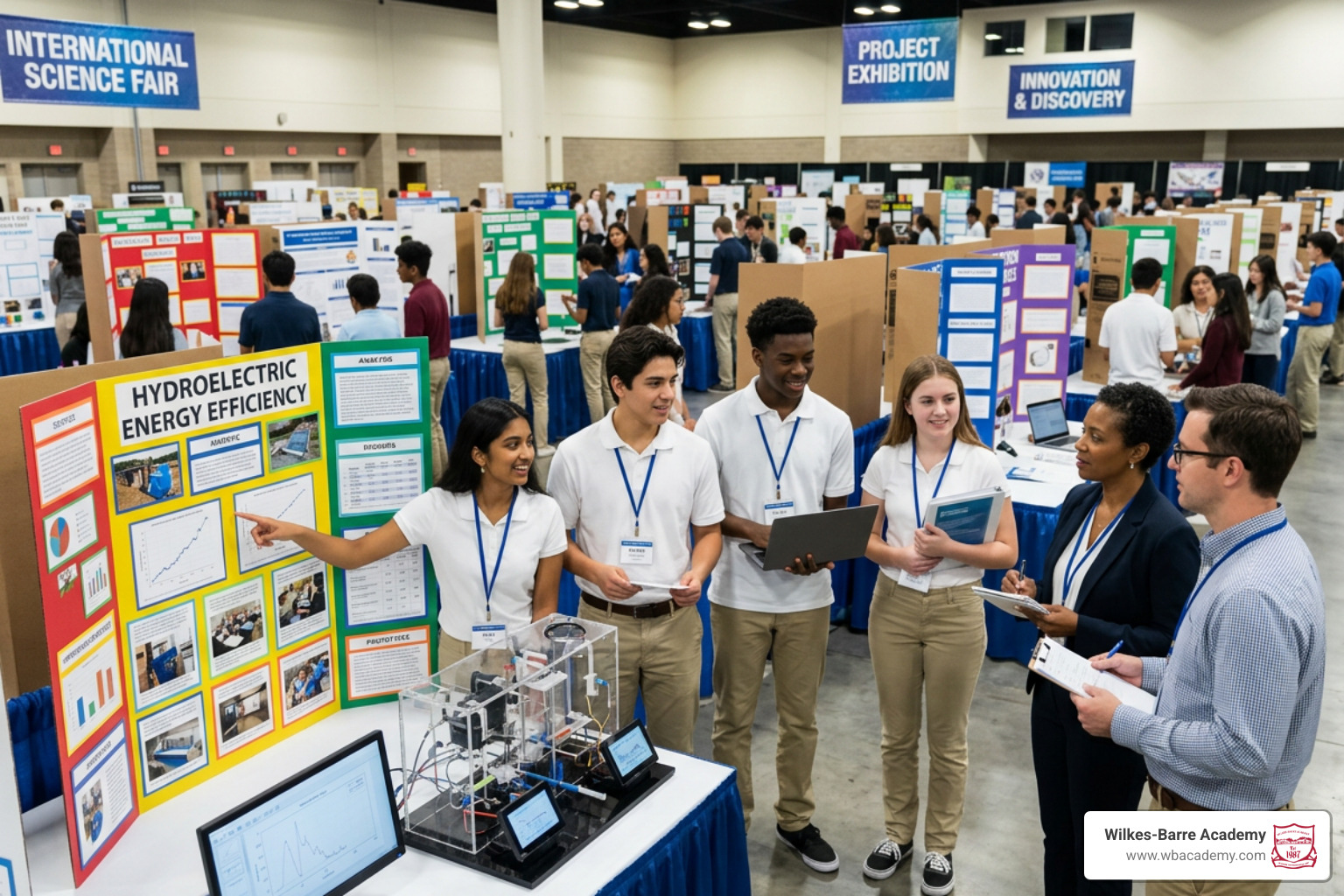
As students advance, they may want to set their sights on larger national and international stages. These premier events bring together the brightest minds from across the globe, offering a platform to showcase talents on an elite level.
One of the most prominent organizations in this space is the Academic Games Leagues of America (AGLOA). Since 1966, AGLOA has challenged over 20,000 students in grades 4–12 through games in mathematics, language arts, and social studies. These competitions focus on developing “Thinking Kids” of character and integrity, culminating in a national championship tournament in late April each year.
For students who love trivia and comprehensive general knowledge, the National Academic Quiz Tournaments (NAQT) provides elite college-bowl style questions. Locally, high school tournaments like the Chester County Academic Competition utilize NAQT-sourced questions to test students across literature, math, science, fine arts, history, geography, and pop culture. For younger students starting out, participating in a school-level Geography Bee is an excellent way to build the broad-based knowledge required for these prestigious quiz bowls.
How to Prepare for Elite Academic Activities and Competitions
Success at the highest levels of competition does not happen overnight. It requires dedication, strategic planning, and structured support. Here are the best practices we recommend for students aiming for elite tournaments:
- Establish a Consistent Study Routine: Break down the competition syllabus into manageable weekly topics rather than cramming at the last minute.
- Practice with Real Materials: Utilize past exam papers, sample questions, and mock buzzer rounds to get comfortable with the actual event format.
- Seek Mentorship: Work closely with teachers, local experts, or older students who have successfully navigated the competition before.
- Emphasize Steady Progress: For math enthusiasts, programs like Continental Math offer regular, progressive challenges that build confidence over time.
- Build Vocabulary and Mechanics: For language arts competitions, participating in a local Spelling Bee helps students master phonetics, roots, and language patterns.
STEM and Innovation Challenges
For students passionate about science, technology, engineering, and mathematics, the global arena offers incredible opportunities to solve real-world problems:
- Mathematics: The IMC – International Mathematics Competition for University Students brings together students from over 200 institutions across 50+ countries. In June 2026, university-level mathematicians will head to Blagoevgrad, Bulgaria, to tackle advanced problems in algebra, analysis, geometry, and combinatorics.
- Chemistry: High school and early college chemistry lovers can participate in the IChC | International Chemistry Competition . This tournament features participants from over 190 countries, offering over $1,500 USD in prizes across three age groups (Junior, Youth, and Senior). It serves as an accessible, highly rewarding stepping stone for chemistry enthusiasts.
- Information Technology: The Huawei ICT Competition 2025—2026 Global Final has attracted more than 180,000 participants from 2,000+ colleges across 100+ countries, focusing on cutting-edge tracks like Cloud, Computing, Ascend AI, and the new Cangjie Programming Track.
- Multi-Disciplinary Science: The IWSC 2026 – IWSC (International Walisongo Science Competition) is open to undergraduate and diploma students worldwide, with registration open from May 18 to June 30, 2026. It features olympiads in mathematics, physics, chemistry, and biology, alongside innovation tracks in environmental engineering.
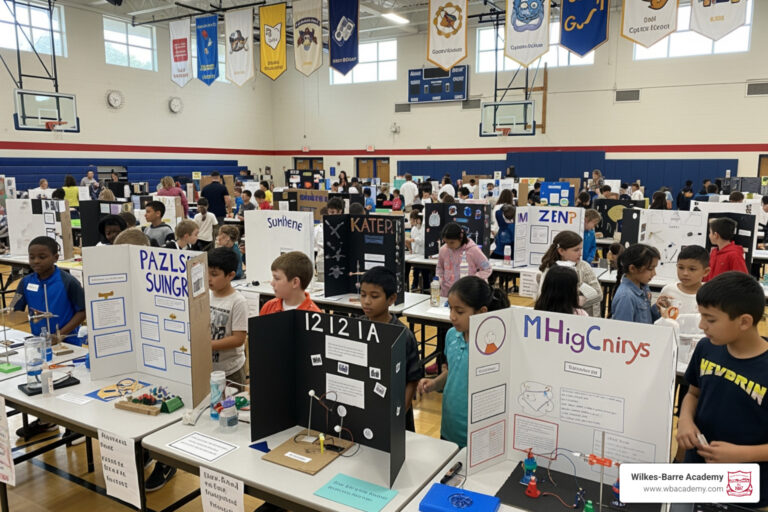
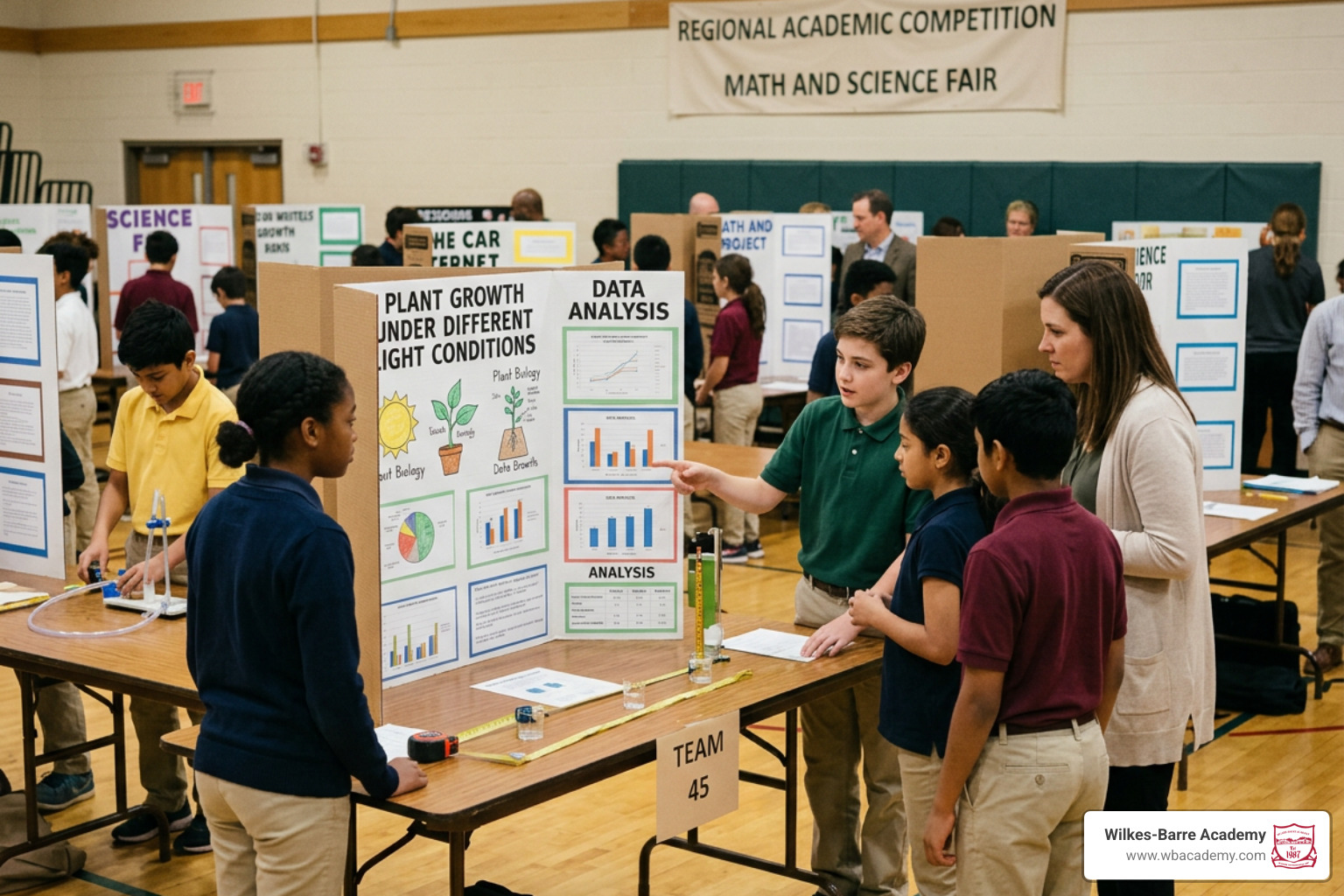
- Local Opportunities: Right here in Pennsylvania, young scientists look forward to the Northeast Regional Science Olympiad, hosted at Penn State Wilkes-Barre, which brings together school districts like the Wilkes-Barre Area School District to compete in hands-on STEM challenges. Preparing a project for a school-level Science Fair is the absolute best way for elementary and middle schoolers to start their scientific journey.
Humanities, Writing, and Arts Contests
For students whose talents lean toward creative writing, history, linguistics, and social innovation, there are equally prestigious avenues to explore:
- Global Research Challenge: The Global Research Challenge 2026 offers over $10,000 in student awards, recognizing 300+ participants across 5 core research areas. Students submit formal academic research papers that undergo a rigorous blind peer-review process.
- International Research Competition & Olympiad: The IRCYS 2026 | International Research Competition & Olympiad empowers young innovators across STEM and social innovation categories. With open registration from April 1 to July 17, 2026, and a hybrid grand final in mid-August, it connects over 1,200 finalists from 40+ countries with university scholarship opportunities.
- Language and Literacy: Developing a deep appreciation for the structure of language can start early. Participating in a school Word Study Bee is a fantastic way for elementary and middle school students to master vocabulary, linguistics, and grammar, preparing them for advanced humanities challenges later in life.
Frequently Asked Questions about Academic Competitions
How do academic competitions support college applications?
Colleges and universities look for students who demonstrate genuine intellectual curiosity and a willingness to push past their comfort zones. Participating in academic activities and competitions shows admissions officers that a student is highly motivated and passionate about their chosen field.
Even if a student does not take home a gold medal, the commitment required to write a research paper for the Global Research Challenge or prepare for a regional Science Olympiad shows incredible initiative. Furthermore, major competitions often open doors to valuable networking opportunities, mentorships with university professors, and exclusive scholarships.
What financial and time commitments should families expect?
The commitment level varies widely depending on the competition level:
- Local & School Events: These typically require minimal to no registration fees and a few hours of study per week.
- National & International Tournaments: These may involve registration fees (for example, the Global Research Challenge has a $30 entry fee, while international participants can register for the IWSC for free). Families should also factor in travel and accommodation expenses if the event is held in person, such as the IMC in Bulgaria.
- Time Management: Elite competitions require consistent study hours. It is crucial for families to help students balance their competition prep with regular schoolwork to avoid burnout.
How are modern competitions evolving with technology and AI?
The world of academic competitions is changing rapidly to keep pace with technological advancements. Many prestigious tournaments have adopted hybrid or fully online formats, allowing students from all corners of the globe to participate without expensive travel.
Furthermore, new disciplines are emerging. For instance, the Huawei ICT Competition now features specialized tracks in Ascend AI, Cloud Computing, and Cangjie Programming. At Wilkes-Barre Academy, we emphasize the integration of Academics Technology in our daily curriculum, ensuring our students are fully prepared to navigate these digital-first, tech-forward competitive environments.
Conclusion
Academic activities and competitions are about far more than winning medals or building a standout resume. They are about fostering a lifelong love of learning, encouraging intellectual curiosity, and helping students discover what they are truly capable of achieving. Whether a child is solving a complex math puzzle, writing a research paper, or working with a team to build a robot, they are gaining the confidence and critical thinking skills needed to navigate the future.
At Wilkes-Barre Academy, we believe in providing a holistic, advanced education that prepares students for these exact opportunities. Our unique single-classroom-per-grade structure allows our dedicated teachers to provide highly individualized attention, ensuring every student receives the support they need to excel. In our close-knit, diverse community, we celebrate each child’s unique passions and guide them to reach their highest potential both inside and outside the classroom.
Ready to give your child an academic edge and a supportive community to grow in? Explore our advanced curriculum and extracurricular programs at Wilkes-Barre Academy.