A Comprehensive Guide to Finding a Nurturing Preschool Close-Knit Environment
Why a Preschool Close-Knit Environment Builds Stronger Starts
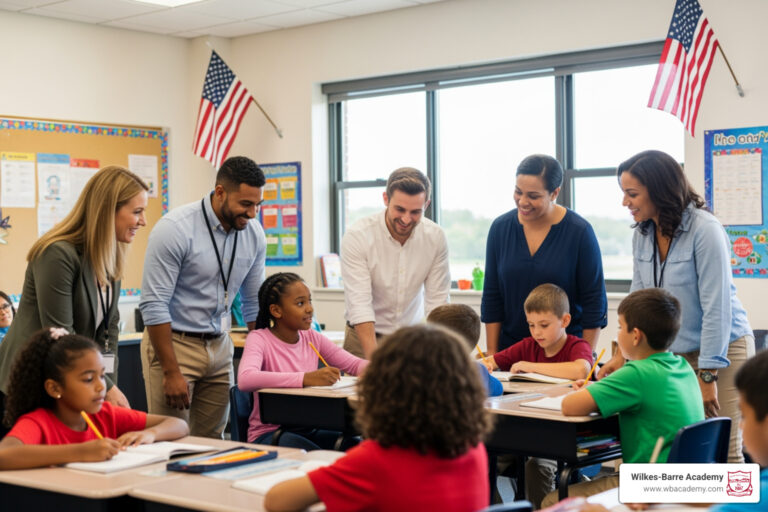
A preschool close knit environment is one where children are known well by their teachers, families have clear ways to participate, and classmates build steady relationships through daily play and routines. It matters because young children learn best when they feel safe, seen, and included.
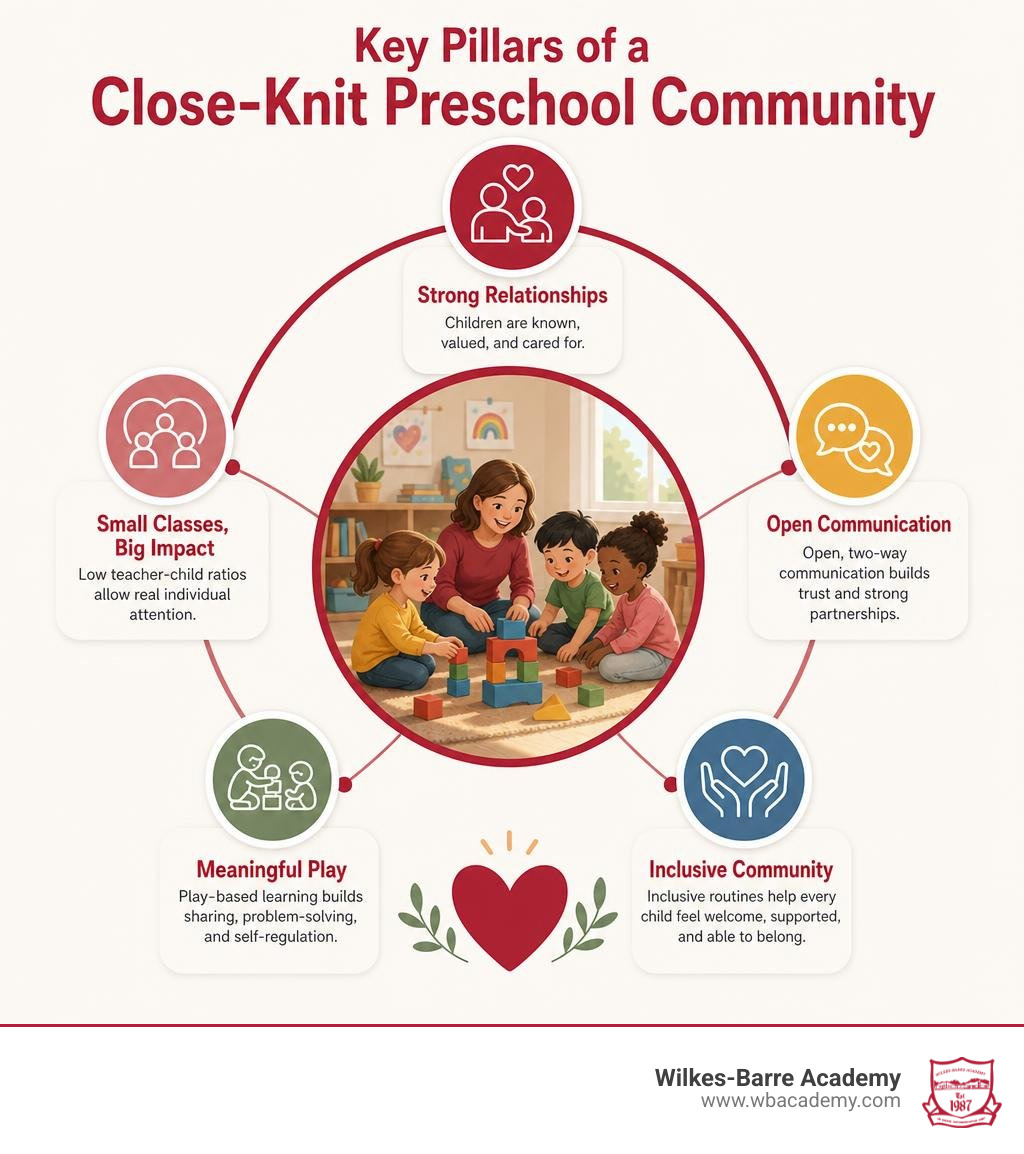
When comparing preschool options, look for these early signs of a connected community:
- Small classes and low teacher-child ratios that allow real individual attention
- Consistent teachers who can build trust over time
- Play-based activities that teach sharing, problem-solving, and self-regulation
- Open, two-way communication between educators and families
- Inclusive routines that help children with different learning needs belong
A warm community is not just a nice extra. It gives children a secure base to practice independence, make friends, manage big feelings, and approach learning with confidence. For busy families, it can also create the home-school partnership that is often hard to find in larger, less personal settings.
Preschool close knit environment word list:
Why a Preschool Close-Knit Environment Matters for Early Development
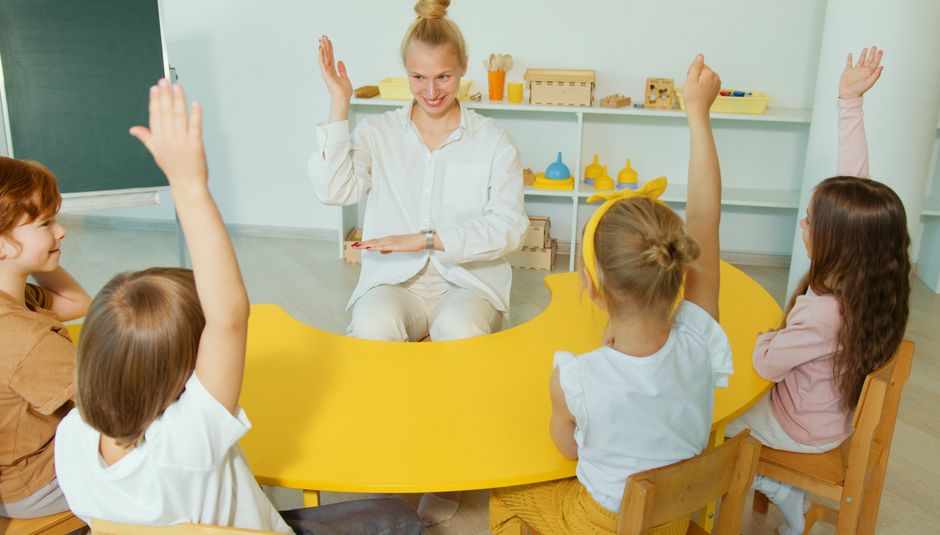
Early childhood sets the trajectory for all future schooling. Decades of research in educational psychology demonstrate that smaller learning settings function as a community nucleus, inviting strong, enduring support from parents and educators alike. According to educational research on school sizing, smaller learning environments—typically defined as having 300 students or fewer across the whole school—demonstrate higher academic achievement in test scores and long-term milestones.
Moreover, smaller, more communal settings directly reduce both student and teacher alienation while substantially enhancing engagement in learning. When a classroom functions as an extended family rather than an institutional warehouse, children flourish emotionally, socially, and cognitively. Discovering The Best Diverse and Close-Knit Schools in Pennsylvania often comes down to identifying programs that prioritize these tight relational bonds over sprawling, impersonal facilities.
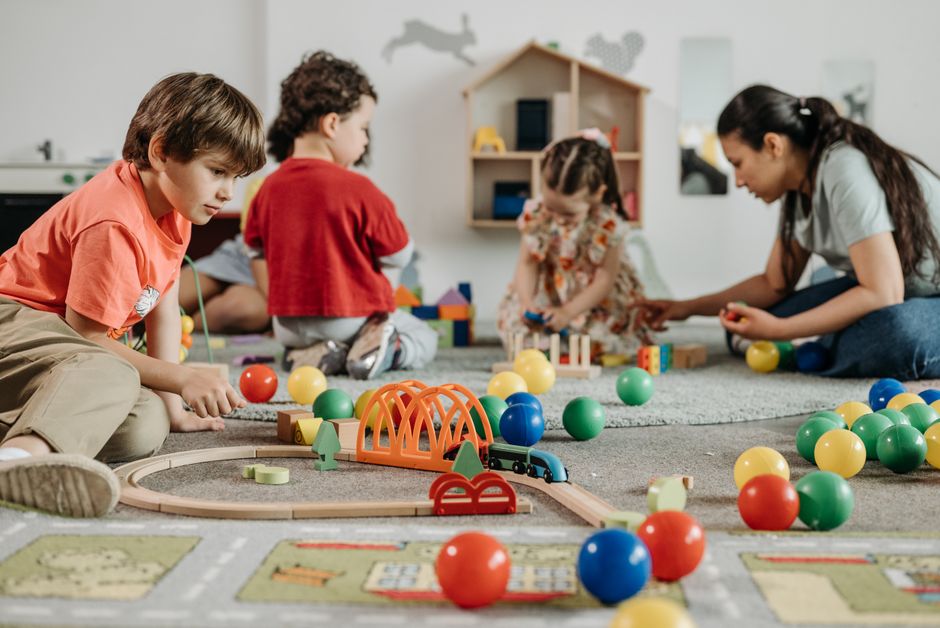
Research confirms that play-based environments cultivate stronger cognitive flexibility, social skills, and self-regulation. In an intimate setting, these skills develop naturally through daily conversations, gentle boundary navigation, and collaborative group tasks.
Core Elements Defining a Preschool Close-Knit Environment
What transforms a standard classroom into a true community? It begins with structural intentionality:
- Low Child-to-Teacher Ratios: Keeping educator-to-child ratios low ensures that every question is answered, every scrape is soothed, and every developmental milestone is documented.
- Intentional Cohort Consistency: Children stay with the same peer group and primary educators throughout the entire academic year, preventing the disruption that comes from frequent classroom shuffling.
- Relational Equity: Facilities and flashy equipment never replace deep personal connections. True equity starts with relational warmth where every child is valued for their unique contributions.
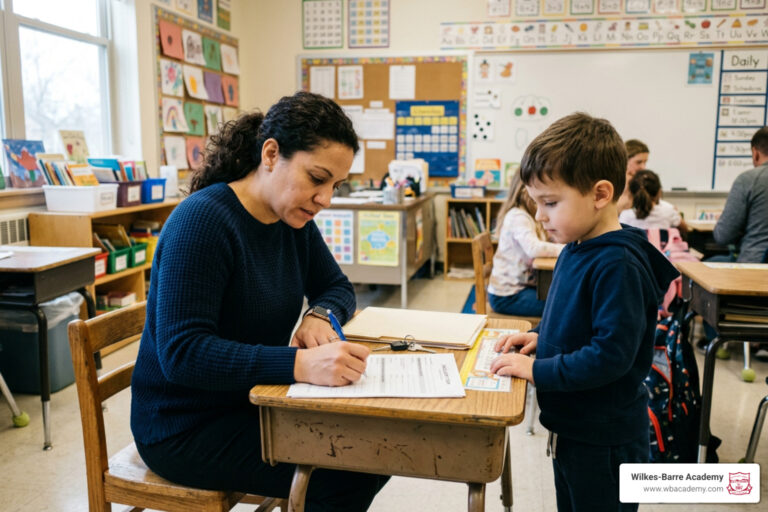
- Individualized Attention: Teachers have the bandwidth to adapt lessons in real time, catering to diverse learning speeds without leaving anyone behind.
The Role of Tenured Educators in Fostering Emotional Security
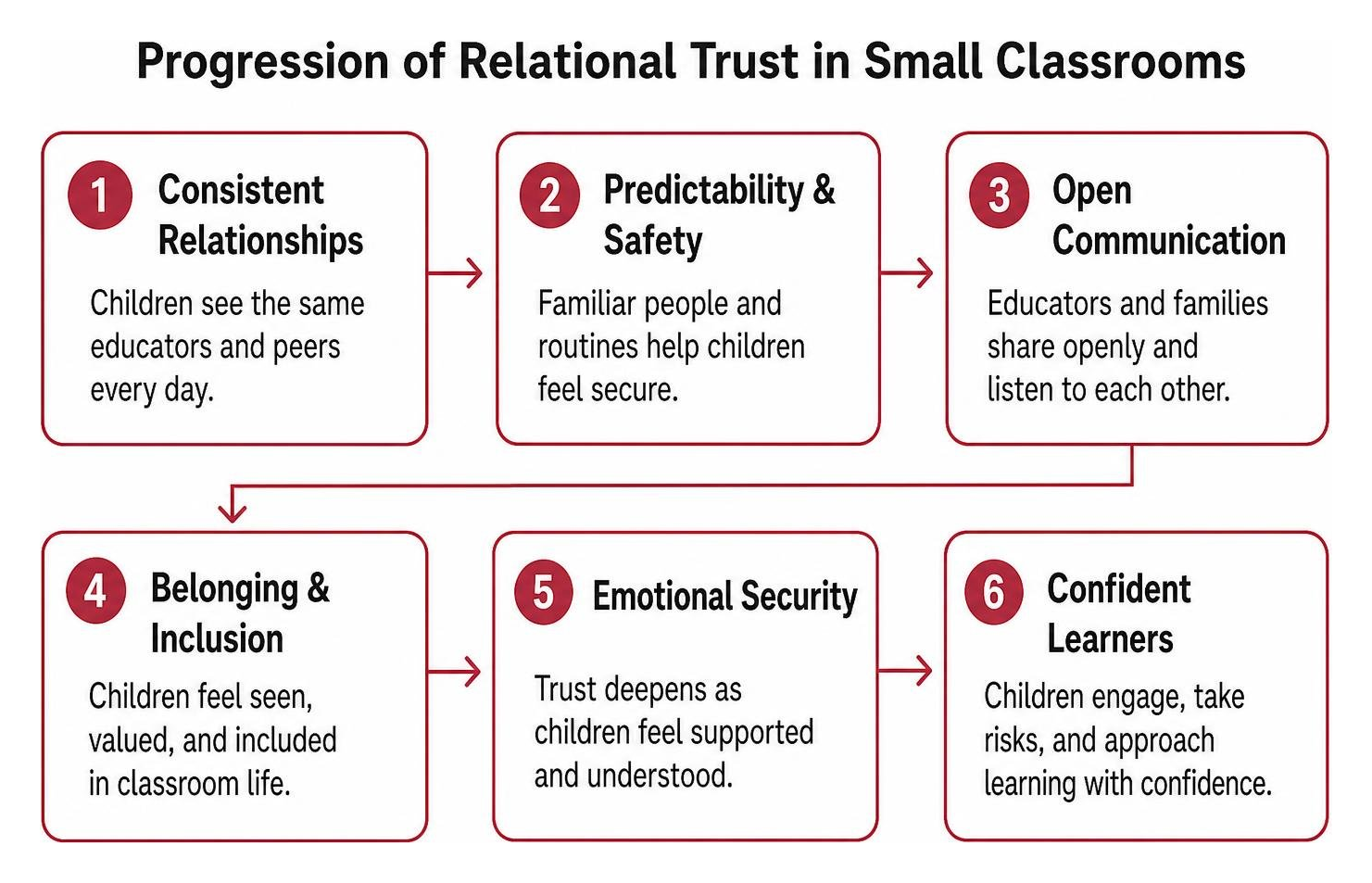
The foundation of any thriving early childhood program is its staff. In an industry too often plagued by high employee turnover, long-tenured teachers provide the emotional anchors young children require. Attachment theory confirms that stable, predictable caregiver bonds allow children to lower their guard, explore their surroundings safely, and regulate their nervous systems.
When educators remain at a school year after year, they build institutional memory, carry forward cherished classroom traditions, and understand family dynamics on a deeply personal level. Children enter the classroom each morning knowing precisely what to expect: a familiar smile, predictable rhythms, and a teacher who understands their subtle cues, quirks, and triumphs.
6 Key Benefits of Small, Communal Preschool Settings
Choosing an intimate early learning environment yields immediate and long-term advantages. When searching for The Best Wilkes-Barre Area Schools for Individualized Learning, evaluating the differences between institutional daycare models and communal schools is essential.
| Feature | Large Institutional Settings | Small Communal Preschools |
|---|---|---|
| Class Size | Often 20–30 children per room | Typically capped under 15 children |
| Teacher Turnover | High, causing attachment disruptions | Low, fostering multi-year stability |
| Curriculum Approach | Rigid, one-size-fits-all schedules | Adaptive, play-based, and child-led |
| Family Connection | Brief, transactional drop-offs | Active, collaborative partnerships |
| Social-Emotional Focus | Reactive behavioral management | Proactive emotional literacy & coaching |
| Inclusion Support | Siloed, fragmented services | Integrated, whole-cohort peer modeling |
1. Tailored Support for Diverse and Neurodivergent Learners
Every child arrives in the classroom with a distinct developmental profile. Research in early childhood inclusion consistently shows that all children benefit from shared spaces—developing deeper empathy, stronger social competence, and more advanced language and learning outcomes.
In an intimate learning environment, children with developmental variations, sensory processing differences, or speech delays are never reduced to a diagnosis. Dedicated educators seamlessly weave multi-sensory techniques into daily circle times and tabletop centers. Neurotypical peers model communication and cooperative play, while simultaneously learning patience, kindness, and genuine inclusivity. Because the classroom dynamic is unhurried, teachers can tailor sensory spaces, modify fine-motor tasks, and provide one-on-one reassurance whenever a child feels overwhelmed.
2. Deep Social-Emotional Growth Through Child-Led Play
Early learning should never feel like high-stakes test prep. Play is the primary vehicle through which young children make sense of the world, test theories, and master emotional regulation.
In a communal classroom, play-based, child-led inquiry takes center stage:
- Sensory Centers: Open-ended materials like clay, sand, water, and dramatic play costumes foster collaborative storytelling and creative problem-solving.
- Emotional Literacy: Educators utilize evidence-based strategies to help children identify their feelings, talk through big emotions, and practice self-calming techniques.
- Conflict Coaching: When two preschoolers inevitably want the exact same wooden block, teachers step in as gentle mediators rather than stern referees, guiding children through organic conflict resolution and restorative sharing.
3. Nature-Based Learning and Outdoor Peer Camaraderie

A genuine community extends far beyond four walls. Daily, all-weather outdoor exploration allows children to connect with the living world and build gross motor coordination while working together in unstructured spaces.
Whether building mud kitchens, observing bugs in a schoolyard garden, or negotiating obstacle courses, outdoor play provides a rich sensory landscape. In small groups, children learn healthy risk-taking, practice spatial awareness, and form spontaneous games that bridge social divides. The shared wonder of discovering a caterpillar or feeling the autumn rain unites classmates in authentic camaraderie.
4. Active Family Partnerships and Co-Learning Culture
A preschool should serve as an extension of the home. When parents, caregivers, and educators view each other as partners, children experience a seamless web of support.
Close-knit programs invite families into the fabric of daily life through:
- Transparent Daily Communication: Real-time updates, photos, and regular face-to-face check-ins during pick-up and drop-off eliminate guesswork.
- Meaningful Family Events: Seasonal celebrations, family picnics, and classroom showcases turn casual parent acquaintances into a lifelong neighborhood support network.
- Classroom Volunteering: Opportunities to read stories, share cultural traditions, or assist with special craft projects give families an active role in their child’s early schooling journey.
5. Seamless Multi-Age Collaboration and Empathy Building
One of the greatest hallmarks of a communal school setting is the natural interaction between age groups. Rather than being isolated strictly by birth month, young learners frequently interact with older peers during assemblies, outdoor play, and cross-grade buddy programs.
Younger children gain confidence by observing older students model advanced language, focus, and kindness. Simultaneously, older students cultivate leadership, empathy, and protective care as they guide their younger peers through shared school routines. This dynamic mirrors natural family and neighborhood structures, ensuring every child feels valued across the entire school ecosystem.
6. Smooth Academic Foundations for Future Grade Transitions
Academic readiness is the natural byproduct of a secure, play-rich early childhood foundation. When children feel safe and emotionally balanced, their brains are primed for foundational literacy and numeracy.
Communal preschools introduce early concepts organically:
- Multi-Sensory Phonics: Connecting animal movements, sounds, and tactile letter tracing to spark early reading curiosity.
- Hands-On Numeracy: Counting natural items, sorting classroom manipulatives, and exploring concrete mathematical concepts through real-world play.
- Foundational Fine Motor Skills: Engaging in painting, clay manipulation, and bead stringing to build hand strength before formal handwriting begins.
Families exploring Top Non-Profit K-8 Schools in Wilkes-Barre for Strong Family Ties understand that a nurturing preschool experience lays the groundwork for elementary excellence, encouraging curiosity and resilience that last for years.
How to Evaluate and Choose a Preschool Close-Knit Environment
Choosing your child’s first school can feel overwhelming, but relying on practical observations during an in-person tour will help clarify your decision. For a deeper look at neighborhood options, our comprehensive guide on Finding the Best Preschool in Wilkes-Barre Without Losing Your Mind walks through the practical logistics of school selection.
Essential Questions to Ask During Your School Visit
When you step inside a potential early learning program, look past the decorative bulletin boards and focus on relational dynamics. Ask the leadership and teaching staff:
- What is your average teacher tenure, and how do you support staff retention?
- What are the exact educator-to-child ratios throughout the entire day, including during outdoor play and rest times?
- How do educators guide peer conflicts and big emotional outbursts?
- In what concrete ways are families invited to participate in school life?
- How do you adapt daily classroom routines for children who learn or communicate differently?
Red Flags That Signal an Overcrowded or Impersonal Program
Be mindful of warning signs that indicate a school may lack the communal warmth your child deserves:
- High Staff Turnover: A revolving door of unfamiliar faces prevents young children from forming secure attachments.
- Chaotic Ratios and Overcrowding: Classrooms where teachers spend all their energy on crowd control rather than meaningful engagement.
- Rigid, Work-Sheet Driven Instruction: Programs that force sedentary academic drills onto toddlers while ignoring play and social-emotional growth.
- Restricted Parent Communication: Facilities that treat family engagement as an inconvenience rather than a core pillar of early childhood development.
Frequently Asked Questions About Early Learning Communities
What is the ideal class size for an intimate preschool setting?
In early childhood education, high-quality programs typically cap classes under 15 children with multiple educators present. This structure ensures that every child receives attentive care, individualized instruction, and gentle guidance through social interactions.
How do close-knit preschools help children with separation anxiety?
Intimate preschools ease transitions by maintaining predictable morning rhythms, creating dedicated drop-off bridges, and pairing nervous children with loving, familiar teachers. Because the environment is calm and uncrowded, educators can offer one-on-one reassurance until the child feels completely secure.
Can working parents stay involved in a community-oriented preschool?
Absolutely. High-functioning school communities offer flexible ways to connect, including digital photo updates, evening family events, weekend campus cleanups, and remote participation options, ensuring working parents never miss out on their child’s milestones.
Conclusion
The early years pass in the blink of an eye. Providing your child with an intimate early education community ensures that their first educational steps are filled with warmth, genuine curiosity, and deep personal connections. When children spend their formative years in a safe, play-rich environment where every teacher knows their name and celebrates their unique personality, they build the emotional resilience, empathy, and cognitive confidence required to excel for a lifetime.
At Wilkes-Barre Academy, a single-location institution, we take immense pride in cultivating an academically advanced yet deeply personal learning environment for our families in Luzerne County. From our dedicated early childhood foundation through our single-classroom-per-grade K-8 program, we offer an interconnected educational family where every student is truly seen, supported, and inspired. If you are seeking exceptional early care and education, we invite you to explore Small Wonders Daycare, our single-location institution, to discover how our close-knit community can support your child’s journey from day one.