A Practical Guide to Compare Private School Costs in Wilkes-Barre, PA
Introduction
Private school in Wilkes-Barre, PA costs an average of $13,713 per year across local independent institutions, though tuition ranges widely from accessible non-profit K-8 programs starting at $6,650 up to higher secondary school rates.
Evaluating tuition and enrollment trends is one of the most important steps when planning your family budget for independent education. While the overall numbers across Luzerne County give a general baseline, discovering the exact figures helps families determine what fits their financial goals and long-term academic plans.
Average Tuition Overview: How Much Does Private School Cost in Wilkes-Barre PA?
When researching how much does private school cost in wilkes-barre pa, parents often discover that citywide figures differ noticeably from individual classroom rates. Across the 9 private schools serving approximately 904 students in Wilkes-Barre, the average tuition stands at $13,713 per year. However, local private elementary and middle schools feature broad price ranges depending on their structure, mission, and resources.
To provide clear context on regional pricing, here is how local figures compare across different benchmarks:
| Metric / Category | Wilkes-Barre Local Average | Pennsylvania State Benchmark | Wilkes-Barre Academy Rate |
|---|---|---|---|
| Average Annual Tuition | $13,713 | ~$15,000 | $6,650 |
| Acceptance Rate | 75% | 81% | Varies by grade availability |
| Private School Share of K-12 Students | 8% | 14% | N/A |
| Average Student-to-Teacher Ratio | 12:1 | 11:1 | Dedicated single classroom per grade |
| Student Diversity (Students of Color) | 27% | 27% | Welcoming, diverse community |
Regional Benchmarks and Acceptance Rates
Understanding whether you can actually afford private school in Pennsylvania requires looking at local admissions realities. The average acceptance rate for private schools in Wilkes-Barre is 75%, which is slightly more competitive than the Pennsylvania state average of 81%. This selectivity often reflects smaller cohort capacities and dedicated classroom limits rather than purely exclusionary standards.
Furthermore, roughly 8% of all K-12 students in Wilkes-Barre attend private schools, compared to 14% statewide throughout Pennsylvania. The student body across local institutions reflects an inclusive environment, with 27% of students representing minority backgrounds, aligning evenly with broader state demographics and demonstrating that independent education serves families from diverse cultural and socioeconomic backgrounds.
Historical 10-Year Breakdown: How Much Does Private School Cost in Wilkes-Barre PA Over Time?
Private education costs in northeastern Pennsylvania have evolved considerably over the past decade. A look at historical data illustrates how inflation, staffing, technology, and facilities have influenced school budgets:
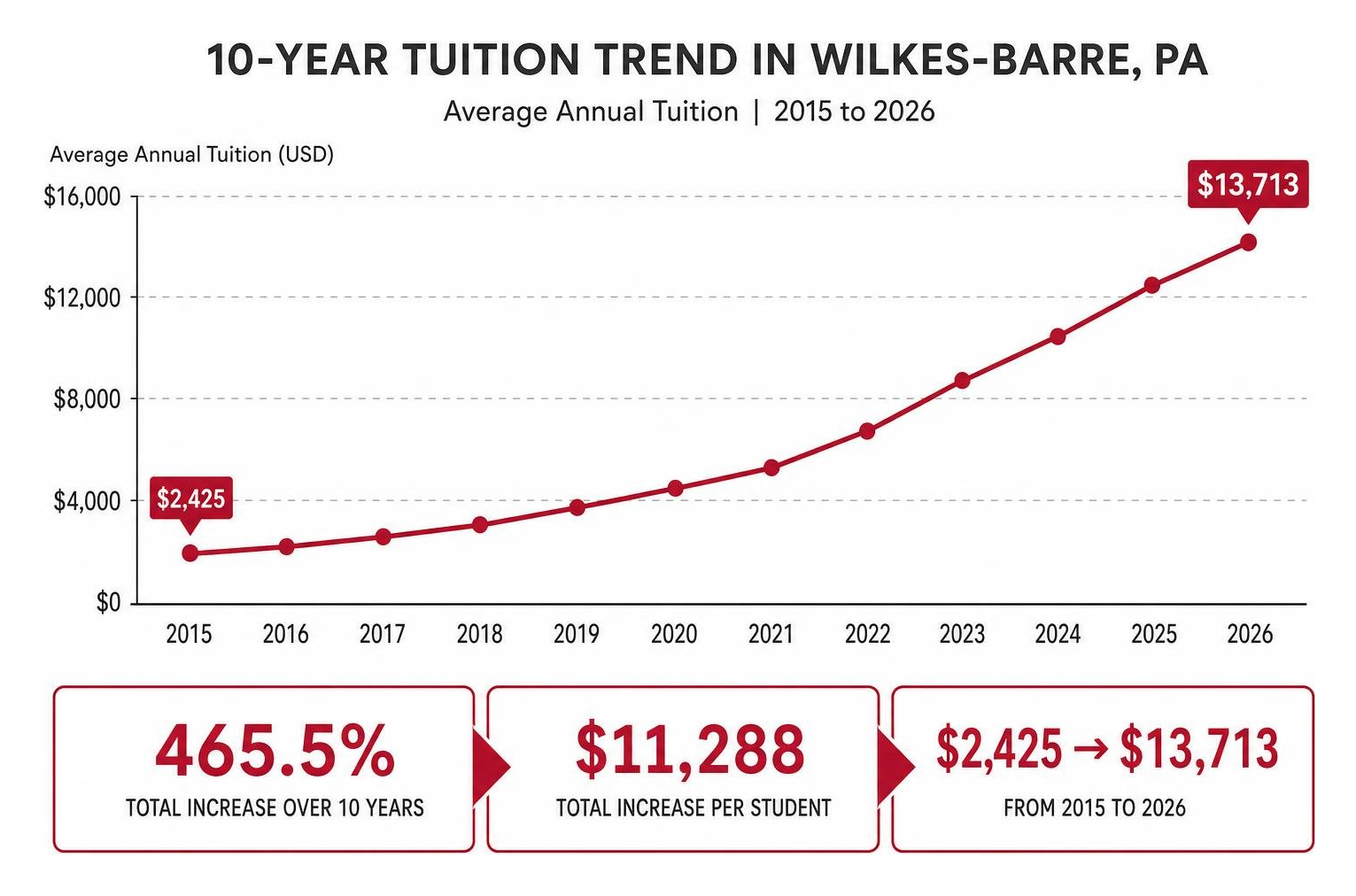
Over the past 10 years, the average tuition in Wilkes-Barre climbed by 465.5%, rising from $2,425 in 2015 to $13,713 in 2026. This decade-long jump of $11,288 per student—roughly the price of a modest car over the course of a child’s early education—underscores the benefit of investing in education: Pennsylvania non-profit private schools explained to find exceptional value without inflated price tags.
Key Factors Influencing Private Education Pricing in Luzerne County
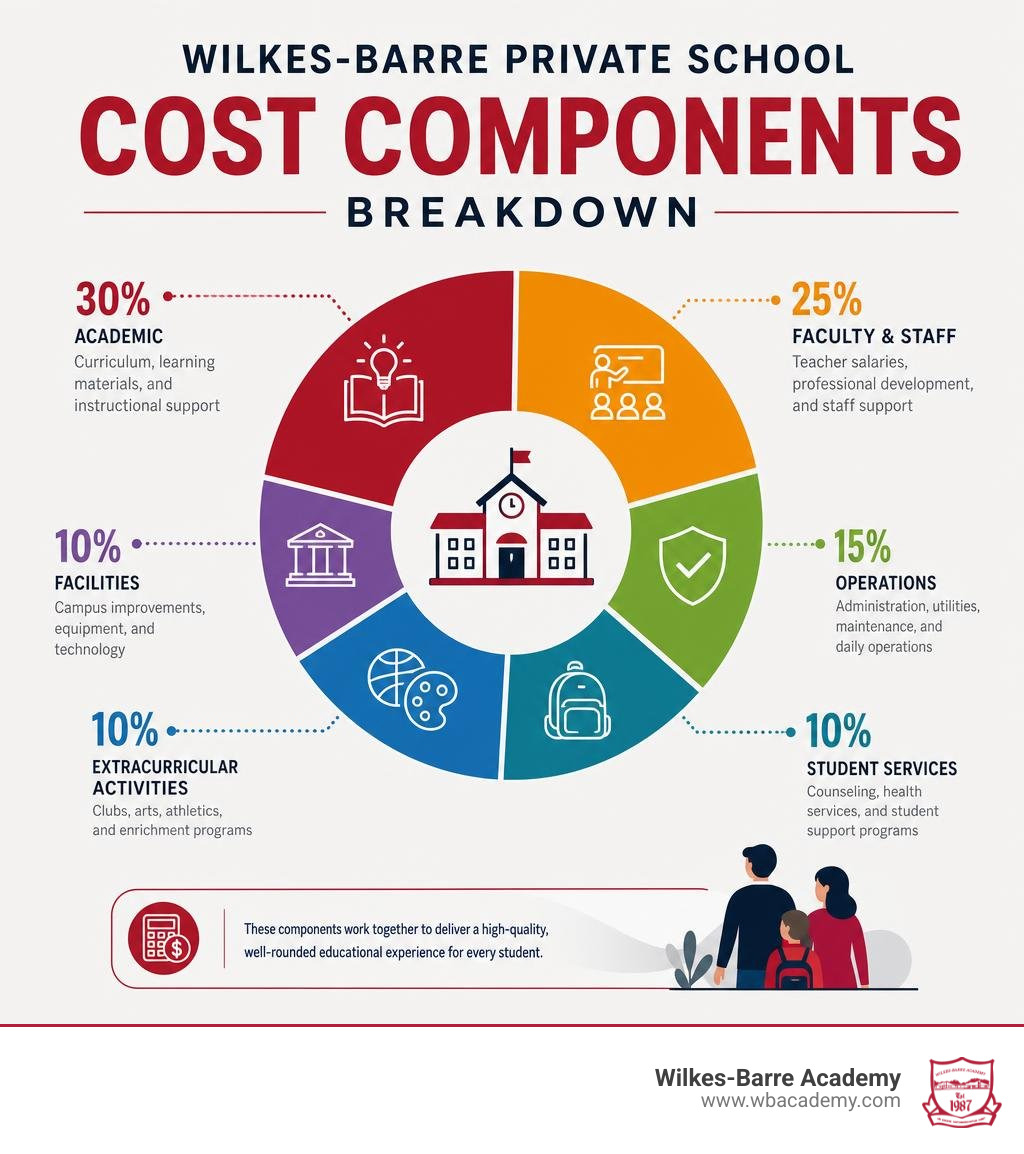
Tuition rates in Wilkes-Barre are shaped by several underlying operational factors:
- Student-to-Teacher Ratio: The local average ratio is 12:1, with an average class size of 20 students. Schools offering lower ratios and single-classroom cohorts invest more heavily in dedicated faculty per student, which directly enhances individualized instruction.
- Religious Affiliation: In Wilkes-Barre, 44% of private schools maintain religious affiliations (predominantly Islamic and Mennonite), which may receive subsidy support from sponsoring organizations to offset operating budgets.
- Academic Curriculum and Facilities: Specialized STEM programs, science labs, language enrichment, and updated classroom technology naturally impact operating overhead.
- Operational Scale and Administrative Structure: Multi-campus networks often incur significant corporate administrative overhead, whereas single-location institutions can streamline leadership and dedicate resources directly to teaching staff and learning materials.
Exploring the secret to finding a non-profit private school that fits your wallet means looking closely at how an institution uses its resources to support student development.
Non-Profit Versus For-Profit Operating Models
A key consideration for parents is whether a school operates on a non-profit or for-profit basis. Asking is private school worth the pennies in Pennsylvania often comes down to governance. Non-profit private schools reinvest every dollar of tuition directly back into classroom instruction, safety infrastructure, faculty salaries, and student activities rather than delivering margins to corporate owners. This structural difference enables community-focused schools to maintain high academic standards while keeping annual tuition thousands of dollars below regional averages.
Hidden Fees and Ancillary Expenses to Factor Into Your Budget
When establishing an accurate educational budget, families should look beyond the advertised base tuition. Mandatory fees and optional services can influence annual out-of-pocket spending, making it essential to request a complete schedule of fees during the admissions process.
Common ancillary expenses to factor into your comparison include:
- Registration and Enrollment Fees: Administrative charges applied upon yearly re-enrollment or initial application processing.
- Tuition Management Fees: Third-party administrative processing fees, such as the standard FACTS system charge for managing payment schedules.
- Textbooks and Materials: Consumable workbooks, laboratory equipment supplies, art materials, or online software licenses.
- Extracurricular Activities: Participation dues for clubs, music ensembles, drama productions, or STEM competitions like Science Olympiad.
- School Uniforms: Daily dress code items, seasonal outerwear, and physical education apparel.
Calculating Total Expenses: How Much Does Private School Cost in Wilkes-Barre PA Beyond Base Tuition?
Extended supervision before and after regular academic hours is an essential service for many working parents. When evaluating total outlays, determining is before/after care included in tuition or is it extra cost is critical.
At Wilkes-Barre Academy, extended care is structured affordably with clear pricing:
- Full-Time Extended Care: $83 per week for a single student, conveniently billed across 10 installments of $340.
- Part-Time Extended Care: Morning-only or afternoon-only care is available at $50 per week.
Combining transparent tuition with reasonable care options ensures families can plan for predictable monthly payments without surprises throughout the academic year.
Financial Aid, Tax Credits, and Tuition Assistance Programs
To make quality K-8 education accessible, families should investigate structured payment plans, multi-child discounts, and tuition assistance options directly through the school’s Tuition guidelines.
At Wilkes-Barre Academy, families benefit from a clear pricing model:
- Base Annual Tuition: $6,650 for a single student.
- Multi-Child Benefit: A multi-child discount maintains a flat rate of $6,650 for the second child.
- Flexible Installments: Families can choose payment in full or 10 installments of $715 per month via FACTS tuition management.
State Scholarships and Tax Credit Grants
Pennsylvania offers substantial programs to help income-eligible families offset private school tuition. State-supported initiatives allow qualifying businesses and individual donors to route tax dollars directly into student scholarship funds.
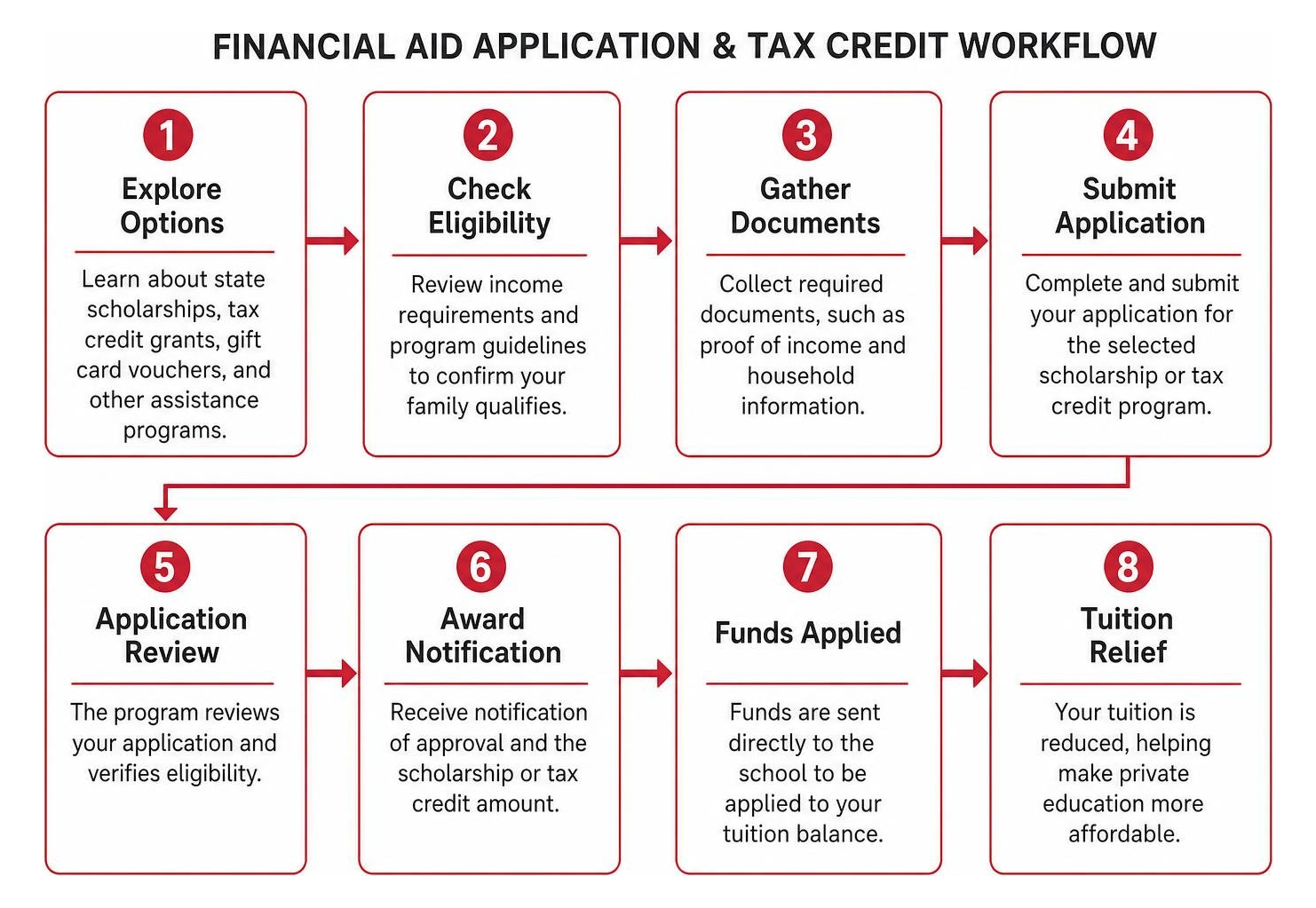
Families can explore tuition assistance through the state EITC Grant and the Opportunity Scholarship Tax Credit (OSTCP) program. Qualifying families can receive assistance that offsets up to two full installments. For an in-depth breakdown of state options, review your roadmap to Pennsylvania school choice and opportunity scholarships.
Gift Card Vouchers and Local Assistance Options
Innovative tuition relief models can also reduce costs throughout the school year. Through our Voucher Program, parents purchase gift cards for routine household shopping, groceries, and dining, earning a direct percentage of each card’s value as a credit toward their tuition balance.
Combining voucher earnings with state tax credits demonstrates that you don’t let the sticker price scare you: financial aid for PA private schools can substantially lower your real educational costs.
Frequently Asked Questions About Wilkes-Barre Private School Costs
What is the average cost of private school in Wilkes-Barre?
The average yearly tuition across private schools in Wilkes-Barre, PA is $13,713. However, prices vary from accessible non-profit K-8 models starting around $6,650 to higher secondary tuition rates.
How can families reduce private school tuition in Pennsylvania?
Families can reduce private school expenses by:
- Applying for EITC and OSTCP tax credit scholarships.
- Taking advantage of multi-child tuition discounts.
- Participating in tuition voucher and gift card rebate programs.
- Using 10-month installment plans to distribute cash flow evenly.
What percentage of Wilkes-Barre students attend private schools?
Approximately 8% of K-12 students residing in Wilkes-Barre attend private schools, compared to the Pennsylvania state average of 14%.
Conclusion
Choosing the right private school requires balancing academic rigor, a supportive community, and sustainable costs. As a dedicated single-location institution in Luzerne County, Wilkes-Barre Academy provides an advanced curriculum with a single classroom per grade, ensuring individualized attention while keeping tuition well below regional averages.
Families comparing options should look at the full picture: base tuition, extended care, payment schedules, available grants, and the day-to-day learning environment their child will experience. A lower tuition rate is most meaningful when it is paired with strong academics, consistent communication, and a school culture where teachers know each student well.
If you are exploring enrollment options and want to see our community firsthand, explore our Frequently Asked Questions or contact us to schedule a personal tour.