Your Roadmap to Pennsylvania School Choice and Opportunity Scholarships
Why Pennsylvania Families Are Rethinking Their School Options
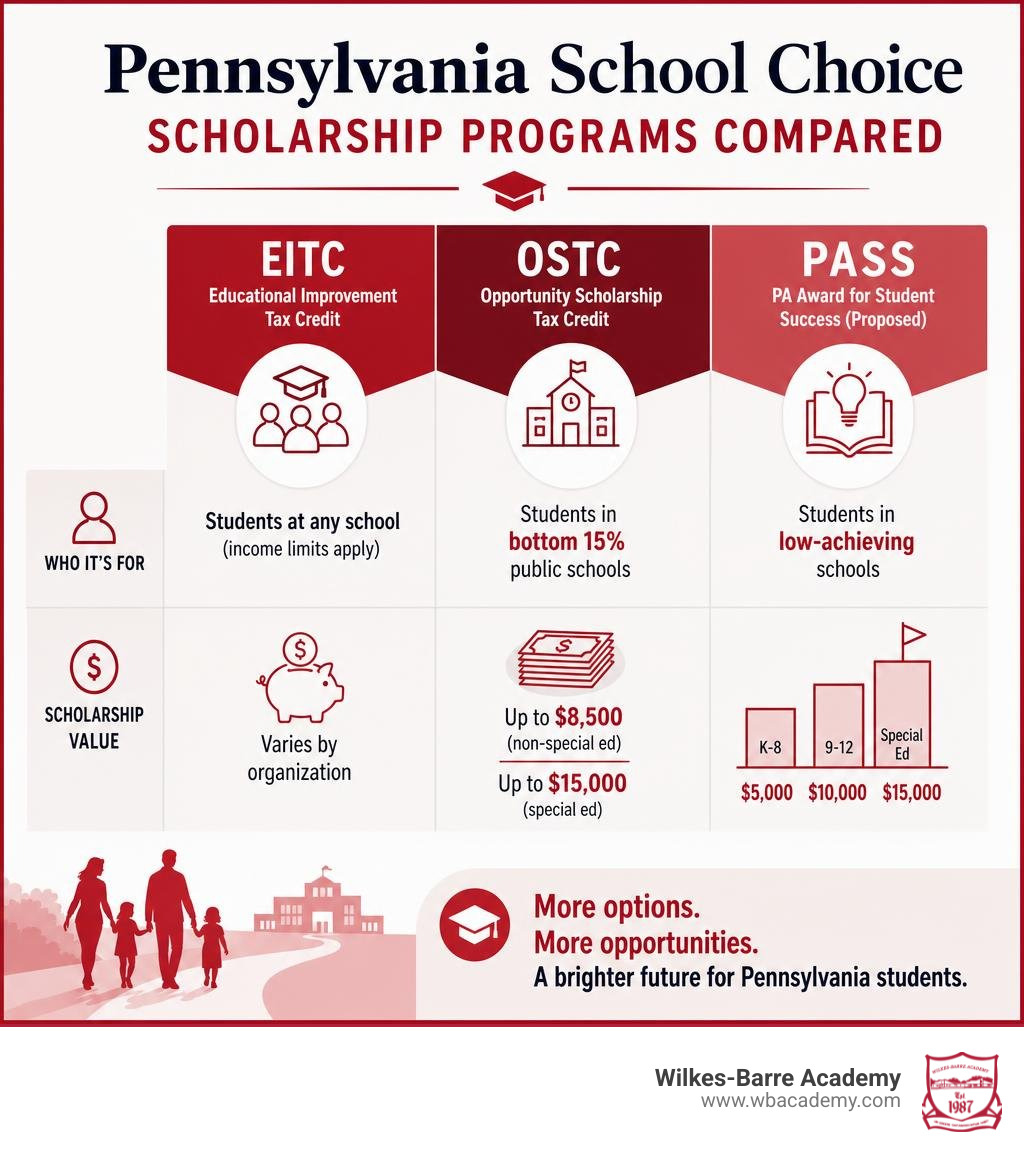
If you’re exploring a pa school choice scholarship, here’s a quick overview of your main options:
| Program | Who It’s For | Scholarship Value |
|---|---|---|
| EITC | Students at any school (income limits apply) | Varies by organization |
| OSTC | Students in bottom 15% public schools | Up to $8,500 (non-special ed), $15,000 (special ed) |
| PASS/Lifeline (proposed) | Students in low-achieving schools | $5,000 (K-8), $10,000 (9-12), $15,000 (special ed) |
Pennsylvania gives families more school options than many people realize. But navigating the programs — tax credits, vouchers, scholarship organizations — can feel overwhelming fast.
Here’s the reality: 72% of Pennsylvania eighth-graders are not proficient in math, and nearly half fall short in language arts. For parents who want more for their kids, that’s a hard number to ignore.
The good news? Scholarship programs exist right now that can help cover private school tuition. And new proposals could expand access significantly for families in Luzerne County and across the state.
This guide breaks down every major PA school choice scholarship option in plain language — what they are, who qualifies, how much they’re worth, and what’s changing in 2026.
Understanding the PA School Choice Scholarship Landscape
The K-12 school choice movement in Pennsylvania has gained tremendous momentum over the last few decades. The core idea is simple: every child deserves access to an education that fits their unique learning style, regardless of their neighborhood or family income.
As noted by Pennsylvania – EdChoice, our state offers several educational pathways, including traditional public schools, charter schools, magnet schools, homeschooling, and private school choice programs funded by tax credits.
For parents looking to transition their children to private education, understanding how these tax-credit scholarships work is the first step. When families have the financial freedom to choose, they often find that private education provides the structured, supportive environment their children need to thrive. If you are wondering whether a private education is the right path for your child, exploring Why a Private K-8 School in Pennsylvania Makes the Grade can help you weigh the long-term benefits of specialized, community-focused learning.
Currently, Pennsylvania’s private school choice landscape is anchored by two highly successful, taxpayer-supported programs: the Educational Improvement Tax Credit (EITC) and the Opportunity Scholarship Tax Credit (OSTC). Together, these programs have provided more than $2 billion in tuition support since 2001, making private education accessible to tens of thousands of families who otherwise could not afford it.
The Educational Improvement Tax Credit (EITC) Program
The Educational Improvement Tax Credit (EITC) program is a unique partnership between Pennsylvania families, private schools, and local businesses. Instead of paying their full state tax liability directly to the government, participating corporations can redirect those tax dollars to approved Scholarship Organizations (SOs). These non-profit organizations then distribute the funds directly to eligible families to help cover private school tuition.
For businesses, the incentive is substantial: they can receive a tax credit equal to 75% of their contribution, which jumps to 90% if they commit to making the same donation for two consecutive years. The maximum tax credit per business is capped at $750,000 per year.
For families, the EITC program is a game-changer. It is not restricted to students in specific school districts; any student meeting the state’s household income requirements can apply. For the 2025-26 and 2026 school years, the household income limit is $116,055, with an additional $20,428 allowed for each dependent child in the household.
If you want to learn more about how to leverage these grants for your child’s education, you can read about the School Year Information Paperwork Tuition EITC Grant to see how local families utilize these funds to offset tuition costs.
The Opportunity Scholarship Tax Credit (OSTC) Program
While the EITC is open to students statewide, the Opportunity Scholarship Tax Credit (OSTC) program is specifically designed to help students trapped in underperforming public schools.
According to the Opportunity Scholarship Tax Credit Program | Department of Education | Commonwealth of Pennsylvania , the program allows eligible students residing within the attendance boundaries of a “low-achieving school” to apply for a scholarship to attend a participating public or nonpublic school.
What exactly is a “low-achieving school”? The state defines it as any public elementary or secondary school ranking in the bottom 15% statewide based on combined mathematics and reading/ELA scores on the previous year’s standardized assessments (excluding charter schools, cyber charter schools, and career and technical centers).
The funding mechanism for the OSTC is identical to the EITC—businesses donate in exchange for tax credits—but the scholarship awards are targeted directly to students in these struggling districts. As outlined in the Opportunity Scholarship Tax Credit Program FAQs – PA DCED , the maximum scholarship awards for the 2025-26 and 2026 school years are:
- $8,500 for non-special education students
- $15,000 for special education students
To qualify, families must meet the same income eligibility requirements as the EITC ($116,055 plus $20,428 per dependent). This program provides an immediate lifeline for parents who feel their local public school is not meeting their child’s academic or developmental needs.
The PASS and Lifeline Scholarship Proposals
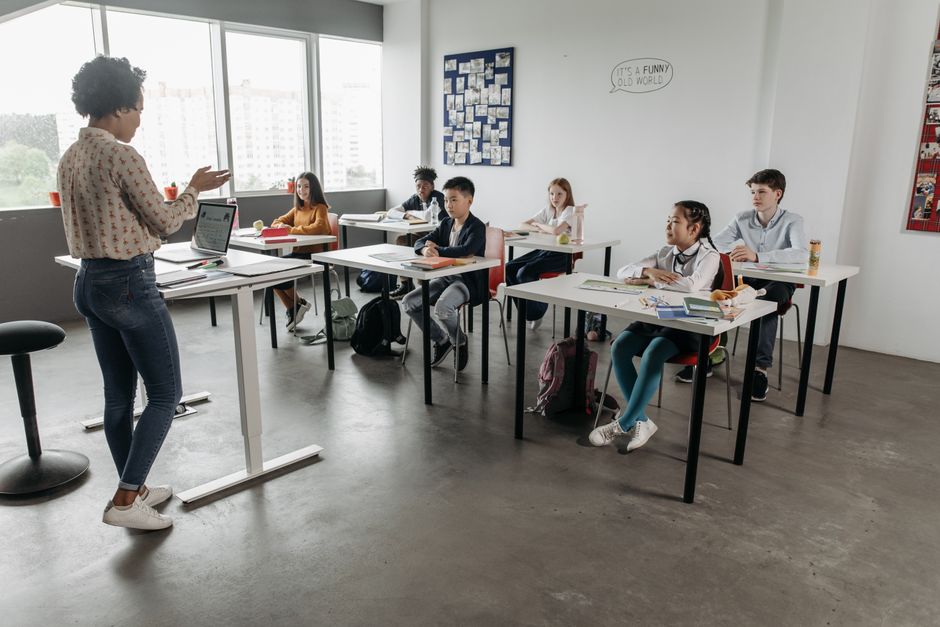
While the EITC and OSTC programs have helped thousands of students, they are consistently oversubscribed. Every year, thousands of qualified applicants are turned away simply because the corporate tax-credit caps are reached. To address this gap, lawmakers have proposed the Pennsylvania Award for Student Success (PASS) program, also frequently referred to as the Lifeline Scholarship program.
As detailed by the Lifeline Scholarship Program/PASS research, PASS would establish Education Scholarship Accounts (ESAs) for students attending the state’s lowest-performing schools. Rather than relying on corporate tax credits, the PASS program would be funded through a direct state budget appropriation. This represents a significant shift in the pa school choice scholarship landscape, offering a more stable and direct funding stream for families in need.
How PASS Differs from EITC and OSTC
The fundamental difference between PASS and the existing tax-credit programs lies in the funding mechanism and the direct control given to parents:
- Direct Vouchers vs. Tax Credits: Under EITC and OSTC, businesses must apply for tax credits, donate to non-profit scholarship organizations, and then parents must apply to those specific organizations. PASS, on the other hand, operates as a direct state-funded voucher. The state Treasury would deposit scholarship funds directly into an Education Scholarship Account managed by the parent.
- Funding Source: EITC and OSTC divert corporate tax liabilities before they reach the state treasury. PASS would be funded directly out of the state’s general fund.
- Targeted Demographics: While EITC is open statewide and OSTC has relatively high income limits, the PASS program is strictly targeted to lower-income families living within the boundaries of the bottom 15% of public schools.
Eligibility and Value of a PASS PA School Choice Scholarship
To qualify for a PASS scholarship, a student must meet two primary criteria:
- Residency: The student must live within the attendance boundary of a low-achieving public school (one of the 383 schools in Pennsylvania currently landing in the bottom 15% of performance metrics).
- Income: The household income must not exceed 250% of the federal poverty guidelines. This ensures that the program directly serves economically disadvantaged families who have the fewest educational alternatives.
The scholarship values under the PASS proposal are structured to provide meaningful assistance based on the student’s grade level and specific learning needs:
| Grade Level / Student Need | Annual PASS Scholarship Value |
|---|---|
| Kindergarten (Half-Day) | $2,500 |
| Grades K-8 | $5,000 |
| Grades 9-12 | $10,000 |
| Special Education Students | $15,000 |
When compared to the average per-student funding in Pennsylvania public schools — which stands at $23,061 per student — the PASS scholarships represent an incredibly cost-effective alternative. For a fraction of the cost of public school placement, families can secure a placement in a high-quality private school that aligns with their values and academic expectations.
Maximizing Your PA School Choice Scholarship Options

If you are looking to secure a pa school choice scholarship for your child, timing and preparation are everything. Because demand for these programs is incredibly high, parents must be proactive.
To maximize your chances of securing tuition assistance:
- Check Your School’s Status: Determine if your local public school is on the state’s official list of low-achieving schools. If it is, your child may qualify for both OSTC and the proposed PASS program.
- Gather Income Documentation: Tax returns, W-2s, and proof of household size are required to verify eligibility for both the EITC and OSTC programs.
- Apply Early: Most Scholarship Organizations process applications on a first-come, first-served basis. Application windows typically open in the spring for the following academic year.
- Work with Your Chosen Private School: Many private schools have dedicated staff members who help families navigate the scholarship application process.
At Wilkes-Barre Academy, we work closely with families to make the enrollment process as smooth and stress-free as possible. From understanding tuition structures to applying for available grants, we believe that paperwork should never stand in the way of a child’s academic future. Parents can explore our No More Paperwork Panic for Enrolling in PA Private Schools guide to learn how we simplify the admissions pipeline.
Why Choose Private School Over Traditional Public School
For many families in Luzerne County, the decision to transition from a public school to a private school is rooted in a desire for a more personalized, challenging academic environment. Traditional public schools often grapple with large class sizes, standardized test pressures, and systemic funding challenges that make individualized attention difficult.
Private schools, by contrast, offer distinct advantages that foster both academic achievement and personal growth:
- Individualized Learning: With smaller class sizes, teachers can tailor their instruction to each student’s strengths and weaknesses. At Wilkes-Barre Academy, our single classroom per grade model ensures that every child receives the focused attention they need to excel.
- Stronger Community: Private schools cultivate close-knit, diverse communities where families and educators work hand-in-hand.
- Academically Advanced Curriculums: Free from the rigid constraints of state-mandated test prep, private schools can introduce advanced concepts early, fostering critical thinking and a lifelong love of learning.
If you are exploring local options, our Wilkes-Barre Private School Guide: Finding the Perfect Fit offers a comprehensive look at what to look for in a school. For a deeper dive into how a private curriculum can elevate your child’s academic trajectory, check out Why Going Private is the Ultimate Grade Upgrade.
The Debate: Arguments For and Against PASS/Lifeline Vouchers
The debate surrounding the PASS/Lifeline scholarship program in Harrisburg is intense, with passionate arguments on both sides.
Arguments in Support of PASS
Proponents of the program, including school choice advocacy groups and an overwhelming 83% of Pennsylvania parents who support school choice options, argue that the program is a moral imperative.
- Immediate Relief for Students: Pennsylvania currently has 383 low-achieving public schools enrolling more than 211,000 students. A staggering 80% of these students are economically disadvantaged, and 83% are students of color. Supporters argue that keeping children trapped in failing environments based on their zip code is deeply unjust.
- Public School Budgets are Protected: Because PASS is funded through a separate state appropriation, public school districts do not lose their local funding when a student leaves. In fact, because the public school retains its local and federal funding while serving fewer students, per-pupil spending within the public school actually increases.
- Fostering Educational Equity: Since 2003, Pennsylvania public schools have made no measurable progress in closing achievement gaps of more than 25 points for Black, Hispanic, or economically disadvantaged students. Supporters believe that introducing competition and giving parents choices is the most effective way to drive systemic improvement.
Arguments Against PASS
Opponents, primarily consisting of public school teachers’ unions and school board associations, raise concerns about the long-term impact of voucher programs.
- Diverting Focus and State Funds: Opponents argue that state funds should be used exclusively to bolster the public school system, particularly in underfunded districts. They contend that any voucher program, even if funded separately, diverts political will and potential state revenue away from public education.
- Accountability Concerns: Critics point out that private schools are not bound by the same state-mandated testing and administrative regulations as public schools, raising questions about academic accountability.
- Anti-Discrimination Policies: Opponents also argue that private schools have selective admissions processes and may not offer the same level of special education services or legal protections as public schools.
Frequently Asked Questions About Pennsylvania Education Options
What is a low-achieving school for the PA school choice scholarship?
For the purposes of both the OSTC program and the proposed PASS program, a low-achieving school is defined as a public elementary or secondary school that ranks in the bottom 15% statewide based on combined math and reading/ELA scores on the Pennsylvania System of School Assessment (PSSA).
The Pennsylvania Department of Education updates and publishes this list annually. Notably, this list excludes charter schools, cyber charter schools, and vocational-technical schools. To see how these designations affect local districts in our region, you can review the OSTCP – Wilkes-Barre Area School District resources for specific school listings and local impacts.
How much are the OSTC and PASS scholarship awards worth?
The value of the scholarship depends on the program and the student’s specific needs:
- OSTC: For the 2025-26 and 2026 school years, the maximum scholarship is $8,500 for non-special education students and $15,000 for special education students.
- PASS (Proposed): The proposed annual amounts are $5,000 for students in grades K-8, $10,000 for high school students, and $15,000 for students with special needs.
These scholarship amounts can go a long way toward covering private school tuition in Pennsylvania. For a detailed breakdown of tuition averages and how to find affordable private education options in our area, take a look at our guide on How Much is Private School in PA? Tuition Stats and Affordable Options.
What is the current legislative status of the PASS/Lifeline program in 2026?
As of June 2026, the PASS/Lifeline scholarship program remains a central point of negotiation in the Pennsylvania state budget discussions. While the proposal has strong backing from Senate lawmakers and broad bipartisan support among voters, it continues to face opposition in the House.
If passed, the Pennsylvania Treasury would manage the application portal, with initial application windows projected to open during the summer months. Families are advised to monitor legislative updates closely as the budget finalization approaches.
Conclusion
Navigating your educational options in Pennsylvania doesn’t have to be a solo journey. Whether you are leveraging the established EITC and OSTC tax-credit programs or keeping a close eye on the emerging PASS/Lifeline scholarship legislation, the ultimate goal is finding an environment where your child can truly shine.
At Wilkes-Barre Academy, located at our single, vibrant campus in Luzerne County, we are dedicated to providing an academically advanced K-8 education. Our unique single classroom per grade structure ensures that we maintain a close-knit, diverse community where every student receives individualized attention and families build lifelong connections.
If you are ready to explore a different path for your child’s education, we invite you to learn more about our Enrollment process or explore More details on tuition and financial aid to see how we can help make a premier private education a reality for your family.