A Comprehensive Guide to Nonsectarian Preschool Outdoor Play
How to Find a Nonsectarian Preschool With Meaningful Outdoor Play
To find a strong nonsectarian preschool outdoor play program, look for three things: a clearly secular curriculum, daily child-led time outside, and trained educators who use safe routines for weather, supervision, and developmental learning.
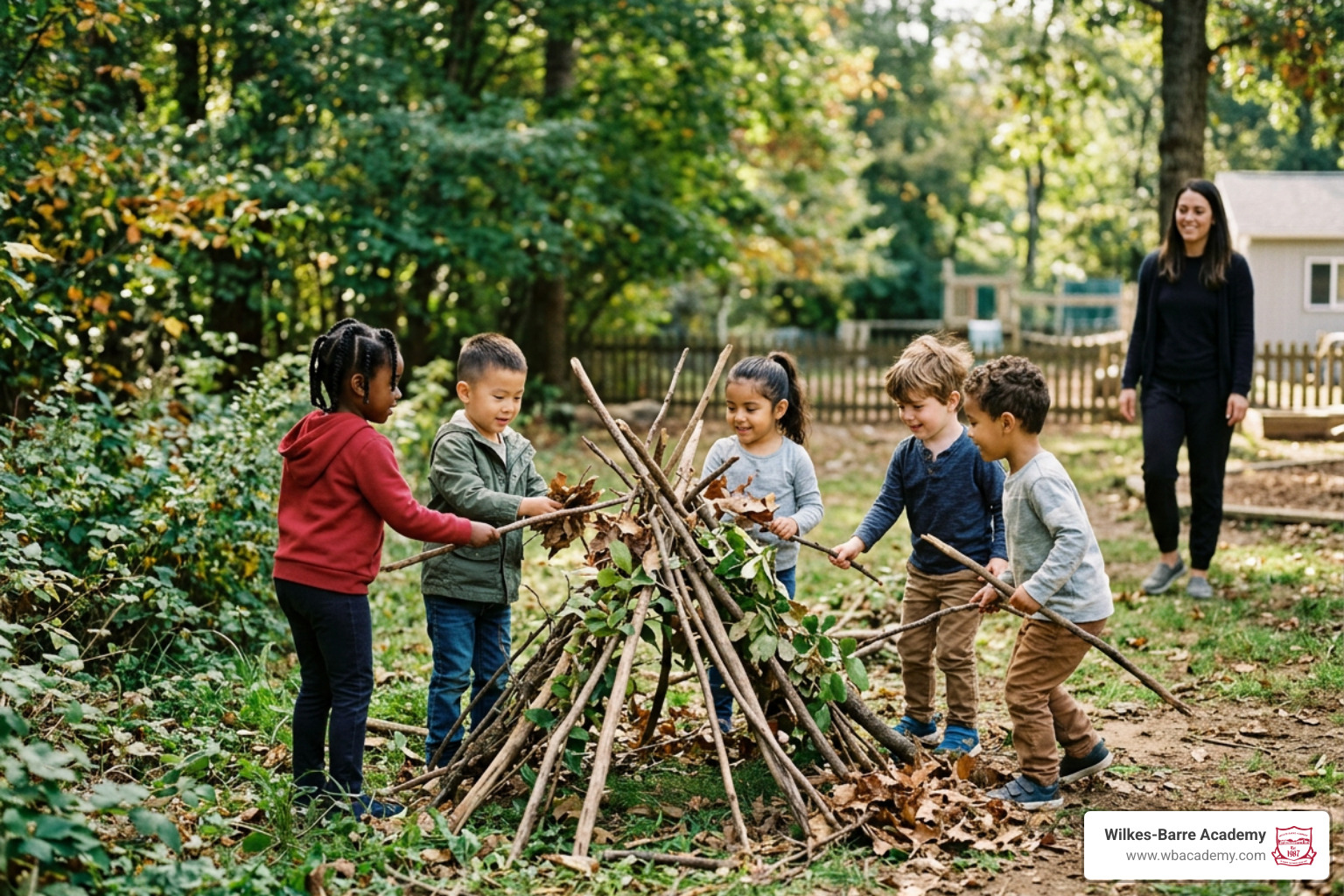
A nonsectarian preschool does not teach a specific religion as part of its program. Instead, it welcomes families from different beliefs and backgrounds while focusing on shared skills such as kindness, curiosity, communication, and respect. In an outdoor, play-based setting, children may build forts, count pinecones, make mud-kitchen meals, climb, garden, tell stories, and solve problems with friends.
Outdoor learning is not simply recess. Quality programs use nature as a setting for early literacy, math, science, movement, and social-emotional growth. The best fit will balance open-ended play with predictable routines, small-group learning, and age-appropriate safety practices.
This guide explains how to compare secular outdoor preschool models, ask the right enrollment and licensing questions, and decide whether a nature-rich program fits your child and family.
Relevant articles related to nonsectarian preschool outdoor play:
Understanding Nonsectarian Early Learning and the Outdoor Model
A nonsectarian early learning environment focuses on foundational developmental skills without incorporating doctrinal teachings, religious rituals, or sectarian holidays into the core curriculum. Instead, the focus stays squarely on science, humanities, arts, and the real world around us. By using an inclusive, secular framework, nonsectarian programs offer a welcoming space for children of any cultural or philosophical background.
When combined with nature immersion, secular early childhood education draws inspiration from time-tested developmental philosophies:
- Reggio Emilia Approach: Views the outdoor natural world as the “third teacher.” The environment encourages emergent investigations, collaborative problem-solving, and child-led inquiry based on real-time observations of living things.
- Waldorf Principles: Emphasizes predictable daily rhythms, storytelling, seasonal song transitions, handcrafts, and active gross motor movement outdoors rather than artificial indoor stimuli.
- Montessori Integration: Channels natural curiosity through tactile manipulation of real materials—like tracing letters in the sand, categorizing stones by texture, and practical life exercises such as gardening or animal care.
| Program Model | Primary Location | Time Spent Outdoors | Core Educational Philosophy | Parent Involvement |
|---|---|---|---|---|
| Forest Kindergarten | Woods, meadows, public parks | 90% – 100% in all seasons | Unstructured child-led play, gross motor mastery, emergent rhythm | Low to moderate |
| Nature Preschool | Blended facility & dedicated nature acreage | 50% – 75% daily | Place-based inquiry, early literacy & numeracy, nature integration | Moderate |
| Cooperative Outdoor Preschool | Parks, shared outdoor zones, local green spaces | 70% – 100% daily | Community co-teaching, play-focused developmental observation | High (parents co-teach and administer) |
Historical Roots and the Waldkindergarten Movement
The roots of modern open-air early childhood education trace back to Europe, particularly the German Waldkindergarten (forest kindergarten) movement. In Germany alone, more than 1,000 forest kindergartens are formally recognized and subsidized by the German government. These programs operate almost entirely outside under the open sky, utilizing public parklands, communal forests, and minimal shelter structures even through cold winters and rainy autumns.
In North America, the first recognized forest kindergarten opened in 2008, setting off an educational shift toward nature-immersive programs. Rather than confining young learners to indoor desks, early childhood educators adopted core secular principles:
- Place-Based Exploration: Learning is rooted in the local ecosystem, whether exploring native trees, local stream waterways, or neighborhood green spaces.
- Child-Centered Autonomy: Children direct their own discoveries while teachers serve as attentive mentors and safety guides.
- All-Weather Resilience: Embracing the philosophy that there is no such thing as bad weather, only bad gear.
- Sensory-Rich Materials: Sand, water, sticks, mud, and leaves replace plastic toys and passive screens.
Core Benefits of Nonsectarian Preschool Outdoor Play
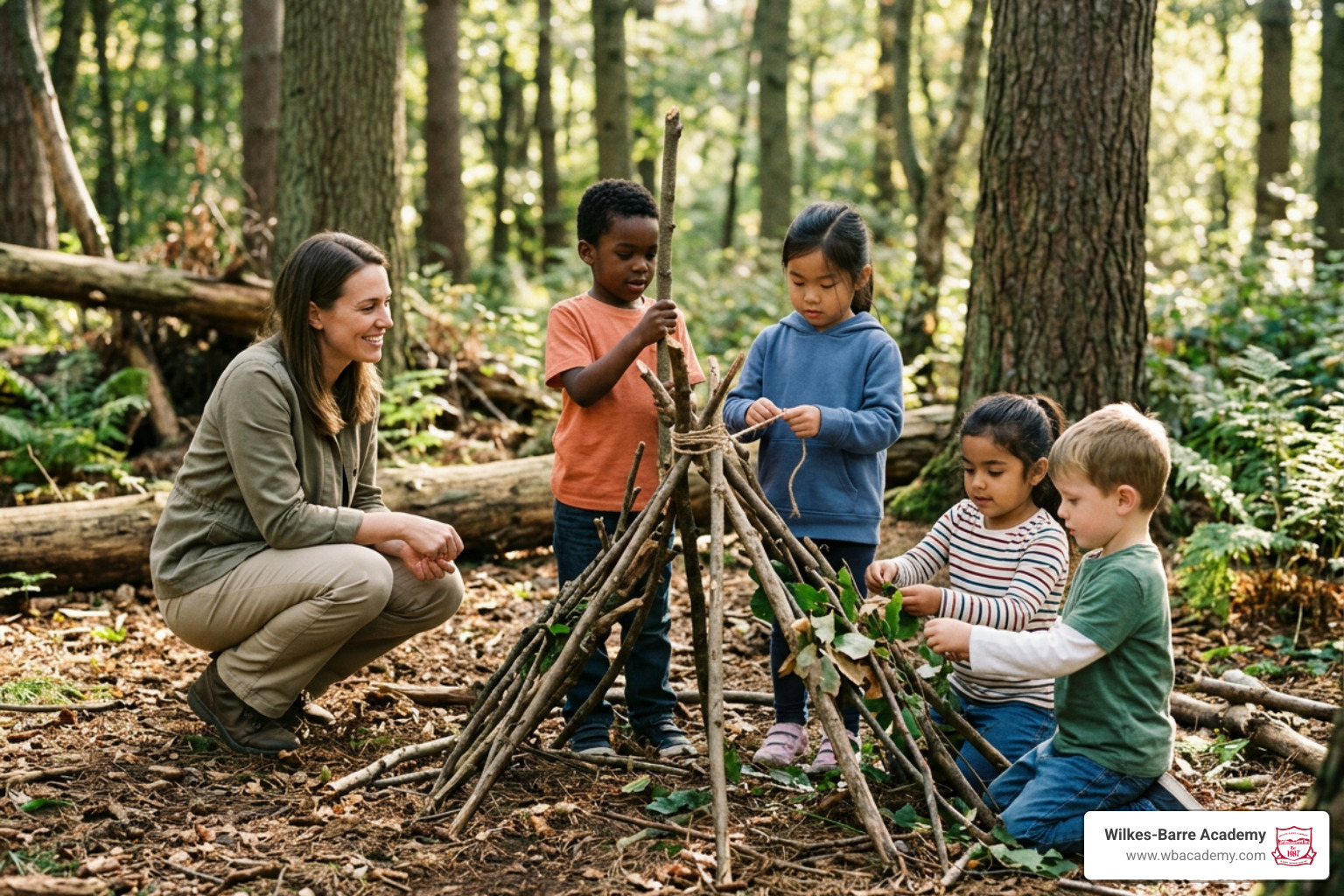
Prior to recent educational shifts, research revealed that most American children spent up to eight hours a day inside interacting with digital media and less than 30 minutes a day engaged in unstructured, outdoor nature play. Modern nonsectarian outdoor programs reverse this trend.
Connecting directly with nature produces well-documented benefits:
- Mental Health and Emotional Well-Being: Outdoor learning dramatically improves mental health, self-concept, and emotional stability in early childhood. Natural spaces reduce stress hormones and create calm emotional baselines.
- ADHD Symptom Relief and Focus: Outdoor learning lessens ADHD symptoms, improves outcomes for diverse learners, and increases overall attention, concentration, and sustained focus.
- Physical Health and Motor Development: Navigating uneven terrain directly strengthens Physical Fitness, builds gross motor coordination, supports balance, and lowers early childhood obesity risks.
- Social-Emotional Teamwork: Collaborative tasks like rolling heavy logs, building brush forts, or balancing across rocks cultivate patience, communication, and perseverance.
Developmental Milestones and Academic Readiness in Nature
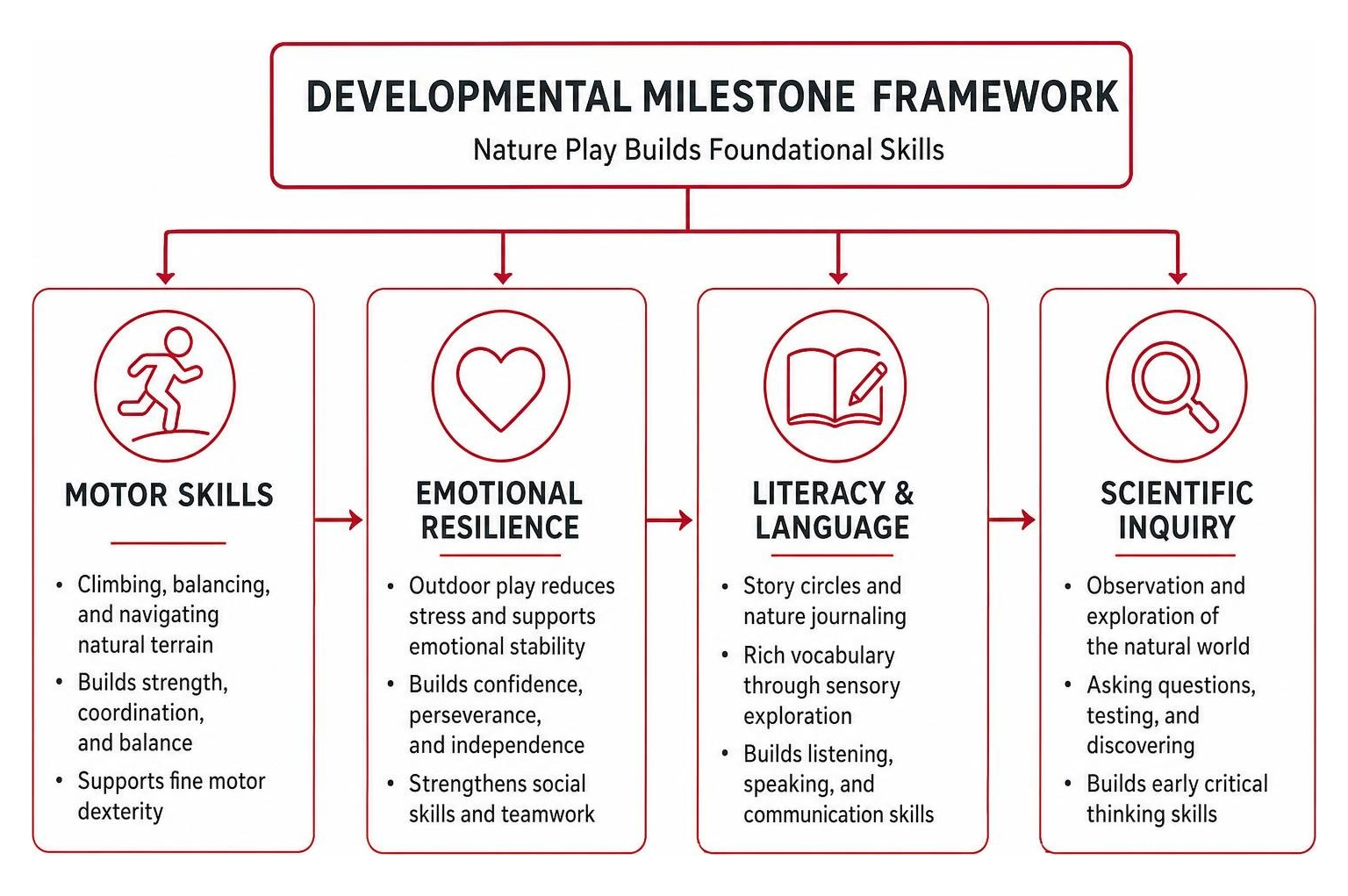
A common misconception is that outdoor preschool is merely unguided playtime devoid of academic preparation. In reality, outdoor nature immersion builds foundational cognitive skills that support lifelong academic success:
- Early Literacy and Language: Outdoor story circles, nature journaling, and descriptive vocabulary expansion (describing rough bark, slick moss, or damp loam) give children rich linguistic foundations.
- Tactile Numeracy and Math: Counting acorns, grouping stones by weight, sorting leaves by shape, and measuring fallen branches introduce early math concepts naturally.
- Scientific Inquiry: Excavating soil, observing worms, tracking puddle evaporation, and noting seasonal foliage changes turn children into observant young scientists.
- Fine and Gross Motor Balance: Whittling soft sticks with vegetable peelers, pinching small seeds during planting, and climbing logs build the fine finger dexterity and upper-body core strength required for early pencil grip and classroom stamina.
Program Models, Daily Schedules, and Weather Management
Managing groups of young children outdoors in varied weather requires intentional logistical design. Programs utilize dedicated gear protocols to keep children dry, warm, and comfortable year-round. Families are typically provided with comprehensive gear checklists: waterproof rain bibs, wool thermal base layers, insulated boots, and breathable rain jackets.
Educators manage field mobility using heavy-duty mobile teacher wagons equipped with first-aid kits, extra warm layers, hand-washing stations, emergency communication devices, and light learning supplies. When conditions become extreme (such as high wind warnings, severe electrical storms, or dangerous sub-zero temperatures), programs make use of weather-resistant base camp tents, wood-stove-heated shelters, or auxiliary indoor spaces.
Designing Daily Schedules for Nonsectarian Preschool Outdoor Play
A predictable daily rhythm provides security and stability for preschoolers while allowing plenty of unstructured discovery. A standard outdoor preschool schedule balances group collaboration with individual exploration:
- 8:30 AM – Morning Gathering & Circle: Warm greeting, morning mindfulness check-in, seasonal songs, and a safety briefing on boundaries.
- 9:00 AM – Trail Hike & Nature Investigation: Guided exploration toward natural landmark stations such as a creek, meadow, or wooded grove.
- 10:15 AM – Nourishing Snack & Story Time: Communal outdoor picnic under tree canopies with open-air storytelling and group discussions.
- 10:45 AM – Deep Child-Led Play & Sensory Work: Mud kitchen creation, fort building, climbing boulders, sand excavating, or free art journaling.
- 12:00 PM – Lunch & Small-Group Focused Learning: Shared meal followed by guided letter tracing, counting natural materials, or science observation.
- 1:00 PM – Closing Circle & Reflection: Singing goodbye songs, reflecting on discoveries, and getting ready for pick-up.
For families seeking broader year-round outdoor engagement, our school provides opportunities like learning About Our Summer Program to keep young minds active in natural environments throughout the sunny months.
Handling Cooperative Models and Family Engagement
In cooperative preschool models, parents play an active operational role. Parents serve as scheduled co-teachers, assist educators with group supervision, maintain trails, and manage administrative committees.
This model offers significant benefits: parents observe their child’s developmental milestones firsthand, learn positive behavioral redirection techniques from seasoned lead teachers, and build close-knit parent communities. However, cooperatives require substantial time commitments from participating families, making clear schedules and open communication essential.
How to Choose the Right Secular Outdoor Program for Your Child
When searching for the right program, start by evaluating practical operational standards. You can read our detailed advice in Finding the Best Preschool in Wilkes-Barre Without Losing Your Mind to help guide your family’s search.
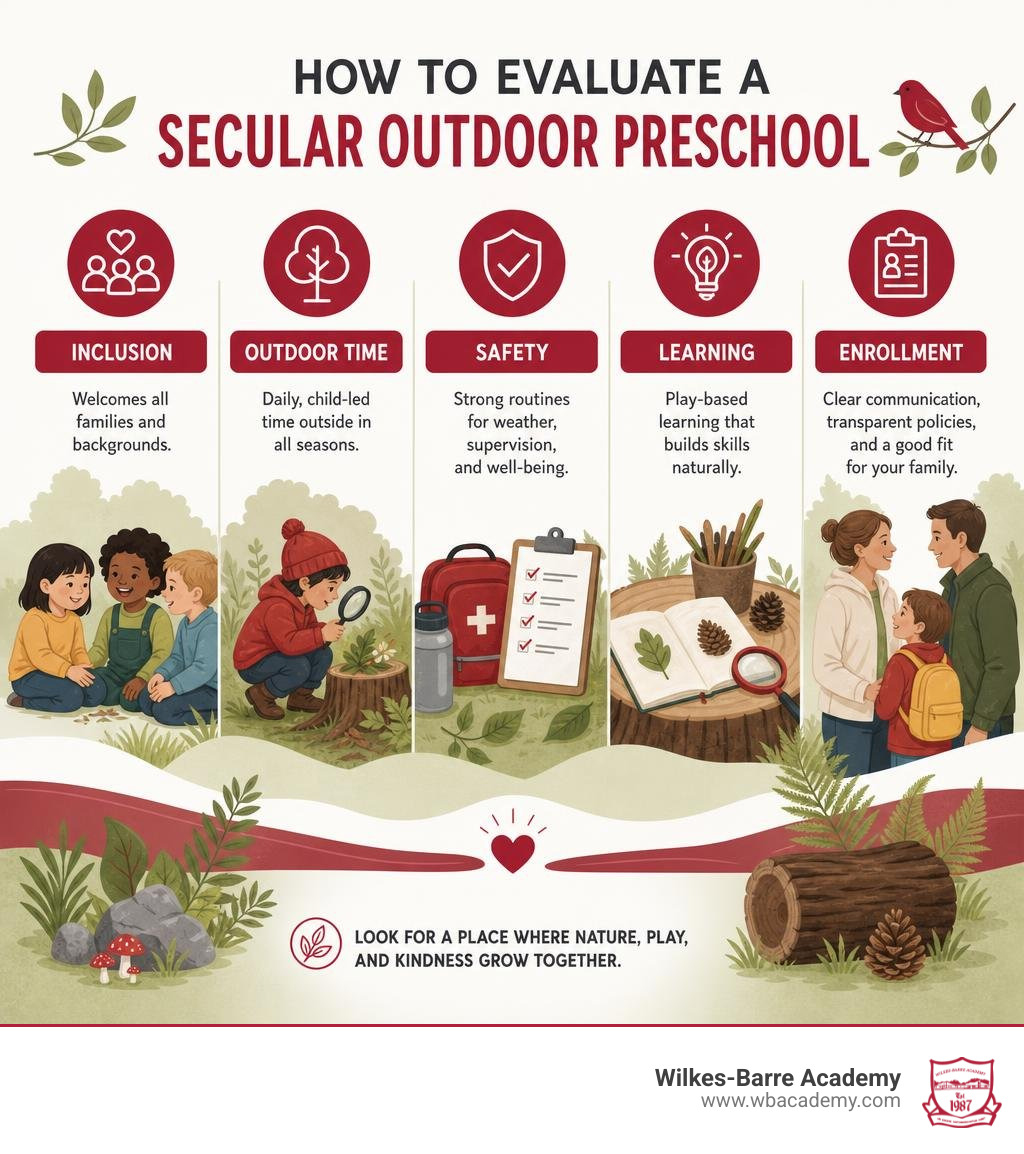
Key criteria to evaluate include:
- Low Adult-to-Child Ratios: Outdoor safety requires small group sizes. Look for programs maintaining ratios between 1:4 and 1:6, ensuring close supervision during climbing and hiking.
- Teacher Qualifications and Safety Certifications: Educators should hold degrees in Early Childhood Education or Nature-Based Pedagogy and have current pediatric CPR and Wilderness First Aid certifications.
- Screen-Time Policies: The National Association for the Education of Young Children (NAEYC) recommends prioritizing tactile, hands-on materials over screens. High-quality outdoor preschools emphasize direct interactions over digital tools.
- Enrollment Logistics: Many nature-based schools operate on lottery-based admissions or maintain annual waitlists. Research application windows (often opening in late winter or early spring for the upcoming fall school year) and review registration deposit and tuition discount policies early.
How to Evaluate Quality in Nonsectarian Preschool Outdoor Play
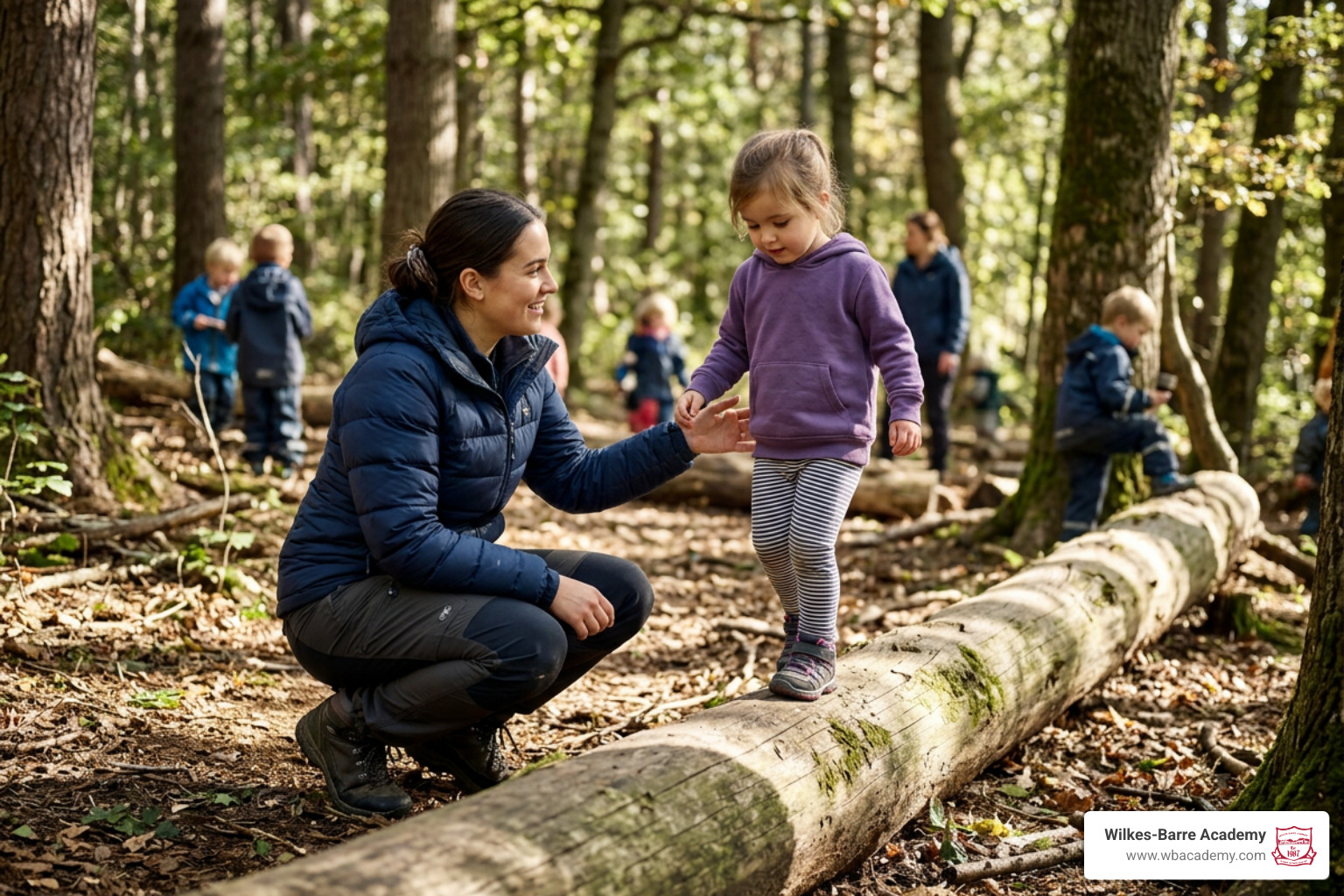
During site visits and family interviews, observe how educators interact with children and manage natural spaces:
- Supervised Risky Play: Quality educators do not eliminate every physical obstacle; they teach risk assessment. Look for teachers who calmly coach children through log-balancing and boulder climbing (“Do you feel stable?” or “Where will your next footstep go?”) rather than saying “Be careful!”
- Secular Inclusivity: Ensure learning units focus on observable natural phenomena, scientific curiosity, and universal values without sectarian doctrine.
- Hygiene and Comfort Protocols: Check how the program manages handwashing before meals and safe outdoor toileting or bathroom transitions.
Frequently Asked Questions About Outdoor Preschools
What makes an outdoor preschool program nonsectarian?
A nonsectarian outdoor preschool operates completely free from religious affiliations, doctrines, and faith-based practices. While sectarian programs may weave scripture or prayer into circle times, nonsectarian programs frame the natural world through scientific exploration, environmental stewardship, artistic expression, and universal social-emotional growth. This secular foundation ensures families of all beliefs feel fully included.
How do all-weather outdoor preschools handle winter and rainy conditions?
Outdoor preschools follow the principle that with appropriate clothing layers, outdoor play remains safe, comfortable, and invigorating across diverse weather conditions. In cold or rainy weather, children wear moisture-wicking base layers, fleece mid-layers, and waterproof rain or snow outer shells. Educators continuously monitor body temperature, fingers, and toes. For extreme situations—like high winds, lightning, or severe sub-zero cold—programs move into weather-tight shelters or indoor classrooms.
Do children in outdoor nature preschools gain sufficient kindergarten readiness?
Yes. Research and practical outcomes demonstrate that play-based nature preschools prepare children exceptionally well for kindergarten. By exploring outdoor materials, children develop early math foundations (sorting, patterning, measuring), scientific inquiry, strong descriptive language, fine motor dexterity, and executive functioning skills. Furthermore, the stamina, emotional self-regulation, and collaborative problem-solving developed outdoors help children adapt smoothly to traditional elementary classrooms.
Conclusion
Enrolling your child in a high-quality outdoor preschool builds lifelong curiosity, resilient physical health, and strong social-emotional foundations. By allowing children to explore the natural world within a welcoming, secular learning environment, we nurture confident learners who are ready for future academic milestones.
At Wilkes-Barre Academy, we understand the balance between active, healthy development and foundational learning. Our single-location facility in Wilkes-Barre, PA provides a dedicated environment designed to support your child’s growth. To explore our personalized early childhood learning options, contact us at Small Wonders Daycare to discover how our close-knit educational community can support your family.