
An Essential Guide to What to Ask During a Private School Tour
Key Checklist: What to Ask During a Private School Tour
When deciding what to ask during a private school tour, prospective parents should focus on six essential areas: daily educational philosophy, student-to-teacher ratios and classroom aide support, differentiated instruction for varied learning paces, faculty retention and credentials, campus safety and discipline policies, and total tuition costs including auxiliary fees. Asking targeted questions in these areas reveals how the school operates day-to-day beyond its promotional presentation.
Walking through school hallways gives you an up-close look at the daily learning environment, helping you determine if your child will thrive academically, socially, and emotionally. Many families find that following expert teacher tour advice helps turn a passive walk-through into an informative, two-way dialogue.
As you explore our rigorous Academics program, high standards should always be balanced by age-appropriate expectations. For example, when asking about nightly study habits, keep the widely recognized benchmark supported by the National Education Association in mind: the “10-minute rule,” which suggests roughly 10 minutes of homework per grade level each night (e.g., 20 minutes for second grade, 50 minutes for fifth grade).
Educational Philosophy and Daily Classroom Application
Every school publishes a mission statement, but you want to see how that mission comes alive during a standard Tuesday morning math or reading block.
- What to ask:
- “How does your educational philosophy translate into daily instructional methods?”
- “How do teachers balance direct instruction, hands-on projects, and independent study?”
- “Can you share a recent example of how school values guided a classroom project or resolved a peer disagreement?”
What to Ask During a Private School Tour Regarding Kindergarten and Early Learning
Early childhood education sets the tone for a student’s entire academic journey. In kindergarten and early elementary classrooms, small class sizes and personalized adult attention are essential.
- What to ask:
- “What is the student-to-teacher ratio and average class size in kindergarten?”
- “Is there a full-time assistant teacher or aide in the room alongside the lead educator?”
- “How do you balance foundational phonics, early math concepts, and active social-emotional play?”
When reviewing early childhood tour considerations, experienced parents recommend checking if early classrooms have dedicated adult support. A class of 20 with a lead teacher and a full-time aide creates a far more responsive environment than a class of 18 managed by a single adult.
Academic Support and Differentiated Instruction
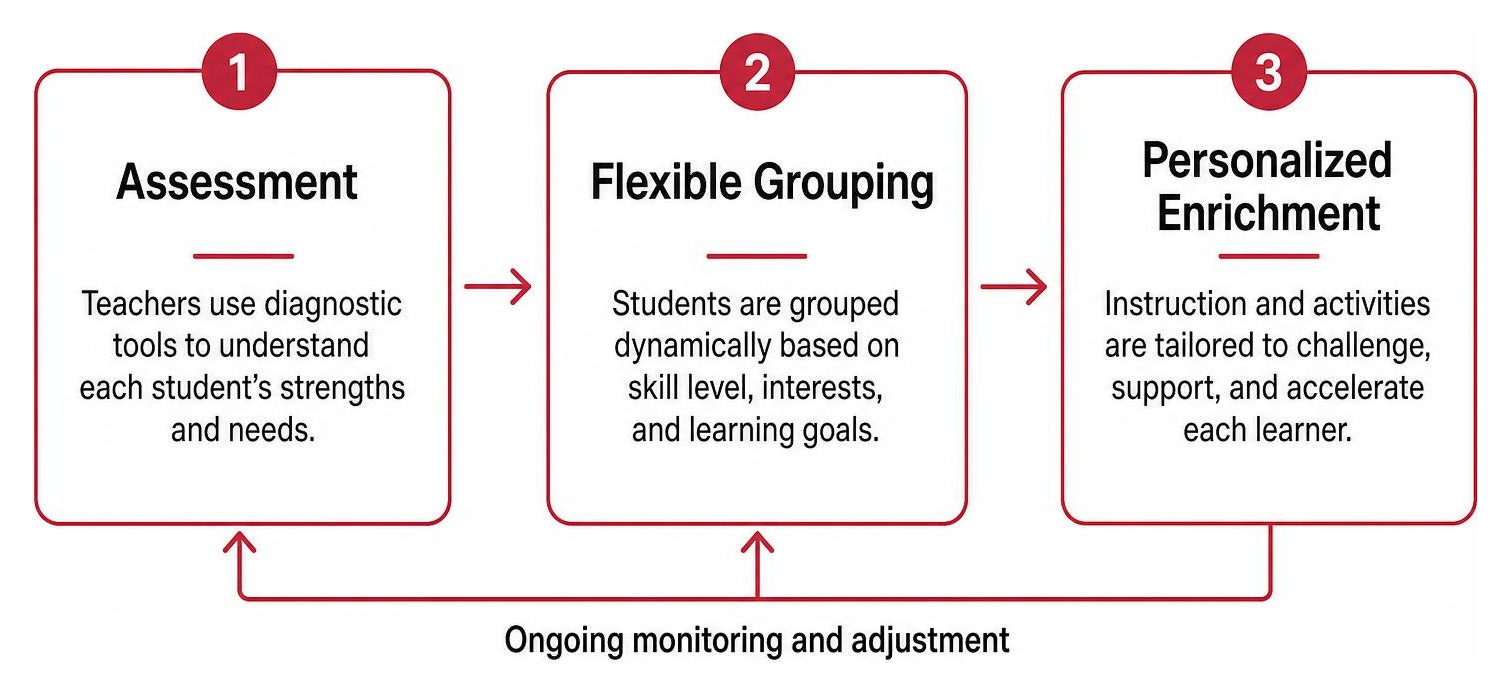
Children learn at different speeds, often excelling in one subject while needing reinforcement in another. Understanding how a school handles mixed learning paces reveals whether your child will be challenged or left behind.
- What to ask:
- “How do teachers adjust pacing for advanced learners who master material quickly?”
- “What diagnostic tools and support systems exist for students who need extra reading or math help?”
- “If a student has a formal learning plan or needs classroom accommodations, how is that managed day-to-day?”
Technology Integration and Screen Time Policies
Modern classrooms must strike a healthy balance between digital fluency and focused, screen-free learning.
- What to ask:
- “How many hours per day do students spend interacting with screens versus physical books and paper?”
- “At what grade level do 1:1 devices get introduced, and what digital safety filters are active?”
- “How does the curriculum teach digital literacy, research ethics, and responsible artificial intelligence use?”
Questions to Evaluate School Culture, Faculty, and Safety
A school’s culture is felt in its hallways, lunchrooms, and playground interactions. Evaluating the community’s emotional and physical safety helps ensure your child learns in a secure, supportive setting.
What to Ask During a Private School Tour About Student Safety and Discipline
Discipline policies should teach self-regulation and problem-solving rather than relying solely on punitive measures. At the same time, physical security protocols must be clear, transparent, and rigorous.
- What to ask:
- “What is the school’s overarching behavioral framework, and how are student conflicts resolved?”
- “What physical security measures, visitor check-in systems, and emergency drill schedules do you maintain?”
- “How does the school handle bullying prevention and digital safety?”
In Pennsylvania, private school safety standards combine campus vigilance with state guidelines. You can read more about legal standards in Private School Student Safety Pennsylvania: A Parent’s Guide to the Law, as well as institutional security readiness in School Security Awareness: PA Act 55 and Your Safety Strategy.
Faculty Qualifications and Teacher Retention Rates
Teachers are the heart of any classroom. Their experience, professional training, and job satisfaction directly influence the stability of your child’s learning environment.
- What to ask:
- “What percentage of your teaching faculty returns each school year?”
- “What qualifications, advanced degrees, and subject-matter credentials do your teachers hold?”
- “How does the administration support ongoing professional development and teacher mentorship?”
In a 2021–22 federal NCES survey, 12 percent of private school teachers left the profession compared to 8 percent of public school teachers. Asking about retention helps you spot stable environments where educators feel supported. We take immense pride in our long-tenured team—you can review our experienced educators in our faculty and staff credentials directory.
School Community Dynamics and Extracurricular Opportunities
A complete education extends well past the 3:00 PM bell. Strong community traditions, clubs, and parent involvement create an enriching school experience.
- What to ask:
- “What after-school clubs, arts, and athletic programs are open to elementary and middle school students?”
- “Can any student join an activity, or are there tryouts and barriers to entry?”
- “How do families participate through events and the Parent-Teacher Organization?”
Explore our diverse array of Extracurricular Activities and leadership-building Student Activities to see how students build character and friendships outside regular classes.
Financial and Operational Questions to Ask Before Enrolling
Transparent operational policies give families peace of mind. Getting full clarity on tuition, legal contracts, and daily logistics prevents unexpected surprises later on.
Full Tuition Breakdown and Financial Assistance
Sticker prices do not always reflect the full cost of attendance. Ask for an itemized schedule covering all potential auxiliary fees.
- What to ask:
- “What fees are included in base tuition, and what costs are billed separately (books, technology, uniforms, field trips)?”
- “What payment schedule plans are available throughout the academic year?”
- “What need-based scholarship or financial aid opportunities exist, and what are the application deadlines?”
Review our published Tuition Schedule for clear rates, and read about financial aid options to explore accessible tuition pathways.
Enrollment Contracts, Withdrawal Terms, and Legal Obligations
Private school enrollment is governed by contract law. Before signing, ask to review handbooks and agreement clauses carefully.
- What to ask:
- “May I review a sample copy of the upcoming year’s enrollment contract and parent-student handbook?”
- “What is our financial obligation if our family relocates or needs to withdraw mid-year?”
- “Under what circumstances can an enrollment contract be canceled or terminated?”
Legal analysts discussing contractual enrollment obligations emphasize checking for tuition acceleration clauses, which may hold parents responsible for a full year’s tuition regardless of withdrawal timing. Familiarize yourself with standard enrollment guidelines by reviewing our School Year Information Paperwork.
Daily Logistics: Transportation and Extended Care
Practical daily logistics can make or break your family routine.
- What to ask:
- “Are local public school districts required to provide busing services to the school?”
- “What hours are morning drop-off and afternoon pickup managed?”
- “Is there structured on-site before-school and after-school care available?”
In Pennsylvania, local school districts often provide bus service to non-profit private schools located within a 10-mile radius. Learn more on our Transportation page, and explore our flexible Before & After School Care programs.
Parent-School Communication and Reporting
Strong partnerships between home and school keep your child supported all year long.
- What to ask:
- “How often do teachers provide academic updates and progress reports?”
- “What digital tools or portals do parents use to monitor grades, assignments, and announcements?”
- “How quickly can parents expect a response when reaching out to an educator?”
We keep parents closely connected through our dedicated Parent Portal Communication Tool, ensuring families always have direct insight into their child’s growth.
Campus Observation Strategies: Looking Beyond the Marketing Pitch

What you observe during unscripted moments between bells often tells you more than a prepared admissions speech. Using proven observational tour strategies, keep your eyes open for these organic classroom signals:
- Student Engagement: Are students actively participating, asking questions, and collaborating, or are they disengaged?
- Hallway Interactions: Do teachers greet students by name with warm body language? How do educators speak to children who are not part of the tour group?
- Display of Student Work: Look at hallway bulletin boards. Do you see authentic, varied student work with constructive feedback, or identical cookie-cutter worksheets?
- Administrative Candor: When you ask difficult questions about faculty turnover or academic challenges, does the guide answer directly, or do they give vague, defensive responses?
Step-by-Step School Tour Evaluation Framework
Use this structured comparison matrix to evaluate your school visits:
| Evaluation Area | What to Look For | Key Question to Ask | Red Flags |
|---|---|---|---|
| Academic Pacing | Engaged students, clear teacher instruction, varied reading levels | “How do you tailor instruction for advanced learners vs. students needing extra help?” | Rigid, one-size-fits-all curricula; dismissal of individual learning differences |
| Class Size & Ratio | Calm, organized room; individualized teacher check-ins | “What is the exact student-to-teacher ratio and class cap in this grade?” | Ratios over 20:1 without a dedicated full-time classroom aide |
| Faculty & Community | Warm rapport, enthusiastic educators, low turnover | “What is your faculty retention rate over the past three years?” | High teacher turnover; dismissive answers regarding staff support |
| Safety & Well-Being | Controlled entrances, clear visitor protocols, respectful peer play | “What is your framework for addressing peer conflicts and bullying?” | Vague security policies; purely punitive discipline without conflict resolution |
| Operational Clarity | Transparent fees, structured extended care, easy busing | “Can I review the complete fee schedule, contract, and handbook?” | Hidden auxiliary fees; unwillingness to share parent handbooks upfront |
For more tips on choosing the right environment, explore our resource on finding the right private school fit.
Frequently Asked Questions About Private School Tours
When is the best time of year to schedule a private school tour?
The ideal window is during the fall and early winter (October through January) of the year prior to enrollment. Touring on a standard, mid-week school day lets you observe normal classroom instruction in action rather than an empty building or an open house showcase.
Should I bring my child with me on the initial private school visit?
For elementary and middle school students, a parent-only initial tour is often best. This lets you ask frank questions about tuition, behavioral policies, and academic support without distraction. Once a school passes your initial screening, arrange a student shadow day so your child can experience the classroom firsthand.
What questions should prospective parents avoid asking on a tour?
Avoid spending valuable face-to-face time on basic facts readily available on the school’s website—such as basic application deadlines, standard address details, or general school history. Focus your tour conversation on qualitative questions about school culture, teaching styles, and daily student life.
Conclusion

Choosing the right educational foundation for your child is one of the most rewarding investments you will ever make. By focusing on class sizes, educational philosophy, teacher retention, and daily classroom life, you can see past glossy brochures and find an academic home where your child will truly thrive.
At Wilkes-Barre Academy, our single-location K-8 campus offers an academically advanced curriculum built on individual attention, dedicated faculty, and a close-knit school community. With our single classroom per grade model, we ensure every child is known, supported, and challenged. We invite your family to experience our classrooms in person—reach out to our admissions team today to schedule your private tour.