Where Stars Are Born: Top PA Performing Arts Programs for Young Creatives
Pennsylvania Is Full of Performing Arts Programs for Kids — Here’s What Parents Need to Know
Finding the right performing arts school in Pennsylvania for kids can feel overwhelming. There are dozens of options across the state — from tuition-free charter schools to private studios, nonprofit theaters, and hybrid online programs.
Here’s a quick overview of the top program types available:
| Program Type | Age Range | Format | Cost |
|---|---|---|---|
| Tuition-free K-12 charter school | K–12 | In-person | Free |
| Private dance/theater studio | Pre-K–18 | In-person | Tuition-based |
| Hybrid online arts school | Grades 6–12 | Online + on-site | Varies |
| Nonprofit community theater | Ages 3–18 | In-person | Low-cost/scholarships |
| Summer intensive camps | Ages 3–18 | In-person | Session fee |
Pennsylvania has a rich landscape for young performers. Programs range from ballet and musical theater to circus arts, vocal training, and technical theater. Some start as young as age 3. Others go all the way through high school and into college prep.
The good news? Whether your child is a complete beginner or a budding star, there’s a program built for them.
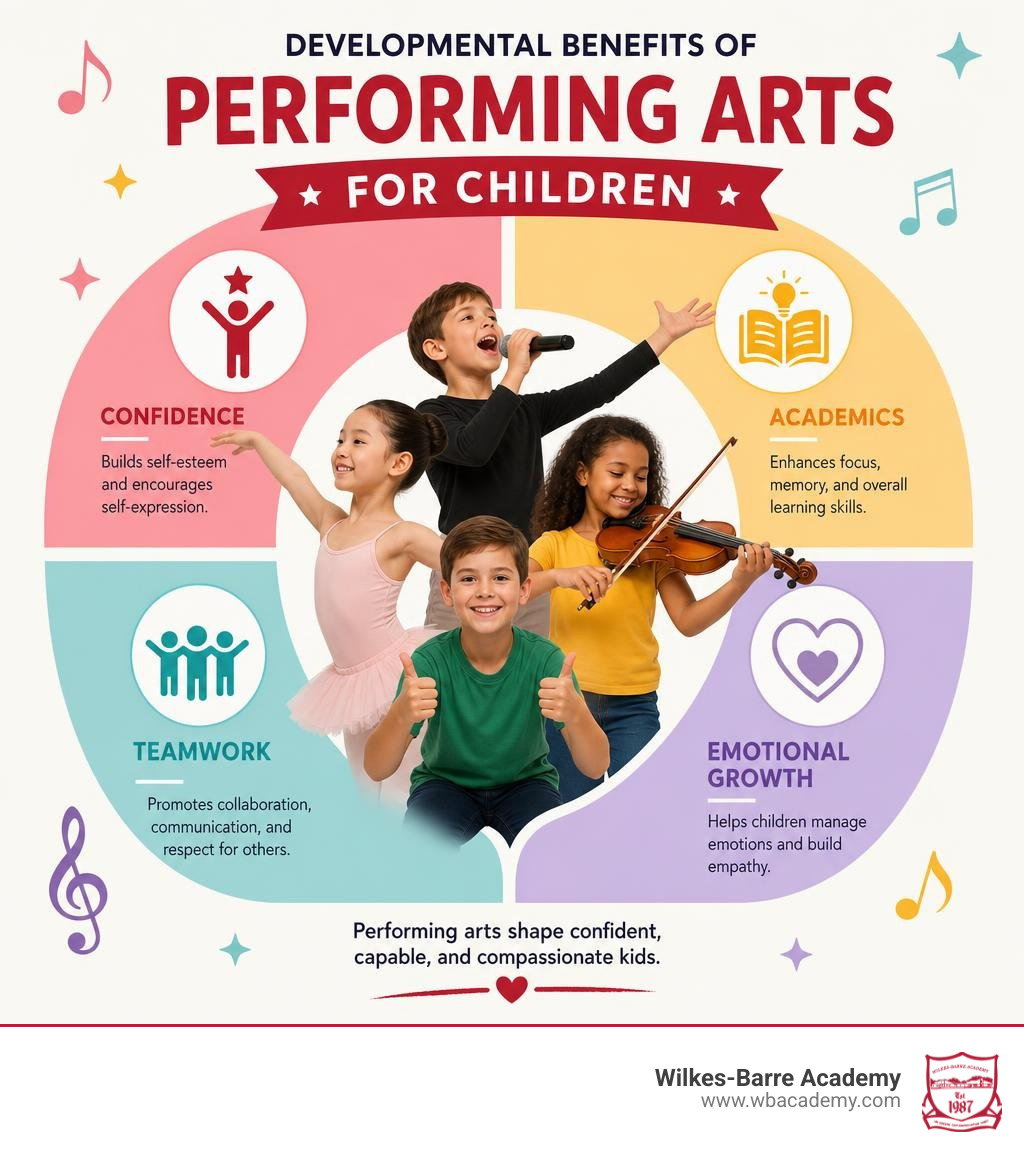
Studies show that proper training in dance and music plays a key role in helping children develop both physical and emotional balance — and that benefit shows up in the classroom, too.
This guide breaks down the best performing arts options in Pennsylvania, what to look for, and how to choose the right fit for your child.
Key terms for performing arts school pennsylvania kids:
- academic activities and competitions
- spelling bee school pennsylvania
- science fair elementary school pennsylvania
Types of Performing Arts Programs Available in Pennsylvania
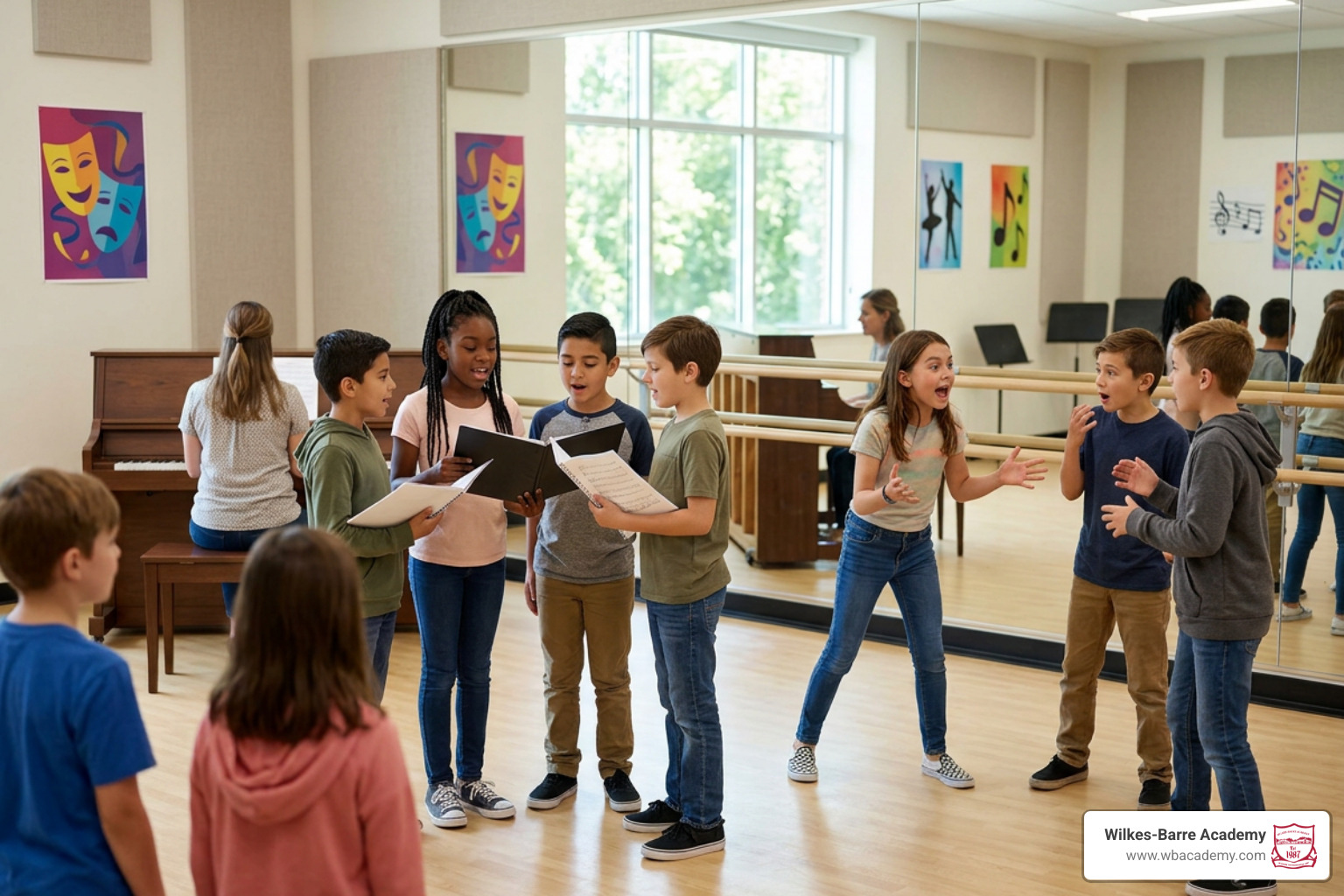
When exploring options for a performing arts school in Pennsylvania for kids, it is helpful to first understand the sheer variety of disciplines available. Performing arts education is not a one-size-fits-all model. Depending on your child’s natural inclinations, they might thrive in a program that focuses on a single discipline or one that offers a multi-disciplinary approach.
Choral Music and Voice Lessons
For children who express themselves through song, vocal programs are an exceptional outlet. Voice training in Pennsylvania programs often spans multiple genres—from classical choral music to contemporary pop and Broadway show tunes. Students learn proper breathing techniques, vocal health, pitch control, and ear training. Many local academies offer private voice lessons alongside group ensemble classes to help students build individual confidence while learning the art of vocal harmony. To explore how personalized musical training can benefit your child, you can read more about our approach to Music Lessons.
Musical Theater
Musical theater is the ultimate multi-disciplinary performing art, combining acting, singing, and dancing into a single cohesive performance. Programs like the “Total Broadway” curricula offered at specialized academies across the state allow children to experience this synthesis firsthand. Students learn how to transition seamlessly from a spoken scene into a song, and finally into a choreographed dance number. This holistic training builds highly versatile performers who are comfortable with multiple modes of creative expression.
Drama and Acting
Acting programs focus on the power of storytelling, character development, and emotional expression. Through improvisation games, script analysis, and scene studies, children learn how to step into another person’s shoes. This training fosters deep empathy and self-awareness. Drama classes also teach vital communication skills, such as vocal projection, articulation, and body language, which are highly useful both on and off the stage.
Instrumental Music
Learning to play an instrument is a cornerstone of a well-rounded arts education. From piano and violin to guitar and percussion, instrumental programs teach children how to read music, understand rhythm, and appreciate music theory. This structured training has been shown to enhance cognitive development, spatial-temporal reasoning, and fine motor skills.
Age-Appropriate Programs at a Performing Arts School Pennsylvania Kids Can Join
A common question among parents is: At what age can my child start? Fortunately, Pennsylvania’s arts landscape accommodates children at every stage of development, from walking toddlers to high school seniors.
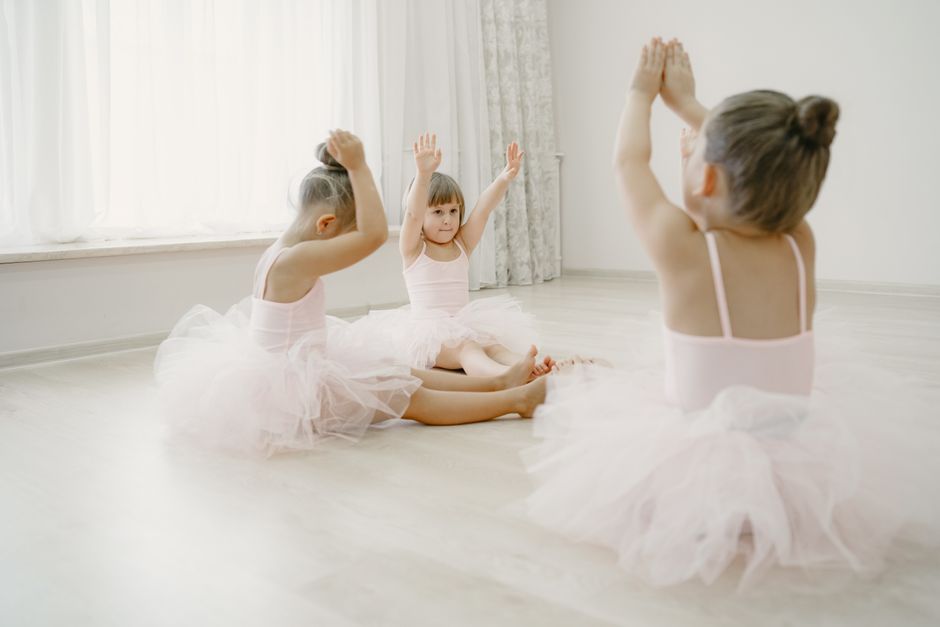
- Early Childhood (Ages 3 to 5): Programs for our youngest creatives focus on creative movement, early childhood music, and play-based storytelling. These classes are designed to build basic motor skills, rhythm, and social cooperation in a low-pressure, highly encouraging environment. Many dance studios accept children starting at age 3 to introduce fundamental coordination through fun, imaginative exercises.
- Elementary Years (Ages 6 to 10): As children enter elementary school, programs introduce more structured techniques. Students can begin formal training in specific dance styles (like ballet, tap, jazz, or hip-hop), join introductory drama clubs, or start private music lessons. The focus during these years is on building foundational skills and fostering a genuine love for the arts.
- Middle and High School (Ages 11 to 18): For older kids and teens, programs become more specialized and rigorous. Students can participate in full-scale musical productions, join competitive dance teams, or enroll in pre-professional training tracks. These advanced programs often include audition preparation, masterclasses with industry professionals, and portfolio development for those looking to pursue the arts in higher education.
Understanding Program Formats: Integrated School Curriculums vs. Specialized Studios
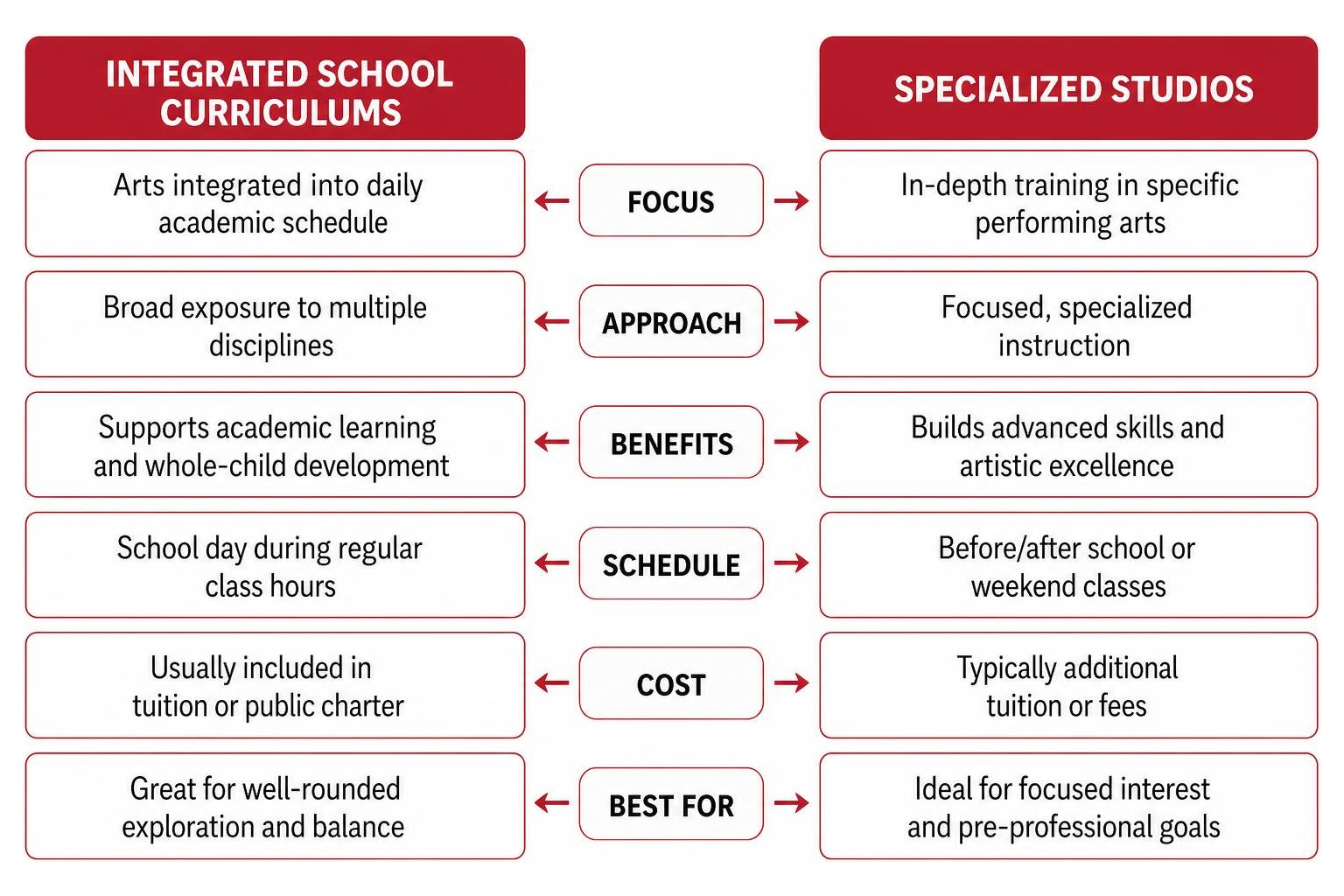
As you search for the ideal environment for your child, you will encounter two primary educational formats in Pennsylvania: integrated school curriculums and specialized private studios.
Integrated School Curriculums
In an integrated model, the performing arts are woven directly into the daily academic schedule. Some tuition-free charter schools in major metropolitan areas, such as Philadelphia, utilize an arts-infused curriculum where creative concepts are used to teach traditional academic subjects.
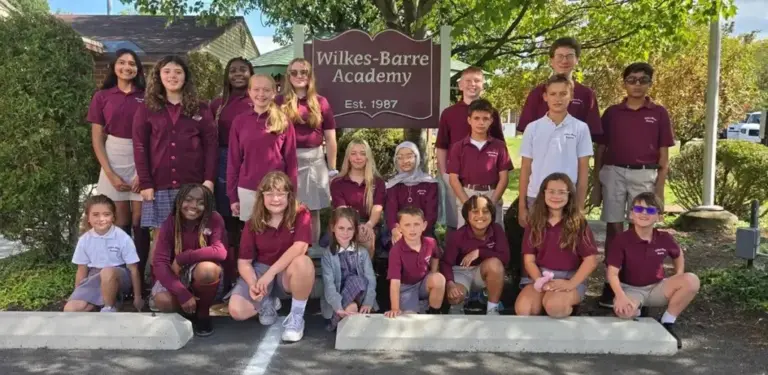
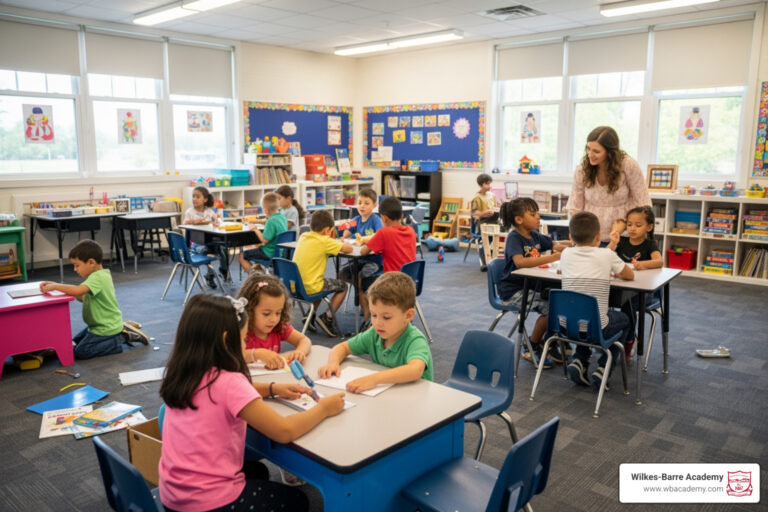
At Wilkes-Barre Academy, we believe in a balanced approach. While we maintain a highly rigorous, academically advanced curriculum as a private, non-profit K-8 school in Luzerne County, we integrate creative expression directly into our school culture. Through our single-classroom-per-grade model, we ensure that every student receives individualized attention, allowing them to balance high academic standards with vibrant creative pursuits. Arts education should not be an isolated subject; it should be a natural extension of a child’s daily learning and personal growth.
Specialized Private Studios and Non-Profit Academies
Specialized studios and non-profit academies operate primarily as after-school and weekend programs. These institutions focus exclusively on arts training and often feature highly specialized facilities, such as dance studios with professional sprung floors to prevent injury.
Many of these academies offer structured, multi-level programs that allow students to progress from beginner recreation to pre-professional levels. For families seeking flexible, high-caliber training without changing their child’s academic school, these studios are an excellent option. Additionally, many community-focused studios operate as 501(c)(3) non-profits, offering generous scholarship programs to ensure that financial limitations never prevent a child from experiencing the magic of the stage.
Key Benefits of Performing Arts Education for Children
Enrolling your child in a performing arts program offers developmental benefits that extend far beyond the stage. Whether a child ends up pursuing a career in the arts or goes on to study the sciences, the lessons learned in the rehearsal room shape their character for life.
| Benefit Area | Specific Impact on the Child | Real-World Application |
|---|---|---|
| Physical Development | Improved coordination, flexibility, spatial awareness, and core strength. | Promotes a healthy, active lifestyle and physical confidence. |
| Emotional & Mental Health | Reduced anxiety, healthy emotional expression, and a safe space to take creative risks. | Builds resilience and healthy coping mechanisms for stress. |
| Academic Performance | Enhanced focus, disciplined study habits, and improved spatial-temporal reasoning. | Proven correlation with higher test scores and classroom engagement. |
| Social Skills | Deep empathy, active listening, teamwork, and collaborative problem-solving. | Fosters strong friendships and excellent communication skills. |
Confidence Boosting and Character Building
Standing on a stage in front of an audience requires courage. Each time a child successfully memorizes a line, executes a dance step, or sings a solo, their self-esteem grows. Performing arts teach children that mistakes are not failures, but rather essential stepping stones in the learning process. This builds a resilient mindset, teaching kids to face challenges with poise and adaptability.
Anxiety Reduction and Screen-Free Connection
Performing arts classes offer a much-needed antidote to excessive screen time. Rehearsals require face-to-face creativity, active listening, and physical presence. For many children, the supportive, inclusive environment of a theater or dance studio acts as a safe haven where they can leave their daily worries at the door, reducing anxiety and fostering deep, genuine friendships.
Supporting Beginners and Students with Special Needs
A high-quality performing arts program should be inclusive, welcoming students of all ability levels and backgrounds. Pennsylvania schools employ several strategies to ensure every child can participate:
- Foundation Programs: Many academies offer introductory classes, such as Level 1 electives or “Total Broadway Foundation” programs, specifically designed for first-time students. These classes focus on basic techniques and building comfort on stage without the pressure of intense competition.
- Guaranteed Casting: To lower the barrier to entry and reduce performance anxiety, many youth theater programs implement a “guaranteed casting” policy. While auditions are held to assign specific roles, every registered student who auditions is guaranteed a place in the production. This ensures that every child experiences the thrill of performing.
- Small Class Sizes: Keeping class sizes small is critical for providing individualized attention, especially for beginners and younger children. For example, some early childhood programs limit class sizes to 8 students, while elementary classes are capped at 12 to 16. This allows instructors to tailor their teaching to each child’s unique pace.
- Specialized Programs: Many non-profit performing arts organizations across PA offer dedicated programs for “Special Actors.” These specialized classes are tailored to accommodate students with physical, developmental, or cognitive differences, ensuring that the transformative power of the arts is accessible to everyone.
Choosing the Best Performing Arts School Pennsylvania Kids Will Love

Selecting the right program for your child requires careful consideration of several factors, from safety protocols to the school’s overall philosophy. Here is what you should evaluate when touring potential schools:
1. Safety Protocols and Facilities
A professional training space must prioritize student safety. When visiting a dance or theater studio, look for the following:
- Sprung Floors: High-quality dance studios should feature suspended floating or sprung floors. These specialized floors absorb shock, protecting young dancers’ joints and preventing fatigue or impact-related injuries.
- Secure Check-In Systems: For younger children, studios should have documented check-in and check-out protocols to ensure students are safe and accounted for at all times.
- Supervised Common Areas: Rehearsal spaces and dressing rooms should be well-lit and supervised by staff members.
2. Teacher Credentials and Experience
The quality of instruction is directly tied to the expertise of the faculty. Look for programs led by instructors with real-world industry experience, such as former Broadway performers, members of professional dance companies, or university-trained educators. Teachers who maintain active connections to the professional arts world can bring invaluable, modern industry insights directly to their students.
3. Class Size Ratios
Ask about the school’s student-to-teacher ratios. Smaller class sizes ensure that your child will receive personalized feedback and won’t get lost in the crowd. A lower ratio also allows instructors to maintain a safer, more focused classroom environment.
4. A Supportive, Non-Competitive Environment
While technical excellence is important, the emotional tone of the school matters just as much. Look for a school that balances high professional standards with a nurturing, family-like atmosphere. The goal should be to empower the “whole child,” fostering both their artistic talent and their personal well-being.
Evaluating Performance Opportunities and Summer Camps
A complete performing arts education includes the opportunity to share one’s talents with an audience. When researching schools, look into the types of performance milestones they offer throughout the year.
- Seasonal Showcases: Many programs host winter holiday shows in December and year-end showcases in June. These events give students a concrete goal to work toward and allow parents to celebrate their child’s progress.
- Full-Scale Musicals: For older students, participating in a fully produced musical—complete with professional lighting, sound, and costumes—offers a thrilling, hands-on look at the theatrical world.
- Summer Camps and Intensives: If your child wants to dive deep into their training, look for schools that offer intensive summer programs. These camps, often running for several weeks, provide immersive instruction in acting, voice, dance, and even behind-the-scenes disciplines like technical theater and design. For detailed registration timelines and camp structures, you can check out local program guides and frequently asked questions on academy websites.
Building a Foundation: Future Creative and Academic Pathways
Even if your child does not plan to pursue a career on Broadway, a strong foundation in the performing arts prepares them for a successful future in any field. The discipline, focus, and creative problem-solving skills developed in the studio are highly transferable.
For students who do wish to pursue the arts professionally, Pennsylvania offers excellent pathways. High school students can transition into pre-professional training programs that offer dedicated college preparation. These advanced tracks assist students in building audition portfolios, preparing monologues, and recording vocal reels for university submissions.
Furthermore, Pennsylvania is home to world-class collegiate arts programs, such as the Penn State School of Theatre, which offers highly competitive B.F.A. degrees in Acting and Musical Theatre. By starting their training early in a supportive local environment, young creatives build the technical skills and inner resilience required to succeed at the highest levels.
The goal of youth performing arts education is to help children find their voice, build their character, and develop a lifelong appreciation for creativity. Whether they are performing in a local showcase or presenting a project in a college classroom, the confidence they build today will serve them for a lifetime.
Frequently Asked Questions about PA Performing Arts
What safety features should I look for in a children’s performing arts program?
When choosing a program, ensure the facility features professional sprung floors in dance studios to protect growing joints from impact injuries. Additionally, look for secure, documented check-in and check-out systems for younger children, well-supervised rehearsal spaces, and clear emergency protocols.
How do performing arts classes help with my child’s school performance?
Performing arts classes teach self-discipline, focus, and time management. The physical activity involved in dance and movement has been shown to boost cognitive function, while reading music and memorizing scripts enhance memory and comprehension skills. These traits directly translate to improved focus and academic performance in the classroom.
Can my child participate in theater if they prefer to stay behind the scenes?
Absolutely! Many comprehensive performing arts programs offer specialized tracks in technical theater and design for older kids and teens. Students can learn stage management, lighting design, sound engineering, set construction, and costume design, allowing them to be an integral part of the production team without performing on stage.
Conclusion
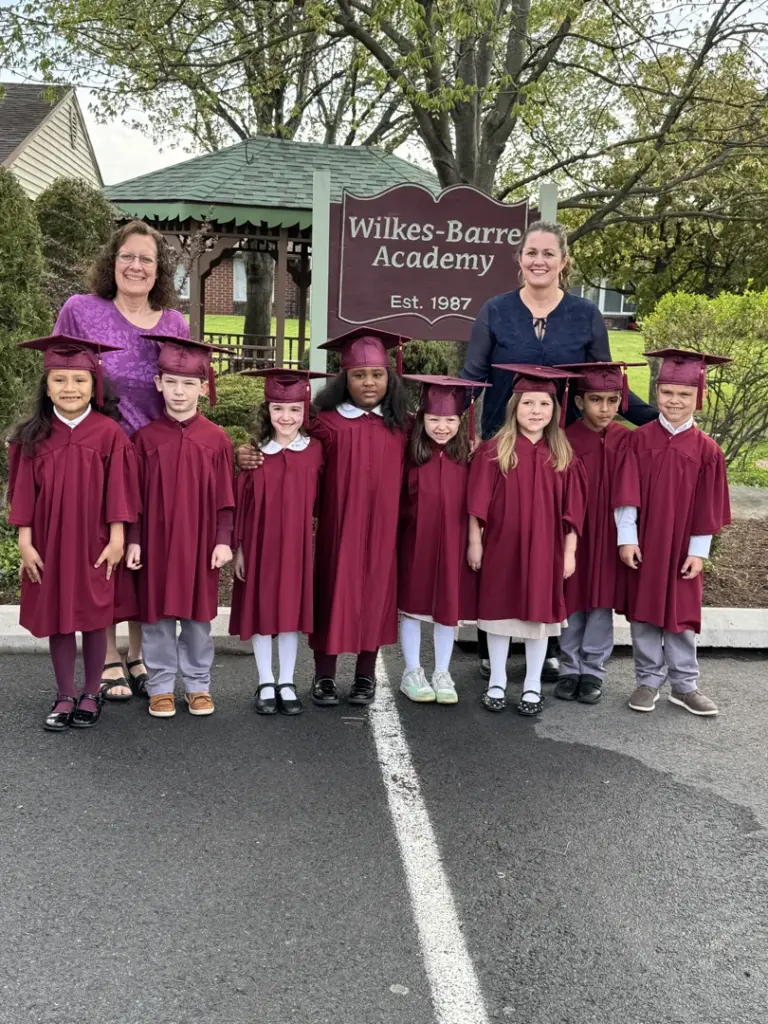
At Wilkes-Barre Academy, we believe in nurturing the whole child. While we are widely recognized in Luzerne County for our academically advanced curriculum, we know that true education goes beyond textbooks. Creative expression is a vital part of a child’s development, helping them build the confidence, empathy, and resilience they need to succeed in high school, college, and beyond.
We offer a close-knit, diverse community where every child is known and valued. Through our vibrant selection of Student Activities and Extracurricular Activities, we provide multiple avenues for students to explore their creative passions.
Whether your child is lifting their voice in our Glee Club, showcasing their unique talents in our beloved annual Winter Follies, or participating in meaningful community outreach like the Sing Seniors Project, we provide a safe, supportive, and encouraging stage for them to shine.
Are you ready to find a school community that celebrates both academic excellence and creative growth? We invite you to explore our programs and see how we help young minds reach high.