The Best Science Fairs in Pennsylvania for Young Scientists
Pennsylvania Elementary Science Fairs: What You Need to Know
If you’re looking for a science fair elementary school Pennsylvania event to explore, you’re in luck — the state has a rich calendar of competitions and showcases for young scientists, from local school gyms to university campuses.
Here are some of the top Pennsylvania elementary science fairs in 2026:
| Event | Grade Levels | Location | Key Detail |
|---|---|---|---|
| Chester County Science Research Competition (Dr. Jonas Salk Fair) | Grades 4-5 | Chester County | 369+ students from 50 schools |
| George Washington Carver Science Fair | Grades 4-5 | Temple University, Philadelphia | Open to public, charter, private & homeschool |
| North Museum Science & Engineering Fair | Junior Division (grades 6-8) | Lancaster County | 100+ category winners |
| Fort Washington Elementary Science Fair | Grades 4-5 | Fort Washington, PA | 15th annual event with community STEM expo |
| Penn Hills Elementary K-5 Science Fair | Kindergarten–Grade 5 | Penn Hills, PA | Two-day event, all grade levels recognized |
| PA Invention Convention | Elementary division | Hershey, PA | State-level; winners advance to nationals |
Pennsylvania’s elementary science fairs aren’t just about winning ribbons. They build real skills — critical thinking, public speaking, and confidence — starting as early as kindergarten.
Whether your child is testing lemon-powered lights or designing a soil-preparation prototype, there’s a fair — and a category — for every young thinker in the state.
Top Regional Science Fair Elementary School Pennsylvania Events
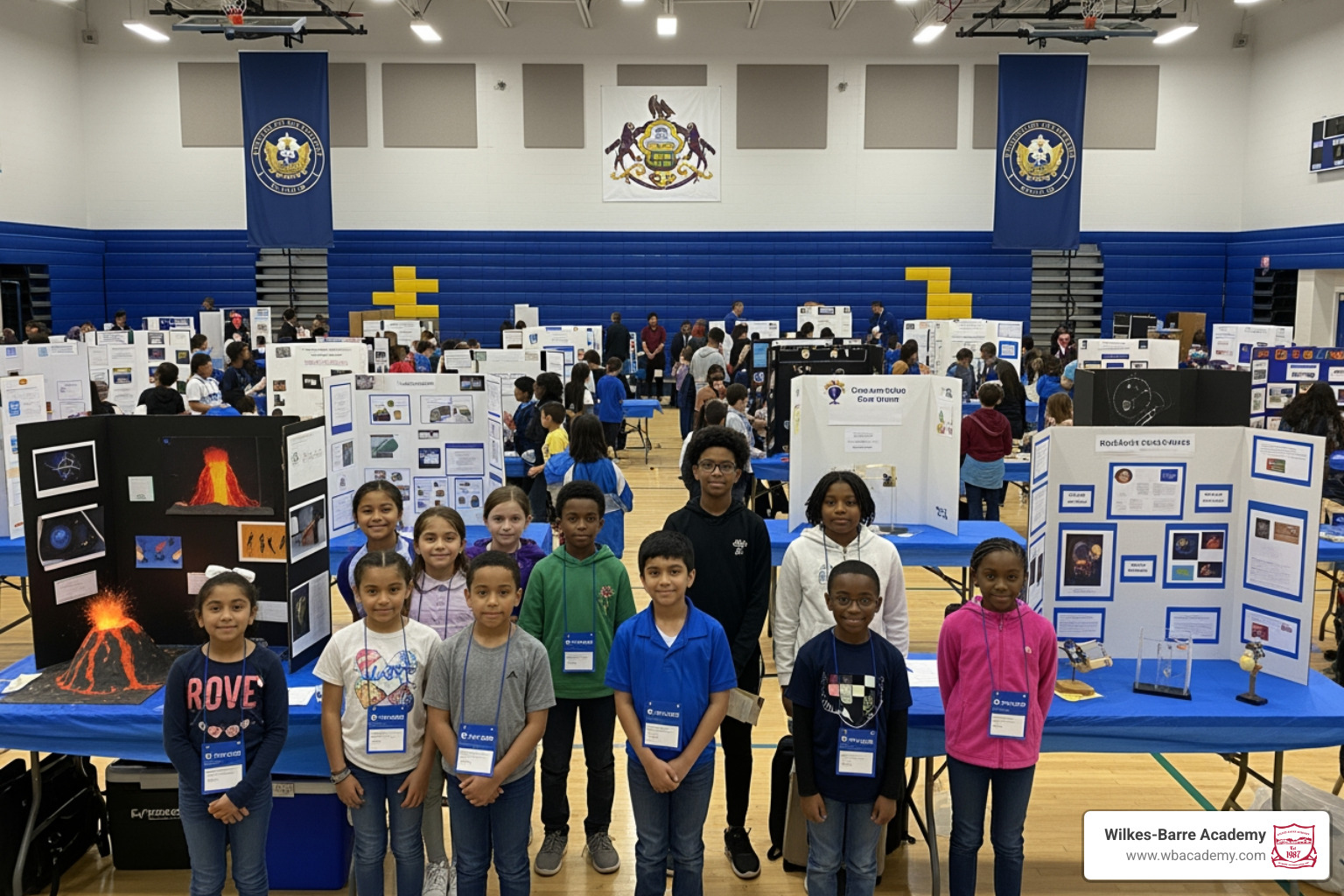
When we look at the landscape of science competitions across the Commonwealth, several regional powerhouses stand out for their commitment to young researchers. These events often serve as the first “big stage” for students who have excelled at their local school fairs.
Chester County Science Research Competition (Dr. Jonas Salk Fair)
One of the most impressive displays of young talent is the Hundreds of Young Scientists Shine at Chester County Research Fair. In 2026, this event saw more than 369 students from 50 different schools participate. For elementary students specifically, the Dr. Jonas Salk Fair caters to grades 4 and 5.
What makes this event special is the scale; it utilizes over 40 volunteer judges to provide feedback to these young scientists. Students compete in 15 scientific categories ranging from botany to computer science. It’s a place where a 4th grader’s project on sound can win “Best of Fair,” proving that you don’t need a PhD to make a significant discovery!
George Washington Carver Science Fair
Held at Temple University, the George Washington Carver Science Fair is a cornerstone of the Philadelphia scientific community. The Elementary Exhibition, held in April, is specifically designed for students in grades 4 and 5. This fair is remarkably inclusive, opening its doors to public, charter, parochial, private, and home-schooled students throughout Philadelphia County. To manage the high volume of participants, the fair uses the STEM Wizard platform for registration and documentation, a tool many students will continue to use as they move into high school competitions.
North Museum Science & Engineering Fair
In Lancaster County, the 2026 Science Fair Winners – North Museum highlights the achievements of students in the Junior Division. While this division often bridges the gap between late elementary and middle school (grades 6-8), it serves as a vital aspirational goal for younger students. In 2026, the fair recognized over 100 winners across categories like Consumer Science and Earth Science, with grand prizes sponsored by major scientific organizations.
Local School Showcases and Community STEM Days
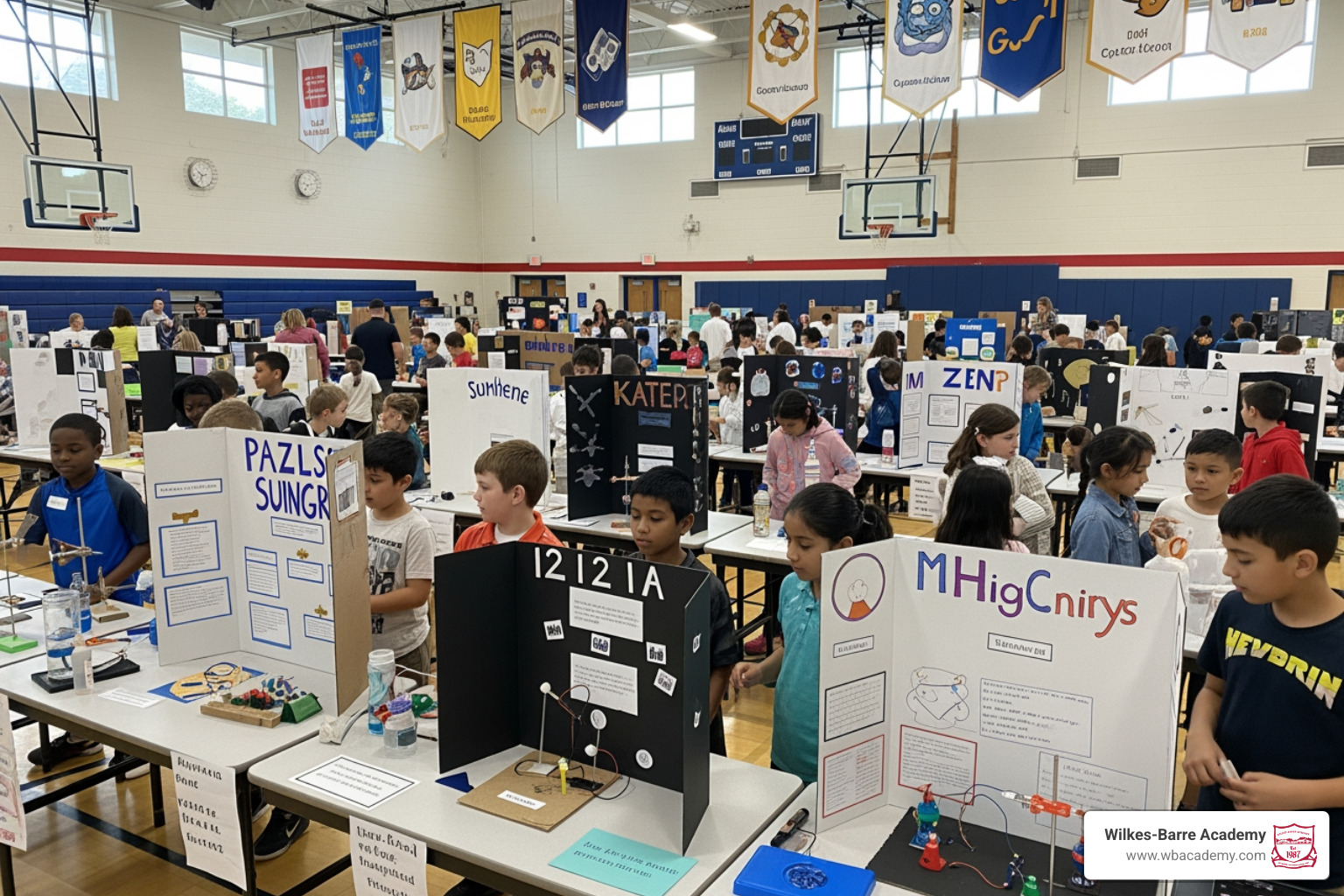
While the large regional fairs get a lot of the headlines, we believe the heart of scientific discovery often starts in the local classroom. At Wilkes-Barre Academy, we see how an annual Science Fair can transform a student’s perspective on learning.
Our school-wide events are designed to be a celebration of curiosity. By participating in Student Activities like these, students from Kindergarten through 8th grade get to experience the thrill of the “Eureka!” moment. These local exhibitions are crucial because they provide a safe, supportive environment for students to practice their presentation skills before moving on to larger regional stages.
Innovative Projects at a Science Fair Elementary School Pennsylvania
In the local science fair elementary school Pennsylvania circuit, we are seeing a shift toward projects that solve real-world problems. For example, at recent 5th-grade showcases, students have moved beyond the classic “baking soda volcano” to explore complex topics like “The Black Death” or the mechanics of lemon-powered lights.

At our own school, we emphasize a strong Academics curriculum that supports two main types of projects:
- Learn & Explain: Perfect for younger students or those exploring a specific topic (like “How do Sea Monkeys live?”).
- Scientific Method Experiments: For those ready to test a hypothesis (like “Which brand of battery lasts the longest in a toy car?”).
We’ve seen incredible success with group projects as well. Allowing up to four students to work together (sometimes even siblings!) fosters collaboration and communication—two of the most important skills in modern science.
Statewide Competitions and Invention Conventions
For students who want to take their ideas to the next level, Pennsylvania offers unique opportunities that go beyond the traditional poster board.
The PA Invention Convention, held in Hershey, is a fantastic example. Unlike a traditional science fair that focuses on research, the Invention Convention focuses on problem-solving. We’ve seen 4th graders from Pennsylvania win state titles by developing prototypes for construction equipment, such as machines that till and dry soil without using harsh chemicals. These students don’t just win ribbons; they often advance to national competitions like the RTX Invention Convention.
Another major path is the PJAS (Pennsylvania Junior Academy of Science). This competition is unique because students aren’t judged against each other. Instead, they are judged on a rubric against a set of criteria. If you meet the high standards of the judges, you earn a First Place award and an invitation to present at the state competition held at Penn State University in May.
| Feature | PJAS | Invention Convention |
|---|---|---|
| Focus | Controlled experiments and research | Creative problem solving and prototypes |
| Judging | Criterion-based (not against peers) | Competitive ranking |
| Final Stage | Penn State University (State College) | National Competition (Varies) |
| Primary Goal | Validating the scientific method | Creating a “marketable” solution |
Essential Steps for a Science Fair Elementary School Pennsylvania
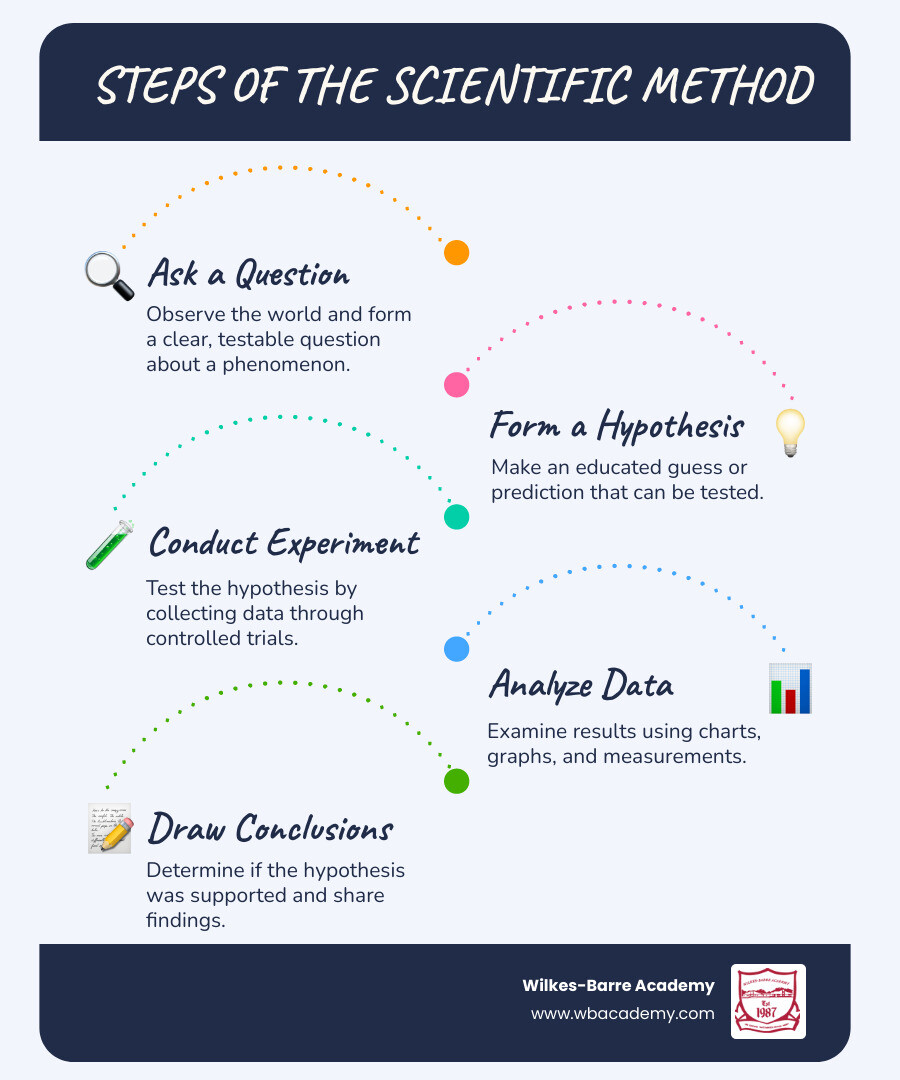
If your student is preparing for a science fair elementary school Pennsylvania event, we recommend following a structured timeline. Success isn’t just about the final display; it’s about the process.
- Ask a Question: Find something that truly confuses or excites you.
- Research: See what other people have already discovered.
- Hypothesize: Make an educated guess about what will happen.
- Experiment: This is the fun part! Collect your data and be sure to take photos.
- Analyze: Organize your findings into charts or graphs.
- Conclude: Was your guess right? Why or why not?
Project Categories and Judging Criteria
Modern judging has evolved to look at the “whole student.” Many Pennsylvania fairs now use the “Seven C’s” plus one extra — Curiosity — to evaluate projects:
- Collaboration: How well did the team work together?
- Communication: Can the student explain their project clearly to a stranger?
- Critical Thinking: Did they troubleshoot when the experiment went wrong?
- Character and Connection: Does the project help the community?
Professional judges, often volunteers from local universities or STEM businesses, look for students who can speak confidently about their work rather than just reading off their boards.
Frequently Asked Questions about PA Elementary Science Fairs
What are the most popular project categories for 4th and 5th graders?
In the science fair elementary school Pennsylvania landscape, we see a lot of interest in Botany (studying how plants grow), Chemistry (the ever-popular “slime” or crystallization projects), and Physics (testing things like the bounce of a tennis ball). Recently, Sports Performance has become a hit, with students testing which swim caps make them faster or how pool temperature affects their energy.
Can elementary students advance to national science competitions?
Yes! While many national fairs start at the middle school level, the PA Invention Convention is a direct pipeline for elementary students. Winners of the state title in Hershey have historically moved on to compete at the national level, meeting with industry mentors and even patent attorneys to discuss their inventions.
How do schools encourage family involvement in science fairs?
Most successful fairs in Pennsylvania involve the whole family. This can include:
- PTA Sponsorship: Providing the funding for ribbons and trophies.
- Evening Family Events: Hosting the fair at night so working parents can attend.
- Community Mentors: Bringing in local engineers or doctors to help students refine their ideas.
- Public Open Houses: Allowing the neighborhood to see the hard work the students have put in.
Conclusion
At Wilkes-Barre Academy, we take immense pride in fostering the next generation of Pennsylvania scientists. Located in the heart of Luzerne County, our private, non-profit K-8 school is dedicated to providing an academically advanced curriculum that doesn’t just teach facts, but teaches how to think.
With our single-classroom-per-grade structure, we offer the individualized learning and close-knit community that young scientists need to feel brave enough to ask big questions. Whether your child is just starting their first “Learn & Explain” project or preparing for a regional competition, we are here to support that journey through strong family-school connections and a diverse, encouraging environment.
To learn more about how we integrate science into our daily student life, visit our Student Activities page or explore our full range of programs at https://www.wbacademy.com/. We can’t wait to see what your young scientist discovers next!