Touring the Best Private Schools in Wilkes-Barre
What Parents Should Know About Private School Admissions in Wilkes-Barre
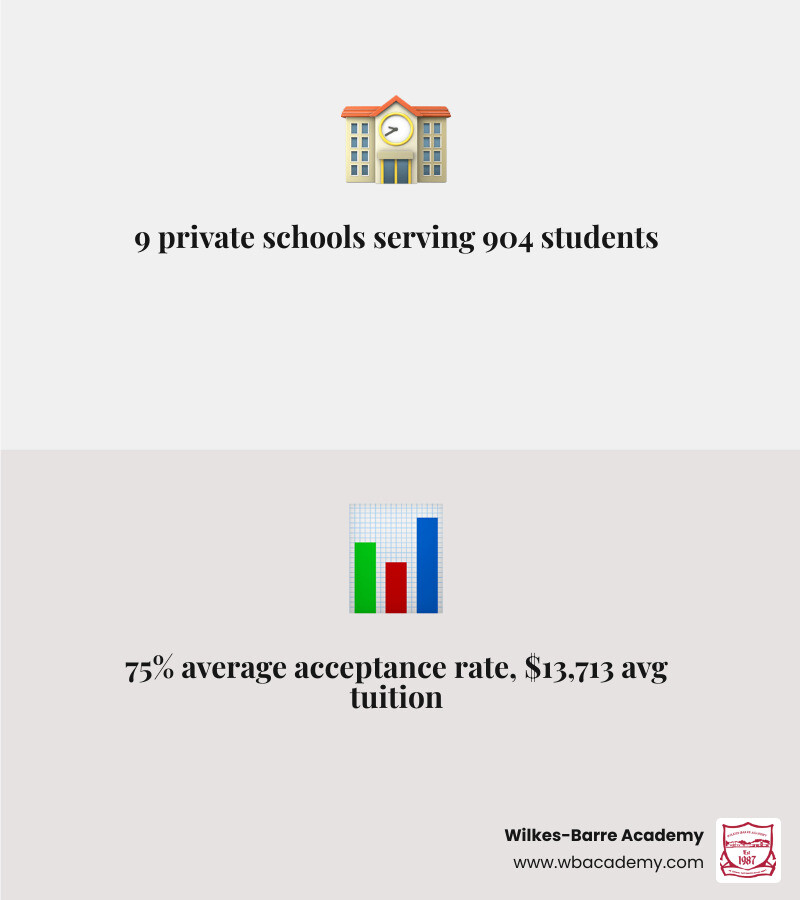
Navigating private school admissions in Wilkes-Barre can feel overwhelming, but knowing your options upfront makes the process much simpler. Here is a quick snapshot of what families searching for private schools in the area need to know right now:
Quick Facts: Wilkes-Barre Private Schools (2026)
| Factor | Details |
|---|---|
| Number of private schools | 9 schools serving 904 students |
| Average tuition | $13,713/year |
| Average acceptance rate | 75% |
| Student-teacher ratio (avg.) | 12:1 |
| Minority enrollment | ~27% |
| Religious affiliation | 44% of schools |
| Grade ranges | Pre-K through Grade 8 (most schools) |
Only 8% of K-12 students in Wilkes-Barre attend private school, well below Pennsylvania’s 14% state average. That means private schools here stay small, selective, and personal.
For the 2026-2027 school year, applications at some programs opened as early as March 18, 2026. If you have not started yet, now is the time to act.
Whether you are looking for a faith-based environment or a non-religious, academically advanced option like Wilkes-Barre Academy, there is a meaningful choice to be made, and this guide walks you through it.
Navigating Private School Admissions in Wilkes-Barre
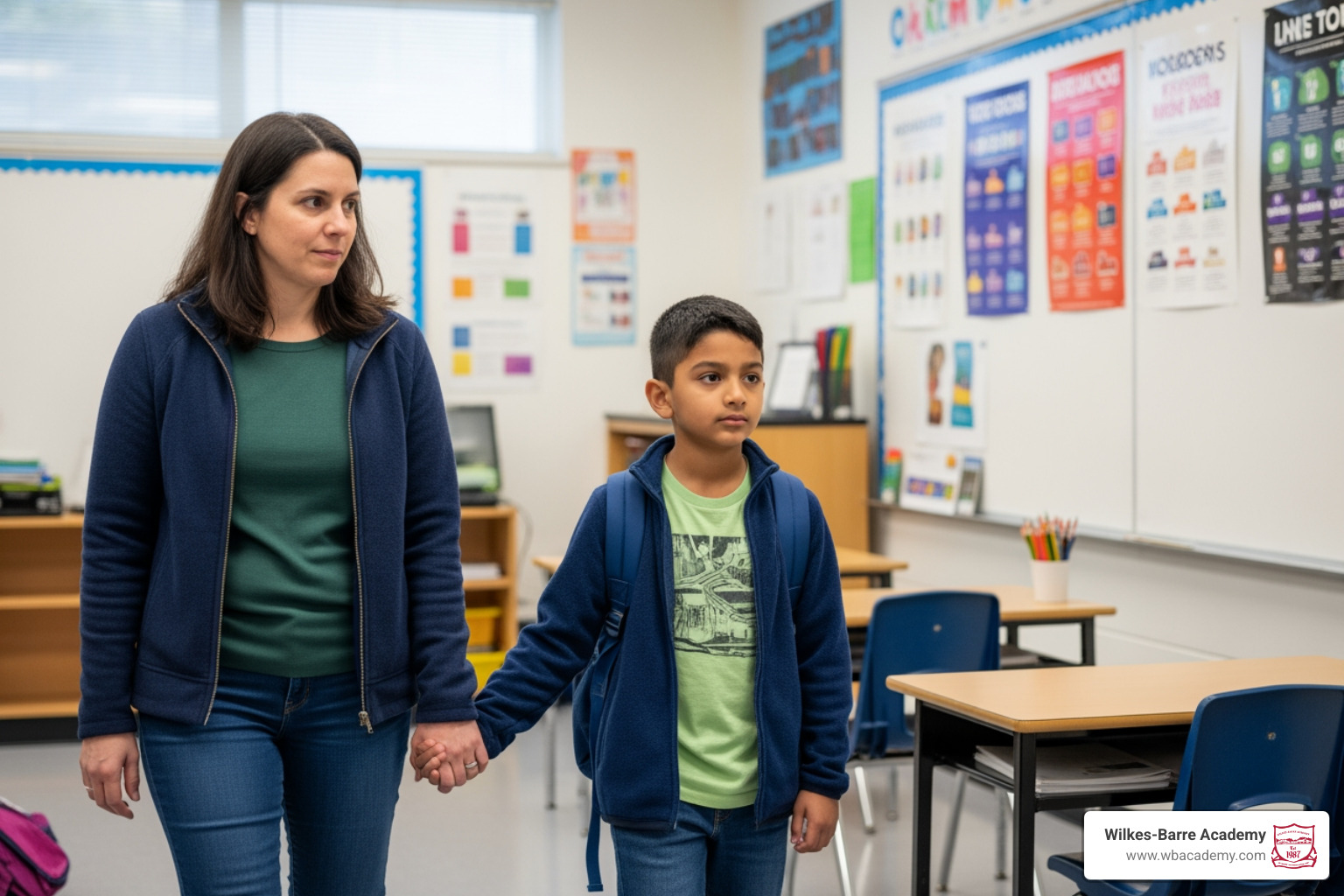
When we talk about private school admissions in Wilkes-Barre, we are looking at a landscape that is both competitive and deeply community-oriented. As of May 2026, the local market has stabilized around nine key institutions serving nearly a thousand students. However, because the percentage of local students in private education is lower than the state average, the schools that do operate here tend to focus heavily on maintaining high standards and intimate environments.
The journey usually begins with an inquiry. Most families start their search about a year before they intend to enroll their child. For the 2026-2027 school year, the active phase of the cycle is already in full swing. If you are looking at specialized tracks or highly sought-after elementary spots, the window of opportunity often begins in mid-March.
We believe that the best way to understand a school is to see it in action. That is why the admissions process almost always starts with a personal connection. Whether it is a phone call to discuss your child’s needs or filling out an online inquiry form, this initial step sets the tone for the entire relationship between your family and the educators. At Wilkes-Barre Academy, you can start by visiting our Admissions page to schedule a tour, submit an inquiry, or begin your application.
Key Requirements for Private School Admissions in Wilkes-Barre
Every school has its own approach to what makes a successful applicant, but several standard requirements run across the board in Luzerne County. If you are preparing for the private school admissions in Wilkes-Barre cycle, you should have the following ready:
- Academic Transcripts: Most schools will want to see at least two to three years of previous school records to understand your child’s academic trajectory.
- Teacher Recommendations: Hearing from a current educator helps admissions committees understand a student’s classroom behavior and social integration.
- Required Essays: For older students, especially those entering junior high or specialized business tracks, essays are a critical way for the school to gauge writing ability and personal motivation.
- The 15-20 Minute Interview: This is not an interrogation. It is a chance for the school to see if the student’s goals align with the school’s mission.
- Placement Testing: Many academically advanced programs use testing to ensure students are placed in the correct level to be both challenged and supported.
Steps to Secure Your Child’s Placement
Securing a spot requires more than just a checkmark on a form. It is a multi-step process designed to ensure a strong fit.
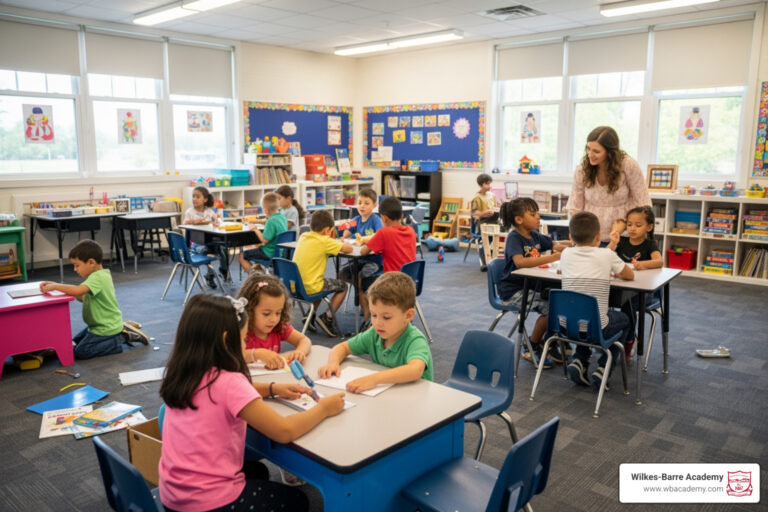
- The Private Tour: We highly recommend scheduling a private tour. This allows you to see the classroom culture without the crowd of an open house. You can schedule a campus visit and learn about enrollment steps to see how our single-classroom-per-grade model works in real time.
- Inquiry and Application Forms: Once you have toured, you will fill out formal enrollment paperwork. This often includes sharing details about the student’s age, current grade, and any specific learning needs.
- Meeting Behavioral and Academic Standards: Most Wilkes-Barre private schools look for students with a solid behavioral record. Some specialized programs even require a minimum 90% average in core subjects like English.
- Enrollment Deadlines: While some schools offer rolling admissions, the most popular programs often have cut-off dates in late spring, around May, to finalize class sizes for the fall.
Comparing Educational Models and School Environments
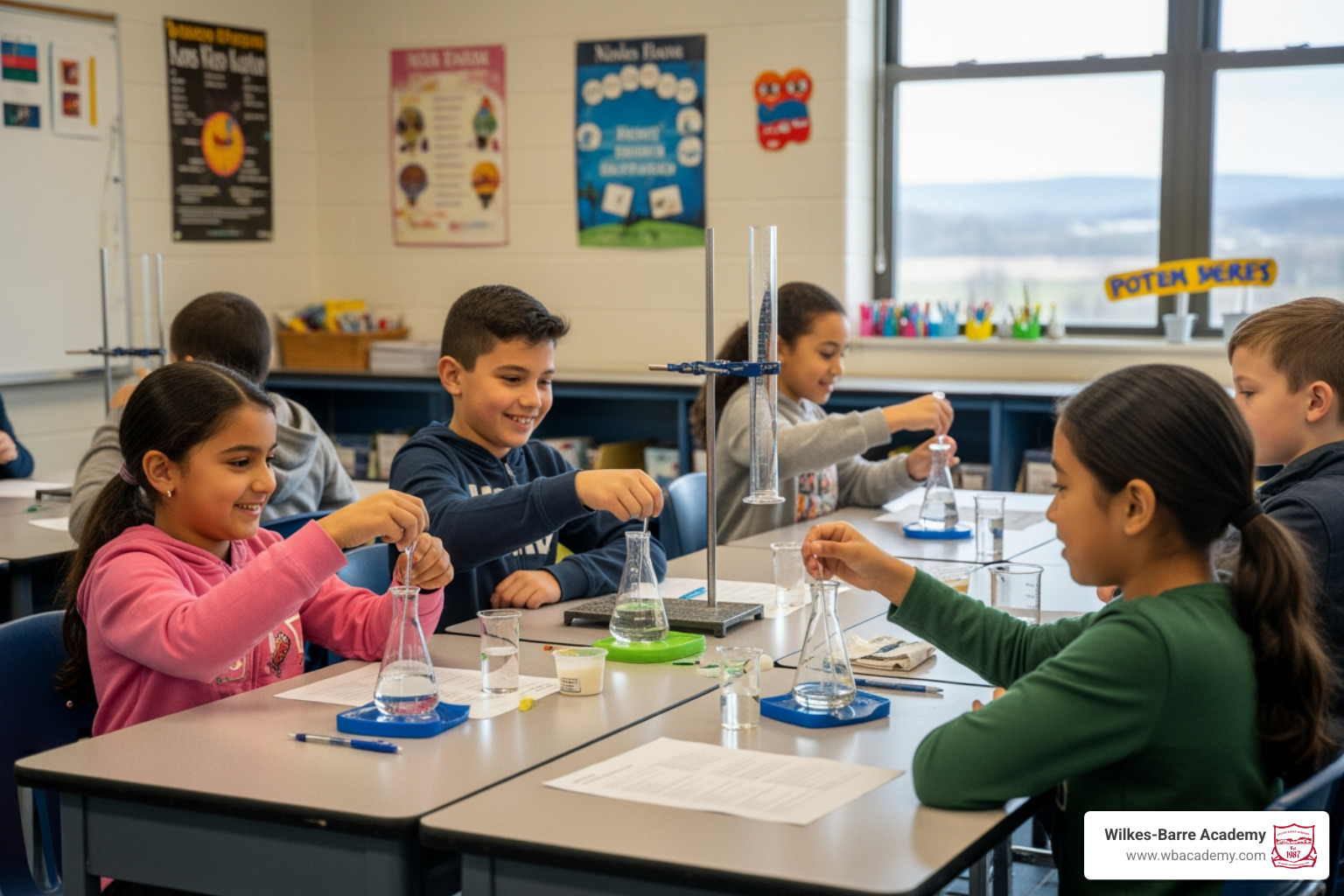
One of the biggest decisions you will face is choosing between different educational philosophies. In Wilkes-Barre, the private school market is split almost down the middle. About 44% of local schools are religiously affiliated, most commonly Islamic, Mennonite, or Catholic. The remaining schools are non-sectarian, focusing purely on academic advancement and community diversity.
The K-8 model is particularly popular in our region. This structure allows children to grow from kindergarten through their early teens in a consistent, stable environment. It eliminates the often-jarring transition to a separate middle school, allowing students to focus on their studies during those critical developmental years.
| Feature | Wilkes-Barre Private School Average |
|---|---|
| Average Class Size | 20 Students |
| Student-Teacher Ratio | 12:1 |
| Acceptance Rate | 75% |
| Minority Enrollment | 27% |
Academic Rigor and Extracurricular Opportunities
What are you paying for when you choose private education? In Wilkes-Barre, the answer is often rigor. Many private schools here use an academically advanced curriculum, meaning students are often working a grade level ahead of their public-school peers.
To support this, schools prioritize:
- Certified Educators: Teachers who hold state certifications and pursue ongoing professional development.
- Small Ratios: While the city average is 12:1, some schools maintain specific caps to ensure no child gets lost in the back of the room.
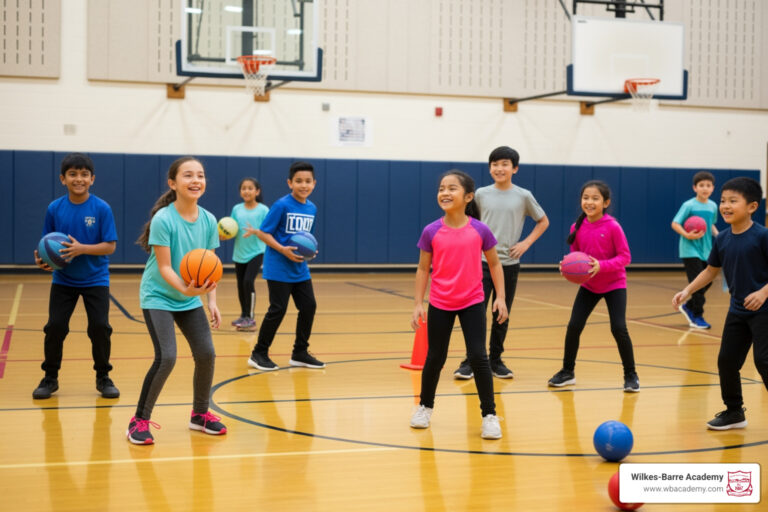
- Holistic Growth: It is not just about math and reading. From varsity sports to specialized clubs, some schools offer over 45 different extracurricular options, with the goal of producing well-rounded citizens.
Support for Diverse Learning Needs
Diversity in Wilkes-Barre private schools is not just a buzzword. It is a statistical reality. With a minority enrollment of 27%, our private schools match the state average for diversity. This creates a rich environment where students learn from different perspectives daily.
For families with specific needs, the individualized learning approach can be a game-changer. By keeping class sizes small and having teachers who stay closely connected with their cohort, schools can adapt their teaching strategies each year to match the specific personalities and needs of that student body.
Understanding Tuition Costs and Financial Aid
Let us talk numbers. The average yearly tuition for a private school in Wilkes-Barre is approximately $13,713. While this is a significant investment, it is actually lower than the Pennsylvania state average of $14,823.
When planning your budget, the sticker price is not always what you will pay. Most schools utilize a Tuition Schedule that outlines base costs, but they also offer various forms of relief. You can find more details on our Tuition page.
Beyond the base tuition, keep an eye out for:
- Application Fees: Usually ranging from $35 to $75.
- Materials Fees: For books, technology, or lab supplies.
- Activity Fees: For field trips, retreats, or sports uniforms.
Scholarship Opportunities and Grant Programs
The perception that private school is only for the wealthy is a myth we work hard to debunk in Wilkes-Barre. In fact, in some local programs, up to 98% of families receive some form of financial assistance.
- EITC Grants: The Educational Improvement Tax Credit (EITC) is a Pennsylvania program that allows businesses to redirect their tax dollars to school scholarships. You can learn more about how to access these on our EITC Grant page.
- Voucher Programs: Some schools offer specific Voucher Programs to help bridge the gap for families who demonstrate financial need.
- Indexed Tuition: This is a model where tuition is indexed to a family’s specific financial profile. Instead of a flat fee, your contribution is calculated based on what you can actually afford.
- External Scholarships: Organizations like CEO America often provide grants specifically for families transferring from public to private schools for the first time.
Frequently Asked Questions about Private School Admissions in Wilkes-Barre
What is the average acceptance rate for schools in the area?
The average acceptance rate for private school admissions in Wilkes-Barre is 75%. This makes local schools slightly more selective than the Pennsylvania state average of 81%. This selectivity is not about being exclusive for its own sake. Rather, it is about ensuring that every admitted student can keep up with the advanced curriculum and contribute positively to the close-knit community.
Are there non-religious private school options available?
Yes. While 44% of local private schools have a religious affiliation, there are several prominent non-sectarian options. For example, Wilkes-Barre Academy is a non-profit, non-religious school. These institutions focus on a diverse community where students from all backgrounds, and no specific faith, can feel at home while focusing entirely on academic excellence.
When should I begin the application process for the 2026-2027 school year?
Ideally, you should begin as early as possible. But do not panic if you are just starting now. Most formal application windows open in late February or mid-March. For the 2026-2027 school year, many families began their tours and paperwork on March 18, 2026. If you are looking at early childhood programs such as Pre-K or Kindergarten, these spots often fill up the fastest because they form the foundational blocks for the rest of the K-8 journey.
Conclusion
Choosing the right school is one of the most significant decisions you will make for your child’s future. In Wilkes-Barre, we are lucky to have a diverse range of options that prioritize small class sizes and high academic standards.
At Wilkes-Barre Academy, we take pride in our unique model. As a non-profit K-8 school, our focus is entirely on providing an academically advanced curriculum. By maintaining exactly one classroom per grade, we ensure that our teachers can provide truly individualized learning. We aren’t just a school; we are a close-knit, diverse community where every student is encouraged to think, explore, and grow every day.
If you’re ready to see how a supportive, engaging environment can transform your child’s love for learning, we invite you to take the next step. Visit our Admissions page to schedule a private tour, submit an inquiry form, or start your enrollment application today. Your choice today is their future tomorrow.