Why Private School Extracurriculars in PA are a Total Game Changer
Why Extracurricular Activities at Private Schools in Pennsylvania Matter More Than You Think
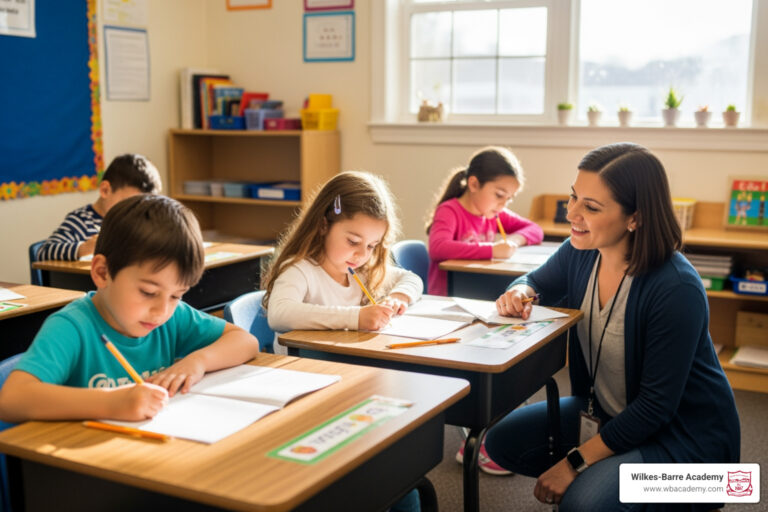
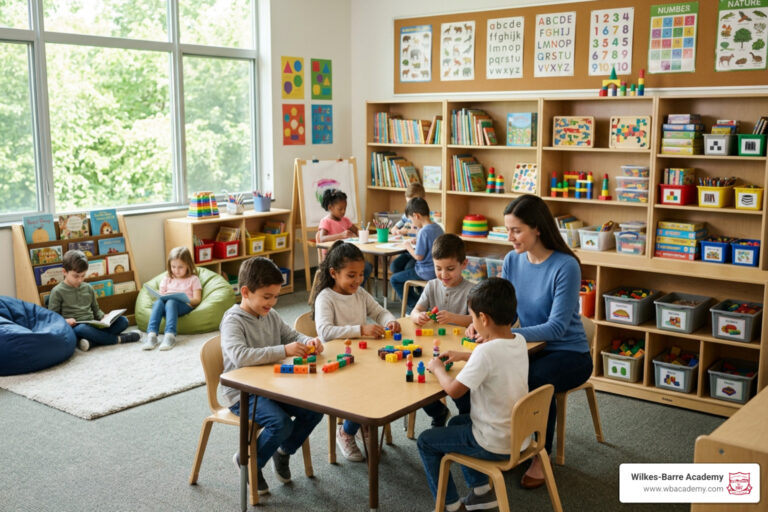
Extracurricular activities in private school Pennsylvania settings go far beyond after-school fun — they are a core part of how students grow into confident, capable, and well-rounded individuals.
Here is a quick look at what Pennsylvania private school extracurriculars typically include:
| Category | Examples |
|---|---|
| Academic | Robotics, Math League, Science Olympiad, Mock Trial |
| Arts & Media | Literary magazine, student newspaper, drama, music |
| Service | Community outreach, charity initiatives, peer ministry |
| Sports & Fitness | Varsity teams, yoga, rock climbing, fitness training |
| Special Interest | Chess, environmental clubs, student government, esports |
Private schools across Pennsylvania — from Philadelphia-area campuses to communities in Luzerne County — are known for offering 50+ clubs and activities that span academics, arts, athletics, and service. Many of these programs are student-driven, meaning kids help shape what gets offered.
For busy parents who want more than just strong academics for their child, this matters. Small class sizes and a nurturing environment mean your child is not just one face in the crowd — they can actually lead a club, make a varsity team, or discover a passion they never knew they had.
This guide walks you through everything: the types of programs available, how Pennsylvania law affects private-public school access, and how extracurriculars can even give your child a real edge in college admissions.
The Landscape of Extracurricular Activities in Private School Pennsylvania
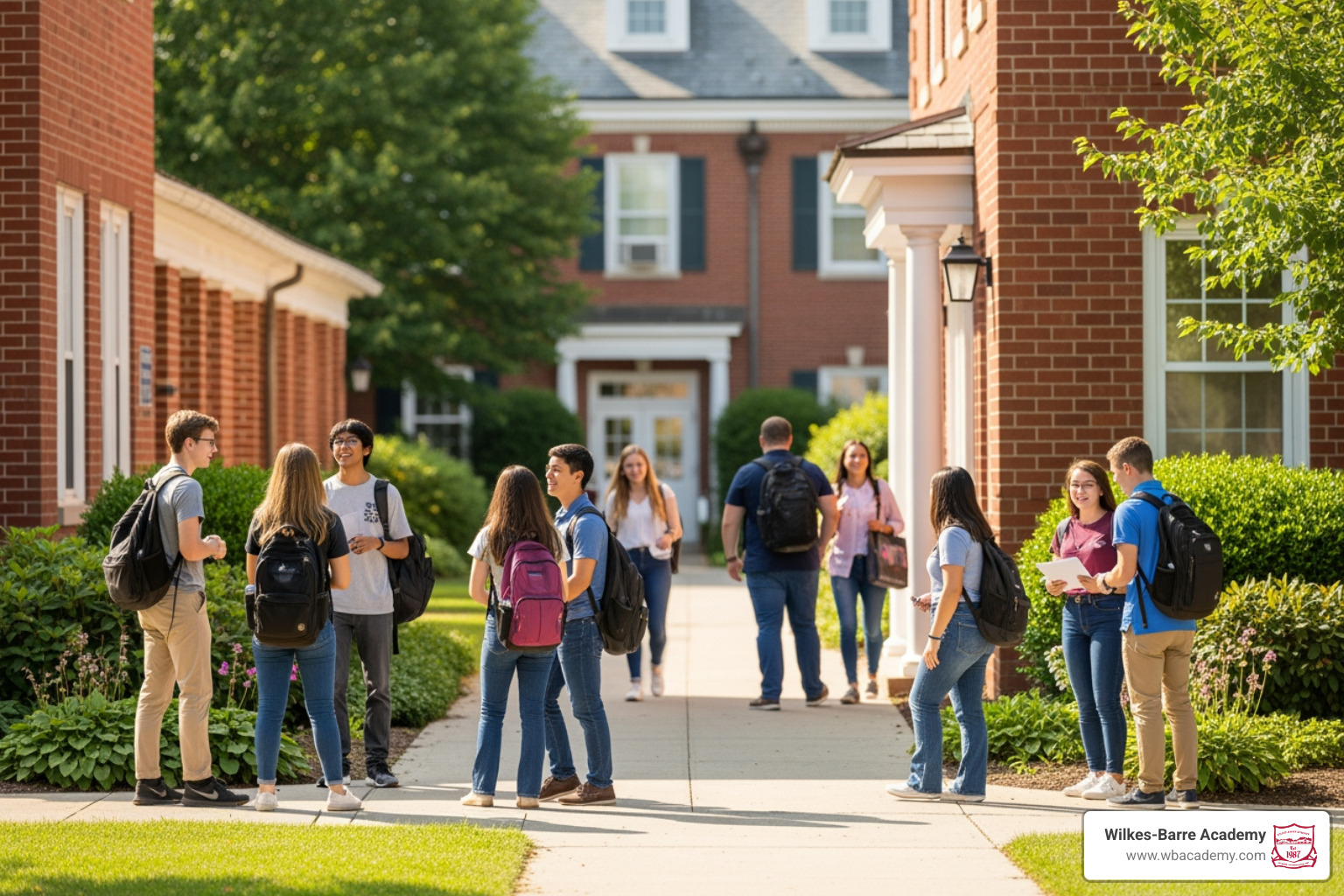
When families research extracurricular activities private school Pennsylvania, they usually discover something important very quickly: strong private schools do not treat activities as an afterthought. They treat them as part of the educational experience.
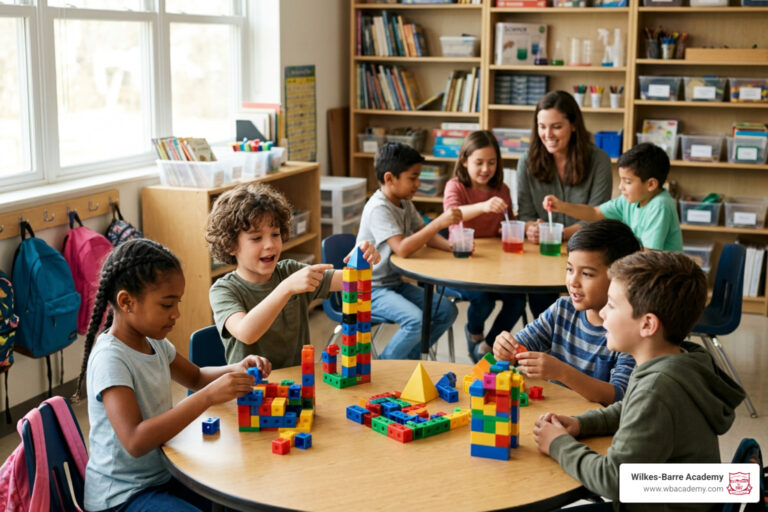
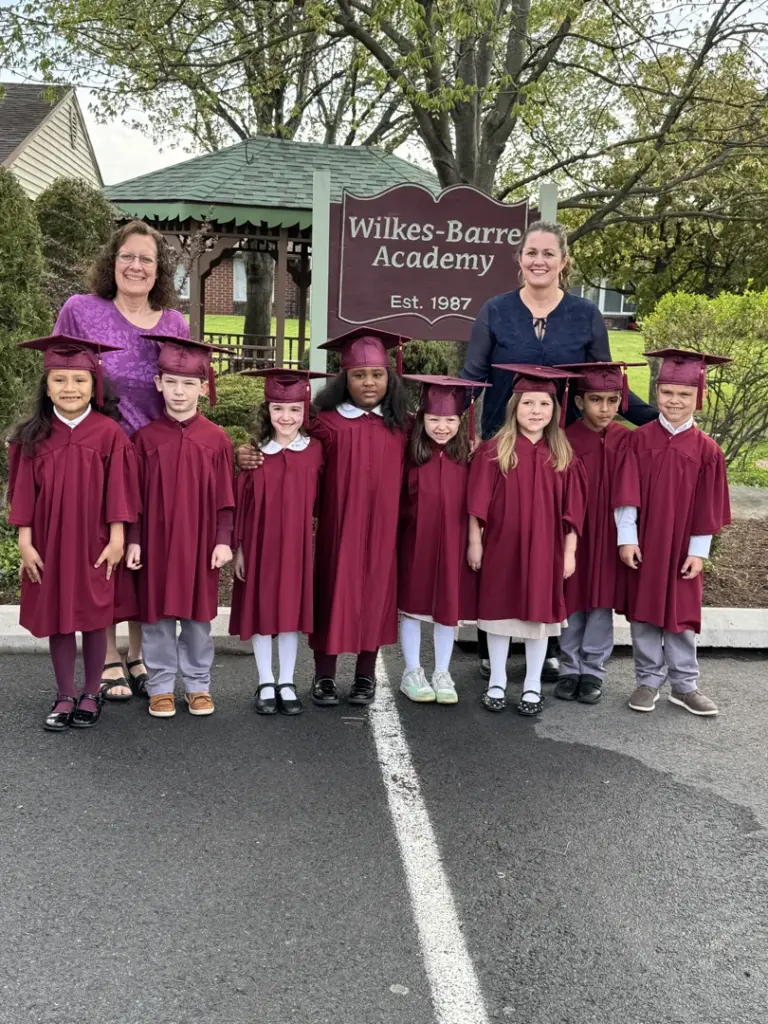
That matters to us in Luzerne County. At Wilkes-Barre Academy, we believe students thrive when they have room to explore, create, compete, perform, serve, and lead. In a smaller school setting, students often get more chances to participate instead of waiting on the sidelines. You can explore many of our own student activities to see how this looks in practice.
Across Pennsylvania, private school extracurriculars commonly include:
- Academic clubs and competitions
- Performing and visual arts
- Athletics and physical fitness
- Service and leadership programs
- Cultural and language activities
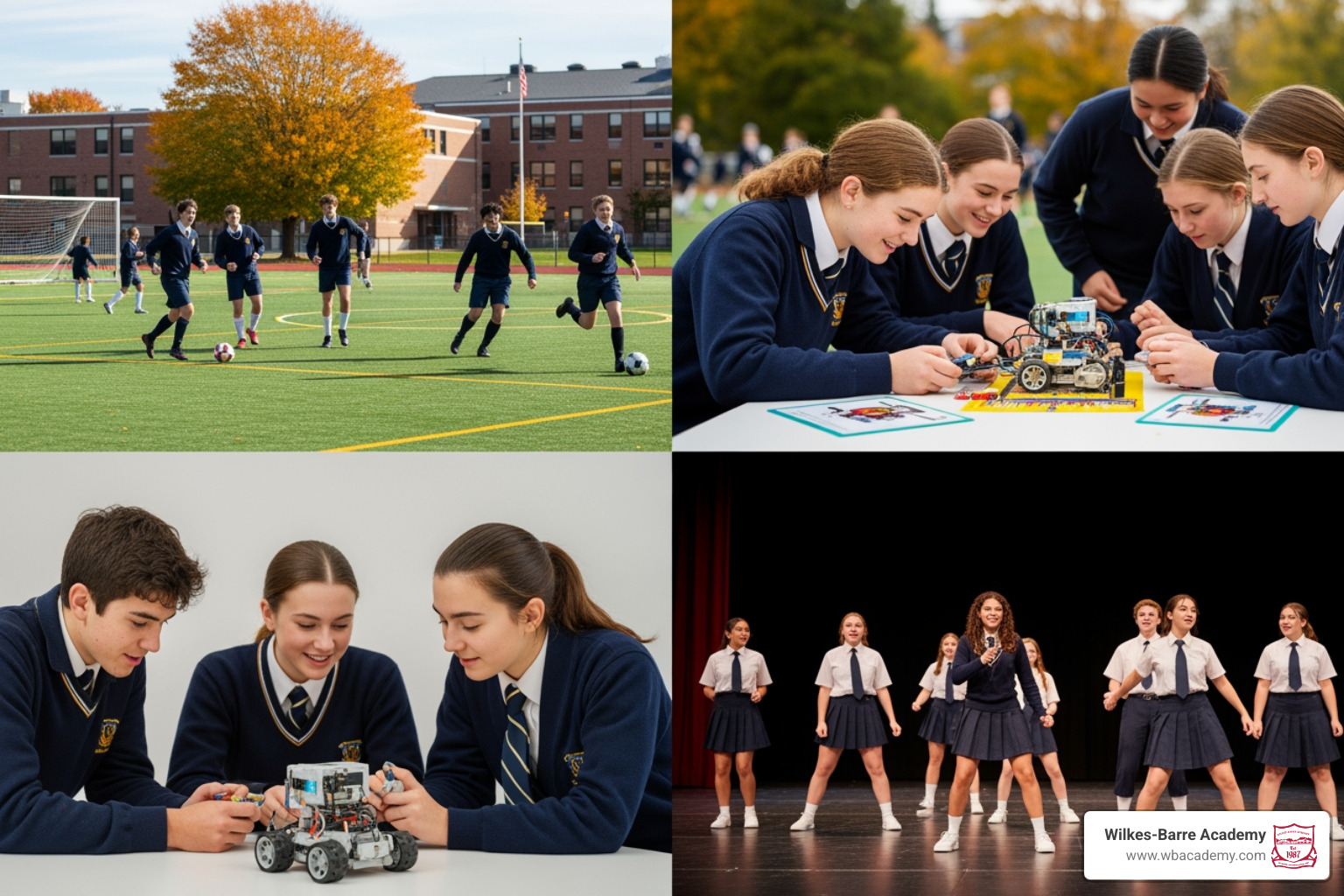
- STEM and robotics
- Media, publications, and public speaking
- Special-interest clubs built around student passions
Independent schools often emphasize these opportunities because they support the whole child. Research from Pennsylvania independent school guidance consistently points to extracurriculars, arts, athletics, service, and student government as essential parts of a well-rounded education, not optional extras.
Just as important, extracurriculars help children build skills that do not always show up on a test score:
- Leadership
- Teamwork
- Communication
- Time management
- Resilience
- Creativity
- Confidence
- Cross-cultural understanding
In other words, the school day may end, but the learning definitely does not.
Promoting a Wide Range of Interests
One of the biggest strengths of Pennsylvania private schools is breadth. Many schools organize activities across clear categories so students can find their fit more easily. You will often see programs in:
- Academics and STEM
- Arts and media
- Athletics and wellness
- Community service
- Student leadership
- Cultural awareness
- Special interests
Some Pennsylvania private schools offer more than 50 clubs and activities, with options changing as students’ interests evolve. That student-led model is a big deal. It means extracurricular life is not frozen in time. If students are excited about coding, debate, world cultures, environmental action, or entrepreneurship, schools can often respond much faster than large systems can.
At Wilkes-Barre Academy, we value this same spirit of discovery. Families can learn more about our full approach to extracurricular activities, which complement our academically advanced K-8 program and close-knit school community.
A strong program should include a balance of:
- Structured activities for skill-building
- Creative spaces for self-expression
- Competitive opportunities for motivated students
- Service projects that build empathy
- Low-pressure options for students trying something new
Not every child wants the spotlight. Not every child wants a trophy. Sometimes the perfect extracurricular is robotics. Sometimes it is chorus. Sometimes it is helping with a community project and realizing, “Hey, I like making a difference.” That counts too.
Accommodating Varying Schedules
A great extracurricular program should work for real families with real calendars.
Pennsylvania private schools often make participation easier by offering activities:
- Before school
- During the school day
- After school
- In seasonal or trimester rotations
- On campus for convenience
Some schools use trimester-based activity systems, requiring students to participate in supervised after-school activities each term while still allowing flexibility in what they choose. Others provide optional programs so students can join according to their interests, workload, and family schedule.
This flexibility matters for K-8 families in particular. Younger students need age-appropriate pacing, and parents need practical logistics. On-campus options can reduce transportation stress, and varied scheduling can make it easier for students to participate without feeling overloaded.
The best extracurricular structure is not “the busiest possible schedule.” It is the right fit for the child. That means schools should leave room for both enthusiastic joiners and thoughtful dabblers. Yes, “thoughtful dabblers” is a real type of student, and we respect them.
Navigating Public and Private School Partnerships

A major 2026 topic in Pennsylvania is whether private school students should be allowed broader access to extracurriculars offered by their resident public school districts.
The current legislative proposal drawing attention would allow private school students in Pennsylvania to participate in extracurricular activities at the public schools in the districts where they live. News coverage and public discussion around the proposal show that it has sparked strong opinions, especially around fairness and funding. Families who want a broader overview of how independent schools work can also review the Pennsylvania Association of Independent Schools, a well-known statewide resource.
Here are the main arguments that have appeared in public debate:
- Public districts may lose roughly $3,500 in funding for each student who attends private school, so some community members argue districts should not have to absorb added extracurricular costs too.
- Some people believe private school students should pay a fee if they use public school facilities, teams, or programs.
- Others argue that if access goes one way, fairness would suggest public school students should also be able to use certain private school opportunities.
- Some commenters say private school students may already have some access in certain situations, which raises questions about what the proposed law would actually change.
For families, the key takeaway is this: the policy conversation is not just about sports. It is about how Pennsylvania defines access to publicly funded programs, and where the line falls between parent choice and taxpayer responsibility.
That conversation is still evolving, so families should check current district policies and state updates before assuming participation is available.
Accessing Public Programs through Extracurricular Activities in Private School Pennsylvania
Even without a broad new law, Pennsylvania already has some pathways for private school students to access public school programs or protections in limited circumstances.
The most important examples are dual enrollment and Chapter 15 protections.
Dual enrollment means a student enrolled in a private school may also participate in certain public school academic programs. Under Pennsylvania law and policy guidance, when a student is dually enrolled for a public school program, the public school’s responsibilities apply to that public portion.
Chapter 15 of 22 Pa. Code deals with services for “protected handicapped students.” In simple terms, this means a public school must provide aids, services, or accommodations that give eligible students an equal opportunity to participate in the public school’s regular education programs and extracurricular activities.
But there is an important limit:
- If a student attends only the private school and does not participate in a public school program, the public school generally does not have to provide Chapter 15 services inside the private school.
- If a student is dually enrolled in a public school class or activity, accommodations apply to that public school portion.
That distinction matters. It means existing access is not unlimited, but it is not zero either.
For example, if a private school student participates in a public school course through dual enrollment, the district may need to provide the relevant accommodations for that course. Questions about Chapter 15 implementation are typically directed to Pennsylvania’s Bureau of Special Education.
Within a private school environment, schools can also support access in their own ways through academic supports, small-group instruction, and programs such as peer tutoring, which can strengthen student confidence and participation.
Transportation and Logistics
Practical questions matter almost as much as legal ones.
One often-overlooked Pennsylvania rule is transportation. Guidance for independent schools in the state notes that local public school districts are generally required to provide transportation to independent school students if the school is within 10 miles of the district border.
That can make private education more realistic for families in and around Luzerne County.
Other logistics that families should consider include:
- Whether activities happen on campus
- Whether buses or carpools affect after-school participation
- Whether the school is independently governed
- Whether the school meets recognized accreditation standards
- How communication with families works around schedules and events
Independent schools are typically governed by boards of trustees rather than public school boards, and they are funded primarily through tuition, charitable giving, and endowment support. That structure often gives them more flexibility to create mission-driven extracurricular programs tailored to their students.
From Robotics to Fine Arts: High-Achieving Programs
Pennsylvania private schools are known for offering much more than basic clubs. In many cases, they develop serious, high-performing programs in STEM, arts, writing, and leadership.
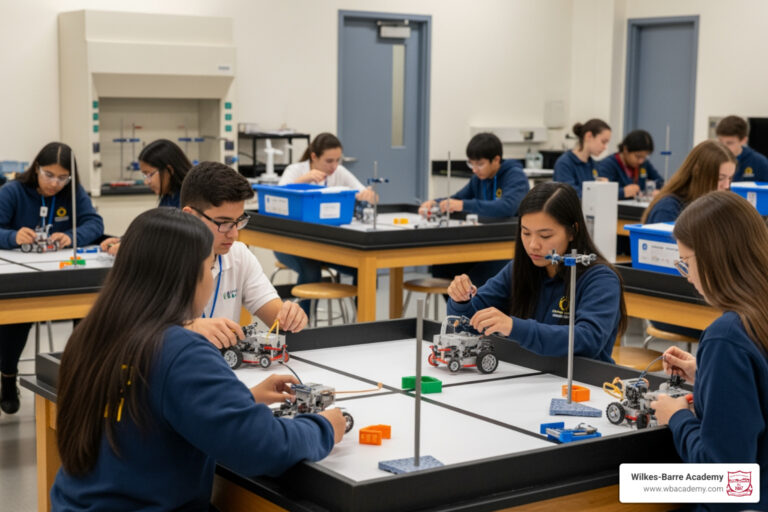
A standout example statewide is robotics. Research shows that one Pennsylvania private school supports 16 robotics teams across lower, middle, and upper grades, with students later entering engineering programs at highly selective universities over the past decade. Another school’s robotics team earned world-level and state-level honors over multiple years. These examples show what is possible when schools invest in long-term skill development, lab space, and student mentorship.
For K-8 students, this matters because early exposure counts. Students do not need to wait until high school to start building STEM confidence. Programs like Science Olympiad and Science Fair can introduce research, experimentation, teamwork, and presentation skills at the right developmental stage.
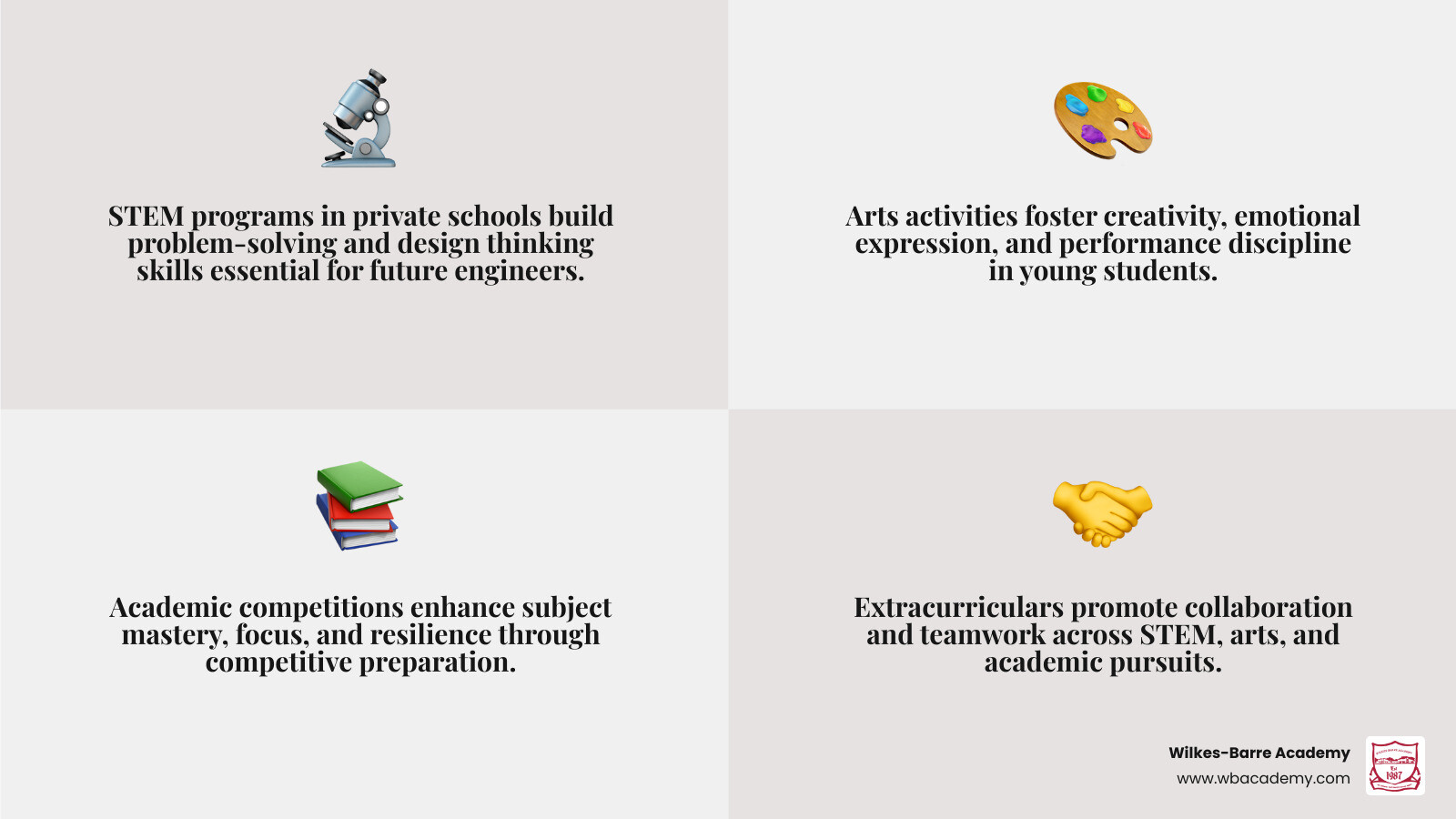
| Area | Typical Benefits |
|---|---|
| STEM | Problem-solving, design thinking, collaboration, technical fluency |
| Arts | Creativity, confidence, expression, discipline, presentation skills |
| Academic Competitions | Preparation, focus, subject mastery, resilience |
| Media & Publications | Writing, editing, voice, leadership, audience awareness |
The point is not that every child needs to become an engineer or performer. The point is that extracurriculars create environments where strengths become visible.
Competitive Edge and College Prep in Extracurricular Activities Private School Pennsylvania
Even though Wilkes-Barre Academy serves K-8 students, parents are right to think ahead. The habits children build now can shape high school success and eventually college applications.
Why do extracurriculars help so much later on?
Because selective high schools and colleges are not only looking for grades. They want evidence of:
- Commitment over time
- Initiative
- Leadership
- Collaboration
- Curiosity
- Depth of interest
That is why private schools often speak about extracurriculars as part of college readiness. Long-term involvement in robotics, math, publications, performance, leadership, or service helps students develop both hard skills and soft skills.
Academic enrichment opportunities are especially valuable. At Wilkes-Barre Academy, students can sharpen their talents through programs such as Continental Math, Geography Bee, and Spelling Bee. These experiences build subject mastery, public confidence, and comfort with healthy competition.
Over time, that translates into a real advantage:
- Students learn how to prepare consistently
- They discover how to handle wins and losses
- They practice presenting themselves
- They become more comfortable taking on responsibility
- They can demonstrate authentic interests instead of padded resumes
That last point is worth underlining. Colleges can tell when a student has genuinely grown through activities versus simply collecting lines for an application. Substance beats sparkle.
Arts and Media Excellence
Not every game changer comes with a robot arm or a science trophy.
Arts and media programs are some of the strongest confidence-builders in private education. Across Pennsylvania, private schools commonly offer literary magazines, student newspapers, theater, vocal music, instrumental music, and performance opportunities that help students find their voice.
These programs matter because they build:
- Public speaking skills
- Creative confidence
- Collaboration
- Interpretation and critical thinking
- Persistence through rehearsal and revision
At Wilkes-Barre Academy, our students have opportunities to explore performance and creativity through programs such as Winter Follies, Glee Club, and Music Lessons.
When students perform on stage, publish writing, or work together on a musical presentation, they learn more than content. They learn poise. They learn how to recover from mistakes. They learn how to contribute to something larger than themselves. Also, they learn that a microphone can be both thrilling and mildly terrifying.
Building Character through Service and Special Interests
One of the best things about private school extracurriculars is that they are not limited to competition. Some of the most meaningful growth happens in service, leadership, and community-centered activities.
At Wilkes-Barre Academy, students can participate in programs that encourage empathy, initiative, and connection, including Community Awareness Projects, Student Council, Sing Seniors Project, and Bear Creek Camp.
These experiences help students develop lifelong skills such as:
- Responsibility
- Civic awareness
- Communication
- Compassion
- Problem-solving
- Social confidence
Private schools often highlight service because it connects learning to real life. Students are not just told to be kind or responsible. They practice it. They lead projects. They work with peers. They experience what it means to contribute to a community.
Special-interest clubs matter for the same reason. Whether a child is drawn to reading, chess, languages, the environment, technology, or performance, an activity can become the place where they feel most engaged and most themselves.
Physical Fitness and Team Sports
Physical Fitness is another essential piece of a well-rounded education. Across Pennsylvania private schools, activity options often include team sports, conditioning, wellness-based programs, and individual choices such as yoga or outdoor recreation.
Some schools in Pennsylvania require regular participation in supervised after-school activities or sports each trimester, while also allowing non-sport options during part of the year. Others participate in leagues such as PAISAA or the Penn-Jersey Athletic League, giving students competitive opportunities at a range of levels.
For students in smaller school settings, one advantage can be access. In a smaller program, students may have a better chance to participate, improve, and contribute rather than getting lost in a huge roster.
At Wilkes-Barre Academy, students can build healthy habits through programs such as Physical Fitness and Ski Club.
Sports and fitness activities support:
- Physical health
- Teamwork
- Discipline
- Confidence
- Stress relief
- Goal-setting
And no, not every student has to love dodgeball. We support recovery from that experience.
Global and Cultural Awareness
Extracurriculars can also broaden a student’s world.
Pennsylvania private schools often include language study, affinity groups, cultural clubs, reading initiatives, and discussion-based activities that help students understand people and perspectives beyond their own. This exposure can be especially valuable in a diverse school community.
At Wilkes-Barre Academy, programs like Spanish Class and Read Across America support language development, literacy, and cross-cultural communication.
Statewide, schools may also offer affinity groups, culture-focused clubs, and global discussion opportunities that help students grow in:
- Empathy
- Cultural awareness
- Listening skills
- Respectful dialogue
- Curiosity about the wider world
For families, this matters because a well-rounded education should prepare students not only to achieve, but also to connect.
Frequently Asked Questions about PA Private School Activities
Can private school students join public school sports?
Possibly, but it depends on current law and district policy.
As of 2026, Pennsylvania has been discussing legislation that would allow private school students to participate in extracurricular activities at their resident public school districts. The proposal has sparked debate over cost, fairness, and access.
Some limited access may already exist through specific arrangements or dual-enrollment situations, but that is not the same as a broad statewide right to join any public school team or club. For students with Chapter 15 protections, public school obligations generally apply to the student’s participation in public school programs or extracurriculars, not to private-school-only enrollment.
Families should always verify the latest rules with their resident district.
What are the most popular clubs in Pennsylvania private schools?
Some of the most common and popular options include:
- Robotics and STEM clubs
- Math teams and academic competitions
- Student Council
- Service projects
- Drama, chorus, and music
- Publications and creative writing
- Fitness and sports programs
- Language and cultural clubs
In Pennsylvania, schools often build broad offerings around academics, arts, sports, service, and special interests. That variety helps students explore different strengths rather than being boxed into one track.
How do extracurriculars help with college admissions?
They help by showing who a student is beyond grades.
Long-term participation in meaningful activities can demonstrate leadership, initiative, resilience, and authentic interest. Strong programs also help students build real-world soft skills like communication, teamwork, project management, and creative problem-solving.
For younger students, the goal is not to “build a resume” in elementary school. It is to build habits, curiosity, and confidence that later translate into stronger applications and stronger life skills.
Conclusion
For families exploring private school options in Luzerne County, extracurriculars are not just nice add-ons. They are part of what makes private education so powerful.
At Wilkes-Barre Academy, our academically advanced K-8 program, single classroom per grade, strong family-school connections, and close-knit community give students the kind of environment where extracurricular growth can really take root. Children are known, encouraged, and given space to participate with purpose.
If you want to see how we support whole-child development through academics, service, creativity, leadership, and enrichment, explore our Extracurricular Activities.
In the end, the best extracurricular is the one that helps a child say, “I can do this.” In our experience, that changes everything.