How Pennsylvania Students are Changing the World One Project at a Time
Why Pennsylvania Students Are Leading the Way in School Community Service
Community service projects in school across Pennsylvania are thriving — and students from kindergarten through 12th grade are driving real change in their neighborhoods.
Here’s a quick look at the most common types of school service projects happening across the state right now:
| Project Type | Common Grade Levels | Example Activities |
|---|---|---|
| Food & Hygiene Drives | Elementary–High School | Blessing Boxes, hygiene kit assembly, pantry donations |
| Beautification & Cleanup | Middle–High School | Park cleanup, mulching, bench painting, litter removal |
| Environmental Projects | Middle–High School | Native gardens, invasive species removal, pollinator planting |
| Advocacy & Civic Action | Middle–High School | Legislative letters, hunger awareness, UN SDG projects |
| Tutoring & Mentorship | High School | Peer tutoring, youth running clubs, reading programs |
Pennsylvania schools — from small-town boroughs to Philadelphia neighborhoods — are finding creative ways to connect students with their communities. Some projects are student-led from day one. Others grow out of classroom lessons, science programs, or a single volunteer’s passion.
What’s clear is that the impact goes both ways. Students build real-world skills. Communities get real help.
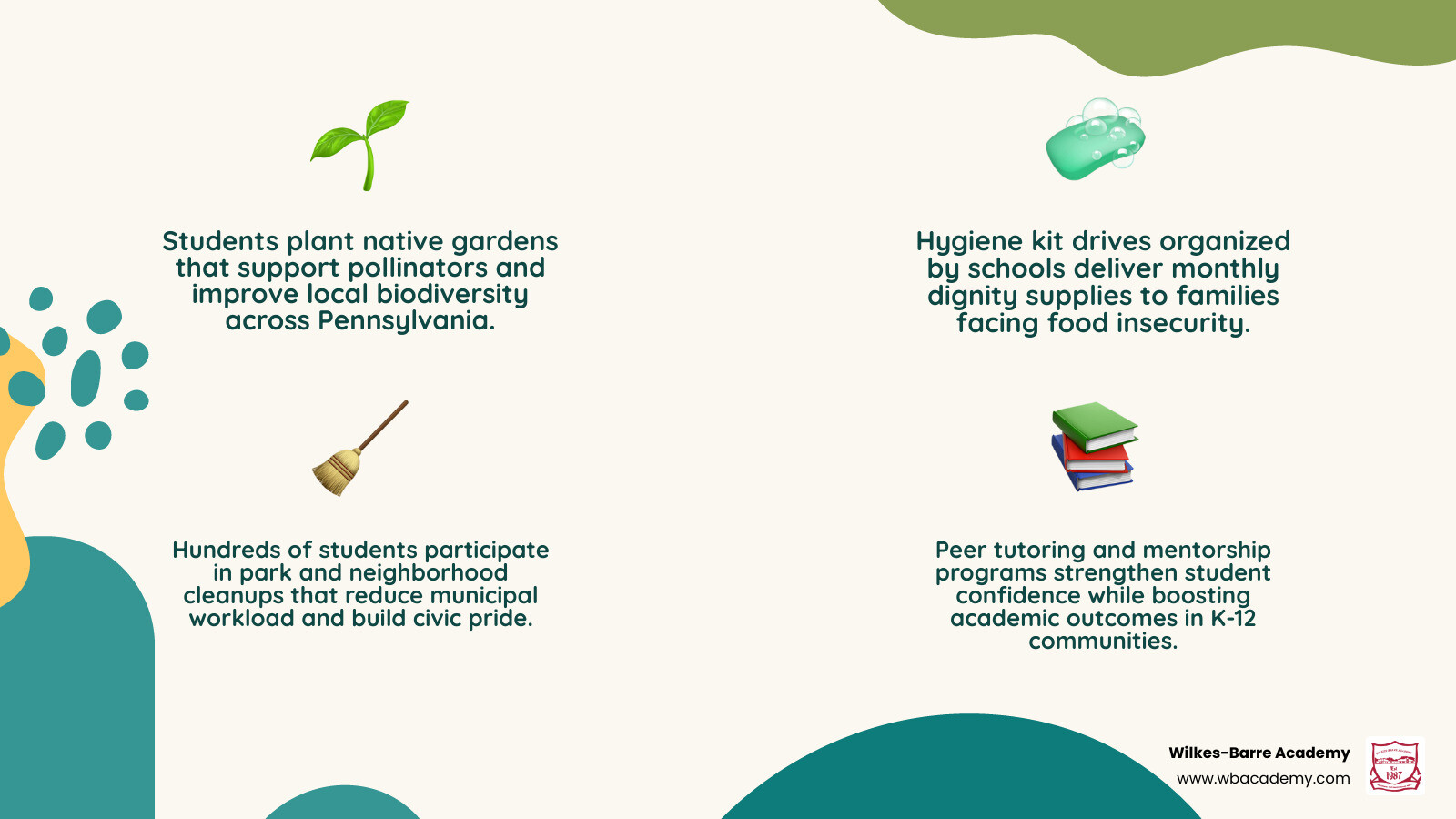
In recent months alone, hundreds of Pennsylvania students have cleaned up downtown streets, planted native pollinator gardens, stocked food pantries, and assembled hygiene kits for families in need — all while still in school.
This list covers the standout projects, the schools making it happen, and what families and educators can learn from them.
The Most Popular community service projects school pennsylvania Students Join
When families search for community service projects school pennsylvania, they usually want practical ideas students can actually do. The good news: Pennsylvania schools tend to choose projects that are visible, manageable, and meaningful.
Across the state, the most common school service projects include:
- Food drives for local pantries
- Hygiene kit assembly for families in need
- School or neighborhood cleanup days
- Beautification projects in parks, boroughs, and public spaces
- Native gardens and pollinator plantings
- Donation boxes for food, toiletries, or clothing
- Tutoring and mentoring younger students
- Civic action projects tied to real community needs
These projects vary by age group and by community type. Urban schools may focus more on hunger relief, neighborhood support, and advocacy. Suburban and small-town schools often combine food collection with environmental projects, downtown cleanups, or borough partnerships. In Northeastern Pennsylvania, schools and families also look for projects that fit smaller group sizes, local nonprofit needs, and school calendars.
One reason these projects are so common is simple: they work. Students can see the results. A cleaned park looks cleaner. A stocked pantry shelf looks fuller. A garden blooms. A hygiene kit gets packed. Even younger students understand, “We helped with that.”

| School Level | Common Project Types | Typical Setting | Why It Fits |
|---|---|---|---|
| Elementary | Food collections, kindness kits, cards for seniors, school garden help | Classroom, campus, local partners | Short, supervised, hands-on tasks |
| Middle School | Blessing boxes, advocacy letters, cleanup projects, environmental action | School grounds, neighborhoods, borough spaces | Builds ownership and connects learning to action |
| High School | Days of Service, mentoring, town beautification, large drives, leadership projects | Boroughs, nonprofits, parks, pantries | Supports independence, leadership, and planning |
Community service projects school pennsylvania schools run in cities, suburbs, and small towns
Pennsylvania is not one-size-fits-all, and school service reflects that.
In large cities, projects often address immediate community needs such as food insecurity, access to essentials, neighborhood safety, and after-school support. One standout middle school example showed students tackling hunger in two ways at once: direct help and public advocacy. Seventh graders created on-campus Blessing Boxes stocked with food and basic supplies, then delivered donations to local pantries each month. They also connected their work to civic learning by writing advocacy materials around hunger awareness.
In suburban communities, environmental action appears often. Native plant gardens, pollinator projects, and invasive-species removal are popular because schools can tie them to science, ecology, and stewardship. These projects also make sense logistically: students can work on school grounds or nearby public spaces without needing a huge travel budget.
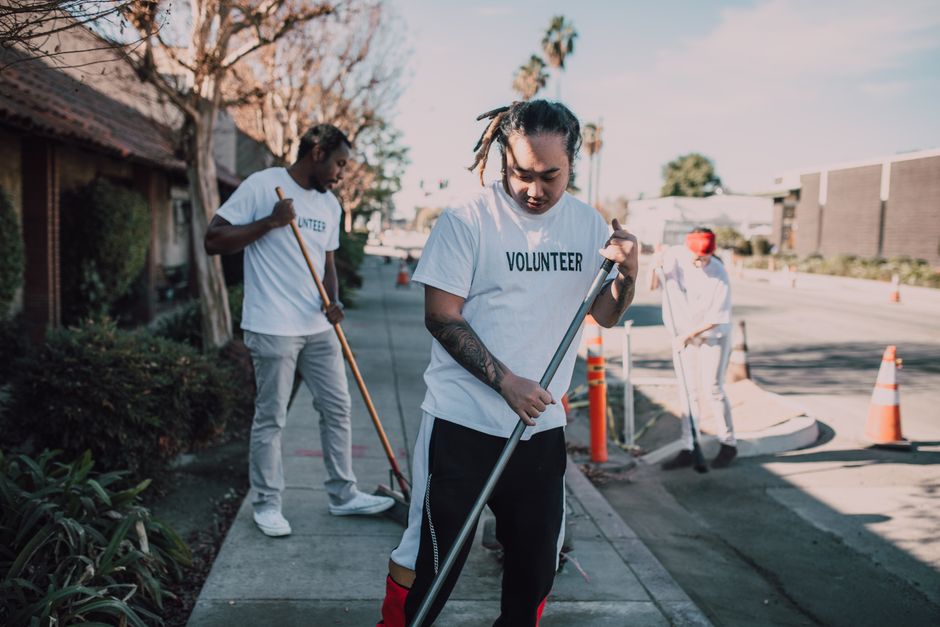
In small towns and boroughs, beautification projects stand out. Students help with mulching, planting, painting benches, litter pickup, and cleanup in visible downtown spaces. These projects often happen through partnerships with borough officials or public works teams. They are especially effective because the impact is immediate and very public. A town looks better by lunchtime. That is satisfying even for students who do not usually get excited about rakes, mulch, or “volunteer landscaping.”
How projects differ by grade level from elementary to high school
Grade level matters a lot.
Elementary students usually do best with simple, concrete projects:
- Collecting canned goods or toiletries
- Making cards for seniors, veterans, or hospital patients
- Helping with school-based gardens
- Packing simple care bags
- Participating in supervised campus cleanups
Middle school students are ready for more independence and more reflection. This is often where service learning gets interesting. Students can research a problem, talk about why it matters, then do something about it. Hunger projects, school pantry boxes, environmental campaigns, and awareness activities fit this age well.
High school students can handle large-scale service, student leadership, and recurring responsibilities. They may lead donation campaigns, coordinate volunteer teams, mentor younger children, or organize annual events. Some schools even build service into senior projects or leadership programs.
At Wilkes Barre Academy, this age-appropriate approach matters. As a single-location K-8 school with strong family-school connections, we know students participate best when service matches their stage of development. Families exploring Community Awareness Projects often find that younger students need structure, while older students thrive when given ownership.
How Pennsylvania Schools Organize and Promote Service Opportunities
Most successful service programs do not happen by accident. They are organized through a mix of school leadership, student ownership, family support, and community partnerships.
Common ways schools organize service include:
- Student councils choosing a service theme
- Faculty advisers leading service clubs
- Homerooms competing in donation drives
- Schoolwide Days of Service
- Family newsletters and email outreach
- Signup sheets for students and parent volunteers
- Assemblies or announcements tied to a cause
- Service-hour tracking for older students
Some schools run a few big annual events. Others build service into the year with monthly or seasonal projects. The strongest programs usually do both: one or two major signature events plus smaller recurring opportunities.
Promotion matters too. Students are more likely to join when schools explain:
- What the project is
- Who it helps
- What students will actually do
- How much time it takes
- How families can support it
That sounds obvious, but it is often the difference between a full signup board and six confused students standing near a pile of canned beans.

How community service projects school pennsylvania schools schedule during the year
Timing shapes participation.
Across Pennsylvania, schools often schedule service around familiar dates and seasons:
- January: MLK Day service events
- March and April: spring cleanup and environmental projects
- April: Earth Day activities, garden prep, litter removal
- Late spring: outdoor beautification and borough projects
- Fall: back-to-school drives, harvest donations, park cleanup
- November and December: holiday food and clothing drives
Recent news shows how powerful calendar-based service can be. Penn Wood High School’s Day of Service connected student volunteering to Martin Luther King Jr. Day by organizing the assembly of hygiene kits for families in need. That model is smart because it gives service a meaningful context, a clear deadline, and a shared purpose.
Other schools choose annual traditions. In Central Pennsylvania, Central Cambria High School’s “Brighten the ‘Burg’ project became a recurring community cleanup and beautification event. Participation reportedly topped 200 students and 18 staff members in 2026, showing how a student-created idea can grow into a school tradition.
How schools connect service to extracurricular life and student leadership
Service is often strongest when it is not isolated from school life.
Many Pennsylvania schools connect community work to:
- Environmental clubs
- Student government
- National honor-style recognition programs
- Athletics teams
- Advisory groups
- Faith-based or character education initiatives
- Leadership electives or capstone projects
This matters because extracurricular structures already provide adult oversight, team identity, and communication channels. It is easier to recruit students when service feels like part of school culture rather than an extra chore.
At Wilkes Barre Academy, we see service as part of the broader student experience, not a side note. Families can explore Extracurricular Activities and Student Activities to see how leadership, curiosity, and community-minded learning fit together. For K-8 students especially, service works best when it is woven into the rhythms of school life.
Standout Pennsylvania School Service Projects Making News
Recent Pennsylvania examples show just how varied school service can be. Some projects focus on downtown cleanup. Others tackle food insecurity. Others build environmental literacy through hands-on restoration.
What these projects share is a clear local need, strong student participation, and visible impact.
Student beautification projects that transform downtowns and neighborhoods
One of the clearest 2026 examples came from Ebensburg. According to the Altoona Mirror, more than 200 Central Cambria High School students and 18 staff members took part in the annual “Brighten the ‘Burg” initiative. Students worked across about 10 community locations doing tasks such as weeding, mulching, bench painting, and trash pickup.
The project is notable for several reasons:
- It was created by students
- Participation reportedly doubled from the prior year
- It involved borough collaboration
- It reduced the workload on local public works
- It made a visible difference in shared spaces
That is a strong model for any Pennsylvania school. Beautification projects are flexible, photo-friendly, and highly local. Students do not need advanced skills to help, but they still gain teamwork, responsibility, and pride in place.
For schools in and around Wilkes-Barre, similar ideas could include:
- Riverfront or park cleanup
- Seasonal campus beautification
- Community flower planting
- Downtown litter walks
- Bench, garden bed, or mural-area maintenance with local approval
Hunger relief and dignity-focused projects led by students
Food insecurity and access to basic essentials continue to shape school service across Pennsylvania.
A particularly thoughtful example came from middle school students in Philadelphia, who created Blessing Boxes on campus. These boxes offered free food and essentials for anyone who needed them, and students supported the effort with monthly deliveries to local pantries. What made the project stand out was its blend of direct aid and civic engagement. Students did not just give; they also learned about hunger as a public issue and participated in advocacy.
Another example came through a January 2026 Day of Service focused on hygiene kits. That project honored Dr. King’s legacy while supporting families through a local pantry partnership. Hygiene kits are a smart school service choice because they focus on dignity as well as need. Soap, toothpaste, deodorant, and other basics are small items that make a big difference.
These projects work especially well for K-8 schools because they can be scaled:
- Younger students can donate items
- Middle grades can sort and pack
- Older students can promote the drive, explain the cause, and help coordinate delivery
Environmental projects building stewardship and science awareness
Environmental service is one of the fastest-growing types of school community work because it aligns naturally with classroom learning.
A strong Pennsylvania example came from Montgomery County, where a volunteer-led project helped transform an overgrown high school area into a native pollinator garden. According to Penn State’s report on the native garden project, more than 250 native plants were added, and the lead volunteer had contributed more than 1,000 service hours over time through watershed and school garden work.
Why does this matter for schools?
- Native gardens support pollinators
- Deep-rooted plants can reduce runoff and erosion
- Gardens become outdoor teaching tools
- Students learn that environmental care is practical, not abstract
Another useful example appears in this biodiversity project in Wyomissing Borough, where students documented action around native planting, invasive-species removal, and bird-box observation. The scale was modest, but that is part of the appeal. Environmental service does not need to be huge to be real.
For K-8 students, some of the best environmental projects are the simplest:
- Pollinator pots
- Campus cleanups
- Tree and native shrub plantings
- Rain garden support
- Compost education
- Invasive plant removal with adult supervision
Why These Projects Matter for Students, Schools, and Communities
School service is not just “something nice to do.” When done well, it supports educational goals that families and schools already care about.
It can strengthen:
- Civic engagement
- Environmental awareness
- Communication skills
- Problem-solving
- Belonging and school culture
- Leadership habits
- Community trust
And yes, it can also make students put their phones down for an hour and discover that mulch is somehow everywhere once you touch it.
Student outcomes schools and families value most
The biggest student benefits tend to fall into a few categories.
First, service builds social-emotional skills. Students practice empathy when they learn who a project helps and why. They build confidence when they complete real tasks that matter. They improve teamwork because community service rarely works as a solo act.
Second, service strengthens communication. Students may need to explain a drive, invite donations, greet community partners, or present what they learned. That kind of communication is practical and memorable.
Third, service supports leadership and problem-solving. Students often need to adapt. What if it rains on cleanup day? What if the school collects more donations than expected? What if no one remembered tape for the poster board? Small obstacles become useful lessons.
For older students, service can also help with:
- Resume building
- Scholarship applications
- Recommendation letters
- Interviews
- Service-award eligibility
Some schools encourage students to document hours carefully because colleges and scholarship programs may value verified service records. Organized tracking also helps students reflect on what they learned, not just how long they volunteered.
Community outcomes that make service worth expanding
Communities benefit in obvious and less obvious ways.
The obvious benefits include:
- Cleaner public spaces
- Better-maintained gardens and parks
- More support for food pantries
- Greater access to hygiene items and essentials
- More volunteer energy for local events
Less obvious but equally important benefits include:
- Stronger relationships between schools and neighborhoods
- More trust between families and local organizations
- Positive visibility for student contributions
- Long-term stewardship of shared spaces
- Reduced pressure on small local agencies and municipal teams
The Ebensburg beautification example showed this clearly. When hundreds of students help across multiple sites, they do work that would otherwise take much longer for local crews. At the same time, the students begin to see their town not just as a place they pass through, but as a place they can improve.
That shift matters. It is often how civic responsibility begins.
Who Pennsylvania Schools Partner With and What Challenges They Face
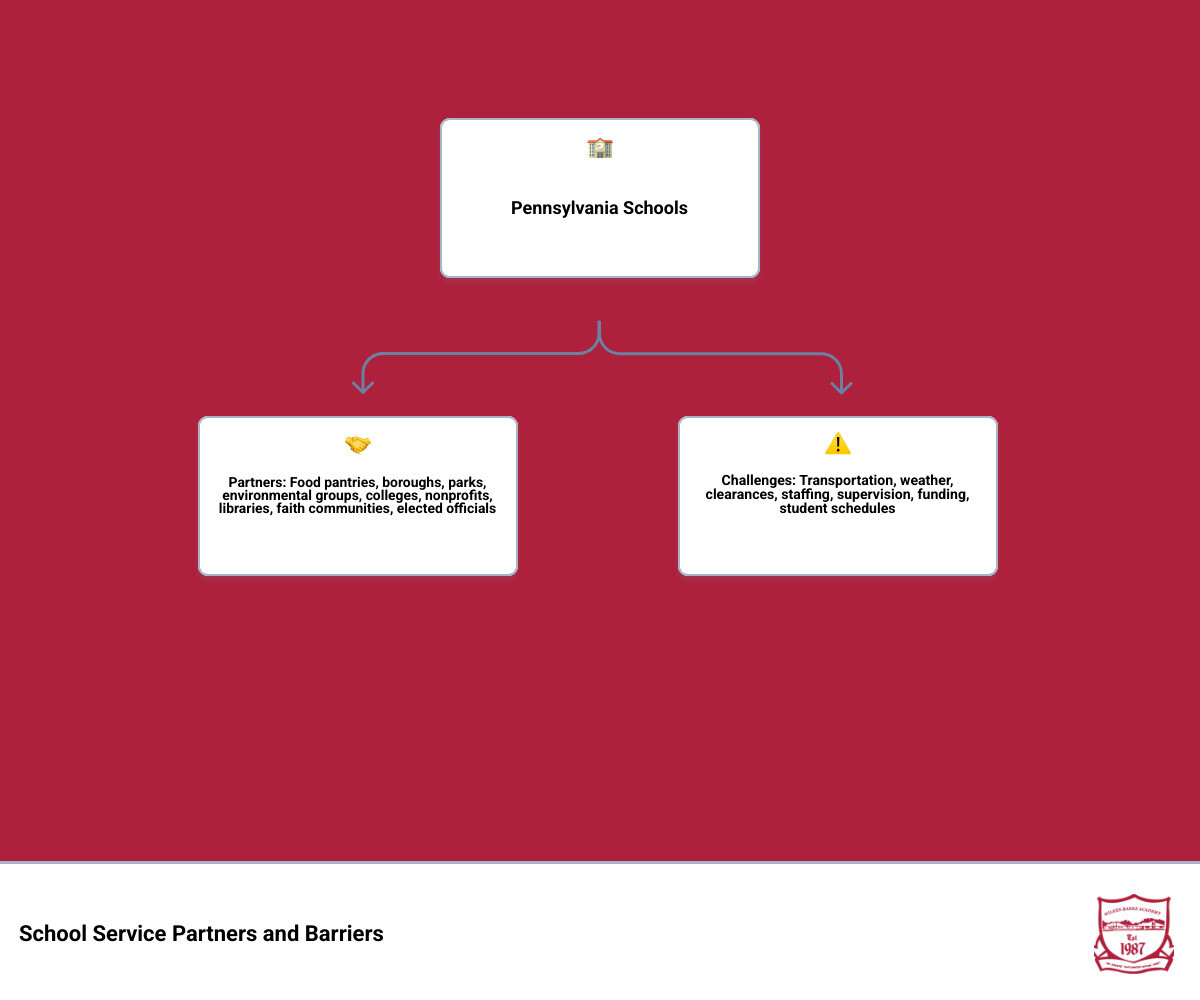
No school runs meaningful service alone for long. Partnerships help schools find projects, manage logistics, and ensure student work meets real community needs.
Common partners in Pennsylvania include:
- Food pantries
- Borough or township departments
- Parks and recreation offices
- Environmental advisory groups
- Colleges and universities
- Youth-serving nonprofits
- Libraries
- Faith communities
- Elected officials for advocacy-related projects
At the same time, service programs face real challenges. Good intentions do not magically solve transportation, weather, staffing, or clearance requirements.
Common partners that help schools scale service safely
Schools often succeed when they partner with organizations that already know the local need.
For career awareness, entrepreneurship, and youth engagement in our region, Junior Achievement of Northeastern Pennsylvania is one example of a community-facing organization that supports student growth. For older students seeking broader volunteer pathways, colleges can also help connect service-minded young people with local opportunities. In Northeastern Pennsylvania, Wilkes University’s volunteer opportunities page reflects the range of causes students may support, from education to food security.
Schools elsewhere in Pennsylvania have also partnered with:
- Local food pantries for donation and distribution
- Environmental councils for native gardens and watershed projects
- Borough officials for cleanup and beautification
- University programs for academically connected service
A major Pennsylvania example is the community partnership model at a local university, where academically based service supports neighborhood education and community improvement. While that is a university setting, the principle applies in K-8 too: service is strongest when learning and community need are connected.
The biggest barriers to expanding school service programs in Pennsylvania
Even the best ideas hit roadblocks.
Common barriers include:
- Volunteer clearances and background-check requirements for adults
- Transportation to off-campus sites
- Staffing ratios and supervision
- Weather for outdoor events
- Cost of materials such as mulch, gloves, plants, boxes, or hygiene items
- Busy student schedules
- Maintaining momentum after a one-time event
Pennsylvania schools also have to think carefully about safety and compliance. In some districts, adult volunteers need clearances before they can regularly support school activities. That can slow things down, especially for field-based projects.
Continuity is another challenge. A great project can fade if it depends on one enthusiastic student or one especially organized teacher. The strongest programs build systems:
- Annual calendar slots
- Student leadership handoff
- Family communication plans
- Partner relationships that continue year to year
- Simple documentation of what worked
That is one reason close-knit schools may have an advantage. In a smaller school community, it can be easier to sustain projects because communication is personal and families feel directly involved.
How schools recognize and incentivize participation
Recognition helps service grow.
Pennsylvania schools commonly encourage participation through:
- Service-hour logs
- Certificates
- Assemblies or end-of-year recognition
- Student spotlights in newsletters
- Recommendation letters
- Class competitions
- Leadership awards
- Graduation honors for older students
Recognition does not have to be flashy. Often the most effective approach is simple and specific: show students that their effort mattered. Share photos. Thank them publicly. Tell the story of the impact.
At Wilkes Barre Academy, we believe students respond best when service feels meaningful rather than performative. Families interested in how community-minded learning fits into student life can explore Community Awareness Projects.
Frequently Asked Questions About community service projects school pennsylvania
What are easy community service projects for Pennsylvania elementary and middle school students?
For elementary students:
- Food or toiletry collections
- Cards for seniors or hospital patients
- Classroom supply drives
- School garden watering and planting
- Litter cleanup on campus
- Kindness kits for community helpers
For middle school students:
- Pantry or Blessing Box projects
- Hygiene kit assembly
- Advocacy posters or letters tied to a real issue
- Park cleanup
- Pollinator planting
- Recycling and compost awareness campaigns
The best projects are short, safe, hands-on, and clearly connected to a local need.
How do students find volunteer opportunities near their school?
Students usually find the best opportunities through:
- School counselors or advisers
- Service clubs and student groups
- School newsletters
- Family-school networks
- Borough event calendars
- Local nonprofits and community organizations
- Seasonal drives hosted by schools or churches
For our local school community, it also helps to start with what is already part of school life. Service opportunities are often easier to join when they connect to existing student activities, family outreach, or community awareness efforts.
Do Pennsylvania schools require service hours?
There is no single statewide rule requiring service hours for every Pennsylvania student. Policies vary by school. Some private schools and districts strongly encourage service, some track hours for recognition, and others make service part of a club, leadership program, or graduation honor rather than a universal requirement.
In practice, many schools treat service as highly encouraged even when it is not mandatory. That approach can work well in K-8 settings, where the goal is often to build habits of empathy, citizenship, and local responsibility rather than just log hours on a form.
Conclusion
Pennsylvania students are proving that community service does not need to wait until adulthood. It can start with a garden bed, a cleanup bucket, a pantry box, a stack of hygiene kits, or a handwritten letter about a problem that matters.
The strongest community service projects school pennsylvania schools support all have something in common: students can see the people and places they are helping. That makes the work real. It also makes the lessons stick.
At Wilkes Barre Academy, we value that kind of close-to-home impact. As a single-location, close-knit K-8 school in Wilkes-Barre, we know students thrive when they are known well, challenged academically, and invited to contribute to the world around them. If you would like to learn more about who we are and how we build a culture of curiosity, character, and engagement, visit Our Story, About Wilkes Barre Academy, and Extracurricular Activities.
Small projects really do add up. One student, one class, one school, one neighborhood at a time.