A Practical Guide to Safe School Environment Pennsylvania
Why a Safe School Environment in Pennsylvania Matters for Every Family
Creating a safe school environment in Pennsylvania is one of the most important responsibilities shared by educators, administrators, and families alike. And yet, for many parents, it can feel like a black box — hard to evaluate, harder to influence.
Here is a quick overview of what Pennsylvania schools are expected to do to keep students safe:
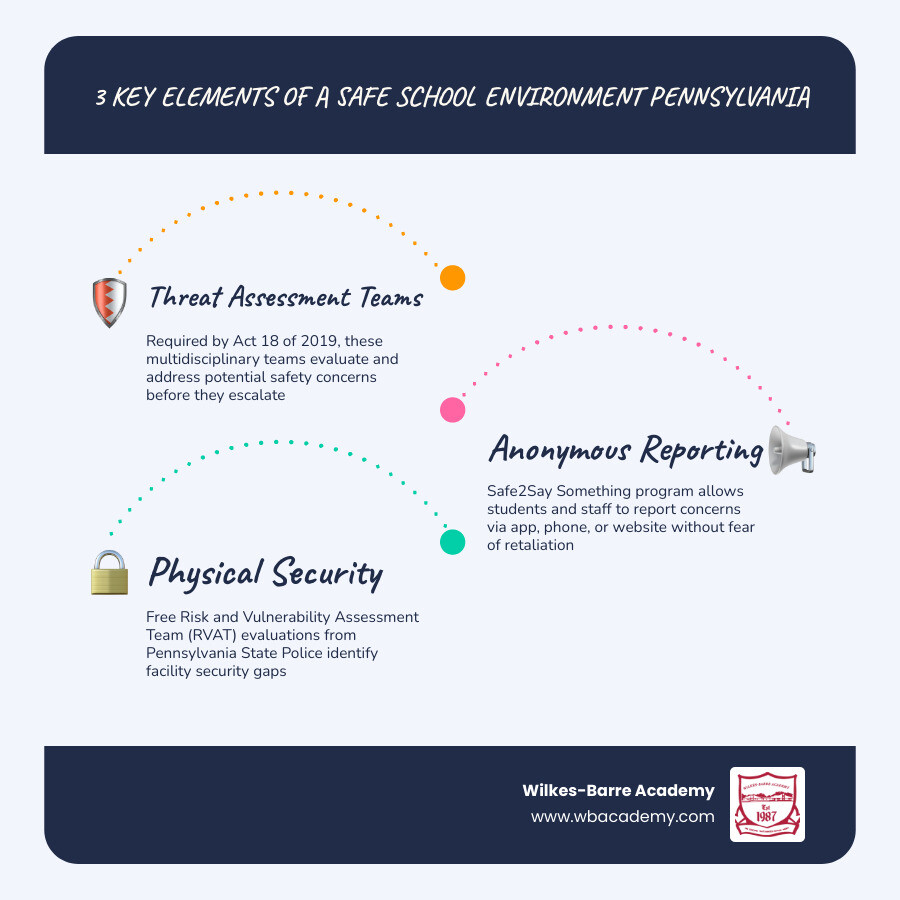
Key elements of a safe school environment in Pennsylvania:
- Threat assessment teams — Required by law for all Pennsylvania school entities under Act 18 of 2019
- Anonymous reporting — The Safe2Say Something program lets students and staff report concerns via app, phone, or website
- Physical security assessments — Schools can request a free evaluation from the Pennsylvania State Police Risk and Vulnerability Assessment Team (RVAT)
- Behavioral health support — Student Assistance Programs (SAP), school counselors, and trauma-informed practices are part of the state framework
- Environmental safety — Schools must address hazards like radon, lead, and mold that affect student health
- Legal compliance — Acts like Act 57, Act 110, and the Pennsylvania Human Relations Act set clear obligations for discipline, staffing, and anti-harassment
- Grants and funding — The Pennsylvania Commission on Crime and Delinquency (PCCD) offers School Safety and Mental Health Grants to help schools improve
Pennsylvania has over 500 public school districts and more than 170 public charter schools — each one responsible for meeting these standards. But standards on paper only go so far.
The real question for parents is simple: Is my child’s school actually doing these things?
This guide breaks down exactly what Pennsylvania law requires, what best practices look like in action, and how schools like Wilkes-Barre Academy approach safety in a way that goes beyond a checklist.
State Agencies and Legal Mandates for Pennsylvania Schools
In Pennsylvania, school safety isn’t managed by a single office; it’s a collaborative effort between several heavy-hitting state agencies. The Pennsylvania Department of Education (PDE), the Pennsylvania Commission on Crime and Delinquency (PCCD), and the Pennsylvania State Police (PSP) work together to create a web of protection for our students.
Navigating the legal landscape can feel like alphabet soup, but a few key laws form the backbone of a safe school environment pennsylvania:
- Act 57 and Act 110: These acts introduced critical changes to how schools handle personnel and student discipline. Under Act 57 and Act 110, schools must maintain rigorous employment records for school police and security officers. If an officer leaves, the school must submit separation records to the Municipal Police Officers’ Education and Training Commission (MPOETC) within 15 days.
- Student Discipline and Safety: Act 110 specifically addresses sexual assault convictions. If a student is convicted or adjudicated delinquent of sexual assault, the school must take action—often involving expulsion, transfer, or reassignment—to ensure the offender is not educated or transported alongside the victim.
- The Pennsylvania Human Relations Act (PHRA): This law ensures that every child can learn in an environment free from discrimination. The PHRC Issues New Guidance on Harassment and Bullying in Schools to clarify that schools are legally obligated to act if they “knew or should have known” about discriminatory harassment based on race, religion, disability, or gender.
At Wilkes-Barre Academy, we take these mandates seriously, ensuring our policies remain in Civil Rights Accordance to protect our diverse community.
Implementing a Safe School Environment Pennsylvania Strategy
Building a truly safe school environment pennsylvania requires moving from reactive “fire-fighting” to proactive planning. This starts with a multidisciplinary approach to threat assessment and risk management.
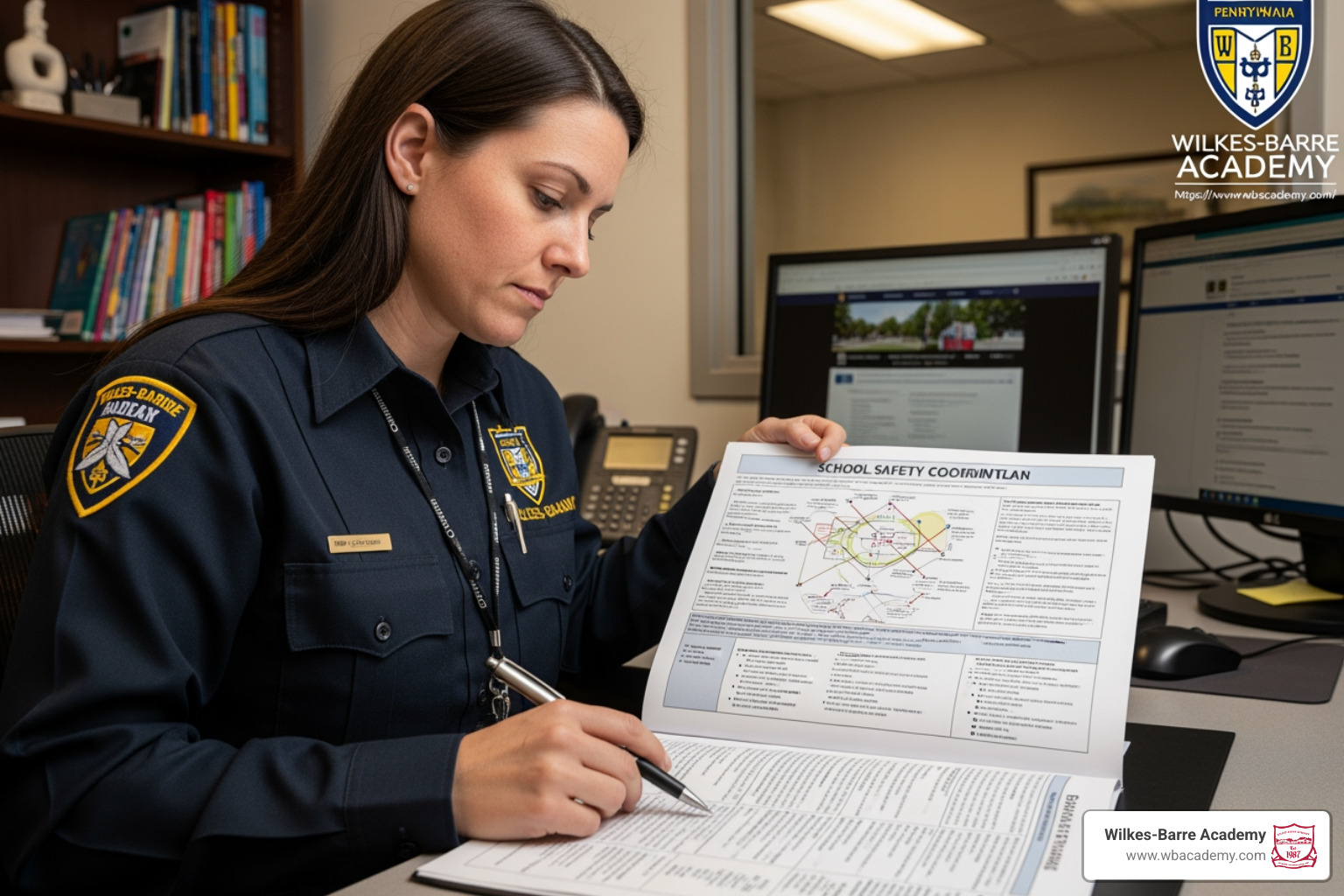
The Power of Threat Assessments
Under Article XIII-E of the Public School Code (introduced by Act 18 of 2019), all Pennsylvania school entities are required to establish Threat Assessments teams. These teams don’t just wait for something bad to happen; they identify, report, and evaluate potential threats to prevent violence before it starts.
We also utilize tools like Safe2Say Something, an anonymous reporting system that allows students to voice concerns without fear of retaliation. Additionally, the Pennsylvania State Police offer Risk and Vulnerability Assessment Teams (RVAT), which provide free, comprehensive physical security evaluations to schools while they are in session.
Understanding Security Criteria
The PCCD has developed a tiered system to help schools understand where they stand. This allows us to prioritize improvements based on need and available funding.
| Criteria Level | Focus Area | Description |
|---|---|---|
| Level 1 | Baseline | Essential safety measures, including basic Student Safety & Security Awareness and entry controls. |
| Level 2 | Intermediate | Enhanced physical security, regular drills, and integrated behavioral health supports. |
| Level 3 | Advanced | High-level technological integration, specialized training, and comprehensive community partnerships. |
Best Practices for a Safe School Environment Pennsylvania
A plan is only as good as its communication. We believe that a safe school environment pennsylvania thrives on transparency.
- Multidisciplinary Teams: Safety isn’t just for guards. It involves teachers, counselors, and administrators.
- Information Sharing: Utilizing tools like our Parent Portal Communication Tool ensures that families are kept in the loop regarding safety protocols and emergency updates.
- Confidentiality: While we share information to keep kids safe, we strictly adhere to confidentiality protocols to protect student privacy.
Steps to Creating Effective Health and Safety Programs
If you are an administrator or a concerned parent looking to improve your school’s standing, follow these steps:
- Comprehensive Assessment: Use the official School Safety and Security Assessment Criteria to identify gaps.
- Resource Mapping: Determine what mental health and physical security assets you already have.
- Policy Development: Create written procedures for everything from fire drills to suicide prevention.
- Staff Training: Ensure every adult in the building knows their role in an emergency.
- Continuous Monitoring: Safety is a moving target; review your plans at least every three years.
Environmental Health and Physical Security Standards
When we talk about a safe school environment pennsylvania, we often think of “locks and clocks,” but environmental health is just as vital. A student can’t learn if the air they breathe or the water they drink is making them sick.

Recent studies have highlighted significant challenges in Pennsylvania’s aging school infrastructure. For example, research conducted between 2018 and 2022 found that 75% of Pennsylvania schools that tested for radon found levels exceeding federal action limits. Furthermore, 52.3% of schools tested for lead in drinking water showed exceedances, yet only 11.3% of those schools performed remediation.
In Wilkes-Barre, we coordinate with local agencies like the Bureau of Environmental Health Services | Wilkes-Barre, PA to monitor local conditions. Schools are encouraged to adopt a “filter-first” approach for lead and implement green cleaning practices to lower the state’s average asthma rate of 13.9%—which is nearly double the national average.
Physical security is the other side of this coin. The Safe Schools | Department of Education | Commonwealth of Pennsylvania provides resources for physical security grants, allowing schools to upgrade doors, windows, and surveillance systems to meet modern standards.
Safety Protocols for Vocational and Technical Settings
Career and Technical Education (CTE) programs face unique risks. Whether it’s an automotive shop or a culinary lab, these environments mimic professional workplaces, complete with heavy machinery and hazardous materials.
Pennsylvania has over 80 different classifications of instructional programs (CIPs) in CTE, each with its own set of hazards. Statistics show that teens are at a higher risk of work-related injuries than adults. Alarmingly, one study found that 50% of CTE professionals in Pennsylvania permitted students to participate in labs without earning 100% on a safety evaluation. This is a gap that must be closed to maintain a safe school environment pennsylvania.
The 3 E’s of Safety
To prevent accidents, CTE programs should follow the “Three E’s”:
- Engineering: Designing workstations that are barrier-free and ensuring all machinery has proper guards.
- Education: Instructing students on the “why” behind safety rules.
- Enforcement: Zero tolerance for unsafe acts.
We also look to Heinrich’s Domino Theory, which suggests that 88% of industrial accidents are caused by unsafe acts, not just faulty equipment. By focusing on student behavior and proper training, we can stop the “domino effect” that leads to injury.
Maintaining a Safe School Environment Pennsylvania in CTE
- Eye Safety Act: Pennsylvania law requires industrial-quality eye protection in hazardous settings.
- PPE and Housekeeping: Proper personal protective equipment and a clean workspace are non-negotiable.
- Fire and Panic Act: Strict adherence to fire safety and clear exit paths is required by state law.
Mental Health, SEL, and Trauma-Informed Climate
A school can have the strongest locks in the world, but if the students inside are struggling with mental health, it isn’t truly safe. A safe school environment pennsylvania must prioritize psychological and emotional wellbeing.
Our School Handbook & Wellness policies emphasize the importance of the Student Assistance Program (SAP). SAP teams are multidisciplinary groups that help identify students struggling with mental health or substance abuse issues.
Recommended Staffing Ratios for Mental Health:
- School Counselors: 1 per 250 students.
- School Psychologists: 1 per 500 students.
- School Nurses: 1 per 750 regular education students.
Pennsylvania schools are also moving toward Trauma-Informed Learning. This approach recognizes that many students carry “invisible backpacks” of stress or trauma. By creating a supportive climate, we reduce the likelihood of behavioral outbursts and improve academic outcomes. Programs like Positive Behavior Support (PBIS) and the use of PAYS data (Pennsylvania Youth Survey) help us track the social-emotional health of our student body and adjust our support strategies accordingly.
Frequently Asked Questions about Pennsylvania School Safety
What are the requirements for threat assessment teams in PA?
Under Act 18 of 2019, every school entity in Pennsylvania must have at least one threat assessment team. These teams must include individuals with expertise in school administration, instruction, counseling, and law enforcement. They are responsible for evaluating threats and implementing intervention plans.
How can schools access grants for security and mental health?
The PCCD manages the School Safety and Mental Health Grant Program. Schools can apply for funding to improve physical security (like cameras or reinforced entries) and to hire mental health professionals or implement suicide prevention programs.
What environmental testing is mandatory for Pennsylvania schools?
While many environmental tests are highly recommended, mandates vary. However, state guidance strongly encourages regular testing for lead in water and radon. Under Act 35, schools must also report on their Automatic External Defibrillator (AED) programs to ensure they are prepared for cardiac emergencies.
Conclusion
Creating and maintaining a safe school environment pennsylvania is a continuous journey, not a destination. It requires the vigilance of the state police, the dedication of our teachers, and the active participation of our families.
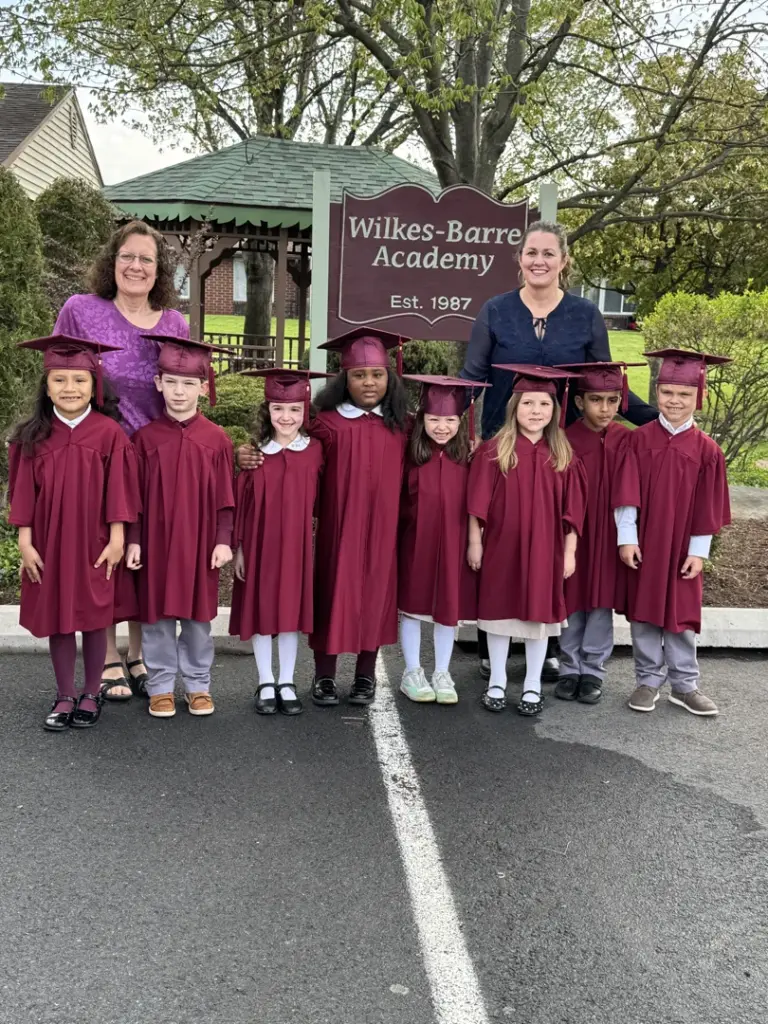
At Wilkes-Barre Academy, we pride ourselves on being more than just a school; we are a community. Our About Wilkes Barre Academy page highlights how our single-classroom-per-grade model allows for individualized learning and strong family-school connections. This close-knit atmosphere is our greatest safety asset—when every teacher knows every student, concerns are caught early, and every child feels seen and supported.
For more information on how we keep our students protected, please explore our resources on student safety services. Together, we can ensure that Pennsylvania schools remain places of growth, discovery, and, above all, safety.