The Complete Guide to What Private School Tuition Includes
What Private School Tuition Usually Includes
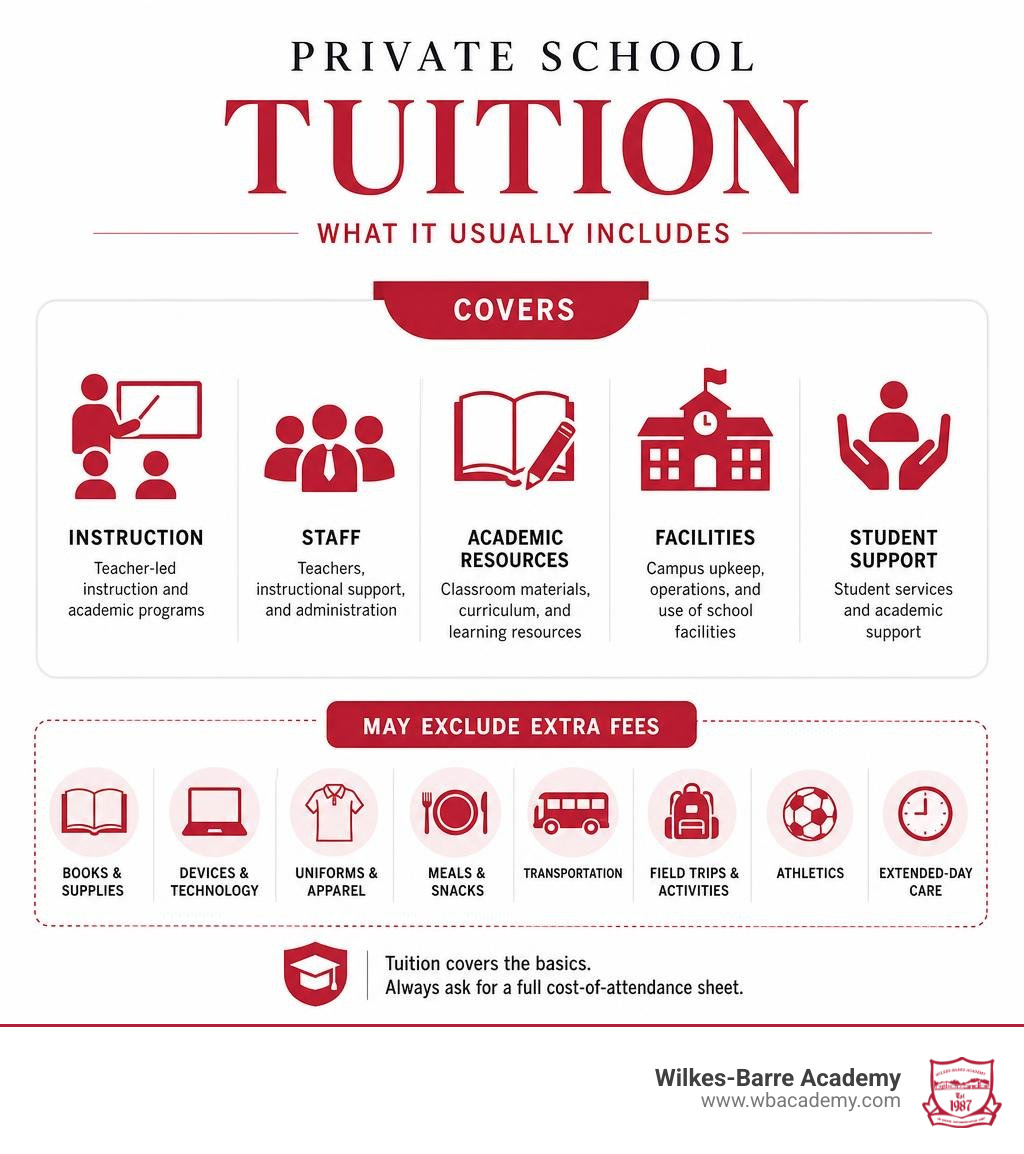
Private school tuition usually pays for the school’s core educational operation: teacher-led instruction, academic programs, classroom resources, student support, campus upkeep, and administration. It may also include some standard activities or use of school facilities.
But the answer to what does private school tuition include is not the same at every school. Families should ask for a full cost-of-attendance sheet before enrolling. Books, devices, uniforms, meals, transportation, field trips, athletics, and extended-day care are often billed separately.
At many independent schools, the largest share of tuition supports the people who teach and run the school. Industry data shows that 53.4% goes to teachers, instructional support, staff, and administrators, while another 12.7% supports employee benefits and payroll taxes.
The published tuition rate is important, but it is not always the full annual price. This guide explains what tuition funds, which costs may be extra, and how to compare a school’s sticker price with the amount your family may actually pay.
Exactly What Does Private School Tuition Include?
When you write a tuition check, where does that money actually go? Because private and non-profit independent schools do not receive direct public tax funding, tuition represents the primary lifeblood of the entire educational ecosystem.
Every dollar is intentionally budgeted to maintain academic rigor, institutional stability, and student safety. Looking at nationwide benchmarks across independent schools, tuition allocations break down into very specific operational categories:
- 53.4% goes directly toward paying teachers, instructional support, essential staff, and school administrators.
- 12.7% covers faculty benefits, healthcare, and mandatory payroll taxes.
- 2.13% pays for routine building maintenance and school repairs.
- 0.90% supports athletic departments and physical education equipment.
- 0.55% is dedicated to ongoing employee development and teacher training.
- The remaining balance covers utilities, insurance, campus safety infrastructure, classroom materials, and institutional overhead.
To help you understand how day-to-day operations match up with billing statements, here is a breakdown comparing standard tuition coverage against fees that schools often bill separately:
| Category | Standard Tuition Typically Covers | Frequently Excluded (Billed Separately) |
|---|---|---|
| Academic Instruction | Certified faculty salaries, core curriculum delivery, classroom instruction, and basic grading systems. | Private tutoring, specialized remedial services, AP/standardized exam fees, and dual-enrollment credits. |
| Learning Materials | In-class consumable supplies, shared educational tools, laboratory specimens, and library resources. | Physical textbooks, personal digital device purchases (1:1 laptops/tablets), and personal stationery. |
| Campus Facilities | Building utilities, classroom climate control, campus security personnel, and facility sanitation. | Capital improvement assessments, building fund contributions, and non-refundable registration deposits. |
| Extracurriculars | Recess supervision, standard physical education, on-campus arts programs, and general school assemblies. | Interscholastic athletic team fees, competition travel, specialized instrument rentals, and club dues. |
| Student Life | Basic wellness services, recess amenities, and designated academic counseling. | Daily cafeteria meal plans, morning/afternoon bus transportation, school uniforms, and extended care. |
Core Academic Instruction: What Does Private School Tuition Include in the Classroom?
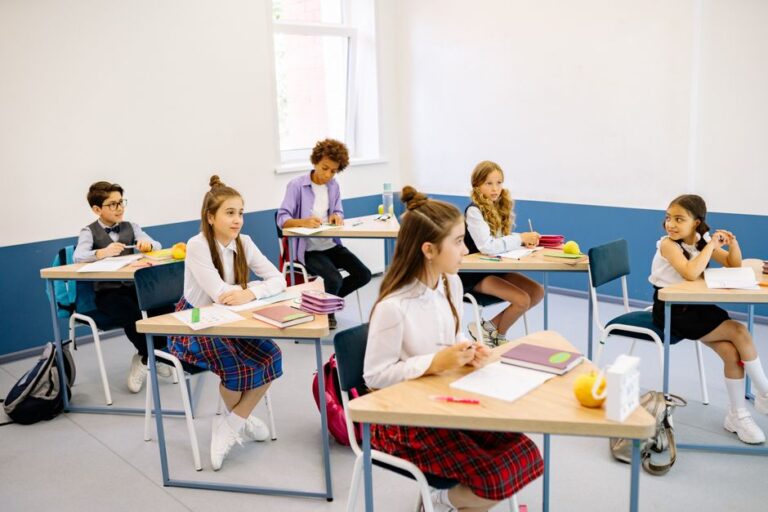
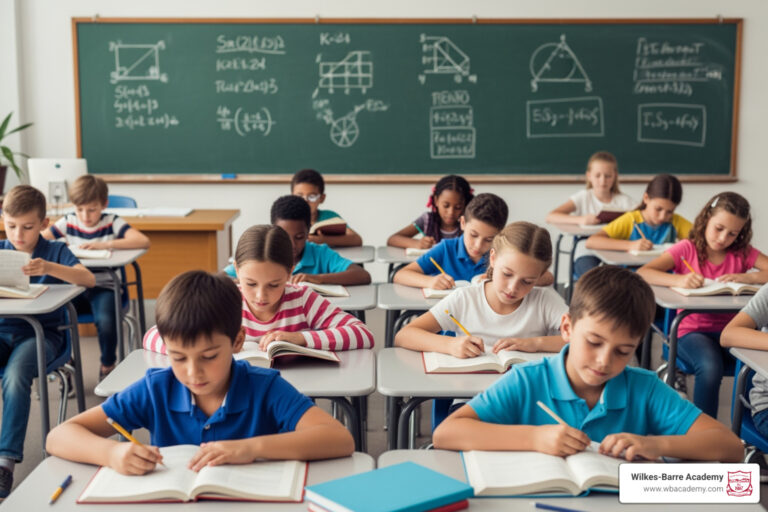
At its heart, tuition exists to fund the educational experience happening inside the classroom walls every day. When you examine the Average Private School Tuition Cost in 2026, you will find that the national average sits near $14,100 per year ($12,500 for elementary programs and $16,200 for secondary schools). A major reason parents seek out private education is the low student-to-teacher ratio—often hovering at 8:1 to 12:1 compared to much higher ratios in crowded public classrooms.
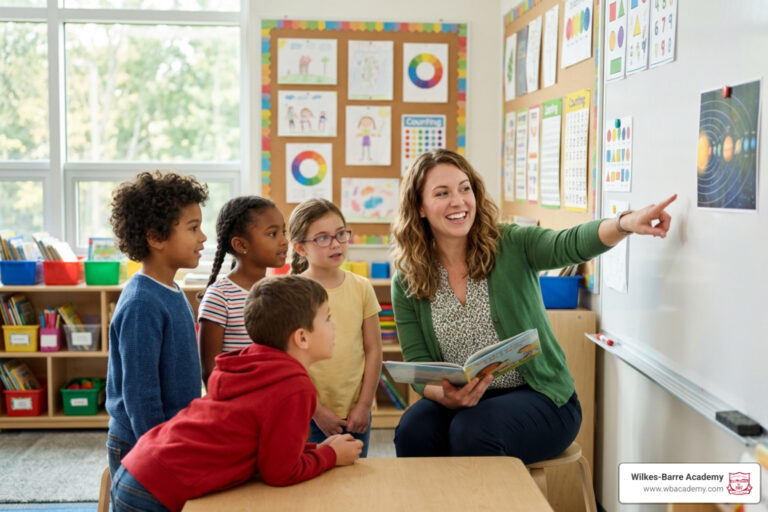
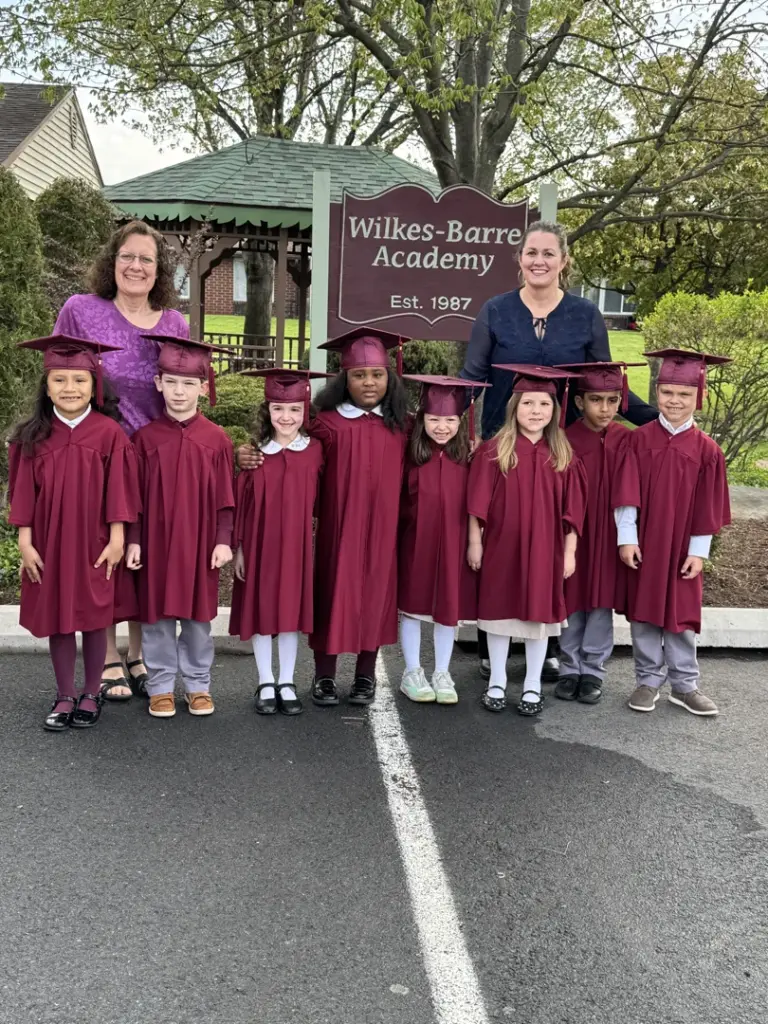
At Wilkes-Barre Academy, our educational philosophy centers on providing a single classroom per grade. This intentional design allows our dedicated teachers to build deep, individualized relationships with every child, tailoring daily instruction to match personal strengths while catching learning gaps before they widen.
Core instruction covered by tuition includes:
- Comprehensive curriculum delivery across mathematics, language arts, science, social studies, and foreign language instruction.
- Continuous student progress monitoring, report cards, and scheduled parent-teacher conferences.
- Daily classroom management led by passionate educators who are supported by regular professional development.
- Enrichment classes such as visual arts, vocal music, physical education, and foundational STEM instruction.
Campus Facilities, Security, and Student Support
Running an educational institution requires safe, modern physical spaces. Tuition dollars keep the lights on, the heat running through chilly Pennsylvania winters, and the campus environment safe and welcoming.
Specifically, tuition allocations help maintain:
- Campus Safety Infrastructure: Controlled access entryways, visitor screening protocols, updated fire safety systems, and trained safety staff.
- Educational Facilities: Science labs equipped for hands-on experiments, libraries stocked with curated reading collections, computer workspaces, and outdoor playgrounds.
- Facility Hygiene and Care: Daily custodial services, regular sanitization, structural maintenance, and seasonal groundskeeping.
- Student Services: School nursing care, basic first-aid supplies, social-emotional development programs, and foundational academic counseling.
Beyond the Sticker Price: Hidden and Additional Fees

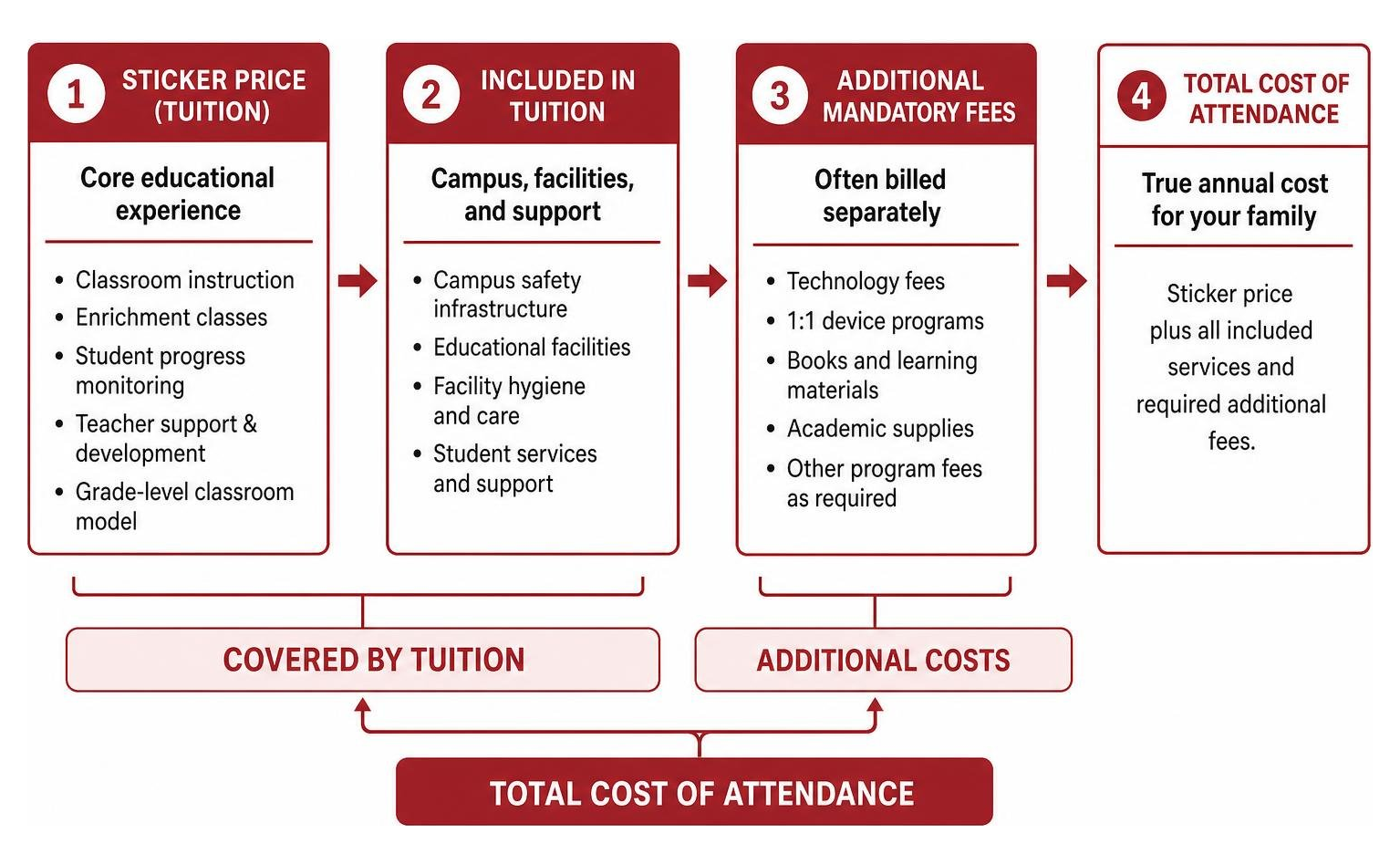
When reviewing prospective schools, looking only at the published “sticker price” can lead to budget surprises. While some schools bundle almost everything into one comprehensive rate, many private institutions separate non-instructional services into distinct, mandatory line items. Depending on the grade level and institutional policies, out-of-pocket costs can add anywhere from $1,000 to $5,000 annually.
According to insights from Costs of Private School in 2026, families should review fee schedules thoroughly to calculate their family’s true total cost of attendance.
Technology, Books, and Academic Supplies
In modern learning environments, technology and physical media are central to the student experience. Depending on the school, these tools may or may not be wrapped into your tuition contract:
- Technology Fees: Many private schools assess an annual technology fee ranging from $300 to $800 to cover software licensing, learning management platforms, campus Wi-Fi networks, and digital security.
- 1:1 Device Programs: Some middle and high school programs require families to purchase a specific laptop, Chromebook, or iPad model outright, or pay an annual hardware leasing fee ($500 to $1,200).
- Textbooks and Workbooks: While primary elementary grades frequently include consumable workbooks in base tuition, upper elementary and secondary schools often require parents to buy or rent physical textbooks and digital access codes, totaling $300 to $1,000 annually.
- Classroom Supply Lists: Standard beginning-of-the-year items—binders, organizers, art sketchbooks, and scientific calculators—remain the responsibility of the family.
Extracurriculars, Uniforms, and Transportation
Beyond the academic day, everyday student life brings additional expenses that you will want to factor into your annual planning:
- Uniforms and Dress Codes: Most private schools require formal uniform sets. Starter packages from approved uniform retailers generally run between $400 and $800 per student, with annual replacements needed as children grow.
- Transportation Services: Because private schools rarely receive municipal bus routing outside local public school catchment zones, private shuttle or bus services generally require an optional transportation contract ranging from $1,000 to $3,500 per academic year.
- Dining and Meal Plans: Unless a school operates an all-inclusive boarding program, lunch is rarely included in day school tuition. Families either pack lunches daily or purchase hot meal plans averaging $1,000 to $1,500 annually.
- Athletics and Performing Arts: While basic physical education is covered by tuition, participation in competitive interscholastic sports teams, specialized drama productions, or music ensemble trips often incurs separate participation fees ($100 to $500 per activity).
- Extended Day Care: For working parents, before-school care and after-school enrichment programs are lifesavers. These services are traditionally billed at an hourly rate or flat monthly fee, adding $1,500 to $4,000 per year.
How Tuition Coverage Varies by Grade Level and School Type
Private school costs are not static; they shift significantly based on your child’s age and the operational model of the school you choose. For a deeper look at institutional finances, consider our guide on investing in education at Pennsylvania non-profit private schools.
Day Schools vs. Boarding Schools: What Does Private School Tuition Include by Model?
The largest structural divide in private education pricing exists between commuter day schools and residential boarding schools:
- Independent Day Schools: Day schools focus resources purely on the daytime academic and co-curricular experience. Day school tuition ranges broadly from $10,000 to $35,000+ depending on grade level and region. Tuition covers instruction, academic support, and campus facilities during normal school hours.
- Boarding Schools (5-Day and 7-Day): Boarding schools operate 24/7 residential communities. Their tuition—which averages $55,425 for five-day programs and $69,150 to $76,000+ for seven-day programs—bundles tuition with full room and board, three daily meals, evening study halls, residential dorm supervision, weekend activities, and campus health center access.
Religious Parochial Schools vs. Independent Secular Academies
Governance and funding models also create major variations in tuition rates:
- Parochial and Diocesan Schools: Catholic and faith-based schools often post substantially lower average tuition rates ($4,800 to $12,000). These schools receive direct financial subsidies from their founding parish, diocese, or religious community, keeping parent tuition artificially lower than the actual per-pupil operating cost.
- Independent Non-Profit Schools: Non-profit academies rely almost entirely on tuition revenue, annual fund donations, and philanthropic gifts. As detailed in our breakdown on how much is private school in PA, Pennsylvania private school tuition averages $14,807 overall ($13,077 for elementary grades and $19,139 for secondary programs). These institutions invest heavily in low student-teacher ratios, advanced curricula, and modern campus resources.
Financial Aid, Tax Benefits, and Affordability Strategies

Many families assume that independent education is out of reach based on headline prices alone. However, you should never evaluate affordability on sticker price alone. If you have ever wondered can you actually afford private school in Pennsylvania, the answer often lies in navigating financial aid, state tax credits, and specialized education savings accounts.
Nationwide, a median of 26.4% of private school students receive need-based financial assistance, with median grant awards reaching $22,308 per recipient.
State Tax Credits and School Choice Programs
In Pennsylvania, state-sponsored tax credit initiatives provide substantial tuition relief directly to eligible families:
- Educational Improvement Tax Credit (EITC): Through the state’s popular program, businesses contribute tax dollars toward scholarship organizations. Families can apply for an EITC grant to directly offset tuition costs based on household income guidelines.
- Opportunity Scholarship Tax Credit (OSTC): For families residing within the boundaries of underperforming public school attendance zones, the OSTC program awards targeted tuition scholarships to attend approved non-public schools.
- State Vouchers and Choice Initiatives: Explore available options through our overview of the voucher program to see how state school choice legislation helps bridge the tuition gap.
Tax-Advantaged Education Accounts and Deductions
Smart tax planning helps families maximize every tuition dollar:
- 529 Education Savings Plans: Federal tax law allows parents to withdraw up to $10,000 to $20,000 per year per student tax-free from a state 529 plan to pay for qualified K-12 private school tuition.
- Coverdell Education Savings Accounts (ESAs): While annual contributions are capped at $2,000 per beneficiary, Coverdell accounts offer exceptional versatility. Funds can be withdrawn 100% tax-free to cover not just tuition, but also mandatory uniforms, books, tutoring, and transportation.
- Dependent Care FSAs and Tax Credits: While K-12 academic tuition cannot be claimed under the Child and Dependent Care Credit, payments for qualified before-school care, after-school programs, and summer day camps for children under age 13 can be paid using pre-tax Dependent Care Flexible Spending Account (DCFSA) funds.
- Medical Expense Deductions: In specific cases where a child attends a specialized private school on the written recommendation of a physician to address diagnosed learning differences, tuition and related therapeutic services may qualify as deductible medical expenses on federal tax returns (subject to the 7.5% AGI threshold).
Frequently Asked Questions About Private School Tuition
Does private school tuition include lunch and transportation?
At most private day schools, lunch and daily transportation are not included in base tuition. Transportation is typically billed as an optional service ($1,000 to $3,500/year) based on your geographic zone, while hot lunch programs are purchased via prepaid meal accounts ($1,000 to $1,500/year). In contrast, boarding school tuition includes full dining plans and campus shuttle transport as part of the residential room-and-board package.
Why does private high school tuition cost more than elementary school?
Private secondary schools are almost universally more expensive than elementary schools due to higher operational demands:
- Specialized Lab Facilities: Advanced biology, chemistry, and physics classes require expensive scientific equipment, safety measures, and consumable materials.
- Elective Breadth and Faculty Credentials: High schools employ departmental specialists across advanced mathematics, foreign languages, and humanities, resulting in higher aggregate faculty payroll.
- College Counseling and Placement: Dedicated college guidance departments, standardized testing prep, and transcript management require dedicated staff.
- Interscholastic Athletics and Facilities: Maintaining competitive sports teams, athletic fields, and performing arts centers adds significant overhead.
What percentage of private school tuition goes toward teacher salaries?
Across independent and non-profit private schools, 53.4% of total tuition revenue is allocated directly to salaries for teachers, instructional aides, and administrators. When you factor in employee health insurance, retirement contributions, and payroll taxes (an additional 12.7%), roughly two-thirds (66.1%) of every tuition dollar is invested directly into the educators and staff who work with your child.
Conclusion
Understanding what private school tuition includes is the first step toward making a confident, well-informed investment in your child’s future. While base tuition covers essential instruction, small class sizes, caring faculty, and clean facilities, accounting for textbooks, uniforms, and technology will give you a clear view of your family’s true total cost of attendance.
At Wilkes-Barre Academy, we are proud to serve families throughout Luzerne County from our single-location campus in Wilkes-Barre, PA. As a dedicated, non-profit K-8 elementary and middle school, our single-classroom-per-grade model ensures that your child is never lost in the crowd. Here, advanced academics, individualized attention, and a close-knit community work together to build a strong foundation for lifelong success.
We invite you to review our transparent Tuition Schedule 2024-2025 and connect with our admissions team to see how an independent education can make a lasting difference for your family.