An Essential Guide to How Private Schools Handle Student Safety
How Private Schools Create a Safer Learning Environment
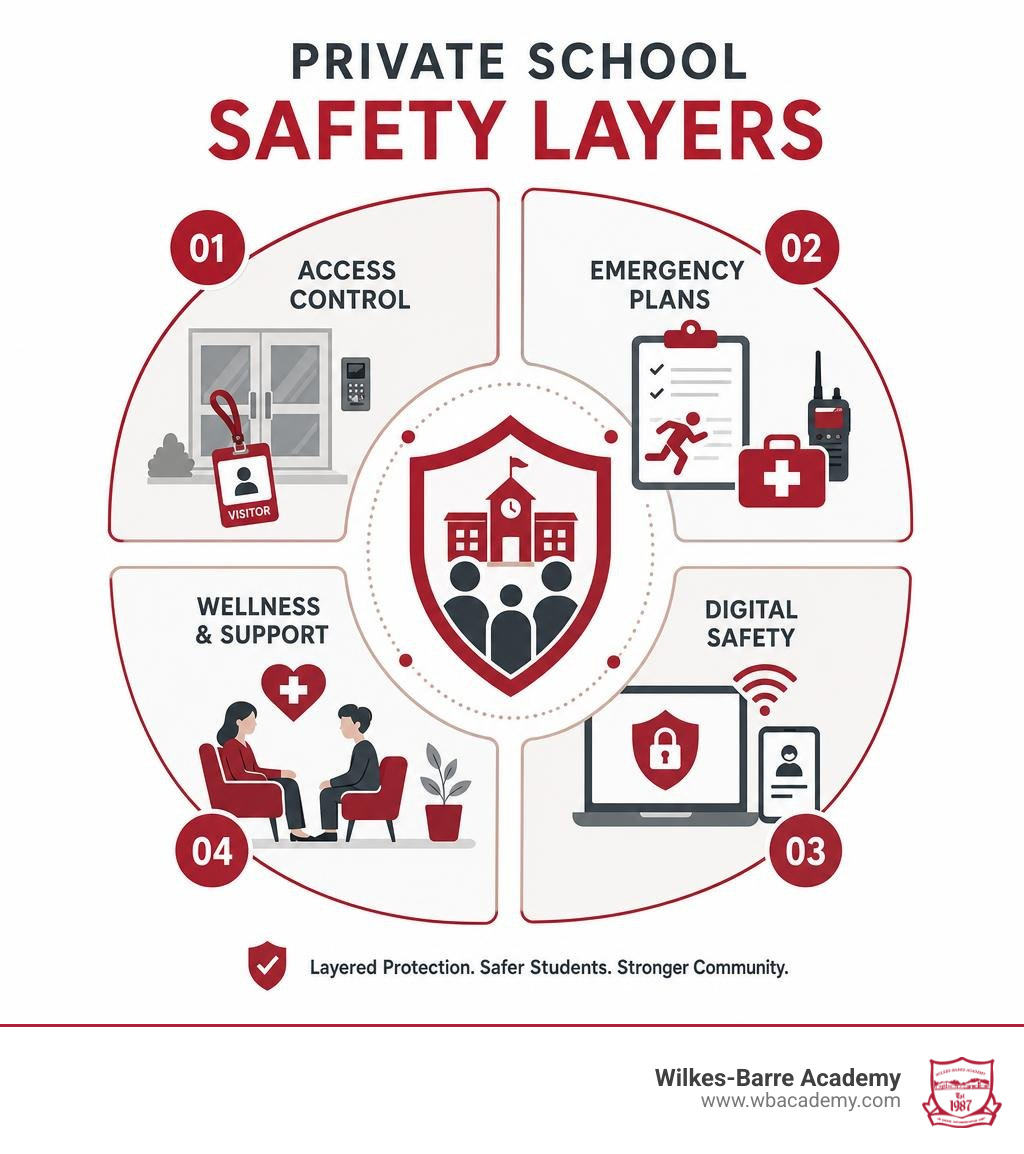
Private schools handle student safety through a layered plan, not one tool or policy. Parents should look for schools that combine:
- Controlled entrances, visitor sign-in, identification badges, and consistent screening for visitors, volunteers, and contractors.
- Background checks and child-protection training for employees and regular volunteers.
- Practiced emergency plans for fire, severe weather, medical events, lockdowns, and family reunification, developed with local first responders.
- Close student support, including clear behavior expectations, anti-bullying procedures, counseling access, and ways to report concerns.
- Digital safeguards such as internet filtering, student-data protection, and digital citizenship education.
Smaller private school communities can offer a meaningful advantage. When teachers and staff know students well, they may notice changes in behavior, emotional distress, peer conflict, or an unfamiliar person on campus sooner. But small size alone is not a safety plan. Strong schools avoid relying only on familiarity and use documented procedures that work every day.
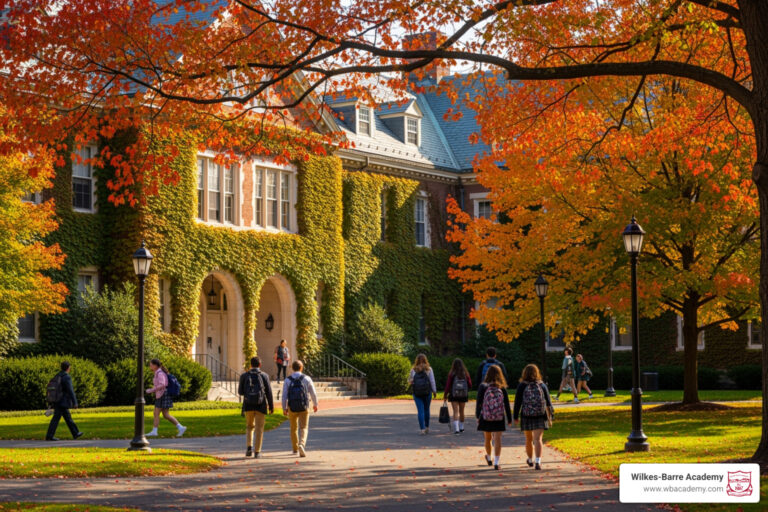
Safety matters deeply to families choosing a school. Research on school choice has found that parents consistently rank it among their top reasons for considering private education. At Wilkes-Barre Academy, a single-location institution, parents can reasonably expect safety to include both physical protection and the supportive, respectful relationships that help children feel secure enough to learn.
How Do Private Schools Handle Student Safety: Core Strategies and Protocols
Understanding how modern educational environments approach student well-being requires looking past single security measures like locks or cameras. When parents ask how do private schools handle student safety, the answer lies in structured, multi-tiered systems that protect students physically, socially, and emotionally throughout the school day.
A well-rounded safety protocol begins with rigorous staff vetting and clear perimeter boundaries. Unlike casual community spaces, an independent school maintains clear expectations regarding who is allowed on campus grounds and when. Faculty and staff undergo comprehensive state and federal background clearances, child abuse registry checks, and personal reference verification before ever stepping foot in front of a class.
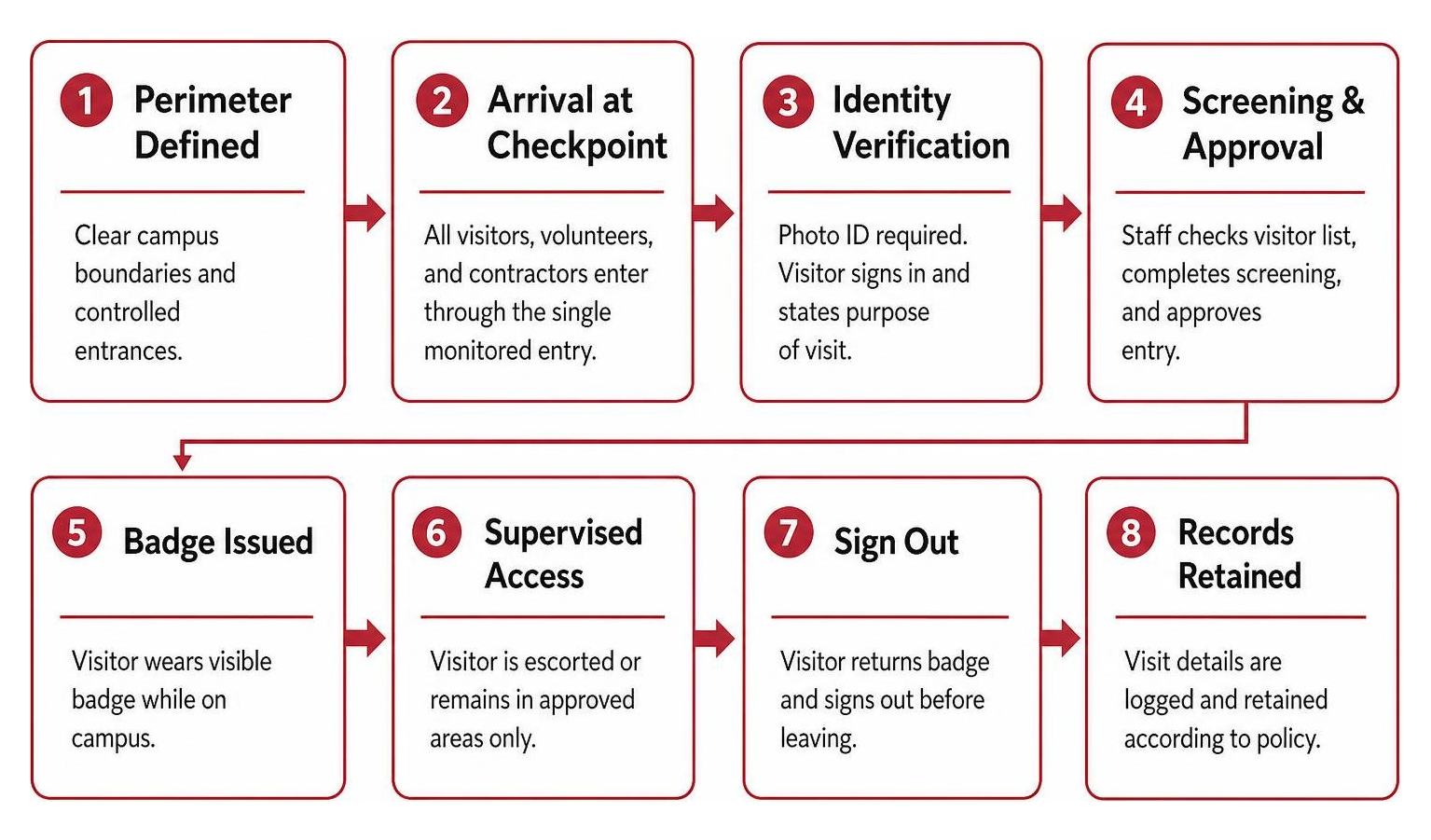
While advanced equipment is valuable, many of the most effective safety practices require operational discipline rather than massive capital investments. Practical, low-cost safety enhancements include:
- Enforcing Strict Single-Entry Checkpoints: Channeling all foot traffic through a single monitored door during morning drop-off, instructional hours, and afternoon dismissal.
- Daily Hardware and Communication Audits: Assigning staff to conduct routine morning walk-throughs to verify that exterior gates latch properly, classroom doors lock from the inside, and two-way radios operate cleanly.
- Clear Wayfinding and Exterior Numbering: Labeling all exterior doors with high-contrast alphanumeric markers (such as a bold letter “A” on a dark background) so arriving emergency responders can pinpoint specific wings instantly.
- Natural Sightline Maintenance: Trimming shrubs, hedges, and tree branches below window lines to eliminate visual blind spots around playgrounds and parking areas.
- Structured Parent Pickup Badging: Issuing secure placard cards or verified digital authorizations for after-school pickup to ensure children are released only to designated guardians.
Physical Security Measures: How Do Private Schools Handle Student Safety at Campus Entrances?
The entrance of a school is its primary defensive threshold. Independent institutions establish secure check-in vestibules—often referred to as “airlocks”—where visitors must be buzzed through an exterior door into a contained reception area before gaining access to interior academic hallways.
Inside this secure entryway, staff use digital visitor management platforms to screen government-issued photo identification against state and national sex offender registries. These systems log entry and exit times, generate photo-bearing visitor badges, and cross-reference active custody agreements to prevent unauthorized parent pickups.
To reinforce physical entry points without creating an intimidating visual barrier, schools apply shatter-resistant and ballistic window films to ground-level glass panels and doors. These durable films hold shattered glass in place during an attempted forced entry, delaying an intruder and providing vital time for law enforcement to respond. Combined with heavy-duty commercial door hardware that allows teachers to lock classroom doors instantly without stepping into the hallway, these measures create a formidable physical shield.
Emergency Preparedness and First Responder Coordination
Effective emergency planning is not a static document kept in a binder; it is a live, practiced discipline. Leading independent schools update their Emergency Response Plans (ERPs) at least twice each school year to incorporate current best practices for Private School Safety Measures in 2026.
These protocols move beyond traditional fire drills to cover a full spectrum of crisis scenarios, including severe weather sheltering, hazardous material spills, localized power outages, medical crises, and active threats. Rather than conducting unannounced, high-stress simulations that can cause unnecessary student anxiety, faculty members first walk through emergency procedures during staff meetings to build muscle memory.
Close collaboration with local police departments, fire stations, and municipal emergency management agencies is essential. Administrators provide first responders with updated architectural floor plans, master digital keys, and designated command posts. Regular tabletop exercises allow school leaders and emergency personnel to simulate crisis decision-making, direct traffic management, and execute orderly family reunification procedures. In Pennsylvania, private school leaders align their crisis planning with state-level awareness standards, including School Security Awareness PA Act 55 and Your Safety Strategy.
Beyond the Classroom: How Do Private Schools Handle Student Safety in Digital Environments?
Modern student safety extends far beyond physical brick-and-mortar walls. With laptops, tablets, and interactive software integrated into daily coursework, private schools maintain comprehensive cybersecurity frameworks to safeguard student identity and mental well-being.
Robust digital protection begins with enterprise-grade network firewalls and internet content filtering that block malicious websites, explicit material, and unauthorized social media platforms on school devices. Data privacy protocols ensure student records, academic performance, and medical profiles are secured behind multi-factor authentication (MFA) and compliant with privacy standards.
Beyond defensive software, schools incorporate digital citizenship into the core academic curriculum. Students learn age-appropriate online safety habits, including how to protect personal passwords, identify phishing attempts, recognize the emotional hazards of cyberbullying, and report suspicious online interactions to trusted adults immediately. Clear Acceptable Use Policies establish transparent rules regarding personal devices, ensuring technology serves as an educational tool rather than a distraction or vulnerability.
The Small-School Advantage: Community Culture and Student Wellbeing
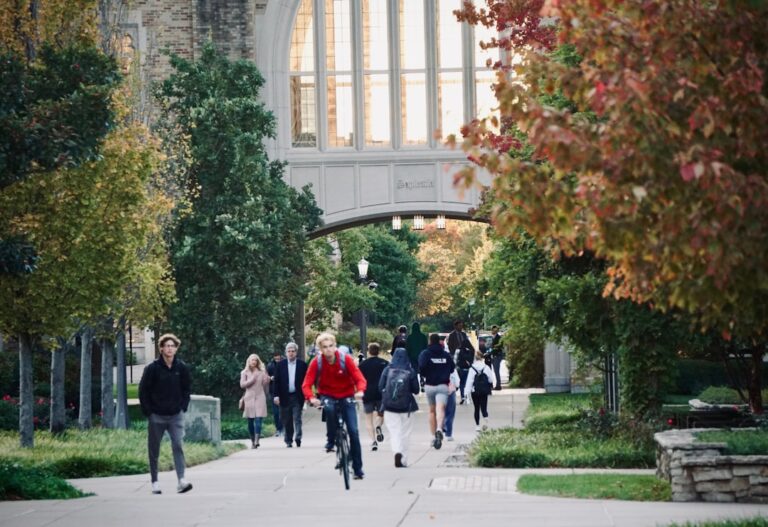
One of the greatest assets an independent school possesses is its community scale. A focused educational setting with low student-to-teacher ratios creates an environment where every child is personally known by multiple faculty members, administrators, and support staff.
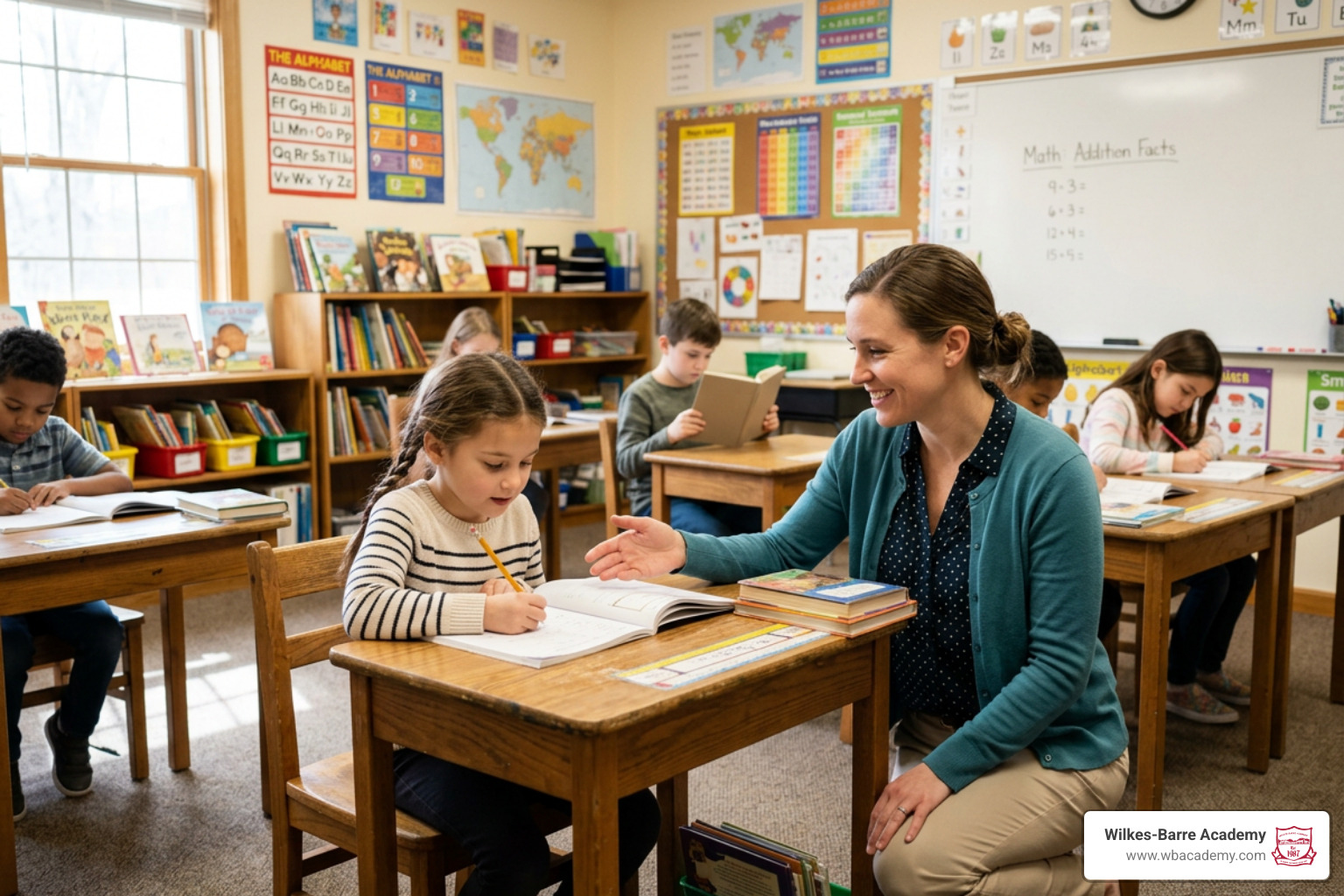
In a single classroom per grade structure, teachers quickly establish deep baseline knowledge of each student’s regular habits, academic rhythm, and emotional demeanor. When a child experiences emotional distress, exhibits unusual withdrawal, or experiences social friction with peers, educators notice the shift immediately. This proximity eliminates the anonymity that often allows concerning behaviors to fester unnoticed in massive school complexes.
This close-knit dynamic transforms student safety from a reactive security checklist into proactive community care. To explore how institutional culture and physical design intersect, see A Practical Guide to Safe School Environment Pennsylvania.
Proactive Mental Health, Anti-Bullying, and Wellness Programs
Physical security hardware can secure a doorway, but a positive school climate protects the heart of the learning community. Independent schools address emotional safety through integrated Social-Emotional Learning (SEL) curricula, accessible school counseling, and structured character education.
Programs focus on developing self-awareness, emotional regulation, empathy, and constructive conflict resolution from the earliest primary grades through middle school. Clear honor codes and conduct expectations hold students accountable for treating peers with dignity.
When interpersonal conflicts or discipline issues arise, schools employ restorative discipline frameworks. Rather than relying solely on punitive measures, restorative practices guide students to understand the impact of their actions, repair damaged relationships, and rebuild peer trust. Paired with anonymous reporting tools and multidisciplinary Behavioral Intervention Teams (BITs), staff can intervene early to support students undergoing family stress or emotional crises before those challenges escalate into broader safety risks.
Balancing Strict Security with a Welcoming School Environment
No parent wants to send their child to an institution that feels like a fortress. Independent schools take great care to balance robust security protocols with a warm, joyful, and inspiring educational atmosphere.
To achieve this, schools apply Crime Prevention Through Environmental Design (CPTED) principles. CPTED uses architectural layout and natural landscaping to deter potential threats unobtrusively:
- Natural Surveillance: Designing open sightlines, glass-paneled interior office partitions, and well-lit common areas where outdoor activities and interior hallways can be monitored naturally during everyday movement.
- Defensive Landscaping: Incorporating natural perimeter boundaries such as decorative wrought-iron fencing, dense evergreen hedges, bioswales, and stone retaining walls that direct foot traffic toward supervised entrances without looking hostile.
- Warm Interior Access Controls: Utilizing discreet electromagnetic door locks, clean architectural check-in counters, and friendly administrative greeters so security verification feels like a standard, welcoming reception rather than an interrogation.
Private Schools vs. Public Schools: Safety Practices and Structural Differences
The fundamental organizational differences between private and public institutions significantly shape their respective safety ecosystems. While both school types prioritize child welfare, private schools benefit from distinct operational flexibility, smaller student populations, and independent governance.
Empirical research consistently highlights these structural advantages. In an extensive academic review published in Working Paper 2020-2, researchers evaluated eleven separate studies on school safety and choice. Every single study found that access to private schooling was associated with measurable improvements in safety as reported by parents, students, and administrators. None found a reduction in safety.
Furthermore, data indicates that private schools experience substantially lower rates of severe disciplinary infractions compared to neighboring district schools—showing an 8 percentage point lower likelihood of physical altercations, a 12 percentage point lower rate of illegal drug usage, and an 18 percentage point lower rate of gang activity.
| Safety Dimension | Independent Private Schools | Traditional Public Schools |
|---|---|---|
| Governance & Policy Flexibility | Autonomous board governance; rapid implementation of new safety policies. | Bound by district-wide school board policies and bureaucratic approval cycles. |
| Class Size & Supervision | Low student-to-teacher ratios; single classroom per grade enhances individual oversight. | Higher student-to-staff ratios; larger campuses make individual behavioral tracking harder. |
| Disciplinary Authority | Direct enforcement of binding honor codes and parent partnership agreements. | Regulated by state-mandated disciplinary administrative statutes and due process steps. |
| Security Philosophy | Emphasis on community cohesion, CPTED, controlled entry, and behavioral intervention. | Frequent reliance on high-visibility measures, metal detectors, and assigned public SROs. |
| Visitor Management | Immediate digital screening and mandatory badging for 100% of campus guests. | High-volume foot traffic can complicate individual visitor tracking during peak times. |
Navigating Security Funding and Resource Allocation
One of the primary structural challenges private schools face is security financing. Unlike public school districts, which receive dedicated taxpayer allocations, state-funded school safety grants, and municipal funding for School Resource Officers (SROs), independent schools fund their entire safety infrastructure through tuition revenues, annual giving, and internal operational budgets.
This financial model requires careful budget prioritization. Independent school leadership boards balance physical security investments—such as ballistic film retrofits, automated access controls, and camera systems—with competitive faculty salaries and academic programming.
Additionally, private schools carry full institutional liability and must meet exacting commercial insurance underwriting standards. Insurance carriers require documented proof of regular facility risk assessments, formal concussion management protocols compliant with state sports laws, certified playground safety inspections, and verified staff background screening records. Fulfilling these duty-of-care requirements ensures schools maintain rigorous safety benchmarks year in and year out.
A Parent’s Guide to Evaluating Private School Safety Protocols
When researching educational options, prospective parents frequently review academic curricula, extracurricular clubs, and athletic offerings. However, conducting a thorough, on-site evaluation of a school’s daily safety practices is equally critical to finding the right fit for your child.
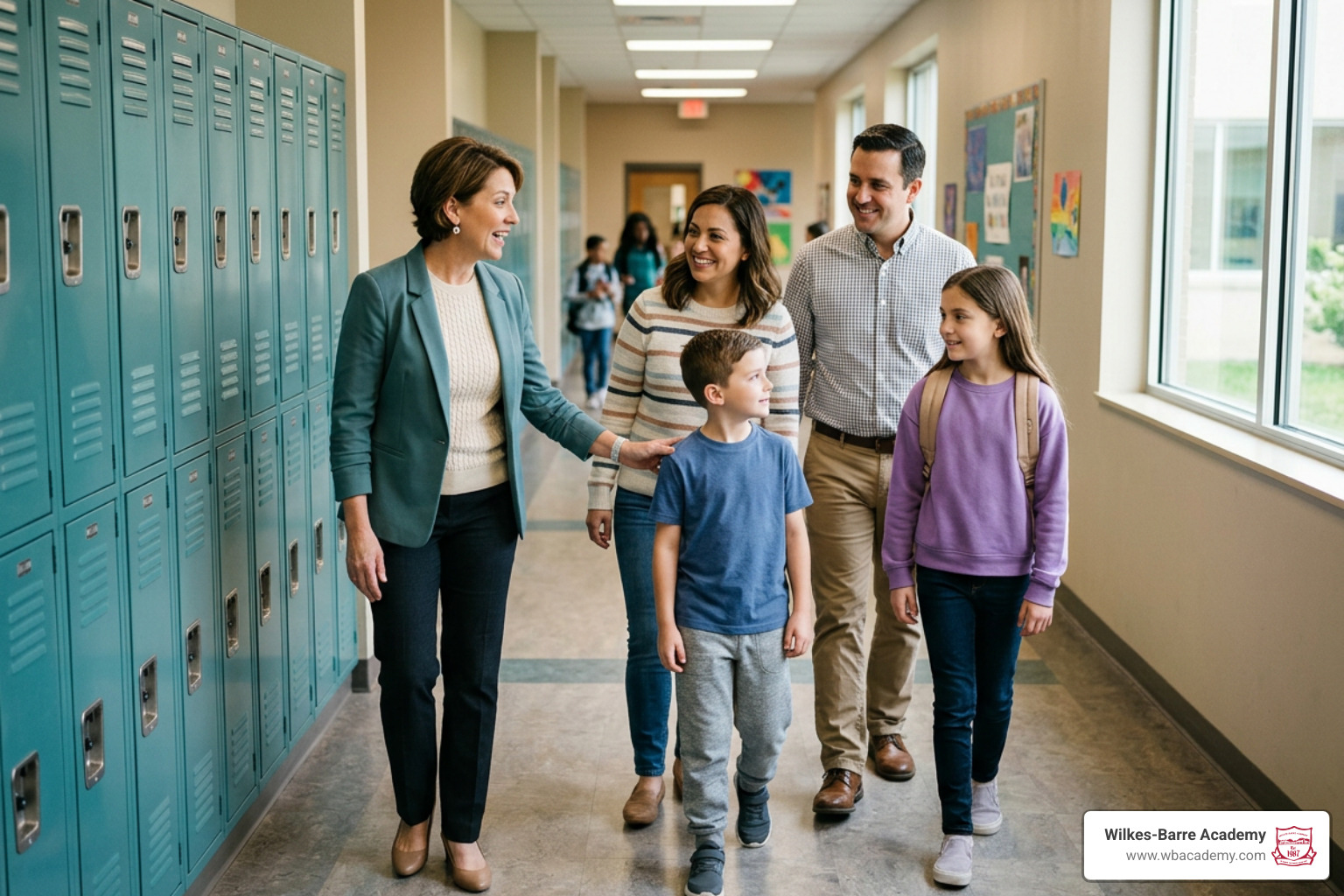
During campus tours and admissions interviews, parents should look beyond the promotional brochures and observe how security is practiced in real time. Pay attention to how easy or difficult it is to approach the school building from the parking lot. Are exterior doors propped open? Are visitors greeted immediately upon entry? Do hallways feel orderly, calm, and supervised? Observing everyday interactions provides genuine insight into the school’s underlying safety culture.
Essential Safety Questions to Ask During School Visits
To help evaluate prospective campuses, use this checklist of targeted questions when speaking with admissions directors and school administrators:
- Access Control & Visitors: “What is your exact process for screening visitors, contractors, and parent volunteers before they enter areas where students are present?”
- Staff Background Clearance: “How frequently are criminal background checks, fingerprinting, and child abuse clearances renewed for faculty, substitute teachers, and coaching staff?”
- Emergency Drills & Training: “What types of emergency drills do students practice each year, and how are teachers trained to support young children emotionally during these exercises?”
- First Responder Coordination: “How often do local police and fire departments conduct walkthroughs of your campus, and do they possess digital copies of your floor plans?”
- Behavioral & Mental Health Support: “What formal steps does the school take when a student experiences severe peer conflict, bullying, or an emotional crisis?”
- Medical Emergency Response: “Who manages medication dispensing on campus, and what percentage of your faculty maintains active CPR and first-aid certifications?”
- Digital Safeguards: “How are classroom devices monitored, and what measures protect student data and online privacy across your school network?”
Frequently Asked Questions About Private School Safety
Are private schools required to conduct emergency drills like public schools?
Yes. Private schools must comply with all state and local fire, building, and public safety codes. This includes executing regular fire evacuation drills, severe weather sheltering drills, and facility lockdown practices. Reputable independent schools frequently exceed baseline state requirements by conducting internal staff safety tabletop reviews and coordinating emergency drills in partnership with local emergency responders.
How do private schools screen teachers, staff, and regular volunteers?
Independent schools mandate comprehensive vetting before hiring any employee or onboarding parent volunteers who work directly with children. This process includes federal FBI fingerprinting, state criminal history background checks, state child abuse registry clearances, and formal employment reference verification. Furthermore, faculty and staff receive mandatory training on identifying and reporting signs of child abuse or neglect.
Do private schools employ dedicated security personnel or police officers?
Staffing models depend on the specific size, operational profile, and risk assessment of the institution. Some large private or boarding campuses contract private security specialists or coordinate with municipal departments for School Resource Officers (SROs). However, many focused, single-location primary and middle schools achieve exceptional safety through hardened physical access control, comprehensive camera monitoring, electronic badging, and deep faculty-student relationships that identify concerns before security personnel are ever needed.
Conclusion
Creating a secure educational setting is an active, multifaceted commitment that unites physical access control, practiced emergency plans, digital safety, and proactive emotional wellness. When these elements operate together, students are freed from distraction and fear, allowing their natural curiosity and love of learning to flourish.
At Wilkes-Barre Academy, our single-location K-8 school community in Luzerne County is built around the foundational belief that academic excellence and student safety go hand in hand. With a single classroom per grade, our dedicated faculty provides the personalized attention, close supervision, and supportive environment every child needs to thrive. To discover how our community fosters a secure, academically enriching home for young learners, explore our comprehensive approach to Student Safety Security Awareness and schedule a visit with us today.