Don’t Miss the Bus: A Guide to Private School Busing in Pennsylvania
Why Pennsylvania Private School Transportation Confuses So Many Families
Does private school provide transportation in Pennsylvania? The short answer is: it depends — and knowing the difference could save your family a lot of stress.
Here is a quick breakdown:
| Situation | Who Provides Transportation |
|---|---|
| Private school within 10 miles of your district | Your public school district (usually free) |
| Charter school within 10 miles | Your public school district (free, but mode may vary) |
| Private school outside the 10-mile radius | The private school (often fee-based) or parents |
| Student with an IEP at an approved private school | Your district of residence (required by law) |
| No district busing available | School shuttle, public transit, or parent transport |
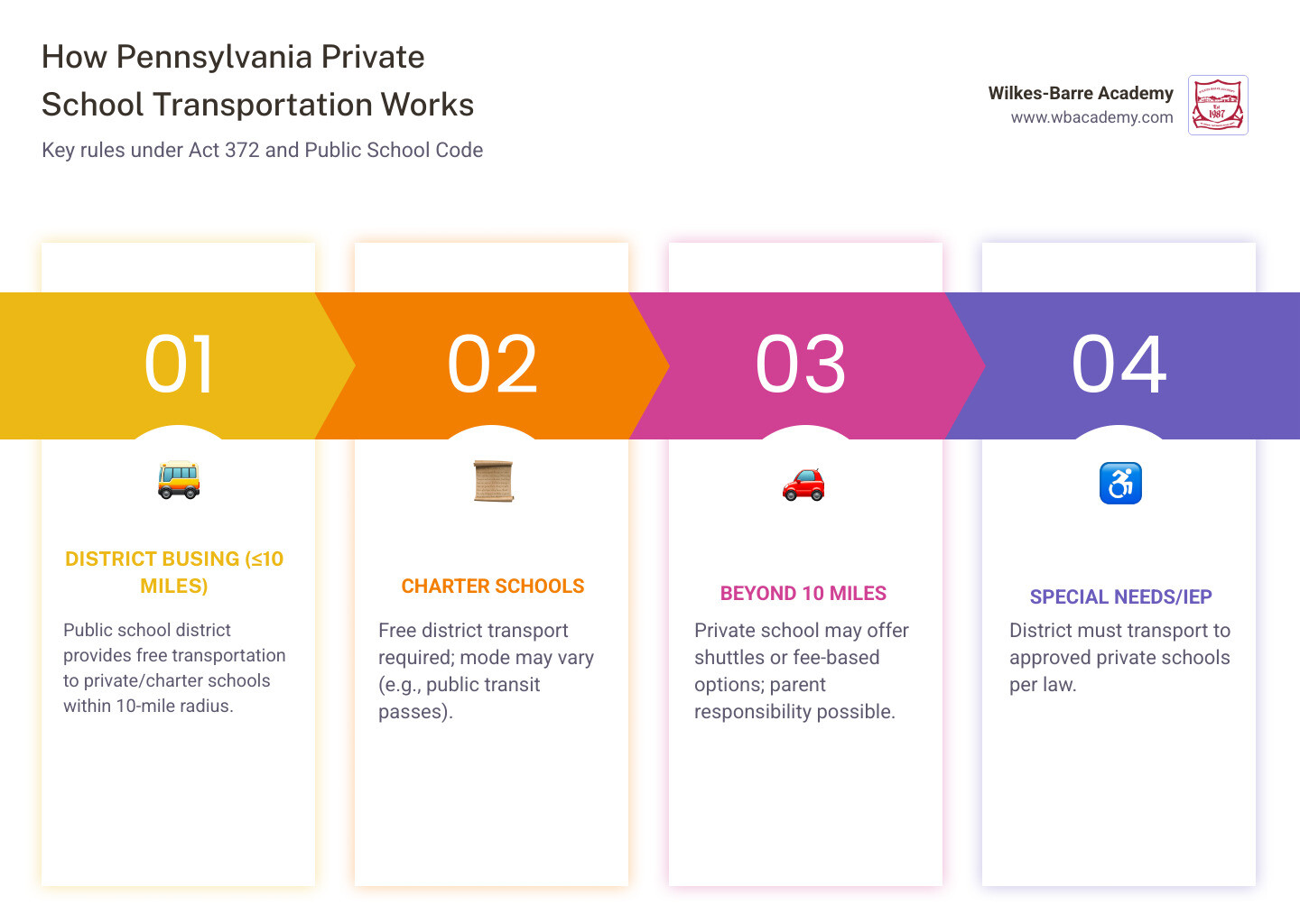
Pennsylvania law — specifically Act 372 and the Public School Code — requires most public school districts to transport students attending non-public schools, including private and charter schools. But that does not mean every private school runs its own buses.
Many families are surprised to learn that the legal obligation falls on their home school district, not the private school itself. And the rules shift depending on distance, school type, and whether your child has special needs.
This guide breaks it all down clearly, so you can plan ahead with confidence.
Does private school provide transportation Pennsylvania? The short answer
When parents ask, “does private school provide transportation pennsylvania,” they are often looking for a “yes” or “no” answer. In reality, the answer is a unique hybrid of state mandates and private initiatives. Under a landmark law known as Act 372, Pennsylvania public school districts are generally required to provide free transportation to students attending non-profit private schools and charter schools.
This means that for many families in Luzerne County, the yellow bus pulling up to the corner is actually sent by the local public district, even if the student is heading to a private K-8 program like ours. However, not every private school offers its own independent bus fleet. While some larger institutions might run their own shuttles to cover gaps, the primary “provider” of transportation in the Commonwealth is actually the taxpayer-funded district of residence.
When public school districts must transport private and charter students
According to the Pennsylvania Public School Code and the Charter School Law, school districts have a legal duty to provide free transportation to non-public students if they provide that same service to their own public school students. This obligation is tied to the student’s district of residence.
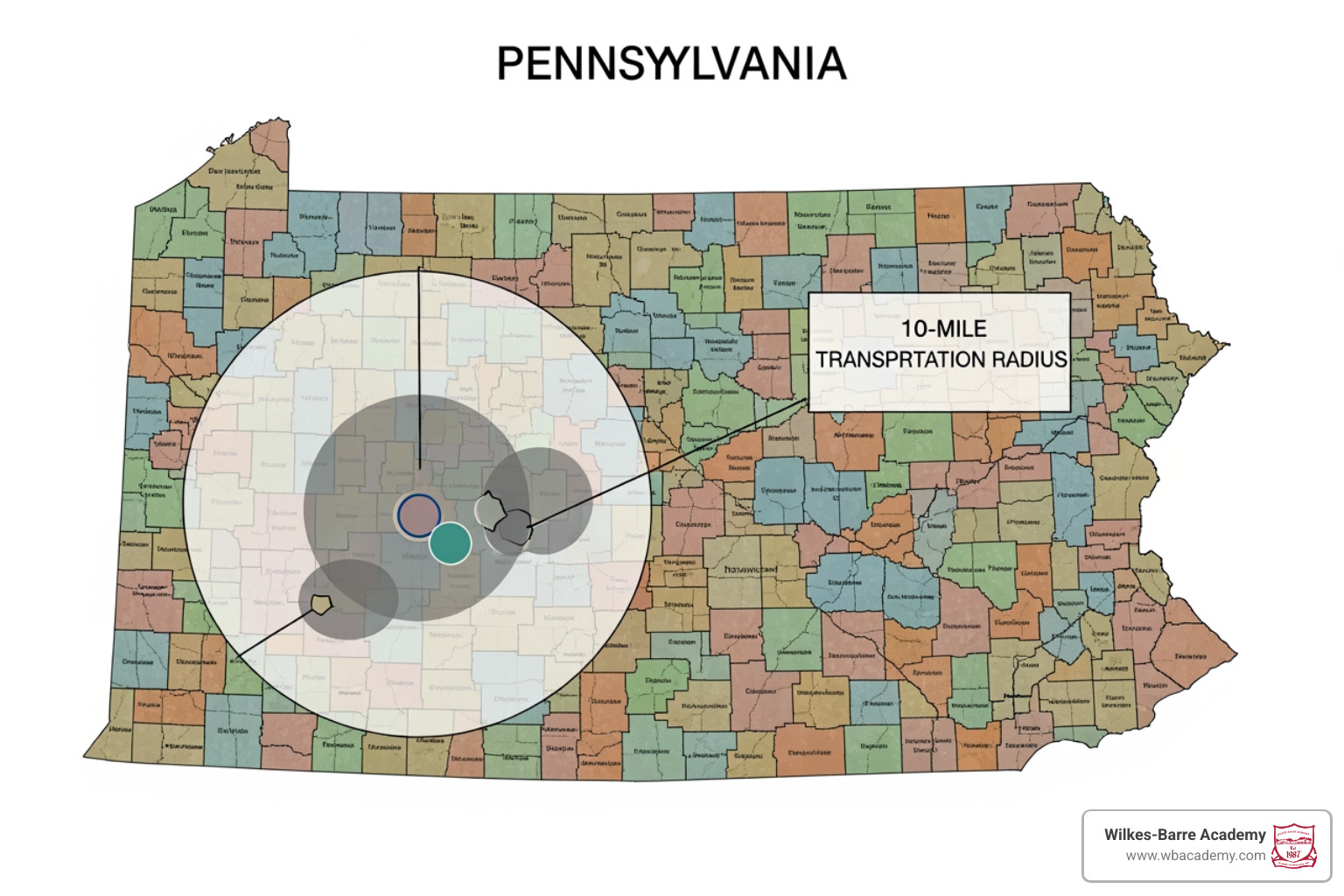
The law specifies that the school must be located within 10 miles of the district’s border, measured by the nearest public highway. If your chosen school falls within that 10-mile radius, your home district is responsible for getting your child there safely, provided they meet the same distance requirements (such as living far enough from the school to qualify for a bus) that apply to public school students.
When a private school may offer its own transportation instead
While the district handles the bulk of the heavy lifting, there are times when a private school steps in. You might see this in the following scenarios:
- Outside the 10-mile radius: If a family lives 12 or 15 miles away, the public district is no longer legally required to provide a bus. In these cases, some private schools offer supplemental, fee-based routes.
- Late activities: Most district buses only run during standard morning and afternoon windows. For students staying late for sports or clubs, private schools may offer “activity buses” or hub stops.
- Shuttle services: In urban areas or for specific regional reaches, schools might provide private vans or shuttles to ferry students from a central “hub” (like a train station or park-and-ride) to the campus.
- Parent carpools: When neither the district nor the school provides a route, many tight-knit school communities organize private carpools.
Pennsylvania school transportation laws every family should know
Navigating the legalities of busing can feel like reading a foreign language. However, a few key sections of the law govern almost everything. Act 372 is the “golden rule” of non-public transportation, ensuring that students attending private schools aren’t left behind just because their parents chose a different educational path.
Key statutes include Section 13-1361 and 13-1362 of the Public School Code, which outline how and when districts must provide transportation. These laws ensure that transportation is provided under the “same conditions” as public students, which helps maintain constitutional fairness. For those who want to dive deep into the technicalities, the Pupil Transportation FAQs | Department of Education provides a wealth of information on state-wide regulations.
The 10-mile rule and who qualifies for free transportation
The “10-mile rule” is the most critical metric for Pennsylvania families. If a non-profit private school is located within 10 miles of the school district’s boundary, the district must provide transportation. Here are the specific distance thresholds that usually trigger eligibility:
- Elementary students: Generally required if the student lives more than 1.5 miles from the school.
- Secondary students: Generally required if the student lives more than 2 miles from the school.
- Hazardous routes: If the walking path is deemed “hazardous” by the Pennsylvania Department of Transportation (PennDOT), the district must provide a bus regardless of the distance.
What Bell v. Wilkinsburg means for charter transportation in 2026
A recent 2026 ruling by the Pennsylvania Supreme Court in Bell v. Wilkinsburg Sch. Dist. clarified an important distinction for charter school students. The court held that while districts must provide “free transportation,” they are not required to provide the identical mode of transportation to charter students as they do for public students.
For example, a district might provide traditional yellow school buses for its public school students but offer public transit passes (like SEPTA or local bus passes) to charter students. As long as the transportation is free and safe, districts have the flexibility to choose the mode. This ruling emphasizes that “free” does not always mean “a yellow bus,” though for most elementary and middle school students in suburban areas, the bus remains the standard.
Does private school provide transportation Pennsylvania under the same conditions?
The phrase “under the same conditions” is a legal cornerstone. It means that if a district provides bus shelters, specific safety protocols, or nonhazardous route planning for its public students, it must extend those same considerations to private school students. However, as the 2026 Supreme Court ruling showed, this doesn’t mandate a carbon-copy experience. It ensures equal access to education by removing the barrier of travel costs, even if the vehicle itself looks different.
Transportation for approved private schools and students with exceptional needs
For students with disabilities or specific educational requirements, the rules are even more robust. Under 24 P.S. §13-1374, the responsibility for transporting “exceptional students” to Approved Private Schools (APS) falls squarely on the school district of residence.
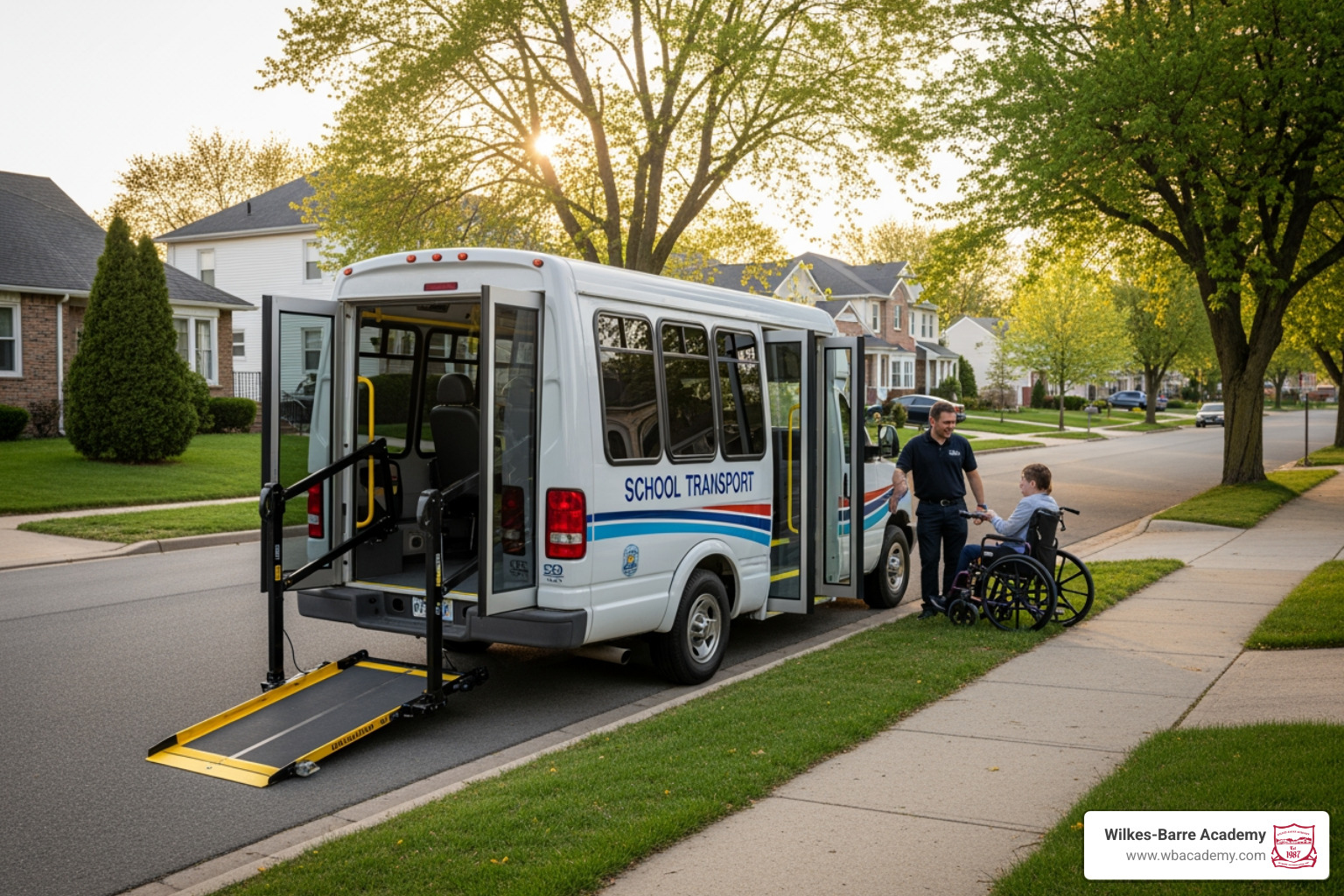
This is a non-negotiable mandate. Whether the student is attending a day program or a residential placement, the district must ensure they have a way to get there. This often involves specialized vehicles equipped with wheelchair lifts or climate control to accommodate medically complex needs. You can find more details in the official Transportation to Approved Private Schools circular.
Transportation rules for day programs versus residential placements
The frequency of transportation depends on the student’s program:
- Day Programs: Districts must provide daily Monday-through-Friday service.
- Residential Placements: If a student lives at the school, the district typically provides transportation to the school at the start of the term and back home at the end. However, if the school closes for holidays or weekends (and does not provide “weekend maintenance”), the district must provide transportation for those trips as well.
- Room and Board: In some cases, a district may choose to pay for a student’s room and board (maintenance) in lieu of daily transportation, provided the private school has the facilities to remain open.
Alternative transportation for students with disabilities, homelessness, or foster care
For students in vulnerable situations—such as those covered by the McKinney-Vento Act (homelessness) or those in foster care—maintaining “school-of-origin” stability is vital. This means if a child moves to a different district due to a change in foster placement, the districts must work together to ensure the child can continue attending their original school.
Services like Alternative Student Transportation in Pennsylvania often step in here. They provide smaller, non-bus vehicles that can navigate rural roads or provide door-to-door service, which is often less stressful for students with sensory sensitivities or medically complex conditions.
How private schools in Pennsylvania handle transportation in real life
In the real world, your child’s commute might be a “quilt” of different services. In Luzerne County, we see a mix of district-provided busing and parent-led transport. To help you visualize the landscape, here is how the two main options compare:
| Feature | District-Provided Busing | Private School-Provided (Shuttle/Van) |
|---|---|---|
| Cost | Usually Free (Taxpayer funded) | Often Fee-Based ($2,000 – $3,000/year) |
| Eligibility | Within 10 miles of district border | Determined by the school |
| Route Type | Neighborhood stops | Hub stops or central locations |
| Flexibility | Set by district calendar | Can include late buses for sports |
| Registration | Requires Act 372 Form | Internal school agreement |
Does private school provide transportation Pennsylvania if the district does not?
If you live outside the 10-mile radius, or if you reside in a “walking district” (where the district doesn’t provide busing to anyone), the responsibility shifts. This is what we call “gap coverage.” Some schools offer their own vans or buses for a fee to accommodate these families. For example, some schools in the Pittsburgh area charge upwards of $2,750 per student for private routes. If the school does not offer this, families must rely on carpooling or public transit.
Common private-school transportation models families will see
- The Hub-Stop Model: Rather than stopping at every student’s driveway, a private shuttle might meet families at a central location, like a local library or shopping center. This keeps ride times short and efficient.
- Reimbursement Programs: In some areas, like Philadelphia, the district offers a “Flat Rate Program” where they pay parents a monthly stipend (up to $300) to drive their own children if a bus route isn’t feasible.
- Public Transit Integration: Many middle and upper school students use regional rail or city buses, which helps build independence.
Costs, eligibility, and registration details to confirm before school starts
If you are planning for the 2025-26 school year, pay close attention to these logistical hurdles:
- Act 372 Forms: This is the most important document. You must submit this to your home district to “claim” your seat on the bus.
- Deadlines: Most districts require transportation requests by early July.
- Pre-K Limits: Pennsylvania state law generally does not mandate transportation for Pre-K students. Busing usually begins at the Kindergarten level.
- Address Changes: If you move during the summer, you must notify both the school and the district immediately, or your child may not have a bus stop on the first day.
A step-by-step plan for Pennsylvania families choosing private or charter school transportation
Getting your child from point A to point B shouldn’t be a full-time job. Use this checklist to streamline your planning:
- Step 1: Verify the Distance. Use a GPS to check the mileage from your home district’s border to the school. Is it under 10 miles?
- Step 2: Contact the District Transportation Office. Ask specifically about their “Non-Public Transportation” policies and request the Act 372 form.
- Step 3: Talk to the Private School. Ask if they have a transportation liaison who coordinates with the various districts.
- Step 4: Review the Route. Once assigned, check the pickup and drop-off times. Are they consistent with your work schedule?
- Step 5: Have a Backup. Keep a list of two or three other families in your neighborhood for emergency carpooling.
Questions to ask your home district and your child’s school
When you call the transportation office, don’t be shy! Ask these specific questions:
- “What is the maximum ride time for non-public students?”
- “Is there a ‘late bus’ option if my child participates in after-school tutoring?”
- “If the public district is closed for a teacher’s in-service day but the private school is open, do you still provide busing?” (Note: Often, the answer is no, so plan ahead!)
- “What is the procedure for reporting a late bus or a driver concern?”
Best next step for Luzerne County families
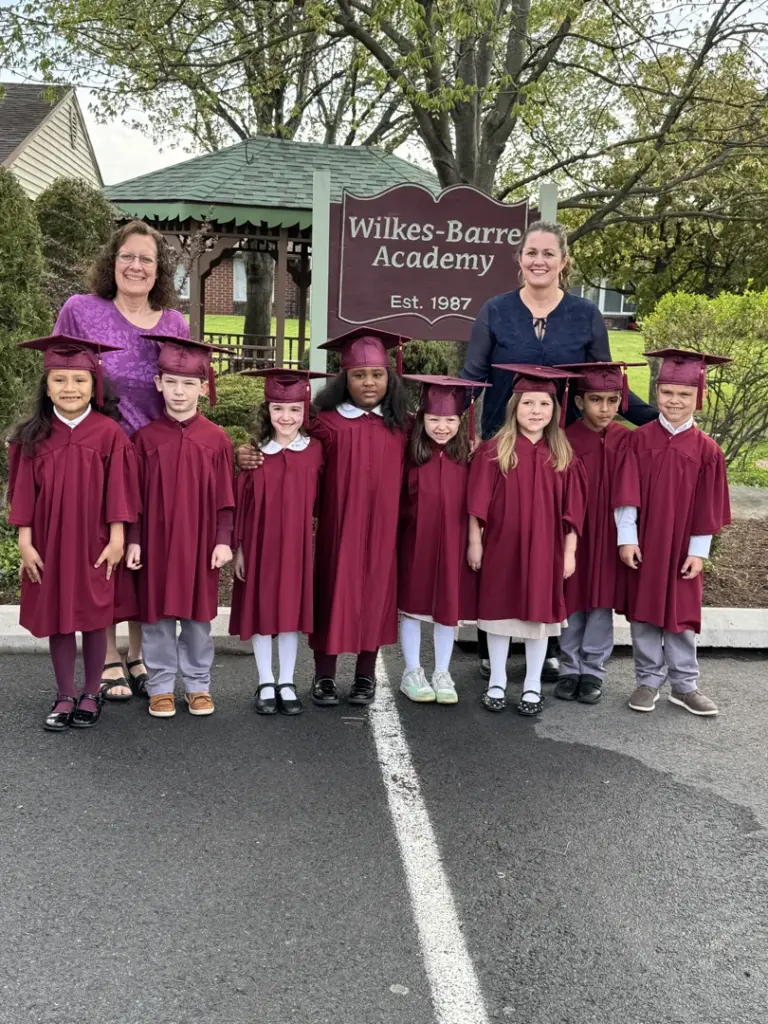
For families in the Wilkes-Barre area and throughout Luzerne County, we understand that choosing a school is about more than just academics—it’s about the daily rhythm of your life. At Wilkes-Barre Academy, we focus on providing an academically advanced curriculum and a close-knit community where every child is known.
While we do not operate a private bus fleet, our families successfully utilize the free busing provided by their home districts under Act 372. We are happy to help guide you through the process of connecting with your local district to ensure your child has a seat on the bus. You can learn more about our community and logistical support on our Transportation page.
Frequently Asked Questions about does private school provide transportation pennsylvania
Do Pennsylvania public school districts provide free transportation to students attending private or charter schools?
Yes, as long as the student resides within the district and the private/charter school is within 10 miles of the district’s boundary. This is mandated by Act 372 to ensure equal access to education for all Pennsylvania residents.
Is private school transportation always free in Pennsylvania?
Not necessarily. While district-provided busing is free, any supplemental transportation provided directly by the private school (like a specialized shuttle or a route outside the 10-mile limit) usually comes with a fee. These fees can range from a few hundred to several thousand dollars per year.
What should families do if transportation is denied or changed?
First, request a written explanation from the school district. If the denial is based on distance, you can request a “mileage check.” If the concern is a hazardous route, you can contact the local police or PennDOT for a safety review. In many cases, consulting with the school’s administration can help resolve disputes with the district.
Conclusion
Understanding the answer to “does private school provide transportation pennsylvania” is the first step in a smooth school year. While the laws are complex, they are designed to support your right to choose the best education for your child. By leveraging the 10-mile rule, staying on top of Act 372 paperwork, and communicating early with both your home district and your school, you can ensure your child’s commute is safe and reliable.
At Wilkes-Barre Academy, we take pride in our strong family-school connections. We are here to support you not just in the classroom, but in all the practicalities that make a private education possible for your family. For more information on how our families navigate the school day, visit our Transportation page today.