Winning the Pennsylvania Science Olympiad
What Is Science Olympiad Pennsylvania — and How Do You Join?
Science Olympiad Pennsylvania (also called PASO) is the official statewide chapter of Science Olympiad, Inc. It runs competitive STEM tournaments for middle and high school students across the state every year.
Here’s a quick overview of how it works:
- Who can join: Students in grades 6-9 (Division B) or grades 9-12 (Division C), in teams of 15
- How to enter: Schools register through the Scilympiad portal at pascioly.org
- When registration opens: September 3, 2025 for the 2025-2026 season
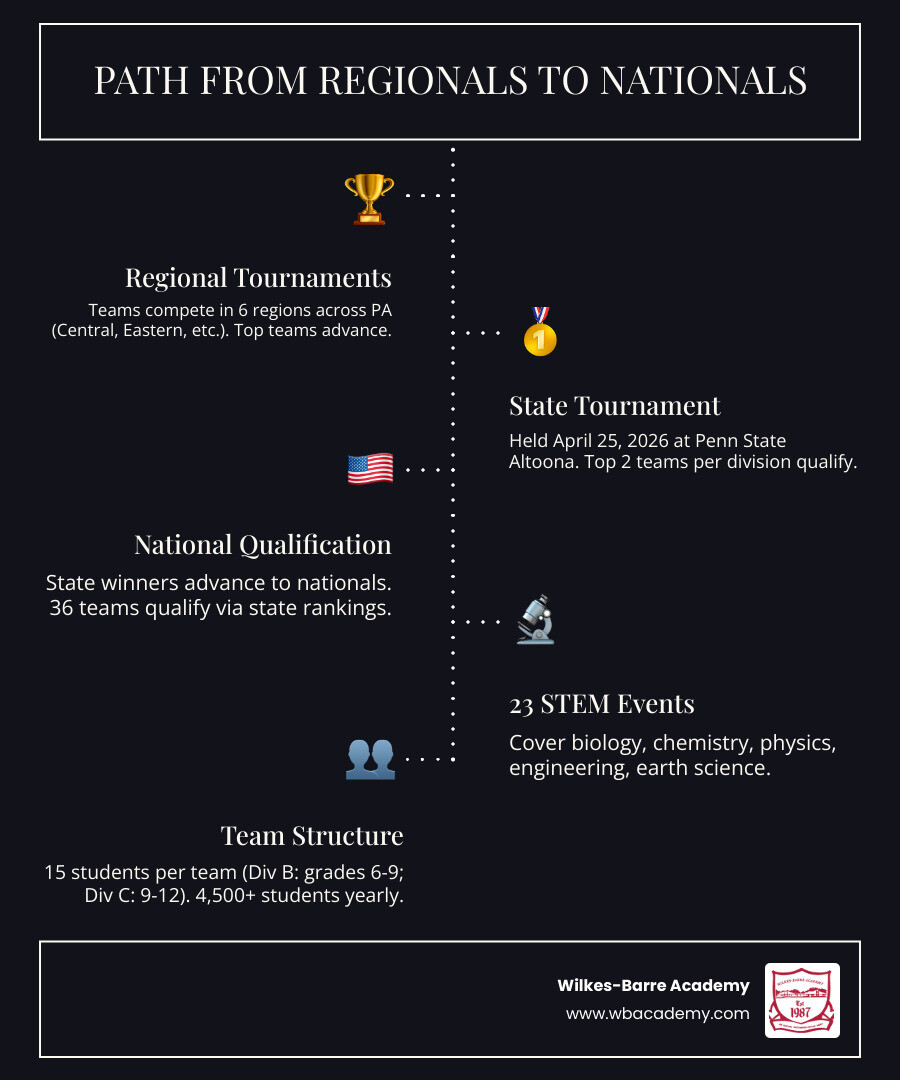
- Tournament path: Regional → State → National
- State Tournament date: April 25, 2026 at Penn State Altoona
- Who qualifies for nationals: The top 2 teams at the state tournament
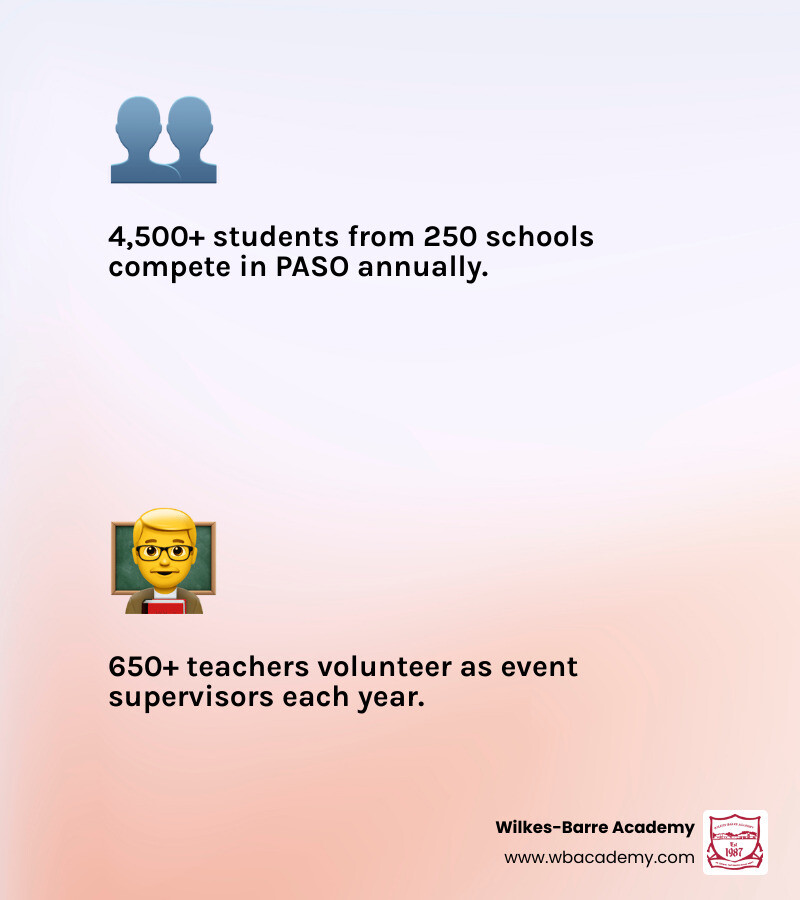
PASO is a nonprofit run by volunteers. More than 4,500 students from 250 schools across Pennsylvania compete each year — from Philadelphia to Erie, and everywhere in between. That includes right here in Luzerne County, where teams compete in the Northeastern Regional at Penn State Wilkes-Barre.
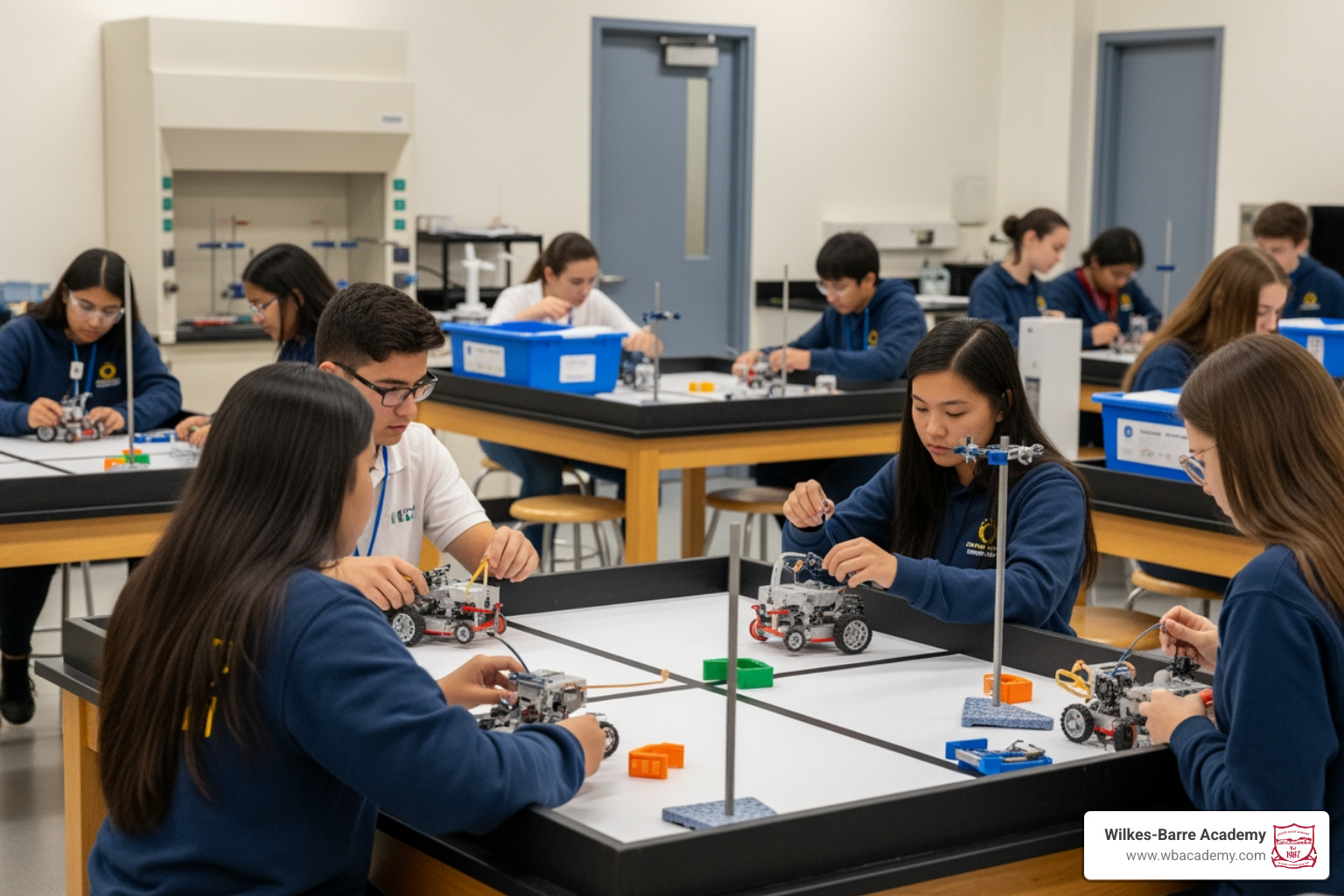
It’s a big deal. Teams work together on 23 events covering biology, chemistry, physics, engineering, and earth science. Think of it like an athletic team — but for science.
Whether you’re a parent exploring STEM opportunities for your child, or a coach looking to get your school involved, this guide walks you through everything you need to know.
Understanding the Science Olympiad Pennsylvania Structure
To understand how to win, you first have to understand the game. The science olympiad pennsylvania structure is designed to mirror a sports league. It isn’t just a one-day science fair where you stand next to a poster board; it is a rigorous, multi-event competition that requires strategy, practice, and a lot of teamwork.
The Pennsylvania Science Olympiad (PASO) is a 501(c)(3) non-profit organization that serves as the state chapter for the national program. Their mission is to improve the quality of K-12 science education and increase student interest in science careers. We see this in the passion students bring to these events. The organization is governed by a Board of Directors and relies on a massive network of volunteers, from university professors to industry professionals, to ensure the competitions are fair and challenging.
The competition is split into two primary levels:
- Division B: Generally for middle school students in grades 6 through 9.
- Division C: For high school students in grades 9 through 12.
You might notice that 9th grade overlaps both divisions. This allows schools with different grade configurations (like a junior high or a traditional 9-12 high school) to participate effectively. For more details on how these activities integrate into a student’s life, you can explore the Science Olympiad page on our site.
Eligibility for Division B and C
Eligibility is straightforward but strict. Each team consists of up to 15 students. While a school can often register multiple teams for invitationals, only one team per school typically moves through the official regional-to-state pipeline.
One of the most encouraging statistics in science olympiad pennsylvania is the diversity of the participants. Currently, females represent 40% of the students competing on teams. This reflects a growing trend in STEM education where barriers are being broken, and more students from all backgrounds are finding a home in the lab and the workshop.
Whether your team is tackling “Anatomy and Physiology” or building a “Robot Tour” vehicle, the goal is the same: collaborative excellence. Students usually work in pairs, meaning that 15-student roster is actually a collection of small, specialized partnerships. For the latest official updates and rules, the Pennsylvania Science Olympiad website is the primary resource for all competing schools.
Regional Qualifiers for Science Olympiad Pennsylvania
Pennsylvania is a large state, so PASO divides the competition into several geographic regions. This ensures that schools don’t have to drive across the entire state just to qualify for the next round. The state sponsors seven regional tournaments in total.
For those of us in Luzerne County, the most relevant site is the Northeastern Regional. This regional is typically hosted at the Penn State Wilkes-Barre campus. It serves schools across Luzerne, Lackawanna, Wyoming, and several surrounding counties.
Other regions across the state include:
- Central: Often hosted at locations like Juniata College.
- Central Eastern: Hosted at Kutztown University.
- Southeast: A high-density region with multiple sites due to the number of schools.
- Southwestern: Hosted at PennWest California.
- Northwestern: Hosted at PennWest Clarion.
Each regional has a specific number of “slots” for the state tournament. These slots are calculated based on the percentage of teams registered at that site. For example, the Northeastern region traditionally sends 7 Division B teams and 7 Division C teams to the state level. You can find the full list of regional sites and their specific boundaries at the Pennsylvania Science Olympiad regionals page.

The Road to the 2026 State Tournament
The 2026 state tournament is the “Big Dance” for Pennsylvania’s young scientists. It is scheduled to take place on Saturday, April 25, 2026, at the Penn State Altoona campus. This beautiful campus will host the top 36 Division B teams and the top 36 Division C teams from across the Commonwealth.
Looking at the most recent results helps us understand the level of competition. In the 2026 State Tournament (Division C), the rankings were incredibly tight. Harriton High School took the top spot with a score of 103 points. They were followed closely by Cumberland Valley High School, which secured second place with 107 points.
In Science Olympiad scoring, a lower score is better (think of it like golf—you get points based on your rank in each event, so 1st place in an event equals 1 point). When the difference between 1st and 2nd place is only 4 points across 23 events, you know every single second of study time mattered!
| Regional Tournament | Host University | 2026 Date | Expected Participants |
|---|---|---|---|
| Central Eastern | Kutztown University | March 19, 2026 | 600+ Students |
| Southwestern | PennWest California | March 27, 2026 | 300 Students |
| Northwestern | PennWest Clarion | March 28, 2026 | 300 Students |
| Northeastern | Penn State Wilkes-Barre | March 2026 (Tentative) | ~40 Schools |
Advancing to Nationals through Science Olympiad Pennsylvania
The stakes at the state tournament are high because only the top two teams in each division qualify for the National Science Olympiad Tournament.
The path is narrow:
- Regionals: Thousands of students compete; only 36 teams per division advance to States.
- States: 36 teams compete in 23 STEM events; only the top 2 advance to Nationals.
- Nationals: The best of the best from every state compete for the national title.
Because advancement is based on overall team performance, a school cannot just be good at “Codebusters” or “Forensics.” They must be competitive across all 23 events, which range from “Astronomy” and “Chemistry Lab” to building “Electric Vehicles” and “Helicopters.”
2026 Regional Highlights and Host Sites
The 2026 season is shaping up to be one of the largest on record. At the Central Eastern Regional at Kutztown University, more than 600 students from 42 schools are expected to compete. This event covers nine counties and features 46 different events between the two divisions.
Out west, the PennWest campuses are preparing for a massive influx of talent. PennWest California expects about 300 students for the Southwestern Regional on March 27, while PennWest Clarion expects another 300 for the Northwestern Regional on March 28. These university-hosted events are vital because they give students access to professional-grade laboratories and facilities they might not have at their home schools.
Closer to home, the Penn State Wilkes-Barre hosting the 2026 Northeast Regional announcement highlights the importance of this event for Luzerne County. Having a regional tournament in our backyard allows our local students to engage with university faculty and see what a future in STEM might look like right here in our community.
Registration and Team Management for the 2025-2026 Season
If you are looking to start a team or re-register an existing one, mark your calendars for September 3, 2025. This is when registration officially opens for the 2025-2026 season.
Everything is handled through the Scilympiad – Pennsylvania Science Olympiad portal. This site is the central hub for:
- Creating your school account.
- Registering your 15-student rosters.
- Managing event sign-ups.
- Paying registration fees (usually around $70–$200 depending on the tournament type and school district).
The state leadership, including State Director Greg Byrd and Assistant State Director J Croom, are the key contacts for any administrative hurdles. They provide a “Registration Information Book” that is essentially the Bible for new coaches.
Financial Equity and Support Programs
PASO is committed to making sure that every student has a chance to compete, regardless of their school’s budget. They offer Financial Equity Grants specifically designed to help under-resourced schools cover registration costs and equipment needs.
Furthermore, PASO supports its volunteers through the “Act 48” program, which allows Pennsylvania teachers to earn continuing education hours for their work as event supervisors. This creates a win-win: the tournament gets expert judges, and the teachers get professional credit.
Upcoming 2026 Invitationals and Clinics
Before the official regional tournaments begin, many teams participate in “Invitationals.” These are essentially practice tournaments that don’t count toward your state qualification but provide invaluable experience.
Two of the biggest in our region are:
- Science Olympiad at Penn (UPenn): Scheduled for February 14, 2026. This is the 10th annual invitational at the University of Pennsylvania. It is popular because it often features fee waivers for Philadelphia School District schools and is run by university students who were once competitors themselves.
- Science Olympiad at Penn State (SOAPS): Taking place on January 17, 2026. The Scilympiad – Science Olympiad at Penn State portal manages this event. SOAPS is famous for its high-quality tests written by alumni who are considered some of the best test writers in the country.
Participating in these events is often the “secret sauce” for winning teams. It allows students to see the types of questions they will face and test their engineering devices (like “Boomilevers” or “Hovercrafts”) in a competitive environment before it’s “win or go home” time at regionals.
Frequently Asked Questions about Science Olympiad Pennsylvania
How do schools register for the 2025-2026 season?
Registration opens on September 3, 2025. Coaches should visit the official Scilympiad portal for PA to create an account, register their school, and then add their teams. It is highly recommended to download the Pennsylvania Registration Information Book from the site to ensure all paperwork and fees are handled correctly.
Where is the 2026 PA State Tournament being held?
The 2026 State Tournament will be held at Penn State Altoona on Saturday, April 25, 2026. Teams should plan for a full day of competition, with the opening ceremony usually starting early in the morning and the awards ceremony concluding in the evening.
Which schools qualified for the 2026 National Tournament?
Based on the Division C results, Harriton High School (1st place, 103 points) and Cumberland Valley High School (2nd place, 107 points) secured the two qualifying spots for the National Tournament. These schools have historically strong programs and serve as great examples of what consistent practice and team coordination can achieve.
Conclusion
At Wilkes-Barre Academy, we believe that providing students with high-level academic challenges is the best way to prepare them for the future. Science Olympiad Pennsylvania is more than just a competition; it is a community that fosters curiosity, resilience, and critical thinking.
For students in Luzerne County, having access to these tournaments—especially with a regional site so close to home—is a massive advantage. Whether our students are exploring the intricacies of “Designer Genes” or calculating the physics of a “Circuit Lab,” they are building the skills that will define the next generation of innovators.
If you are looking for an academically advanced environment where your child can thrive in STEM and beyond, we invite you to learn more about our community. More info about student activities is available on our website, where you can see how we integrate competitive learning into our individualized curriculum. Let’s get ready for the 2026 season—the lab is waiting!